• Skip to primary navigation
  • Skip to main content
  • Skip to footer
Benedictine Sisters of FL

Holy Name Monastery
Founded 1889

Donate Now
  • Home
  • About Us
    • History
    • Being Benedictine
    • Benedictine Monasticism
    • Meet Our Community
    • Holy Name Academy-Alumnae
  • What We Do
    • Mission, Vision and Our Partners
    • Retreats
      • Invitation to Retreat
      • Accommodations
    • Volunteer Programs
    • Oblate Program
    • Spiritual Direction
    • Aqua/Hydroponics
    • More of Our Ministries
  • What’s Happening
    • Articles of Interest
    • Events
    • Newsletters
    • Brochures
    • Links
  • Support Us
    • Gifts of Support
    • Wish List
  • Stories Shared
  • Galleries
    • Photos
    • Videos
      • Benedictine Sisters of FL Videos
      • Other Videos
  • Contact Us

Benedict

Let All The Earth Cry Out To God With Joy

July 7, 2025 by Holy Name Monastery Leave a Comment

(At the outset let it be understood that what follows may appear to be fiction but it is not. St. Luke shared this with me.)

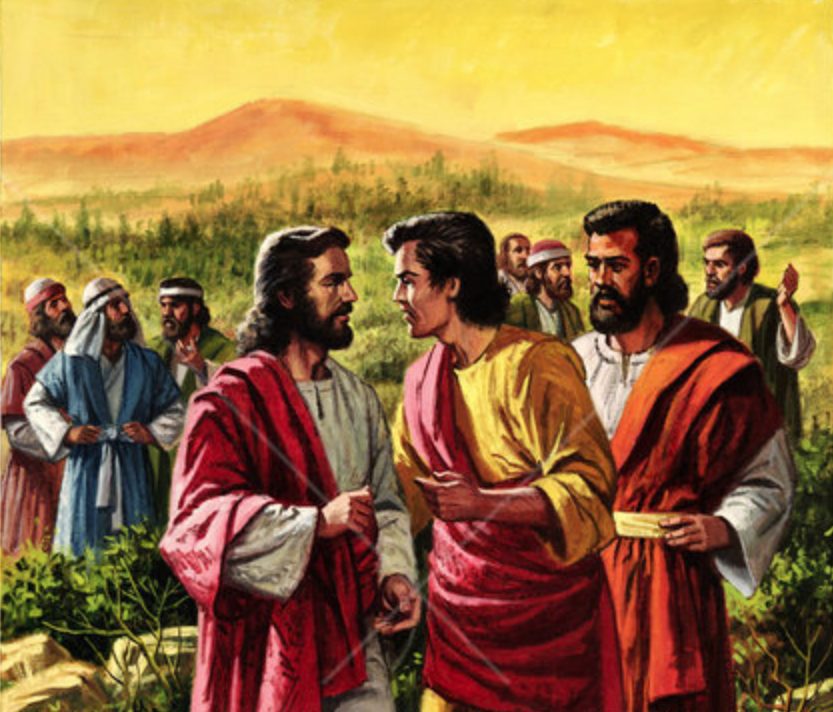
One day, when the man of God Benedict was doing Lectio and pondering how to incorporate his set of values into his manuscript directed to his followers, St. Luke entered his reverie.  What an inspiration!  Luke and Benedict chatted with each other for a spell.  Look Ben, (said Luke) you’ve consulted the writings of the one you call the Master.  May I suggest you look at my record of the sayings of THE Master.  Compare it with the 10th chapter of my Gospel. Sure enough!  Very many of our special Benedictine values are put forth by THE Master Jesus.  For instance:

+ A SPIRIT of POVERTY: take nothing with you (is how Jesus puts it) No money bags, no suitcase, no canvas bag or pretty tote and no sandals.  Or as you say it in your Rule: “No one may presume to give, receive or retain anything as her own, nothing at all, in short not a single item … no one shall presume ownership of anything. “

+ A SENSE of STABILITY: Jesus advises his followers: Into whatever house you enter, stay in the same house; don’t be moving from one house to another.   Benedict, you describe the first kind of monastics called cenobites.  From what you say, I sense this may be your preferred type of members.  “Those who belong to a particular monastery, where they serve under the rule of a superior.”

+ Further, Benedict, you expect these cenobites to follow Jesus’ way of life, personally and communally, practicing a SPIRIT of SIMPLICITY and ACCEPTANCE of WHATEVER IS AVAILABLE:  In your words:  Eating and drinking whatever is offered to you; whatever is set before you.

Benedict, my friend, you have an obvious understanding of human nature. Could we attribute that to your twin sister’s influence?  She took her turn as cook for her group of women whom she loved as ardently as you looked after the rough and tough gang of men that lived with you. It’s evident in your words: Taking turns serving one another, using an unvoiced system of gestures when anything is required.  And (yes, PLEASE God) it will save you a heap of trouble if you designate a weekly reader to proclaim the Holy Word throughout the meal.

In studying your Rule, Benedict, it seems to go without saying that there will likely be no harmony in the group unless the members all strive to AVOID EVIL and CLING to PEACE.   I (that is Luke) remind my readers: Remember what Jesus said (It’s right there in verse 9). “If peace is not present in the house where you find yourself, go out into the streets and shake the dust from your feet and leave that town.”  When you feel evil rising in you, get in touch with the cause – shame the devil – leave the occasion of sin.

In this weekend’s second reading St. Paul reminds us that we bear the marks of Jesus in our body.  Jesus conquered evil so that we, too, might be part of the new creation. We rejoice with the disciples, reveling as they did in first fervor.  We rejoice because “our names are written in heaven.”  Sing with Isaiah in the First Reading: We rely on the gentle care God has for us: we shall be carried in God’s arms, comforted as a mother comforts her child and fondles the child in her lap and delights in nursing the babe.  That’s the joy that can erupt in the words of tomorrow’s responsorial psalm: LET ALL THE EARTH CRY OUT TO GOD WITH JOY.

~Reflection by Sister Roberta Bailey, OSB


Let us remember each other in prayer on Friday, July 11th, the Summer feast of St. Benedict.



First Reading: Isaiah  66:10-14                     Second Reading: Galatians 6:14-18
Gospel: Luke 10:1-12, 17-20
Continue Reading

Filed Under: Blog, Front Page, Homily Tagged With: Benedict, Gospel, Jesus, poverty, sense, Spirit, st. benedict, St. Luke, stability

Each day is our moment to resist any act of violence against creation.

November 11, 2024 by Holy Name Monastery Leave a Comment

This weekend’s first reading, the story of the widow in Elijah’s time, and the Gospel of the widow in Jesus’ time, prompt us to take a hard look at our individual and communal giving practices.  As followers of Jesus Christ, we see clearly that God is the giver of all.  That raises the question: What portion of our blessings do we give back to honor God and build up God’s Kingdom on earth?

In this reflection, instead of emphasizing the spirit of giving often connected with the story of the widow’s mite, I’d like to share some ideas that convey the perspective that it is not all about GIVING.  This summer’s siege of storm devastation and raging fires in the western U.S. is often blamed on changing weather patterns.  But is not much of it due to poor land management, human carelessness and a growing history of trying to control the forces of nature?  The Benedictine value of STEWARDSHIP (preserving the earth and respecting people) calls us to responsible care rather than oppressive authoritative dominance.  Our current readings from the Rule of Benedict remind us: “Treat all things as INSTRUMENTS of the ALTAR.”  “A good word is better than the best gift.”  Living out the Benedictine value of prudent stewardship can require a radical shift in our thinking lest we too easily become accustomed to regarding earth’s resources as if they had no intrinsic worth.  For example, the demand for fast, prepackaged food contributes to the stripping of rain forests in order to provide pastureland.  In the process, many Indigenous peoples have been rendered homeless, and the habitat of endangered species has been lost forever.  Advances have been made in the production of biodegradable substances but so far, it’s only resulted in a reduction in the time it takes plastics and Styrofoam to disintegrate – they still constitute a hazard to the environment.

One of the biggest offenders is plastic bottles.  In landfills toxic gases are leached into the environment causing a variety of health issues.  Landfills in the U.S. have over 2- million discarded plastic bottles that each take up to 1,000 years to decompose.  How many thousand years did we toss into the landfill this week?  In the last month?  Trying to conserve by switching from plastic to glass containers is foiled here in our county because glass is not recycled.  Our primary motivation is that all (now and in the future) may have a share in God’s gifts. We have to think bigger than the cash register. Each day is our moment to resist any act of violence against creation.

We wrestle prayerfully with questions about how we can adopt, and adapt, to a simpler lifestyle: letting go of some things, being patient when our preferences are denied by unavailability of pantry supplies. We have to start where we are, doing what we can, with the insight and energy we have to make a difference.  Maybe we begin with one thing, one purchase, one habit a month that we change.  For example: spend a few pennies more to make a purchase from a local vendor that you usually make at a big box store.  Or make a pint or gallon purchase of hand soap instead of several smaller bottles.    Run 2-sided copies and use scrap paper for note pads. After a month, don’t forsake the new habit, keep it up and add a new pattern.  By the end of the year, you’ll be 12x more conservative.  You may ask: how does doing any of this help the people in the 3rd world?  The truth is, it doesn’t directly.  It changes YOU.   At the heart of our actions must rest the conviction that our world belongs to God and any misuse dishonors the Creator.

The widow in the Gospel was made destitute by life’s circumstances.  We by no means live a life of destitution – but we know people who do.  We are invited to ask ourselves: What can I, what can we, do to reverse the destructive patterns of life that are making a negative impact on our earth and in the lives of those we profess to serve?  In the mix, is the challenge THINK GLOBAL, ACT LOCAL.  Each day we are challenged to figure out what to do with our “too much”?  The answer is NOT to find an empty shelf, an empty room, to store it.  If we are not using it, do we REALLY need it? If we haven’t worn it since we moved into this building, who could use it?  If we have forgotten we ever had it, did we ever really need it?  Are we saving it because, deep down, we don’t trust God to come through for us on a “rainy day?”  We can only give from our need if we trust (really and truly deep down) that God will provide.   We can sing God’s praises with Elijah’s widow in tomorrow’s first reading because, for nigh on 137 years, our community “jar of flour has not gone empty” and “our jug of oil has never run dry”.

~Reflection by Sister Roberta Bailey, OSB


Thank God for the gift that Veterans have offered for our nation and for world peace ….   Remember, too, the families of veterans …  their lives too were, and are, affected by the impact on service women and me …  witnessing the effects of turmoil between peoples and nations.  Pray for strength for veterans and their families to be compassionate, supportive, faithful to relationships and seeking available medical and mental services.    

Have a good week!


First Reading:  Kings 17:10-16                 Second Reading:  Hebrews 9:24-28
Gospel:  Mark 12:38-44
Continue Reading

Filed Under: Blog, Front Page Tagged With: Benedict, Elijah, Elijah's widow, giving, God, Gospel, Jesus, Widow

“When we become aware of our humility, we’ve lost it.”

October 23, 2024 by Holy Name Monastery Leave a Comment

Here we have two brothers, who belong to the innermost circle of Jesus’ disciples, trying to insure they get special privilege in the kingdom to come.  But listen to Jesus: “The last be shall first and the first shall be last.”  Greatness, He says, consists not in what we have, or what we can get from others but in what we can give of ourselves to others.  Jesus asks us: Can you drink the cup I am going to drink?  These two brothers, in their eager ignorance, answer without hesitation: “No problem!”

For us as Benedictines – in Benedict’s view, we are all called to cultivate a humble awareness of our place in creation.  Being humble requires an unassuming trust in God’s providence.  For St. Benedict, everything a monastic does must be credited for the glory of God.  That’s why we were created.  Remember your Baltimore catechism?  We were made to know, love and serve God.  A fifth century monk says it well: A proud monk needs no demon. He has turned into one, an enemy to himself.

In our own lifetime, Mother Teresa gives us a few ways to practice humility that sound much like Benedict’s steps of humility.


To speak as little as possible of one’s self.

To mind one’s own business.

Not to want to manage other people’s affairs.

To avoid curiosity.

To accept contradictions and correction cheerfully.

To pass over the mistakes of others.

To accept insults and injuries.

To accept being slighted, forgotten and disliked.

To be kind and gentle even under provocation.

Never to stand on one’s dignity.

To choose always the hardest.


Words from Prayer for Humility by an Anonymous Abbess is worth pondering line by line.

Lord, you know better than myself that I am growing older and will soon be old. Keep me from becoming too talkative, and especially from the unfortunate habit of thinking that I must say something on every subject and at every opportunity.

Release me from the idea that I must straighten out other peoples’ affairs. With my immense treasure of experience and wisdom, it seems a pity not to let everybody partake of it. But You know, Lord, that in the end I will need a few friends.

Keep me from the recital of endless details; give me wings to get to the point.

Grant me the patience to listen to the complaints of others; help me to endure them with charity. But seal my lips on my own aches and pains — they increase with the increasing years and my inclination to recount them is also increasing.

I will not ask you for improved memory, only for a little more humility and less self-assurance when my own memory doesn’t agree with that of others. Teach me the glorious lesson that occasionally I may be wrong.

Keep me reasonably gentle. I do not have the ambition to become a saint — it is so hard to live with some of them — but a harsh old person is one of the devil’s masterpieces.

Make me sympathetic without being sentimental, helpful but not bossy. Let me discover merits where I had not expected them, and talents in people whom I had not thought to possess any. And, Lord, give me the grace to tell them so.

AMEN


~Reflection by Sister Roberta Bailey, OSB


Thank God for blessings received; pray for those who were no so fortunate.


First Reading:   Isaiah 53:10-11         Second Reading:  Hebrews 4:14-16
Gospel:   Mark 10:35-45
Continue Reading

Filed Under: Blog, Front Page, Homily Tagged With: Benedict, Benedictine, brother, brothers, humility, Jesus, Mother Teresa

16th Sunday of Ordinary Time

July 22, 2024 by Holy Name Monastery Leave a Comment

These last few weeks seems like the church is singing the message of a Willie Nelson ballad, On the Road Again. “I just can’t wait to get on the road again.  Goin’ places that I’ve never been; seein’ things that I may never see again. The life I love is makin’ music with my friends.  Just can’t wait to get on the road again.”

This weekend the Evangelist Mark gives us an example of the kind of tension that exists in our own lives and in the life of every committed Christian.  On the one hand, we feel drawn away to a quiet place.  At the same time, we feel the almost constant demands on our commitment “to respond to the needs of God’s people.” We want to respond generously where there is a real need.  But, how do we know what is a ‘real need’ and what is just our own desire be needed, to “play savior”?  There are times when, no matter how weary we feel, we know we should say ‘Yes’. Other times, in spite of any criticism it may generate, we feel we are inclined to say ‘No’.  At times in the life of Jesus, we see him leaving the people, in spite of their demands, and going away to pray.  This kind of rest is not laziness or irresponsibility.  This is the Sabbath rest Fr. John recommends: mercy and compassion over sacrifice.

Last weekend the apostles were sent out two-by-two. Today, they are re-gathering two-by-two.  They are exhilarated, but exhausted. They are on their own for the first time without Jesus.  They had preached, cast out demons, anointed the sick, and called people to respond to Jesus’ message.   Now Jesus invites them (and us) to “come away to a deserted place, all by yourselves and rest a while.”  Notice there are four parts to Jesus’ invitation: “Come away – to a deserted place – all by yourself – and rest a while.”  Each phrase means something on its own, but no single phrase stands alone.  We have to accept the whole package.

We must be on guard that we don’t wear busy-ness as if it were a badge of honor.  Wearing a button that goes “blink, blink” and proclaims an implicit message:  “I’m worthwhile because I’m so busy and I’m always tired” equals “I’m important”.  But busy-ness is not a badge of honor!  On the contrary, it is the mark of a life way out of balance.  It is NOT Benedictine!

Jesus said: “Come away.”  He did not say “Go away.”  His is an invitation to a communal experience.   It’s “coming away” to be with Jesus.  What a beautiful invitation!  If we don’t rest, we won’t be able to take care of the self.  Without self-care we will be of no use to anyone, especially God.

As Jesus listened to each of the two-by-two teams give their reports, he was moved by their tender stories of healing children, inspiring people, and boldly witnessing to Jesus’ words.  At the same time, He must have seen fatigue in their faces and so, in a gracious moment of concern, Jesus said to them: “Come away for a while and rest.” Jesus made no suggestion that their ministry of witness and compassion was over, but he offered them a respite. They got into a boat and headed off for the first Christian retreat.

And you know what greeted them!  Over 5,000 figured out where the boat was going and got there ahead of them.  Imagine how the disciples must have felt!  They had had visions of having a little quiet time with Jesus.  But like Jesus, the disciples’ hearts were moved to pity. They set personal wishes aside in deference to the needs of others as Benedict says in RB 72, “No one is to pursue what she judges better for herself, but instead, what she judges better for someone else.”

We know for sure, that there is weariness in ministry.  And we know as well that weariness is no excuse to quit and let others pick up the slack. Somehow, we must discover Jesus’ compassion for the crowd within our own heart.  It’s just not as easy as it sounds.

Several years ago a health study determined there are three main reasons people can’t cope with the demands in their lives:   1. they live in the past,  2. they have a low self-esteem and 3. they can’t laugh at themselves.   The study indicated that we need approximately 12 laughs a day to stay healthy! Yes, life throws us curve balls just when we least expect it (like being paged just when we finally got a chance to zone out for a few minutes).  To stay sane, we need to sit back and enjoy a good laugh.  So, here’s your laugh-vacation for today.  Not long ago a lady I know sent flowers to her friend who had opened a new restaurant. When she arrived at the grand opening, she looked for the flowers. Imagine her consternation when she found them, and saw that, in her haste in placing the order, she had sent a white wreath with a card that said, “May you rest in peace.” She panicked, of course, and called the florist who said, “Honey, I’m not worried about you because as we speak, there’s a lady being buried across town who got a dozen roses with a note that read, ‘Good luck in your new location!”

~Reflection by Sister Roberta Bailey, OSB


First Reading:   Jeremiah 23:1-6         Second Reading:  Ephesians 2:13-18
Gospel:   Mark 6:30-34
Continue Reading

Filed Under: Blog, Front Page Tagged With: apostles, Benedict, Come Away, Jesus, On the Road Again, rest a while, two-by-two, Willie Nelson

Do You Think You’re Really What They Say You Are?

July 8, 2024 by Holy Name Monastery 1 Comment

At the outset let it be understood that what follows may appear to be fiction, it is not.  More than one of the evangelists spent an afternoon sharing between themselves as I listened in.

This is some of what I gleaned.  One day, when the man of God Benedict was doing Lectio and pondering how to incorporate his set of values into his manuscript directed to his followers, the evangelists Luke and Matthew entered the reverie.  What an inspiration!  The exchange continued for quite a for a spell.  Look Ben, (one of the speakers said) “you’ve consulted the writings of the one you call the Master.  May I suggest you look at what’s recorded in our sayings of THE Master.   Sure enough!  Very many of our special Benedictine values are put forth by THE Master, Jesus.

+ A SPIRIT of POVERTY: take nothing with you (is how Jesus puts it) No money bags, no suitcase, no canvas bag or pretty tote and no sandals.  Or as you say it in your Rule: “No one may presume to give, receive or retrain anything as her own, nothing at all, in short not a single item … no one shall presume ownership of anything.“

+ A SENSE of STABILITY: Jesus advises his followers: Into whatever house you enter, stay in the same house; don’t be moving from one house to another.   Benedict, you describe the first kind of monastics called cenobites.  From what you say, I sense this may be your preferred type of members.  “Those who belong to a particular monastery, where they serve under the rule of a superior.”

+ Further, Benedict, you expect these cenobites to follow Jesus’ way of life, personally and communally, practicing a SPIRIT of SIMPLICITY and ACCEPTANCE of WHATEVER IS AVAILABLES:  In your words:  Eating and drinking whatever is offered to you; whatever is set before you.

You have an obvious understanding of human nature, Benedict. Could we attribute that to your twin sister’s influence?  She took her turn as cook for her group of women whom she loved as ardently as you looked after the rough and tough gang of men that lived with you. It’s evident in your words: Taking turns serving one another, using an unvoiced system of gestures when anything is required.  And (yes, PLEASE God) it will save you a heap of trouble if you, designate a weekly reader to proclaim the Holy Word throughout the meal.

In studying your Rule, Benedict, it seems to go without saying that there will likely be no harmony in the group unless the members each and all strive to AVOID EVIL and CLING to PEACE.   The evangelists remind readers: Remember what Jesus said: “If peace is not present in the house where you find yourself, go out into the streets and shake the dust from your feet and leave that town.”  When you feel evil arising in you, get in touch with the cause – shame the devil – leave the occasion of sin.

Mark interjected a stray thought.  Consider, he suggested, what ultimately did not happen in Nazareth: no healings, no mighty deeds.  Is it much of a surprise?  After all a miracle is not just an event, but it is an interpreted event. If Jesus is not reputed to be capable of healing, any healing that does take place won’t be attributed to him. So, the crowd’s attitude is “there’s nothing here to see. Let’s just move along, move along… and find some other excitement.”

Such is true with us, with our community.  Our guests won’t experience peace and harmony, generosity of spirit and light-heartedness, beauty in nature and in liturgy if they can’t witness those qualities in each of us.  They come expecting a miracle.  The miracles happen in our interactions, first with each other, then between us and our guests.

Remember Jesus’ question to this disciples, “Who do people say I am?  And, you: “Who do you say I am?”  Who do you say these Benedictine Sisters of FL are?

Do you recall the rock opera popular in the 1970’s: “Jesus Christ, Superstar”?   This line challenges us: “Do you think / you’re what / they say you are?”  Benedictine Sisters of Florida, do you think  / you’re what they say you are?  Are you really who you say you are?

~Reflection by Sister Roberta Bailey, OSB


Thursday, July 11, is the summer feast of St. Benedict.  The feast most folks know of is celebrated on March 21.  But that day usually falls during Lent when Alleluia is suppressed and music low key …  we, Benedictines “pull out all the stops” for the summer feast.  Whisper a pray for us at Holy Name as we continue to walk into an ever-evolving future.  God bless each of you!


Gospel:   Mark 6:1-6


Continue Reading

Filed Under: Blog, Front Page, Homily Tagged With: acceptance, Benedict, God, Jesus, Master, poverty, Saint Benedict, simplicity, Spirit, stability

Third Sunday of Lent

March 5, 2024 by Holy Name Monastery Leave a Comment

It is to US that Jesus Entrusts Himself


Today we have by far the most famous story of Jesus’ anger, yet none of the gospel writers mention the word anger in it. They said rather that Jesus was “consumed with zeal.”   Zeal sometimes wears the face of persistence.  This is akin to four-year Jude who, when his mother asked him what he wanted for breakfast, replied: “Soup.”  His mother explained: “Son, you know that we don’t eat soup for breakfast. We eat soup for lunch. So, what would you like for breakfast?”  “Lunch,” he replied. Now that is certainly enthusiasm in pursuit of an idea!

The author of the book “Angry Like Jesus” (2015) writes “When I began to study Jesus’ anger, I was struck by the observation that every time Scripture says Jesus was angry, he’s the only one who was. Conversely, every time others were angry, Jesus was not.”  Notice in today’s story that no one except Jesus was “consumed with zeal” when money changers overtook the temple.

What can we learn from this?  First, we have to understand that anger is an automatic response which tells us to take care of ourselves.  If we stuff our anger, and blow up later at someone who has no clue what set us off, who’d want to be friends with us?  I could find nowhere in Scripture or the Rule of Benedict where anyone says: “Don’t get angry.”  One of Benedict’s Tools of Good Works tells us: “Do not act in anger” and in the Prologue he cautions: “Keep your tongue free from vicious talk and your lips from all deceit; let peace be your quest and aim.”  Chapter 4 has this admonition which covers a multitude of situations: “Your way of acting should be different from the world’s way.”

To understand Jesus’ anger that day, we need to get a handle on how important motivation is.  It was not wrong for the merchandisers to sell animals and doves. Nor was it wrong to change money.  That was helpful to the people who came unprepared to the temple.

Notice that no one stopped Jesus when he used his whip of cords.  Notice, too, the Gospel writer did not say Jesus did bodily harm to anyone.  He overturned tables, He spilled money and swung the whip of cords so all in his path scattered.

Then, like a child who has witnessed the fury of a disappointed parent l look up calmly and ask: “So, Mom, are we still going to McDonald’s?”  The Jews overlooked Jesus angry display and asked: “What sign can you show us for doing this?”  Jesus, probably shaking his head in amazement, answered: “If you destroy this temple, which took 46 years to build, I will raise it up in three days.”  They’d remember this later when Jesus was raised from the dead.  They didn’t ask why Jesus cleansed the temple because they knew they were guilty of wrongdoing.

The Gospel tells us while Jesus was in Jerusalem for this Passover many began to believe in his name.  But still he did not trust Himself to them.  It is to us that He entrusts Himself, in Sacrament and Word.  Individually and as a faith community, we are the sanctuary where Jesus has chosen to reside.  When He enters the temple each day, will he find it oriented to the purpose for which God has created you and me?  Or will he find cause to do some cleansing and cleaning?  We pray: Jesus, cleanse us as your temple and restore us, and keep us true to the purpose for which you created us.

~Reflection by Sister Roberta Bailey, OSB


First Reading:   Exodus 20:1-17       Second Reading:  1 Corinthians 1:22-25
Gospel:   John 2:13-25
Continue Reading

Filed Under: Blog, Front Page, Homily Tagged With: anger, Benedict, Jesus, Lent, Third Sunday of Lent, zeal

  • « Go to Previous Page
  • Page 1
  • Page 2
  • Page 3
  • Page 4
  • Interim pages omitted …
  • Page 7
  • Go to Next Page »

Footer

Prayer / Newsletter / Info

 Contact Info

Benedictine Sisters of Florida

PO Box 2450
12138 Wichers Road
St. Leo, FL 33574-2450
(352) 588-8320
(352) 588-8443

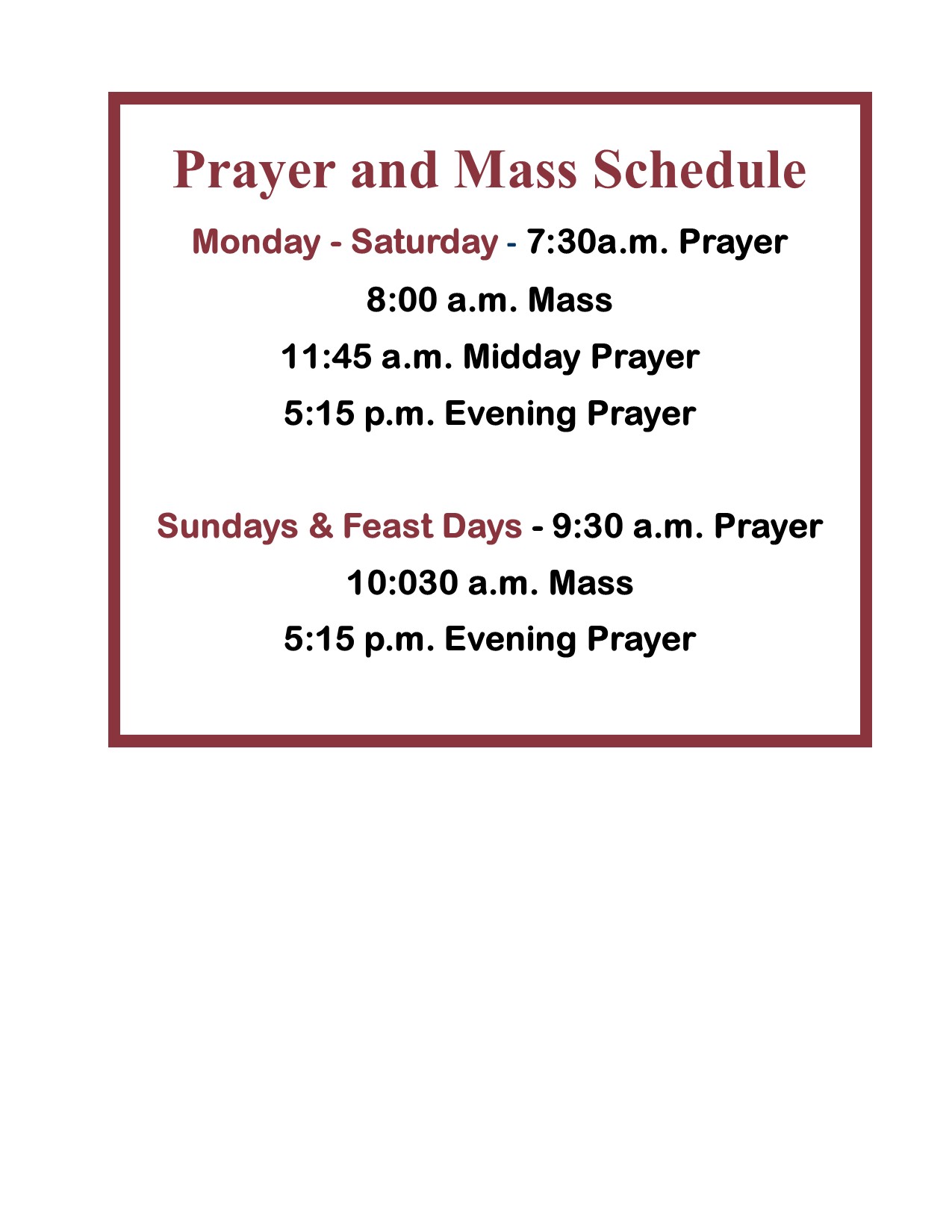
 Mass Schedule

Related Links

Copyright © 2026 · Benedictine Sisters of FL · Touching Lives Through Prayer and Service

Copyright © 2026 · Bendedictine Theme on Genesis Framework · WordPress · Log in