• Skip to primary navigation
  • Skip to main content
  • Skip to footer
Benedictine Sisters of FL

Holy Name Monastery
Founded 1889

Donate Now
  • Home
  • About Us
    • History
    • Being Benedictine
    • Benedictine Monasticism
    • Meet Our Community
    • Holy Name Academy-Alumnae
  • What We Do
    • Mission, Vision and Our Partners
    • Retreats
      • Invitation to Retreat
      • Accommodations
    • Volunteer Programs
    • Oblate Program
    • Spiritual Direction
    • Aqua/Hydroponics
    • More of Our Ministries
  • What’s Happening
    • Articles of Interest
    • Events
    • Commemorative Bricks
    • Newsletters
    • Brochures
    • Links
  • Support Us
    • Gifts of Support
    • Wish List
  • Stories Shared
  • Galleries
    • Photos
    • Videos
      • Benedictine Sisters of FL Videos
      • Other Videos
  • Contact Us

st. benedict

25th Sunday in Ordinary Time

September 22, 2025 by Holy Name Monastery Leave a Comment

This parable is challenging to explain but, it came from the mouth of God’s Son so it must be important for us to grapple with. What might Christ be saying to us? Here is what I heard – colored by the recent readings from chapter 2 of Benedict’s Rule on the Qualities of the Prioress. The Gospel tells us if we can’t be trusted in little matters we certainly cannot be trusted with great ones. If you are not a leader in a Benedictine community it may be easy to breeze through chapter 2 with an attitude of ho, hum – that’s for them – glad it’s not me.

To say that Benedict lays down high standards for the superior may be an understatement. He places the chapter on leadership qualities early in the Rule, only after he defines the type of monk he is writing for. So we know he is writing about the qualities of the leaders of the “strongest kind of monastics” – the ones who have chosen to live under a Rule and a monastic leader.

I am thinking Benedict left it unsaid in Chapter 2, but he sprinkled exhortations regarding leadership for all the members elsewhere in the Rule. Benedict echoes Jesus when he presses home the “the person who is dishonest in very small matters will also be dishonest in great ones.” It does not require a great leap to apply this maxim to all of us – the youngest in community to the eldest. It seems to me Benedict is waving a banner before our eyes of what we each need to be so that a call to leadership does not include an abrupt change of lifestyle. Benedict knew from his own experience that the leader’s role in community is time-limited. He himself had experienced the call to leadership and call to a hermit’s life. He must have foreseen, perhaps with a nudge from his twin sister Scholastica, that the monastic must be prepared in all aspects of her life to move in and out of leadership roles. If the individual member does not engage in a lifelong endeavor to develop the attitudes, skills and qualities that Benedict laid out for the superior, (guess what?) an election or appointment to a leadership position will not ipso facto endow a saintly disposition. If a person has not learned to be accountable for her own actions (or at least tried to be), and to be solicitous for the welfare of those in her charge (as a teacher, principal, supervisor, kitchen manager, sacristan, chief floor scrubber, head nurse….), an imposition of hands or a community blessing, or even the bishop’s blessing will not infuse saintliness: responsibility, accountability, compassion or mercy.

You may remember the lesson of the geese who fly in V formation? As each bird flaps its wings, it creates an uplift for the bird following it. Combined, the whole flock adds 71% greater flying range than if the individual geese flew alone. Whenever a goose falls out of formation, it suddenly feels the drag and resistance of trying to fly alone and quickly gets back into formation. When the lead goose gets tired, it rotates back into the formation and another goose flies at the point position. The geese in the formation honk from behind to encourage those in front to keep up their speed.

Note that Benedict does not let the “honkers” off the hook. In speaking of the qualities of the abbot, Benedict intersperses words to the “monks in the pews.” If the prioress is to call the community or individuals to account, the member must be docile to listen. If the prioress is to be a shepherd, the sheep have to be willing to be corralled and led. It’s impossible to lead if no one follows.

Benedict reveals his keen insight into human nature when he talks about the cast of characters who can be gathered into one community. He reminds the leader, and by inclusion, all the members, to “accommodate and adapt themselves to the character and intelligence of their Sisters.” In conclusion, Benedict smiles upon the leader consoling her that she does not lack resources. He quotes Psalm 33: “Those who fear God lack nothing.” In helping others, the leader achieves the amendment of her own faults. Benedict does not mention, but I bet he knew, the gratifying support the prioress or the abbot, (or leaders of any sort) daily receives in unpretentious, quiet affirmations.

Like the story of the geese, in monastic life when the leader gets sick or is shot down (with arrows or words), individual members drop out of formation to help, protect and reaffirm the leader until she is either able to again take the lead or fly in formation with the other members. Jesus reminds us in this parable that, in the end, it doesn’t matter when you came into community, even when you came into the church. The reward for putting your hand to the plow will be the same: a day’s work in the kingdom for God’s daily wage … the last, the same as the first. It’s been that way for all eternity. You’ll find when you get there (I’m guessing) that your view from the mansion God is saving for you is just as magnificent as that of Moses or Adam and Eve or your favorite saints – everyone’s mansion has a “throne-side view” of heavenly glory.


P.S.  World Mission Sunday

World Mission Sunday is scheduled for the weekend of October 18-19, 2025, and this year’s theme is “Missionaries of Hope Among All Peoples.” During this Jubilee Year of Hope, the theme is most appropriate, and all are called to engage in missionary work in one form or another, thereby bringing hope to those in despair. This annual worldwide collection helps to provide aid to 1,124 dioceses that cannot sustain themselves because they are too poor, young, or actively persecuted.


~Reflection by Sister Roberta Bailey, OSB


First Reading:   Amos 8:4-7         Second Reading:  1 Timothy 2:1-8
Gospel:   Luke 16:1-13
Continue Reading

Filed Under: Blog, Front Page, Homily Tagged With: Benedict, Christ, geese, God, Gospel, st. benedict, The Rule, World Mission Sunday

Summer Feast day for Saint Benedict

July 11, 2025 by Holy Name Monastery Leave a Comment

How many books written in the sixth century are still in print today? How many of those are in active, everyday use by tens of thousands around the world today — not only monks and nuns, but oblates and other lay people? The answer is one: The Rule of St. Benedict — what the author, whose feast day we celebrate this Thursday, called “this little rule that we have written for beginners.”

At the heart of his Rule lie the four guiding principles which are the foundation of daily life for the Benedictine Sisters of Florida. These four — community, prayer, service, and hospitality — can light the way to a deeper daily spirituality for anyone.

Community

Benedict understood that community, like family and friends, can be messy. Rooted in scripture, the Rule offers a cure: “No one is to pursue what is judged better for self, but instead what is judged better for someone else. To their companions, they show the true love of sisters or brothers…” How would your own world be transformed if this became the way of life for you and those around you?

Prayer

Benedict’s guidance for prayer might surprise you. “God regards our purity of heart and tears…not our many words. Prayer therefore should be short and pure…” Prayer, Sister Joan Chittister writes, “is meant to call us back to a consciousness of God here and now.” How would your day be transformed if it were laced throughout with short, simple prayer that opened your eyes to the Divine in your daily life?

Service

We often view work, especially work that benefits someone else, as a burden, something we have to do but would rather avoid. Instead, Benedict reminds us that work is a privilege and serving others is an honor — something that has been true since the day Jesus picked up carpenter’s tools, then laid them down to heal, to feed, and to save the lost. “…live by the labor of your hands, as our ancestors and the apostles did…” says Benedict. How would your workdays be transformed if you saw each as a gift from God and an opportunity to serve others in Jesus’ name?

Hospitality

Possibly the most challenging 11 words in the Rule are these: “All guests who present themselves are to be welcomed as Christ.” How would you welcome Christ if He came to your door today? How would our neighborhoods and towns, states and nations be transformed if each of us welcomed everyone everywhere as Christ?

As you can see, St. Benedict wrote something that is as practical today as ever. Our prayer for you, today and always, is that you find yourself in a loving community, that you infuse your days with prayer, that you cultivate a heart for happy service, and that you welcome even the most unlikely person as Christ. When you do, you will find more contentment than you can imagine.


Continue Reading

Filed Under: Events Tagged With: Community, Feast of St. Benedict, hospitality, Prayer, service, st. benedict, St. Benedict feast day, Summer Feast Day for St. Benedict

Let All The Earth Cry Out To God With Joy

July 7, 2025 by Holy Name Monastery Leave a Comment

(At the outset let it be understood that what follows may appear to be fiction but it is not. St. Luke shared this with me.)

One day, when the man of God Benedict was doing Lectio and pondering how to incorporate his set of values into his manuscript directed to his followers, St. Luke entered his reverie.  What an inspiration!  Luke and Benedict chatted with each other for a spell.  Look Ben, (said Luke) you’ve consulted the writings of the one you call the Master.  May I suggest you look at my record of the sayings of THE Master.  Compare it with the 10th chapter of my Gospel. Sure enough!  Very many of our special Benedictine values are put forth by THE Master Jesus.  For instance:

+ A SPIRIT of POVERTY: take nothing with you (is how Jesus puts it) No money bags, no suitcase, no canvas bag or pretty tote and no sandals.  Or as you say it in your Rule: “No one may presume to give, receive or retain anything as her own, nothing at all, in short not a single item … no one shall presume ownership of anything. “

+ A SENSE of STABILITY: Jesus advises his followers: Into whatever house you enter, stay in the same house; don’t be moving from one house to another.   Benedict, you describe the first kind of monastics called cenobites.  From what you say, I sense this may be your preferred type of members.  “Those who belong to a particular monastery, where they serve under the rule of a superior.”

+ Further, Benedict, you expect these cenobites to follow Jesus’ way of life, personally and communally, practicing a SPIRIT of SIMPLICITY and ACCEPTANCE of WHATEVER IS AVAILABLE:  In your words:  Eating and drinking whatever is offered to you; whatever is set before you.

Benedict, my friend, you have an obvious understanding of human nature. Could we attribute that to your twin sister’s influence?  She took her turn as cook for her group of women whom she loved as ardently as you looked after the rough and tough gang of men that lived with you. It’s evident in your words: Taking turns serving one another, using an unvoiced system of gestures when anything is required.  And (yes, PLEASE God) it will save you a heap of trouble if you designate a weekly reader to proclaim the Holy Word throughout the meal.

In studying your Rule, Benedict, it seems to go without saying that there will likely be no harmony in the group unless the members all strive to AVOID EVIL and CLING to PEACE.   I (that is Luke) remind my readers: Remember what Jesus said (It’s right there in verse 9). “If peace is not present in the house where you find yourself, go out into the streets and shake the dust from your feet and leave that town.”  When you feel evil rising in you, get in touch with the cause – shame the devil – leave the occasion of sin.

In this weekend’s second reading St. Paul reminds us that we bear the marks of Jesus in our body.  Jesus conquered evil so that we, too, might be part of the new creation. We rejoice with the disciples, reveling as they did in first fervor.  We rejoice because “our names are written in heaven.”  Sing with Isaiah in the First Reading: We rely on the gentle care God has for us: we shall be carried in God’s arms, comforted as a mother comforts her child and fondles the child in her lap and delights in nursing the babe.  That’s the joy that can erupt in the words of tomorrow’s responsorial psalm: LET ALL THE EARTH CRY OUT TO GOD WITH JOY.

~Reflection by Sister Roberta Bailey, OSB


Let us remember each other in prayer on Friday, July 11th, the Summer feast of St. Benedict.


First Reading: Isaiah  66:10-14                     Second Reading: Galatians 6:14-18
Gospel: Luke 10:1-12, 17-20
Continue Reading

Filed Under: Blog, Front Page, Homily Tagged With: Benedict, Gospel, Jesus, poverty, sense, Spirit, st. benedict, St. Luke, stability

St. Benedict Feast Day

July 10, 2024 by Holy Name Monastery Leave a Comment

Summer Feast day for Saint Benedict

How many books written in the sixth century are still in print today? How many of those are in active, everyday use by tens of thousands around the world today — not only monks and nuns, but oblates and other lay people? The answer is one: The Rule of St. Benedict — what the author, whose feast day we celebrate this Thursday, called “this little rule that we have written for beginners.”

At the heart of his Rule lie the four guiding principles which are the foundation of daily life for the Benedictine Sisters of Florida. These four — community, prayer, service, and hospitality — can light the way to a deeper daily spirituality for anyone.

Community

Benedict understood that community, like family and friends, can be messy. Rooted in scripture, the Rule offers a cure: “No one is to pursue what is judged better for self, but instead what is judged better for someone else. To their companions, they show the true love of sisters or brothers…” How would your own world be transformed if this became the way of life for you and those around you?

Prayer

Benedict’s guidance for prayer might surprise you. “God regards our purity of heart and tears…not our many words. Prayer therefore should be short and pure…” Prayer, Sister Joan Chittister writes, “is meant to call us back to a consciousness of God here and now.” How would your day be transformed if it were laced throughout with short, simple prayer that opened your eyes to the Divine in your daily life?

Service

We often view work, especially work that benefits someone else, as a burden, something we have to do but would rather avoid. Instead, Benedict reminds us that work is a privilege and serving others is an honor — something that has been true since the day Jesus picked up carpenter’s tools, then laid them down to heal, to feed, and to save the lost. “…live by the labor of your hands, as our ancestors and the apostles did…” says Benedict. How would your workdays be transformed if you saw each as a gift from God and an opportunity to serve others in Jesus’ name?

Hospitality

Possibly the most challenging 11 words in the Rule are these: “All guests who present themselves are to be welcomed as Christ.” How would you welcome Christ if He came to your door today? How would our neighborhoods and towns, states and nations be transformed if each of us welcomed everyone everywhere as Christ?

As you can see, St. Benedict wrote something that is as practical today as ever. Our prayer for you, today and always, is that you find yourself in a loving community, that you infuse your days with prayer, that you cultivate a heart for happy service, and that you welcome even the most unlikely person as Christ. When you do, you will find more contentment than you can imagine.


Continue Reading

Filed Under: Prayer Tagged With: Community, hospitality, Prayer, service, st. benedict, St. Benedict feast day

If You Wish, You Can Make Me Clean

February 13, 2024 by Holy Name Monastery Leave a Comment

We each have our own variant of leprosy, don’t we?  With some it’s visible on the outside; for others, it thrives on the inside.  Our faults: scaly or hidden are made obvious by our actions, our facial expressions, our tone of voice.  And, there are those who harbor their leprosy – deep in their feelings and heart – a gut ache or pain caused by stressed nerves.  Yes, we do this even when our leprosy is old and scarred and has been in our gunny sack for more years than we can count.  You know those kinds of wounds that we take out every once in a while to nurse and keep alive.  We rehash their story privately or in unrelated situations when some word or sound, or maybe a smell reignites the fuse.  We discover that there’s an ember that springs to flame that we didn’t even realize was there all along.  But Jesus has been watching it. He’s waiting for us to reach out and plead: “If you wish, you can make me clean.”

When we do, what is Jesus’ instruction?  “Go, show yourself to the priest.”  (Here he’s not talking about the Sacrament of Reconciliation.)  This is Jesus’ way of asking us to bring our faults into the light of day, to expose them so they can be zapped with the Divine Presence.  St. Benedict speaks of submission to the will of another, humility, confession of faults and public admission of mistakes.  He quotes the psalmist – as he often does – when he says: “I will report my faults to the Lord.” (PS 31).  Benedict encourages the members to admit their fault “of their own accord and make satisfaction.”  But, he’s not naïve – he knows there will be occasions when this doesn’t happen.  You know what he says: “Be subjected to a more severe correction.”  Now that may seem irrelevant to the story of Jesus and the man with leprosy.  But it seems pretty obvious (to me) that Jesus did not go looking for the man.  The man called out to Jesus: “If you wish, you can make me clean.”  Benedict, (what a wise man!) knew there’d be more sensitive souls in community, personalities who’d need more solicitous care, compassion and consideration.  To this one, Benedict advises: “reveal (this hidden fault) “only to a spiritual guide who knows how to heal her own wounds as well as those of others”, (and equally important) “without exposing them and making them public.”

We don’t know how long this man with the leprosy had been following Jesus.  How many miracles had he witnessed before he felt compelled to step forward and the words escaped his lips: “If you wish, you can make me clean?”  Had he seen Jesus’ interaction with the woman caught in adultery or heard the story of the good Samaritan or good Shepherd?  Was it desperation that made him cry out: “If you wish, you can make me clean”?  Was he burdened with feelings of guilt for having leprosy and causing the estrangement of his family and friends since he was bound by law to “make his abode outside the camp.”? (Leviticus1:46) Did the rest of crowd step back when he moved forward to be heard?  This was a “gutsy” young man!  He was stepping into the light, drawing attention to himself and his leprosy.  He was admitting publicly that he was not clean.  He risked being shunned AGAIN!  But faith won out: “If YOU wish, YOU can make ME clean.”

As we enter the Lenten season (this week) we pray: “Jesus, if you choose, you can make me clean.”  I do want to be clean; I am ready to be made whole. Don’t look only at the faults I am aware of.  I trust that you can make the whole of me clean in your eyes.  It doesn’t matter whether or not we raise our voice to be heard above the crowd: “If you wish, you can make me clean.” It may be, that someone pushes us forward, “Now’s a good time; ask him now – He can do it!”  Do you believe in intercessory prayer?  Do the General Intercessions make any difference in the lives of those we name?   “I turn to you, Lord, in time of trouble, and you fill me with the joy of salvation. … for, a great prophet has arisen in our midst: God has visited his people.”

~Reflection by Sister Roberta Bailey, OSB
 

   Ash Wednesday, February 14, Mass and distribution of Ashes at 7:30 a.m.

   May you enjoy a happy Mardi Gras on Feb. 13 … and an unusual Valentine’s Day gift of the opening of Lent: a love feast extraordinaire as God opens his arms to work with you on keeping of resolutions that will shape a new you this per-Easter season.

   Celebrate with us on February 28th the anniversary of 135 years since the day the Benedictine Sisters arrived in FL from PA.  God bless all who have touched our lives with their prayers and gifts of time, talent and financial support. 

 Prayers on Sunday when we had our monthly Recollection Day … a quiet day of prayer, Holy Hour and Evening Prayer.  God bless you each and all with good health, much happiness and abundant peace!


First Reading:   Leviticus 13:1-2,44-46         Second Reading:  1 Corinthians 30:31-11:1
Gospel:   Mark 1:40-45
Continue Reading

Filed Under: Blog, Front Page, Homily Tagged With: Benedict, if you wish you can make me clean, Jesus, leprosy, Mark, st. benedict

Because you were faithful in small matters…

November 20, 2023 by Holy Name Monastery Leave a Comment

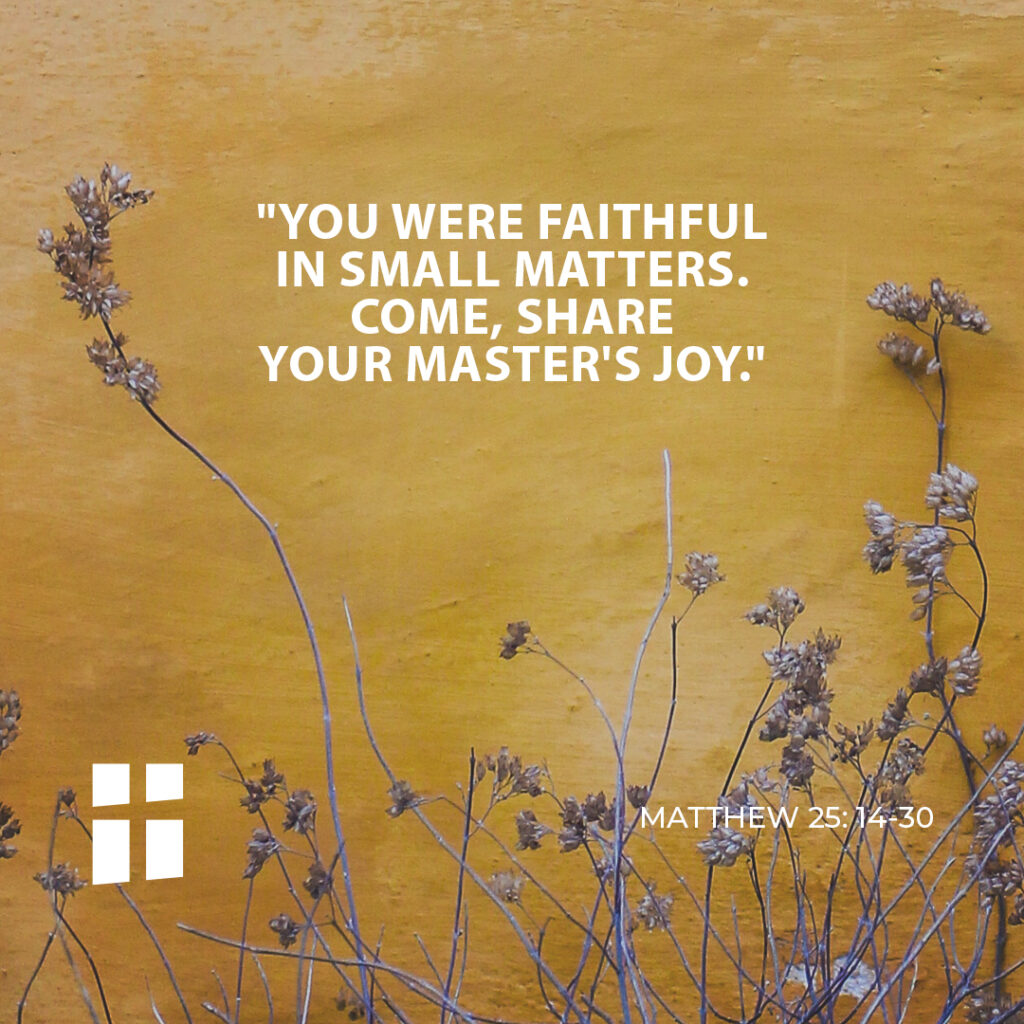
Because you were faithful in small matters…

come, share your Master’s joy.

Like the Master in this Gospel, St. Benedict teaches us “journey lessons.”  We sense a journey motif from the opening words of Benedict’s Rule when he bids us: “Listen! The labor of obedience will bring you back (“coming back” requires a journey, doesn’t it?)  “Let us get up then (he says) at long last, for the Scriptures rouse us when they say: “It is high time for us to arise from sleep… (come from the land of your dreams) …run while you have the light… go out to seek workers in the multitude of the people …”.  Listen to Benedict: “moving on in your journey of faith, (and life in the monastery) “You will say, ‘Here I am Lord’.”   Then he tells us how to prepare for our journey: “Clothed with faith and the performance of good works, let us set out on this way, with the Gospel for our guide…. Be just in all your dealings, speak the truth from the heart and do not practice deceit or listen to slander.”

By the time Benedict wrote Chapter 67 one can tell he’s had some experience with monks who journeyed far from the home monastery.  We know that Benedict, in his youth, had escaped “big city life.”  So, he wanted to protect his monks from the evils and temptations of the prevailing society.  Those at home are to remember the absent ones in prayer for their confrere’s safety and protection from temptation.

I have to smile when I read what Benedict cautions next.  He certainly knew human nature: “No one should presume to relate what was seen or heard outside the monastery.”  Benedict didn’t want stories of the world to creep in and cause dissension or dissatisfaction to rankle or upset his community.  We need to be on guard that we balance charitable interest in each other versus the drive to know every intimate detail about what was seen or heard on the other’s journey.

Benedict is solicitous of his monks sent on a journey that they appear neither embarrassingly shabby nor be clad in “rich folks” clothing.  He charges the superior with checking that hemlines are a decent length and the members’ clothing be suited to the weather.   And, it’s obvious that times were different when Benedict walked the earth.  He makes provision that the members be LOANED underwear from the wardrobe that is to be laundered and returned after the trip.

In line with his admonition to pray always, Benedict reminds his monks when they are on a journey to keep an eye on the sun and listen for the bells from neighboring abbeys announcing prayer times. Benedict reminds them though at a distance too far to join the community, they should “observe the prescribed hours” as best they can.  Thus, probably began the custom of the Angelus.

The Rule closes with this journey-question: “Are you hastening toward your heavenly home?  Then keep this little rule … as you set out for loftier summits of the teaching and virtues we’ve mentioned.”  Benedict, in his own unique way, shares Paul’s message to the Philippians: “Whatever you have learned or received or heard from me or seen in me—put it into practice. And the God of peace will be with you.”   Benedict adds this promise: “Under God’s protection” (together) we will reach our heavenly home.”  That’s the same promise Jesus makes to his trustworthy followers: Because “You were faithful in small matters … come, share your Master’s joy.”

~Reflection by Sister Roberta Bailey, OSB


Have a pleasant Thanksgiving… give thanks for all that has been and open your heart to all that will be…give another a reason to rejoice on this day.


First Reading:   Proverbs 31         Second Reading:  1 Thessalonians 5:1-6
Gospel:   Matthew 25:14-30
Continue Reading

Filed Under: Blog, Front Page, Homily Tagged With: Benedict, God, Jesus, Master, monastery, small matters, st. benedict, The Rule

  • Page 1
  • Page 2
  • Page 3
  • Go to Next Page »

Footer

Prayer / Newsletter / Info

 Contact Info

Benedictine Sisters of Florida

PO Box 2450
12138 Wichers Road
St. Leo, FL 33574-2450
(352) 588-8320
(352) 588-8443

 Mass Schedule

Related Links

Copyright © 2026 · Benedictine Sisters of FL · Touching Lives Through Prayer and Service

Copyright © 2026 · Bendedictine Theme on Genesis Framework · WordPress · Log in