Articles of Interest
Join the Sisters in wearing orange for gun violence

“Your way of acting should be different from the world’s way.”
 Last week we heard Jesus chastise his disciples for their arguing about who should be next in the line of succession. Today they take offense because they perceive a stranger as a direct threat to their exclusive calling. Their attitude is clear: “You have no right; He gave us that job.” Envy and jealousy raises its ugly head.
We are witnessing how Jesus deals with this ages-old human condition. We saw it first in the story of Cain and Abel. In our own lives we may have been victim or culprit of it with our siblings, classmates, spouses or friends. St. Benedict guards against inroads of it in describing the “Qualities of the Abbot” in the “Tools of Good Works” and the “Steps of Humility,” the distribution of labor and his directives about property and gifts. The psalmist applies the trait to God, and St. Paul says he experiences “a godly jealousy.” We sing of in it the hymnody: “Our God is a jealous God.” And, here in this Gospel we hear the disciples grousing (Benedict calls it “murmuring”) – “How come they are trying to use the gift you gave to us?”
So far the disciples have missed the point of Jesus teaching. It’s about true discipleship; how we relate to each other. Jesus warns us that true followers are not to “cause little ones to stumble.” He’s been saying all along that who will be included in the Kingdom is not within our authority, it’s not even within our concern! Jesus makes it quite clear – whoever is not against us, is for us.
In this instance, Jesus immediately turns the tables on the disciples. He warns them that they are the ones in danger of doing harm. It’s as though Jesus says, “The problem is not those folks, guys. Don’t worry about them; they are not the problem. Rather, look at yourselves. Are you a stumbling block?” His message is clear – finger-pointing will get us nowhere with Jesus. Jesus couldn’t be more clear with his vivid example of drowning to get his point across. “Better to be thrown into the sea with a millstone around your neck than to do harm to “these little ones.”
Jesus warns us that scrupulosity about others’ behavior, or a judgment about their motivation (especially without all the facts) can cause us to stumble. He is trying to help us understand that no one is an exception to His teaching. We can’t say: “That doesn’t apply to me; I don’t have to listen to what He is saying. And, anyway, I’ll be forgiven.” The old axiom holds true, “What’s sauce for the goose, is good for the gander.”
Our Creator knows we have been endowed with the capacity to make comparisons, weigh pros and cons, and draw conclusions that seem to just “pop into our heads.” Jesus is warning us to be on guard about being “judgmental” – milking and waxing self-assigned motivations to others. We can spread faulty conclusions built on our limited perceptions. Jesus cautions us to turn the focus back to our own behavior. Jesus challenges us to a self-examination. How authentic is our way of thinking and acting? Do we spend more time judging another’s behavior and spreading ill-will than we do in Lectio looking at our part in the cultivation of evil in the world? What are the stumbling-blocks, the mind-fields we scatter that unwittingly impedes the spread of the Good News? This gospel incident is a story of commitment. The people to whom Jesus is talking are his own disciples – people who have agreed and want to follow him. The metaphor explains just how serious sin really is. Jesus is asking, “Just who do you believe? Do you believe in me? Whose ways do you imitate?”
We were created so that God can pour out blessings upon us, and through us. In gratitude, we owe it to God, and to others, to pass on the good news of the great inheritance that is ours.
So how goes it with you? Does your practice of faith, your living of Benedict’s Rule challenge others? Ages ago Isaiah said, and St. Paul repeated, “My thoughts are not your thoughts, neither are your ways my ways.” [Isaiah 55:8; Ephesians 3:20] Benedict offers the same life guideline in RB Chapter 4:20, the Tools of Good Words: “Your way of acting should be different from the world’s way.”
This week we do well to ask ourselves (refraining from pointing a finger at anyone else – exposing three fingers pointing smack dab back at self, right where the blame belongs): Do my ways invite others to join the church, the community? Does my attitude give others the benefit of the doubt; the attitude that I wish others’ granted me? What do I do or say that may cause seekers or guests or volunteers to step away, give up on the idea of ever coming again or supporting the community, put off joining RCIA or considering a call to religious life? What could I, what could we, do differently? Ponder the closing sentences of the first reading, words attributed to Moses: “Would that all people of the Lord were prophets! Would that the Lord might bestow his spirit on them all.” [Numbers 11:29]
~Reflection by Sister Roberta Bailey, OSB, Prioress

Let us join in prayer for a swift, peaceful, and just resolve for persons fleeing their home countries. So many levels of conflict and confusion may make us feel helpless … but we believe firmly that for God ALL THINGS are possible. And we learned that God is depending upon His creatures to do their part. This morning in his homily our chaplain noted: “Each of us is one of us.” Helen Keller is quoted: “I am only one; but still I am one. I cannot do everything, but still I can do something. I will not refuse to do the something I can do.” (Helen Keller) Something to think about – what IS my part?
Heartful gratitude to those who contributed to our collection for the people of Haiti devastated by earthquake damage. With your generosity, and the Sisters contributions from their personal monthly allowances, plus a “round-it-up” donation from our community funds, we will be sending $2000 to the St. Luke Foundation – a direct services agency headquartered in Miami, FL
God bless!
First Reading: Numbers 11:25-29 Second Reading: James 5:1-6
Gospel: Mark 9:38-43,45,47-48
Continue ReadingDo the best you can…

What Were You Arguing About on the Way?
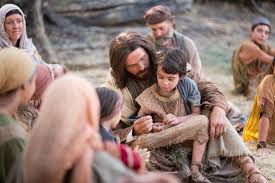 Jesus and his disciples have entered a private home where they’re welcomed by their hostess. They’re settled comfortably on cushions on the floor. All is quiet until Jesus asks: “What were you talking about out there on the road?” He knew exactly what they were discussing: who’s next in the line of succession? They are like children who don’t want to tell their parents what they’ve been talking about. Jesus doesn’t push for an answer. He won’t humiliate or embarrass them. Instead, He beckons forward a child. Why a child? Well, a child can’t make you more important in the eyes of the world. However, a child can teach you much about ministry!
The disciples probably recalled the incident when they started to shoo the children away. Jesus had chided them saying: “Let the children come to me.” I suspect Jesus is so comfortable with children because of their innocence, uncluttered faith, and their often startling way of exposing the bold truth; saying it just like it is. Jesus sees the inherent worth and value in everyone and, therefore, welcomes children just as they are. It is not a detached encounter that Jesus has with the child. He makes the child an active participant in his lesson. He took the child, he placed the child among them, and he put his arms around the child. In fact, this child, whom society deemed as lacking in worth, was of so much value to Jesus that he moved the child from the margins to the center. Living on the margins, children can be forgotten, ignored and left to figure out the mysteries of life on their own. You’ve heard the quote “it takes a village to raise a child.” It’s true – it is in the center of life that children can receive the love, support, and encouragement they need to thrive and grow to become productive, good-hearted, trustworthy, faithful citizens.
Children growing up today in our country are in precarious, fragile, and dangerous places. They have music, popular culture, technology, violence and sexuality sown into the fabric of their lives in ways that to date are unparalleled. There is perpetual, uncontrolled text messaging and exposure to other social media, Nintendo, Wiis, X-boxes, CDs and peer pressure to participate in dangerous activity. Today, maybe more than ever, children are abused, snatched, neglected (or the opposite over-protected by “helicopter” parents) or labeled with an alphabet of disorders (ADD, ADHD, dyslexia, dyscalculia, dyspraxia, dysgraphia) and hastily placed on medication without proper diagnosis.
There are latch-key kids, under-fed, lonely, ignored children and many are victims of inadequate health care. Now, more than ever, vulnerable children need to be embraced by the church just as Jesus embraced children. If the church leaves out children, it is leaving out a face of God. If policy-makers leave out children, they place their own future in jeopardy – forgetting who it is that is going to be caring (or not) for them in their sunset years.
Jesus is talking about welcoming the one who is beyond the circle, one who needs a welcome. So, here’s the question Jesus is asking us: Who are the people without power or status in our society? Do we serve them willingly? At the deepest level, Jesus’ idea of service reminds us that none of this is about us! It’s not about our ego. It’s not about how much we give, how much we work, how many hours we minister, whose ministry is more important. Service is about absorbing the sufferings of our world by sharing our life – our time, our resources and our gifts. It’s building-up the other so that she or he in turn is enabled to be Christ to others.
Jesus asked his disciples: “What were you arguing about on the road?” Every time we travel with Jesus we are “on the road.” Because Jesus himself is the Road: he is the Way, the Truth and the Life. We are being asked what we are doing while on the Way. The disciples refused to answer and kept silent. Will you be a silent one? Or will you speak out on behalf of the needy ones? The ones Benedict is referring to in RB 72, when he advises: “Anticipate one another in honor, not following what you consider useful for yourself, but rather what benefits the other.”
~Reflection by Sister Roberta Bailey, OSB
First Reading: Wisdom 2:12,17-20 Second Reading: James 3:16—4:3
Gospel: Mark 9:30-37
Continue ReadingWho Do You Say That I Am?
 This is the same Gospel story we will hear again in two weeks: today it’s Mark’s version; later this month we will hear the evangelist Luke’s memory of this same event.
We read: Once when Jesus was praying in solitude, and the disciples were with him, he asked them, “Who do the crowds say that I am?” They said in reply, “John the Baptist; others, Elijah; still others, ‘One of the ancient prophets has arisen.’” Then he said to them, “But who do you say that I am?” Peter said in reply, “The Messiah of God.” He rebuked them and directed them not to tell this to anyone. (But, what follows He agreed I could share with you. It’s part fact; a good bit fantasy – or is you might say, prayer.)
The early morning sky held promise of a beautiful sunrise. I was sitting by the lake when Jesus quietly joined me. I sensed He was inviting me into an in-depth conversation. Let’s walk a bit for our heart-to-heart exchange. Notice all the lovely things God places in our path: the trees and plants, the squirrel scurrying along clutching an acorn so big the weight is making balance a challenge. Do you hear the gleeful voices from nearby – the happy sounds of children at recess? Listen closely to the clear shrill song from above of birds welcoming the new day.
(I suggest to Jesus) “This looks like a good spot, let’s sit a spell.” Jesus is in a pensive mood. He sits quietly, pondering, staring at the water. Turning to me (and to you) with a quizzical look on His face, He asks: “What are people saying about me? Who do people say that I am?” Quiet surrounds us as I ponder my tumbling thoughts. I’m always curious to know what others say about Jesus. But, this time His question invites a personal response. At first I echo what Peter said: “You are the Messiah of God.” Probing deeper, I realize that for me, Jesus is everything. He knows me intimately. But with this question he’s asking how well I know Him. The thoughts of my heart tumble around. I turn to Him and take a hesitant chance: “Let me ask you this: Who do YOU say that I am? Why do you love me so much?” Without a second’s hesitation, Jesus smiles, shakes his head and touches my heart with his response. I needed that warm fuzzy. His message is what I will carry, treasure, nurture in all the days that follow.
May I suggest to you: Today be brave; in your private time with Jesus turn his question back to Him: “You, who do you say that I am? Why do you love me so much?” Sing your own tune for the words of our Responsorial Psalm: “I love the Lord because He heard me; because He inclined His ear to me the day I called … and freed my eyes from tears and my feet from stumbling. Alleluia!”
~Reflection by Sister Roberta Bailey, OSB, Prioress
Have a pleasant, stress-free week
Stay safe – be healthy – know peace!