• Skip to primary navigation
  • Skip to main content
  • Skip to footer
Benedictine Sisters of FL

Holy Name Monastery
Founded 1889

Donate Now
  • Home
  • About Us
    • History
    • Being Benedictine
    • Benedictine Monasticism
    • Meet Our Community
    • Holy Name Academy-Alumnae
  • What We Do
    • Mission, Vision and Our Partners
    • Retreats
      • Invitation to Retreat
      • Accommodations
    • Volunteer Programs
    • Oblate Program
    • Spiritual Direction
    • Aqua/Hydroponics
    • More of Our Ministries
  • What’s Happening
    • Articles of Interest
    • Events
    • Commemorative Bricks
    • Newsletters
    • Brochures
    • Links
  • Support Us
    • Gifts of Support
    • Wish List
  • Stories Shared
  • Galleries
    • Photos
    • Videos
      • Benedictine Sisters of FL Videos
      • Other Videos
  • Contact Us

Mark

We are called to BE the Good News

November 18, 2024 by Holy Name Monastery Leave a Comment

Last weekend we observed Jesus as he sat in the temple quietly taking in what was going on around him.  We heard His remark about the contributions being made to the temple treasury.  We saw what he saw.  A widow, as unobtrusive as she could be, slipped (almost unnoticed) among the other donors to deposit her “two cents” that settled softly with the rich folks’ paper money. And if you’ve read Mark’s gospel continuously from that incident to today’s Gospel you also know Jesus’ prediction about the destruction of the Temple, his teaching about the cost of discipleship, the woes that will accompany the end times and Jesus’ instruction to his disciples about the need for watchfulness so that they will not be caught unprepared for the final judgment.

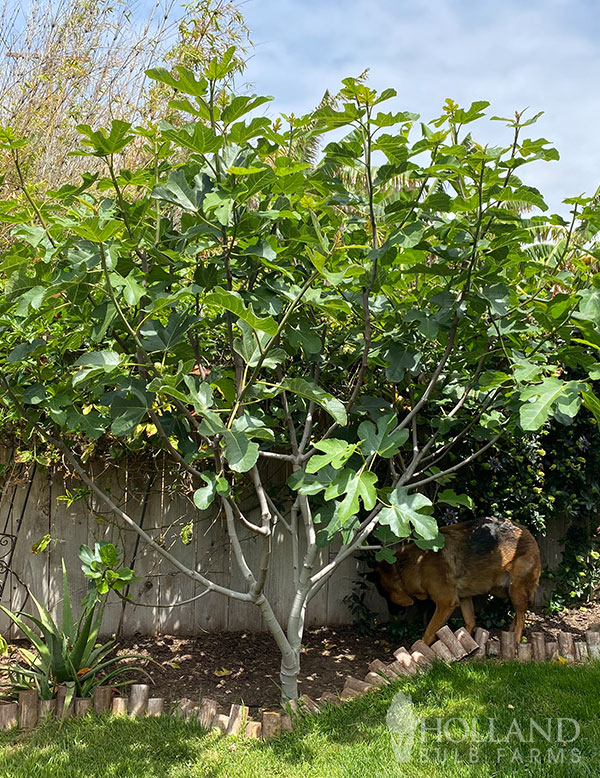
Jesus says: “Learn a lesson from the fig tree.”  Jesus could have said citrus tree or olive tree.  They grew nearby, too.  But, he says “fig tree” and happily for us we have fig trees to observe.   When the branch becomes tender and sprouts leaves, we know that another season of fruit is near.

After Jesus tells the parable of the fig tree, He gives several brief parables. We know that Jesus’ words are not spoken to frighten his disciples, nor should they frighten us.   The prophetic Word of God is as sure and secure as the rest of His message.  It is offered to prepare us for the changes we will experience during our lifetime and at the end time. Our consolation and hope are found in the lasting nature of Jesus’ words and God’s never-ending love for us.

When you see the things happening that Jesus talks about, know that he is near, at the gates.   “But,” says Jesus, “of that day or hour, no one knows, neither the angels in heaven, nor the Son, but only the Father.”    Then He assures us: “Heaven and Earth will pass away, but my words will not pass away.”

So, how, as followers of the Jesus, do we prepare in the face of struggles not unlike our times as community and as a nation?  How well do you read signs?  Can you train yourself to be more observant of the signs?  Do you naturally notice signs in nature?  Road signs?  How well do you read nonverbal body language?   Do you work to sensitize yourself to recognize everyday signs?  How do you heighten your sensitivity to spirit signs?  Do you use Scripture, the Rule, the example of a favorite saint? What helps you to listen more keenly to your heart in the quiet of the night when sleep eludes you?  Maybe your quiet time is walking, working or driving along a familiar road; passing through the hall at a leisurely pace; setting the table, readying yourself for communal prayer in the chapel – do you hear God’s whisper in your heart?

Cultivation of the inner spirit helps prepare us to see the direction of the cultural winds we face, whether agreeable or frightening.    God does not usually shout to us in fury or in a tumultuous hurricane.  Much of the time God speaks softly.  So stay tuned.  In the face of cultural garbage and shifting government structures or a changing church, we steady ourselves not to be tempted to hoard food and possessions.  We guard against the temptation to build a hermitage and hide out.  We pray to be strengthened to stay in the fray.  Many things will just happen in our lives – things not scheduled by the calendar, or watch, or clock or a computer “ding”.  With all the scheduled things we have to do, we are called by today’s Gospel to keep our hearts attuned to the significant things that just happen.

How can we do this day in and day out and year after year?  Can we do it by heeding Jesus’ directive to the disciples who accompanied Him in the garden the night before his death:  Stay here, watch and pray.   Watch: ask for God’s Wisdom to let us see God’s perspective so we discover our moment within our cultural context.  And, pray!  Remember, “to pray” is not simply to read books about God, spirituality or prayer, or to think about those topics.  To pray is simply – to pray!  We don’t even have to start the conversation.  Simply let God in.  Let us strive to keep in mind that we are called not so much to do the Good News.  We are called to be the Good News.

~Reflection by Sister Roberta Bailey, OSB


First Reading:   Daniel 12:1-3         Second Reading:  Hebrews 10:11-14,18
Gospel:   Mark 13:24-32
Continue Reading

Filed Under: Blog, Front Page, Homily Tagged With: disciples, fig tree, God, Good News, Jesus, Mark, Widow

It is a story of commitment

September 30, 2024 by Holy Name Monastery Leave a Comment

The people to whom Jesus was speaking in this Gospel would have understood His references a little more clearly than we do.  The teaching is not meant to be taken literally.  It is a metaphor.   Many of the people to whom Jesus was speaking were farmers.  Injuries to hands, feet and eyes were the kinds of injuries farmers incurred frequently. So, they would not have flinched at the descriptive injury. Also, in Jesus’ time the idea of losing an offensive body part to prevent oneself from falling into sin was a common type of proverbial saying. Stories were also written with this underlying thought. The entire story of Oedipus is an example. Oedipus removes his own eyes rather than look at the children he begot with his own mother.  He did not know her to be his mother, but his lack of knowledge did not make him innocent.  Nor did he know the man he had slayed at the crossroads was his father.  Jesus’ audience would have fully understood these sayings as metaphors.  We may cry: “I didn’t know!”  That may be our reason; but it is no excuse.

So, what was Jesus saying metaphorically?  It is a story of commitment. The people to whom Jesus is talking are people who have agreed and want to follow him.   I guess one can say Jesus is asking them, “Just what do you believe? Do you believe in me as the Messiah? Do you believe in God’s way or do you believe in the ways of the world?”

How do we fare today? What do we believe about our calling to discipleship? To conversion of life? It is easy to stay committed when the times are easy. It is easy to say, “Yes, Lord, I believe,” when we are not asked to do anything out of the ordinary. But, how about when the times are tough? What do we believe when we are asked to do something we really don’t want to do? How do we respond when we are asked to take an unpopular stand?  To side with someone who is being ridiculed?  To speak our mind when we suspect it will be a minority position?  The real question for us is: Is following Jesus Christ the most important thing in my life? Or does something else take its place when being a Christian is not convenient?

Jesus calls us to a radical faith. How do we make credible the expression “radical hospitality?”  We are called to be radical not “radical” as in being crazy, but radical as different, radical as turning the world’s understanding of life upside down. Jesus is calling us to a radical expression of all aspects of our faith.  Jesus calls us to love our enemies when the world says destroy – bomb them, shoot them, destroy their reputation.  Listen to Jesus who says the greatest gift we can give is our life for the sake of another.  Life in this sense can often mean the gift of our time, our attention, our care and concern in concrete, real-time actions. These are radical ideas for this world. Alone we cannot hope to be that generous.   However, we know that with God all things are possible. Jesus has set the example.  He leads the way; He models the behaviors we are to imitate. His is an attitude of tolerance, compassion and acceptance of the gifts of others.  Jesus challenges us to be humble, inclusive and tolerant.

Jesus offered his life for us and He taught the twelve how to do the same. They scattered and hid at first, but eventually they got it right. They were not perfect, but they believed. Jesus is calling us to do the same. We may not always get it right; sometimes we falter.  There will be those times when we do get it right. At those times we humbly say, “Thank you, Lord – to You be the praise – that in all things God may be glorified!”  Ponder the closing sentences of the first reading, words attributed to Moses: “Would that all people of the Lord were prophets!  Would that the Lord might bestow His spirit on them all.”

~Reflection by Sister Roberta Bailey, OSB
 

Our chaplain will be in Lourdes and Ireland from October 4-18.   There will be no Mass at the monastery during that time.  The Sisters and our faith community will attend Sunday Mass (October 6 and 13) in one of the parishes.     May God bless Fr. John on pilgrimage and his family visit to his homeland. 


First Reading:   Numbers 11:25-29         Second Reading:  James 5:1-6
Gospel:   Mark 9:38-43, 45, 47-48
Continue Reading

Filed Under: Blog, Front Page, Homily Tagged With: apostles, commitment, Gospel, Jesus, Mark, radical hospitality, stories

” Your actions speak so loud I cannot hear what you are saying.” – Ralph Waldo Emerson

September 9, 2024 by Holy Name Monastery Leave a Comment

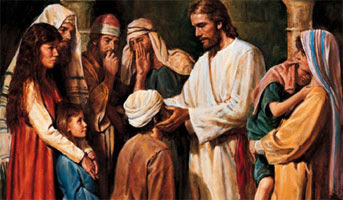
In this Gospel story we find clues that promote our understanding of the sacramental “laying on of hands” and the sacredness of human touch.   We are struck by the physical means Jesus used to heal the man’s lack of hearing and speech:  the use of spittle and touch – both discouraged in today’s post-COVID “stay safe” world.  Jesus cannot explain to the deaf man verbally what He is about to do, so He uses a rough form of sign language to communicate His intentions. First, He sticks His fingers in the man’s ears to let him know that He is going to do something about his deafness. He spits on His finger and touches the man’s tongue to let him know that He is about to restore his speech. This might sound gross, but it’s what Jesus does!  And, it awakens faith in this man’s heart.

After touching the man, Jesus looks toward Heaven. This act serves two purposes. First, it communicates to the deaf man the origin of the healing.  Secondly, the act of looking toward Heaven demonstrates Jesus’ dependence on his Father. As Jesus raises his eyes heavenward, he “sighs”.   Of course, the deaf man cannot hear the sigh, but he can see Jesus’ expression. And, it speaks volumes, more than words could say: “I care about you and what you are going through!”  Jesus says one word, “Ephphatha”- “be opened”. When Jesus says this, the man’s hearing is restored and his tongue is loosed. He can hear and speak! What a miracle! One command from Jesus and his life has changed forever! The witnesses declared: “He has done all things well!”

This week we are invited to make an honest inventory of our true needs.    Have I found contentment? Am I close enough to God to receive guidance and strength? Have I secured peace of heart and mind? Deciding what we lack is the first step in securing it. Only then can we express our needs to Christ who has said: “Ask and you shall receive.”  But, remember God-time may not match our unspoken expectation.  When God takes time answering our prayers, it’s not because we’re not heard or that God doesn’t already know our needs.  God is giving us the gift of time to recognize what our true needs are.

One of the greatest weaknesses of the human heart is the inability to tune into people’s underlying needs.  One may indeed lack food for the table, but her real need may be for a fair wage for her 8-hr job.  We can hear the cries of broken, suffering people in lands across the sea, but be oblivious to the cues of the persons that every day are sitting right beside us. Remember the expression: “Your actions speak so loud I cannot hear what you are saying.”  (Ralph Waldo Emerson)

This man in the Gospel, though he was lacking hearing and speech, he had people around him that cared about him. They heard that Jesus was passing by, and they brought their friend to Jesus.  Benedict calls to us to “carry each other”. We can help one another understand the word of God spoken in community decision-making and help one another accept decisions that are contrary to personal wishes.  We are to uphold the weak, challenge the faint-hearted, rouse the sleepers, and open our eyes to the light that comes from God and our ears to the voice from heaven that every day calls out to us.  This is how St. Benedict teaches that we shall “progress in the way of life and faith, running on the path of God’s commands, our hearts overflowing with the inexpressible delight of love.”  With the help of community, he says: “We will run, and not grow weary”.

The closing words of our Gospel remind us that Jesus does all things well.  “All” may only be a three-lettered word but it is a mighty big word!  It covers a lot of territory. If one letter is missing – one person missing out in decision-making – all that God designs to be accomplished may not come to fruition. How can a two-legged stool keep balanced?  Jesus does all things well. Come to Him and let Him teach you the truth!  You’ll shake your head saying, “Well done! Well done! Very well done!”


~Reflection by Sister Roberta Bailey, OSB



Pray for peace in our times… and guidance during the upcoming voting season.


First Reading:   Isaiah 35:4-7a         Second Reading:  James 2:1-5
Gospel:   Mark 7:31-37
Continue Reading

Filed Under: Blog, Front Page, Homily Tagged With: deaf, God, Healing, healing touch, Jesus, Mark, speech

“The Sufficiency of My Merit is to Know That My Merit is not Sufficient” ~ St. Augustine

September 2, 2024 by Holy Name Monastery Leave a Comment

In this Gospel, Mark provides a significant amount of information about the Jewish observance of the laws ritual purity, perhaps to educate the Gentile Christians in his audience who would have had little or no experience with these laws. Well, we’re not among those uneducated, are we?

In today’s Gospel, Jesus criticizes the Pharisees for making ritual purity equal to and as binding as the Law of Moses.  He teaches that we are not defiled by the food that enters our bodies but the words that spew out our mouths.  Such defilement could also be the shrug of the shoulders and leaving the room with another’s question hanging in dead air.  Jesus unmasks a deeper question behind the one posed by the Pharisees: Where is holiness found?  What makes a “holy person”?  By itself it’s not eyes cast heavenward or cast to the ground or beating your chest like the Publican.  It’s not found in how we hold our hands to pray or kneeling for Communion or fasting until we faint.  Nor it is wearing a veil or a habit or a chapel veil.   Outward appearances don’t qualify one for sainthood.  Jesus makes it clear holiness comes from within.  It is evidenced in our deportment, our words, our attitudes, our interactions with each other and our care for God’s creation.  Examples are watering a plant, carefully relocating a lizard to the outdoors, moving chairs quietly, gently placing objects against what could be a noisy surface, or ensuring that doors don’t slam closed.  It’s kindness to our neighbor in the next room or down the hall; the sick, the newcomer, the guest, an annoying child.  The evangelist John was not the first, or the last, to say: “Actions speak louder than words.”  The words at the conclusion of today’s Gospel challenge us to guard against trying to merely look holy.

Jesus reminds us that we become holy when we allow God’s Spirit to transform us. Our actions and our words are a reflection of our “spiritual diet and digestive track”.  Our bodies reject tainted food in often dramatic and hurtful ways, through IBS and spastic colon.  In the same way, our consumption of bias, violence, snide remarks and crude language from the company we keep, our reading material or TV viewing is an abuse our spiritual digestive track cannot tolerate.  It is ejected onto others, into our environment by way of our own mouths.  But our spiritual diet can overcome those symptoms.  We can absorb positive, helpful attitudes in prayer, with daily, deliberate practice, lectio, and interactions with Christ-like persons.  We mature and radiate an expression of the conversion of our hearts.

It is worthy of our time and effort to perk up and listen to the Gospel message: “Hear me, all of you, and understand.  You disregard God’s commandments but cling to human tradition.”  It seems to me, Jesus’ underlying message to us, individually and communally, in this day and place, concerns teaching “human precepts” as “divine doctrine”.  It can be a great temptation for many to elevate personal wishes to the “right way” of doing things.  “I’m telling you: my way is the right way!” There is rarely only one right way in everyday matters.

The list of things that were once acceptable that today we shutter to see or hear about grows almost daily.  Airplane passengers used to able to view the plane’s cockpit from their seats, a cloth  towel hung near the kitchen sink to dry, or someone having one-sided conversations with a plug in their ear are a few examples.  Open dinner buffets were more popular and you didn’t get “pinged” to view 100 photos of my day in the park or of a tired toddler  up past his bedtime.  Even the “Queen of Manners” Emily Post and Amy Vanderbilt have changed their minds about the “right way” to eat fried chicken.

Ponder in the week ahead Jesus’ reminder to the crowd.  Pray that it may not be said of us: “This people honors me with their lips, but their hearts are far from me.”

~Reflection by Sister Roberta Bailey, OSB


Enjoy your holiday weekend …

  God keep you safe


Lord on this Labor Day,
we thank You for the blessing of work.
We ask for strength to complete each day.
We ask for rest when we are weary.
We ask Your guidance
for everyone seeking employment,
and we ask that
You be with those whose faces
we might never see
but who work tirelessly each day
for the good of us all.   Amen.

– from Our Sunday Visitor


First Reading:   Deuteronomy 4:1-2,6-8         Second Reading:  James 1:17-18,21b-22,27
Gospel:   Mark 7:1-8,14-15,21-23
Continue Reading

Filed Under: Blog, Front Page, Homily Tagged With: Christians, God, Jesus, Jewish, John, Labor Day, Mark, Pharisees

“Have the People Recline”

July 29, 2024 by Holy Name Monastery Leave a Comment

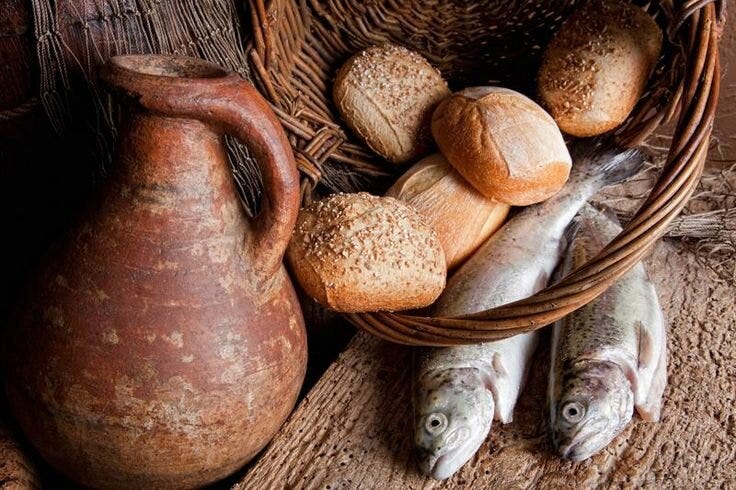
All four of the evangelists, Matthew, Mark, Luke and John, tell the story of this day when Jesus fed five thousand with five loaves of bread and two fish.  Each embellishes his version with his own details and emphases. Mark and Matthew tell us Jesus commanded the people out there in the wilderness to sit down on the green grass. I‘ll not probe the question, but why, I wonder, is there this reference to the color of the grass?  John’s version of the event reminds me of words in Psalm 23: “He beckons me to lie down in green pastures.”

We can relate to the generosity of the young boy who shared his five barley loaves and two fish.  We’re not told how it happened that the boy had the fish and the loaves.  Perhaps most people at that time would not dream of going out into the wilderness without at least a little something to eat and drink.

So, the story, it seems to me, (in today’s lingo) was a “pay forward” moment; you know, similar to the Dairy Queen drive-thru customer who paid the tab for the car coming up behind her. That started a chain reaction that lasted for 3 days and 200 thankful Dairy Queen customers!  The generosity of the young boy on the green grass at Jesus’ feet started a “pay-forward” reaction that enabled Jesus to feed the hungry crowd.  Some evangelists say it was 5000 people.  Others recalled “5000 not counting the women and children”.  I find it interesting that in John’s version Jesus tells the apostles to have the people recline and John says the men reclined.  What were the women doing?  I would venture a guess they were doing “women’s work” i.e. rounding up the kids, wondering if there’d be enough bread and what they were going to give the men to drink.

What trust!  What faith in Jesus the apostles showed in telling the people to relax! Be patient.  Sit down!  Surely, they could not fathom how all these people could be fed. Even when pooling all their supplies, they certainly did not have the resources to feed this crowd.  What were they to do now that they had people seated and waiting to see what would happen next?   That’s what you call FAITH! That’s obedience – trusting the wisdom of God to do the impossible!  We just need to take the first step: Listen and obey the prompting of the Spirit: “Tell the people to be seated”.

No doubt Jesus could have multiplied the available supplies if he wanted to.  But, as John asks, to what end?   The very next day the people would be hungry.  They’d likely not be clamoring “Speech! Speech! Share a good word! Let’s hear it!”  They’d be waiting for the apostles to open Jesus’ food distribution center.

On this day, out in the wilderness, John tells us that the people ate and were satisfied. Which would be more satisfying to you, a full belly for a single afternoon, or a glimpse, a vision of what life looks like when lived in the company of generous people under the reign of God?  What would our world be like if people acknowledged that they are called to be transformed?   What would happen if we were truly as open-handed with our possessions as the young boy on the hillside was with his? What would have been the status of the pandemic if everyone followed CDC advice: got vaccinated, wore a mask, washed their hands?  What would the stats be today if people continued to practice those sanitation protocols?  Hospital visits are on the rise while at the same time admissions remain relatively low.

And, what would happen if we really believed that Jesus still has the power to take the gifts we offer and to create from our generosity widespread outbreaks of sharing? As I watched the Olympics opening ceremony I was thinking “This is lovely – a testament to the ingenuity of computer whizzes!  Soon I wondered:  With the millions donated by sponsors and spent on the production to awe the crowds, much good could have been done. With the millions rolling in to support political campaigns, I daresay that the world could be transformed.  Over 3.1 million children a year (one child every 10 seconds) would not die of hunger.   Let us strive to reflect the attitude and directive of the apostles that long-ago day on that lush green hillside: “Tell the people to be seated.”


 ~Reflection by Sister Roberta Bailey, OSB
 

Let us pray together for safety and enjoyment for the crowds in France for the Olympics, and protection for thousands enduring the effects of inclement weather: Floods and too much rain, drought, low water table, loss of profitable crops, and high irrigating costs, and terror as fires approach homes, businesses and forests …  and pray for peace amid unsettling times over political issues and factions …… 

   God bless us all!


First Reading:   2 Kings 4:42-44         Second Reading:  Ephesians 4:1-6
Gospel:   John 6:1-15


Continue Reading

Filed Under: Blog, Front Page, Homily Tagged With: 2 fish, 5 loaves, 5000, apostles, forward, Jesus, John, Luke, Mark, Matthew, pay, pay it forward, recline

Be Patient! It’s a Waiting Game.

June 18, 2024 by Holy Name Monastery Leave a Comment

Mark’s Gospel is the shortest of the four Gospels.  It is full of parables, stories told by Jesus, the best of Storytellers. With some of His stories, Jesus uses elaborate details, making it easy to understand His point. Today’s “riddle” sounds like heaven is a “field of dreams.”  This is a field where a man one day casts seeds with abandon, unmindful of whether they fall on soil that is good or not-so-good.  That night he sleeps unaware that something mysterious is happening in the soil.  Violá!  Overnight the earth has sprung forth blade, and ear and then the fruit!  Jesus queries exactly what our curious minds may be wondering: “To what shall we liken the kingdom of God?”   Jesus floats another riddle for our consideration.  The kingdom can be compared to the smallest of seeds that when nurtured grows into the largest of trees.  Literally, the word parable means “a riddle.”  Jesus told more than 40 riddles or parables during his ministry.  Usually when a person tells you a riddle, they eventually tell you the answer.  But Jesus only explained one parable to the crowds – the parable of the Sower and the Seed.  Mark says Jesus explained everything to his disciples in private and they did not share for future generations the meaning of all the parables. Then, Jesus ascended into heaven and took the answers with him!   So that left the later disciples, and us, with a lot of figuring out to do.

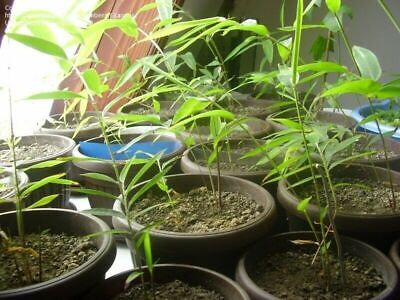
Let’s start with one of the most amazing seeds in the world:  Chinese bamboo.  The seedling lies buried in the soil for five long years before any sprout appears above ground.  It seems dormant, or at least stunted.  But don’t be deceived into thinking it’s a lost cause.  The seedling requires constant cultivation during gestation, needing watering and fertilization on a regular basis. Then it requires much patience!  Wait, wait, wait.  It will make up for lost time.  When the bamboo seedling finally emerges from the ground, it grows at an astonishing rate, ninety feet into the air in just six weeks.  That’s fifteen feet a week, more than two feet a day, two inches every hour.  Once it finally gets going, you can almost watch it grow before your very eyes!  Why does it take so long to emerge, and grow so fast once it does?  Plant experts say that during its first five years, the seed is busy building an elaborate root system underground.  This is what enables it to grow ninety feet in six weeks.

Think of yourself as a “Chinese bamboo”.  Growth in us within God’s Kingdom is in a similar pattern.  We take a long time to emerge.  Sometimes it takes so long we wonder, “Did the seed of God’s kingdom planted in me at Baptism ever take root?  Maybe it fell on a rock in my heart and died.  Maybe it got choked by the thorns of my sins.”  More often than not the seed of God’s Kingdom is building an elaborate root system.

This means that we need to trust God who in the first place planted the seed of the Kingdom in us. God understands what’s happening inside us because he sees into the heart, even if we can’t.  We also need to be patient with ourselves and overly generous with mercy and compassionate with others.  Even though the Kingdom may not seem to have taken root in you, and you don’t seem to be getting any holier, there’s no need to be discouraged.  Growth may not be visible for a long time, but eventually something wonderful, beautiful and multi-faceted will emerge.


~Reflection by Sister Roberta Bailey, OSB


First Reading:   Ezekiel 17:22-24         Second Reading:  2 Corinthians 5:6-10
Gospel:   Mark 4:26-34
Continue Reading

Filed Under: Blog, Front Page, Homily Tagged With: bamboo, Chinese bamboo, God, Jesus, Kingdom, Mark, seedling

  • Page 1
  • Page 2
  • Page 3
  • Page 4
  • Go to Next Page »

Footer

Prayer / Newsletter / Info

 Contact Info

Benedictine Sisters of Florida

PO Box 2450
12138 Wichers Road
St. Leo, FL 33574-2450
(352) 588-8320
(352) 588-8443

 Mass Schedule

Related Links

Copyright © 2026 · Benedictine Sisters of FL · Touching Lives Through Prayer and Service

Copyright © 2026 · Bendedictine Theme on Genesis Framework · WordPress · Log in