• Skip to primary navigation
  • Skip to main content
  • Skip to footer
Benedictine Sisters of FL

Holy Name Monastery
Founded 1889

Donate Now
  • Home
  • About Us
    • History
    • Being Benedictine
    • Benedictine Monasticism
    • Meet Our Community
    • Holy Name Academy-Alumnae
  • What We Do
    • Mission, Vision and Our Partners
    • Retreats
      • Invitation to Retreat
      • Accommodations
    • Volunteer Programs
    • Oblate Program
    • Spiritual Direction
    • Aqua/Hydroponics
    • More of Our Ministries
  • What’s Happening
    • Articles of Interest
    • Events
    • Commemorative Bricks
    • Newsletters
    • Brochures
    • Links
  • Support Us
    • Gifts of Support
    • Wish List
  • Stories Shared
  • Galleries
    • Photos
    • Videos
      • Benedictine Sisters of FL Videos
      • Other Videos
  • Contact Us

Good News

“By your perseverance you will secure your lives.”

November 17, 2025 by Holy Name Monastery Leave a Comment

“Remember you are not to prepare your defense beforehand, for I shall give you a wisdom in speaking that all your adversaries will be powerless to resist or refute.  … By your perseverance you will secure your lives.”  In another translation we read: “This will be your chance to tell the Good News. Do not worry about what to say in court. For I will give you wise words. None of your enemies will be able to prove that you are wrong. They will not be able to say that your words are false.”

Much is written in support of the practice of imagining or role-playing various scenarios before actually confronting someone or being caught in a confrontational situation.  I don’t mean to belittle the value that might have to ease the knots in your stomach but these words of Jesus quoted by Luke remind us, when we actually get in a situation we can depend on God for Jesus says: “I myself will give you a wisdom, wise words, in speaking.”

A few months back my sign (Scorpio) read: “Worry is like a rocking chair: it gives you something to do but gets you nowhere.”  Sometimes that “rocking chair” could work ruts in the carpet…

One group of researchers have evidence to proof that we worry about – (commentary is mine.)

40% of our worries are things that will never happen [Whew, that’s a huge chunk we can let go of]

30% are about the past – which can’t be changed anyway – so dump the gunny sack and look to today

12 % are about criticism by others, mostly untrue – and many imaginary – why do we so often assume that other people are going to spend time their precious time thinking about “me”?

10% are about health, which only gets worse with stress – better to relax, loosen up and let our bodies work their own magic on the knots (I hear you: “that’s easier said than done.”)

8% are about real problems that can be solved – so here is where we need to spend our energy and focus our prayer.  Remember Jesus’ promise (and He is a person of his word): “By your perseverance you will secure your lives!”  So, “hands off” and “zip the lip” offering God the right solution because our limited eyesight most likely will see only a rather self-serving solution …  “God-sight” knows the key to the best fix for all concerned.

 Worry and fretting allows what we see as problems to come between us and God.   It is the view that God has somehow lost control of the situation and we’ve lost trust in God’s omnipotent care for us.  A legitimate concern should draw us closer to God and cause us to rely on His providential love for us.

By our Corporate Commitment we profess to respond to the needs of the people of God with the “compassion of Christ.”  But how can we do that if we have not learned to depend on the compassion of Christ?   Saying the words is one thing; living with a firm conviction that compassion begets compassion is all together another matter.   Let us seek ways to be compassionate. Not wishy, washy – for COM-passion means “with passion” – with fervor, excitement, enthusiasm, even obsession.  Compassion is a component of the good zeal our Holy Rule commends.

Mother Evangelista Kremiter – founding superior of the Atchison Benedictines and certainly was a mover and shaker in founding our federation – is quoted as saying: “Our lives, not words, make us credible.  Words move but example motivates.”  May our lives, individually and collectively, be an example that motives all who meet us to be people of compassion.

~Reflection by Sister Roberta Bailey, OSB


As we prepare to celebrate Thanksgiving ….   Consider what you are doing for someone(s) less fortunate that you and your family ..  donate money or canned goods to a food bank or place a surprise in their mailbox or on the doorstep, work a church event ….. or invite a live-alone person for a meal and conversation ….  or  how long has it been since  you’ve worn some things hanging in the closet for eons ….

  “Bend a knee”  a whisper THANK YOU!


First Reading:   Malachi 8:19-20a         Second Reading:  2 Thess 3:7-12
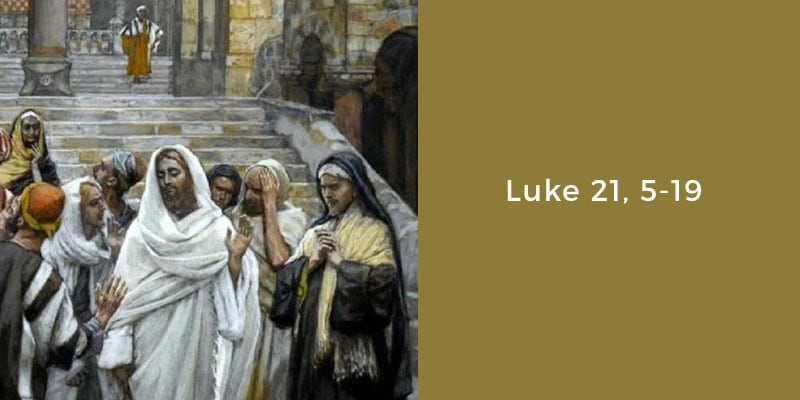
Gospel:   Luke 21:5-19
Continue Reading

Filed Under: Blog, Front Page, Homily Tagged With: "By your perseverance you will secure your lives.", Corporate Commitment, defense, God, Good News, Jesus, love, Luke

We are called to BE the Good News

November 18, 2024 by Holy Name Monastery Leave a Comment

Last weekend we observed Jesus as he sat in the temple quietly taking in what was going on around him.  We heard His remark about the contributions being made to the temple treasury.  We saw what he saw.  A widow, as unobtrusive as she could be, slipped (almost unnoticed) among the other donors to deposit her “two cents” that settled softly with the rich folks’ paper money. And if you’ve read Mark’s gospel continuously from that incident to today’s Gospel you also know Jesus’ prediction about the destruction of the Temple, his teaching about the cost of discipleship, the woes that will accompany the end times and Jesus’ instruction to his disciples about the need for watchfulness so that they will not be caught unprepared for the final judgment.

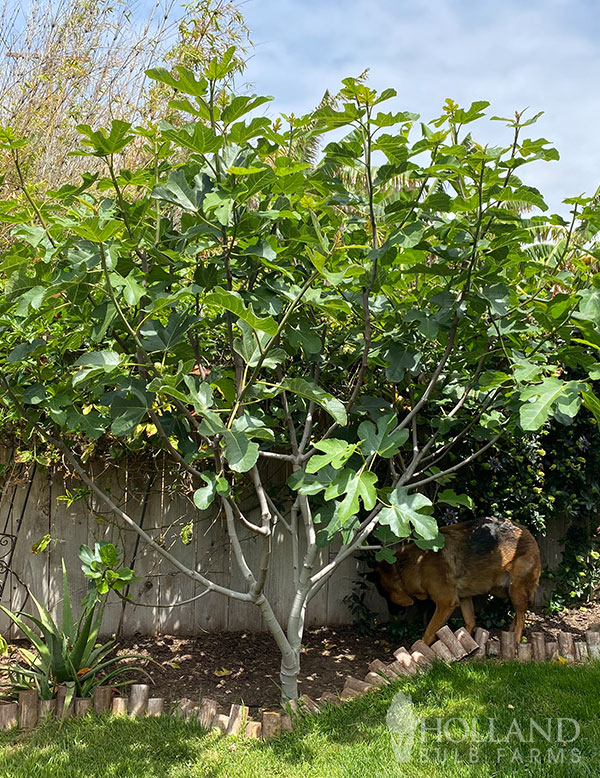
Jesus says: “Learn a lesson from the fig tree.”  Jesus could have said citrus tree or olive tree.  They grew nearby, too.  But, he says “fig tree” and happily for us we have fig trees to observe.   When the branch becomes tender and sprouts leaves, we know that another season of fruit is near.

After Jesus tells the parable of the fig tree, He gives several brief parables. We know that Jesus’ words are not spoken to frighten his disciples, nor should they frighten us.   The prophetic Word of God is as sure and secure as the rest of His message.  It is offered to prepare us for the changes we will experience during our lifetime and at the end time. Our consolation and hope are found in the lasting nature of Jesus’ words and God’s never-ending love for us.

When you see the things happening that Jesus talks about, know that he is near, at the gates.   “But,” says Jesus, “of that day or hour, no one knows, neither the angels in heaven, nor the Son, but only the Father.”    Then He assures us: “Heaven and Earth will pass away, but my words will not pass away.”

So, how, as followers of the Jesus, do we prepare in the face of struggles not unlike our times as community and as a nation?  How well do you read signs?  Can you train yourself to be more observant of the signs?  Do you naturally notice signs in nature?  Road signs?  How well do you read nonverbal body language?   Do you work to sensitize yourself to recognize everyday signs?  How do you heighten your sensitivity to spirit signs?  Do you use Scripture, the Rule, the example of a favorite saint? What helps you to listen more keenly to your heart in the quiet of the night when sleep eludes you?  Maybe your quiet time is walking, working or driving along a familiar road; passing through the hall at a leisurely pace; setting the table, readying yourself for communal prayer in the chapel – do you hear God’s whisper in your heart?

Cultivation of the inner spirit helps prepare us to see the direction of the cultural winds we face, whether agreeable or frightening.    God does not usually shout to us in fury or in a tumultuous hurricane.  Much of the time God speaks softly.  So stay tuned.  In the face of cultural garbage and shifting government structures or a changing church, we steady ourselves not to be tempted to hoard food and possessions.  We guard against the temptation to build a hermitage and hide out.  We pray to be strengthened to stay in the fray.  Many things will just happen in our lives – things not scheduled by the calendar, or watch, or clock or a computer “ding”.  With all the scheduled things we have to do, we are called by today’s Gospel to keep our hearts attuned to the significant things that just happen.

How can we do this day in and day out and year after year?  Can we do it by heeding Jesus’ directive to the disciples who accompanied Him in the garden the night before his death:  Stay here, watch and pray.   Watch: ask for God’s Wisdom to let us see God’s perspective so we discover our moment within our cultural context.  And, pray!  Remember, “to pray” is not simply to read books about God, spirituality or prayer, or to think about those topics.  To pray is simply – to pray!  We don’t even have to start the conversation.  Simply let God in.  Let us strive to keep in mind that we are called not so much to do the Good News.  We are called to be the Good News.

~Reflection by Sister Roberta Bailey, OSB


First Reading:   Daniel 12:1-3         Second Reading:  Hebrews 10:11-14,18
Gospel:   Mark 13:24-32
Continue Reading

Filed Under: Blog, Front Page, Homily Tagged With: disciples, fig tree, God, Good News, Jesus, Mark, Widow

Fourth Sunday of Lent

March 20, 2023 by Holy Name Monastery Leave a Comment

There are so many fake news stories nowadays that it can be very difficult to know truth from fiction.  I don’t blame those Pharisees for being overly cautious.  We need to be very careful.  Like my mother always said, “If a story is too good to be true, it probably is.”

Everyone is drawn to sensationalism but spreading such a story could really upset things, to the point of creating chaos.  Unfortunately, much of what is reported is commentary disguised as factual news coverage.  And there is an abundance of fake news stories that mislead well-intentioned people.  With all this inundating us, it is easy to become overly skeptical of anything we hear, or cause many to simply turn a deaf ear to all news, fake or real.  Of course, once you cut away all the junk you can find truth out there.

In living out our faith, we are dependent on knowing the truth.  Yet too often we act like the facts of our faith story are up for debate.  We begin to see the account of Jesus in the Gospels as just another series of tales written for grocery store check-out lane gossip rags.

The story of the healing (in this Gospel) of the blind man tells of an encounter with Jesus that leads to freedom and healing.  Jesus was and is real and the fact that he can heal us should be undisputed.  But too often we live our lives in desperation and despair, seemingly unaware that we can take our burdens to Jesus.  We act like the Bible story is just a nice tale to be told at church and not one that exists to change our lives.  It requires good insight and keen powers of discernment to sort fact from fiction.

The secret to having clear inner vision is found in prayer; spending time with God trying to see things as He sees them.  If you take this route, you may have some wonderful surprises.  You’ll begin to see beauty in others, a beauty that others, and we ourselves, often miss because we have eyes to look but not to really see.  In spending quiet time with God you begin to see God’s gifts in life.  An old proverb comes to mind: “None are so blind as those who refuse to see.”  We might add: None are so blind as those who are too busy to see.”

After all, scripture isn’t simply factual news.  It is the GOOD news.

[Inspiration for this reflection was borrowed mainly from a Reflection by Tracy Earl Welliver]

~Reflection by Sister Roberta Bailey, OSB


Two “big feasts” coming up this week: St. Joseph Day is transferred from Sunday to Monday.  St. Benedict’s Day is celebrated as usual on March 21st … since it is Lent, we will celebrate without the Alleluias in our song …  but in our hearts, they will ring.   Both of these saints are considered patrons of a peaceful death.  Through the intercessions of Joseph and Benedict may all will die today be received into glory.  And, God bless with eternal peace all our deceased family and community members, friends, oblates, and donors.


First Reading:   Samuel 16:1b,6-7,10-13a      Second Reading:  Ephesians 5:8-14
Gospel:   John 9:1-41
Continue Reading

Filed Under: Blog, Front Page, Homily Tagged With: 4th Sunday of Lent, Blind, blind man, Fourth Sunday of Lent, God, Good News, gospels, Jesus, Lent

What Shall We Do?

December 13, 2021 by Holy Name Monastery Leave a Comment

Two phrases jump out to me in this Gospel: “What should we do?  and “Exhorting them in many ways, he preached the GOOD NEWS to the people.”   Good news, Luke says???  The Scriptural reading we’ve been hearing for the past two weeks isn’t quite what I’d term “good” news.   We’ve been hearing predictions of occurrences of unimaginable proportions … taking down mountains, flattening hills, wiping out valleys, hearing voices crying in the desert, watching for signs in the sun, the moon, the stars, dismay, perplexity, roaring sounds and people dying of fright.  And this is GOOD news?  Seems a little too real with daily news alerts of COVID spinning off variants of the virus and active cases on the rise.  Snow storms are billowing across the northern states and this morning we learned of the loss of lives and devastation from tornados in Kentucky and Arkansas.  There are floods and toxic drinking water in Hawaii.  Fires are deliberately set and ravaging our forests; wildlife and residents escaping for their lives.  Threat of war, discord, political “cat fights” and gun violence is a growing reality.

And, we find ourselves striving for Benedictine peace at the half-way point in Advent 2021.  We sense it in the rose colored liturgical appointments and candles.  They all symbolize “relax” – be joyful!  In the days when it was popular to use the Introit of the Mass, we sang – “Guadete!  Rejoice in the Lord always; again I say, rejoice!”  Storms, conflicts, disease and dissension call us to give voice to the petition in the opening prayer for tomorrow’s Mass.  We beg for a gentle rain on the earth.  “Drop down dew from above, and let the clouds rain down the Just One; let the earth be opened and bring forth a Savior.”

John’s message today is simple.  He doesn’t ask the tax collectors to stop collecting, nor does he encourage the soldiers to go AWOL.  He says, Share what you have, be honest, do not oppress people.  What he preaches is at the same time easy and difficult; simple and challenging. How can I bring the Divine into my daily ordinary actions to make my faith a living thing so my walk echoes my talk?

One thing is certain – John’s audience knew where they stood with him.  And, he knew clearly his place in God’s story.  “I am baptizing you with water, but one mightier than I is coming.  I am not worthy to loosen the strap of his sandals.”  Another translation says: “untie the laces of his sandals.”  Why, I wonder, did he say “loosen, untie” which would leave the wearer’s shoes flapping on his feet or sliding off his feet so he is barefoot?  Is this an allusion to the spirit of hospitality expected of all Christians?  It brings to mind Benedict’s admonition of the ages old practice of first washing the guest’s feet for which the shoes would have been untied, loosened, removed.  And look at Jesus on the cross – his bare feet exposed to the elements and on-lookers’ abuse.

And, there’s that question Luke’s text raises: “What should we do?”  John’s answer is unique in Luke’s account, he responds by offering specific actions:

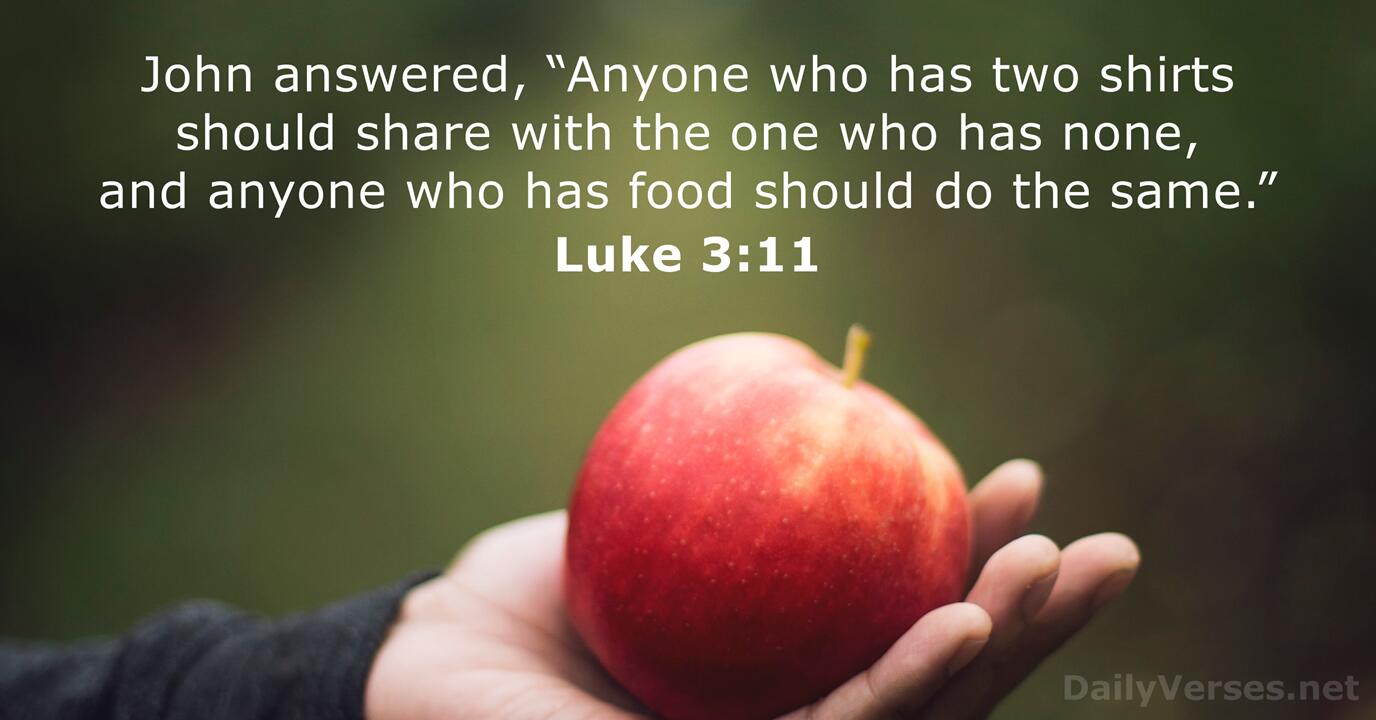
If you have more than you need, whether in terms of food or clothing, you must share.

Stop stealing from your neighbors.

And stop using your power to take advantage of each other.

In other words, no more hoarding, no skimming, no extortion.

The question, then, to each of us, in flashing neon lights, is – “What should I do?  What should we do?”  How shall we respond to the Advent of our Emmanuel that our prayers, our hymns and our intercessions are talking about?  How can we meet the promise of the season with real, meaningful expectation when everywhere around us the world seems to be caught up in merrymaking, crowd gathering with death hovering “out there”?  How can we celebrate in a deserving manner the solemnity of our God come to earth?

Today, faithful John has a gift for us wrapped in rough brown burlap and the coarseness of a camel’s hair shirt.  He jolts us out of our pessimism and any moodiness or reluctance.  His exhortation shakes us awake from our sleep to an awareness of the sparkle in the eyes of a new born Babe, the giggle of a child’s Knock-Knock joke, the welcome look on an elder’s face, the grateful tears of the recipients of our good deeds.  We see evidence of a warming heart as life-giving words fall gently on world-weary ears…and, we know our answer to the question…WHAT SHALL WE DO?  

~Reflection by Sister Roberta Bailey, OSB, Prioress


First Reading:  Zephaniah 3:14-18a     Second Reading:  Philippians 4:4-7
Gospel:  Luke 3:10-18
Continue Reading

Filed Under: Blog, Front Page, Homily Tagged With: 3rd Advent Sunday, 3rd Sunday of Advent, Advent, Good News, Gospel, Jesus, John, Luke, What Shall We Do, What to do

Listen to His voice

November 15, 2021 by Holy Name Monastery Leave a Comment

We are called to BE the Good News

In this Gospel, Jesus offers us signs to look for that will indicate the coming of the Son of Man.  Mindfulness to his words prepares us for the changes we will experience during our lifetime and at the end time.  (And, just in case we miss the point, the experience of the pandemic couldn’t make it clearer that the future is unpredictable.)  When you see the things happening that Jesus talks about, we know that He is near, at the gates.  “But,” says Jesus, “of that day or hour, no one knows, neither the angels in heaven, nor the Son, but only the Father.”  Then, He assures us: “Heaven and earth will pass away, but my words will not pass away.”

So, as followers of the Jesus, how do we prepare?  How good are you at reading signs?  Can we train ourselves to be more observant of the signs?  By personality do you notice signs in nature?  Do you read road signs or only notice the sign on the building where you turned left?  (The sign and the building may be gone the next time you pass by.)  How well do you read non-verbal language?  Do you work to sensitize yourself to recognize everyday signs?  If not, how do you reckon you can heighten your sensitivity to spirit signs?  Do you use Scripture, the Rule, the example of a favorite saint, a confessor or a friend-guide?  What helps you to listen more keenly to your own heart?  In the quiet of the night – when sleep eludes you – or when out walking or clocking steps on the tread mill, do you hear God’s voice?  When you are traveling along a familiar road, riding alone in an elevator, passing through the hall at a leisurely pace, setting the table or sanitizing doorknobs, do you see and hear God?  As communal meetings and prayer times approach what controls your schedule – the TV, the computer, the phone, an alarm, or time-honored habits?  In the quiet of the chapel as we gather for communal prayer, do you head-count or leave time-space for God’s voice to invade your awareness?

God does not usually shout to us in fury or in the high winds of a Florida thunderstorm.  Most of the time God speaks softly.  So we are honor-bound to stay tuned at all times to that still, small voice.  This takes a keen “reading of the signs.”  It takes courage to “stay in the fray” and not seek to protect ourselves by ignoring the signs.  Many things will happen – are happening – in our lives that are not in our goals or strategic plan.  Things not scheduled by the calendar or our clock or our watches or the “ding” of a ZOOM alert.  We are called by today’s Gospel to keep our hearts attuned to “read the significance of the signs of our time.”

Jesus asks us, “When the Son of Man comes, will He find faith on earth?”  The value of our response is lived out in our faithfulness to prayer, each other and participation in our corporate commitment.  For example, our Thanksgiving partnership with St. Mark’s Parish and our personal contributions to meet the needs of the left-out, locked-out and dropped-out.

We know we are called not so much to DO the Good News – though faith-in-action is important.  We are called to BE the Good News – a model of all that is implied when we call ourselves Christian, Catholic, monastic, Benedictine, a Benedictine Sister (or Oblate) of Florida.

~ Reflection by Sister Roberta Bailey, OSB, Prioress

Have a good week.  Jesus tells us in the Scriptures as we near the close of the liturgical year: “Read the signs of the time!” 

Stay safe – be healthy – know peace!

Continue Reading

Filed Under: Blog, Front Page, Homily Tagged With: Be the good, Benedictine Sisters of FL, building, do the good news, do you hear God's voice, Good News, Jesus, Listen to His voice, road signs, Son of Man

A New Term for an Old Reality

January 29, 2018 by Holy Name Monastery Leave a Comment

Twice now this week we’ve heard Jesus command: “Be quiet.”  This morning it was “Quiet, be still!” in order to calm a storm.  Now here in this story from Mark it’s “Quiet, come out!”  to chase an unclean spirit and cure a young man besieged by demons that today might be labeled PSTD, Schizophrenia, Bipolar illness …

Demons are so disruptive.  The victims long for control over the evil spirit that seems to pull the strings, think the thoughts, speak the words and do the deeds.

In this story, apparently no one in town suspected that the young man had an evil spirit.  Otherwise, they would have been shunned him.  They wouldn’t have allowed him in their company, in the temple or anywhere near Jesus.

Well, I got this far in my reflection (Sister Roberta Bailey, OSB, Prioress)– pondering the variety of demons our society struggles with today.  Then I got distracted and stymied – I felt like an evil spirit, some might call, writer’s block, was redirecting my thoughts, interfering with my schedule, trying to inflict me with laryngitis or lull me into a nap.

When lo and behold, Jesus said, “Quiet – here’s a reflection already written for you.  It was a blog piece from Stephen Okey professor from SLU who did a presentation for us (here at the monastery) on one of the most insidious demons that invades us most anywhere we turn.  In Stephan’s words:

Fake News and the Good News

Although the term “fake news” may be of relatively recent invention, Pope Francis argues that it begins already in the Garden of Eden.  In an insightful exegesis of Genesis 3, he describes the serpent as the first purveyor of fake news, who relies on “mimicry” and the “appearance of truth.”  The serpent is able to take something true, given in love (the command against eating the fruit of the tree of knowledge of good and evil), and twist and discredit the claim through selective reframing and presentation.  The same problem continues today, as individuals, networks, and even governmental agencies create attractive and credible lies in order to generate traffic, generate revenue, and generate division.

Francis defines “fake news” as “the spreading of disinformation on line or in the traditional media.  It has to do with false information based on non-existent or distorted data meant to deceive and manipulate the reader.”  He calls for resistance to fake news, to recalling Christ as The Truth on which we can rely, and to learning to discern the true from the false in order to be free.  Pope Francis has three concrete suggestions for resisting fake news, along with one deeper exhortation.

First, avoid “homogeneous digital environments impervious to differing perspectives and opinions.”  Francis wants us out of our “echo chambers,” meeting with those whom we do not already encounter.  This goes beyond cultivating a diversity of sources for media; it means cultivating a diversity of relationships.  If one can avoid living in such a “bubble,” one should be less susceptible to stories that simply confirm one’s worst fears.

Second, slow down.  One of the dangers of fake news is its “spreading so fast that it is hard to stop.”  Journalists in particular are encouraged not to chase the breaking, sensational headlines, but rather the “underlying causes of conflicts” in pursuit of richer and deeper understanding.  This is not only journalists though: many of us would benefit from taking a moment to read an article or story before reposting, understanding it beyond its headline, and reflecting on whether or not it is credible.  Discernment of the truth takes time.

Third, communicate the truth in love.  Francis focuses much of this message on “the true” in contrast to fake news, but he connects it also to “the good.”  He encourages us to consider the fruits of our communication.  If we “provoke quarrels” or “foment division” rather than “promote informed and mature reflection,” then that communication falls short.  Put another way: the repetition of true facts is a necessary condition of communicating the truth, but not a sufficient one.

Finally, an exhortation: strategies are valuable, but they aren’t the whole story.  The three practices listed above must be part of a conversion of heart. If cultivating a diverse body of sources and relationships simply becomes pretty window dressing for the bubble one remains in, then it bears no good fruit.  It is similar to his claim in Laudato Si: if we rely simply on technological or strategic solutions to our problems, we mask the underlying moral problems that contribute to the throwaway culture (or to continue to promote fake news).

“Fake news” is a new term for an old reality.  There is a temptation to deceive, to deceive others, to deceive ourselves, and to deceptively accuse others of deception whenever we don’t want to hear the truth.  But we need to hear the truth, and we need to keep our eyes focused on the truth, because it is the truth that will set us free.

Stephen Okey | January 24, 2018

First Reading  Deuteronomy 18:15-20   Second Reading  1 Corinthians 7:32-35
Gospel Reading  Mark 1:21-28


Continue Reading

Filed Under: Blog, Front Page, Homily Tagged With: Be still, communicate, Demons, Fake News, Good News, Jesus, Quiet, truth

Footer

Prayer / Newsletter / Info

 Contact Info

Benedictine Sisters of Florida

PO Box 2450
12138 Wichers Road
St. Leo, FL 33574-2450
(352) 588-8320
(352) 588-8443

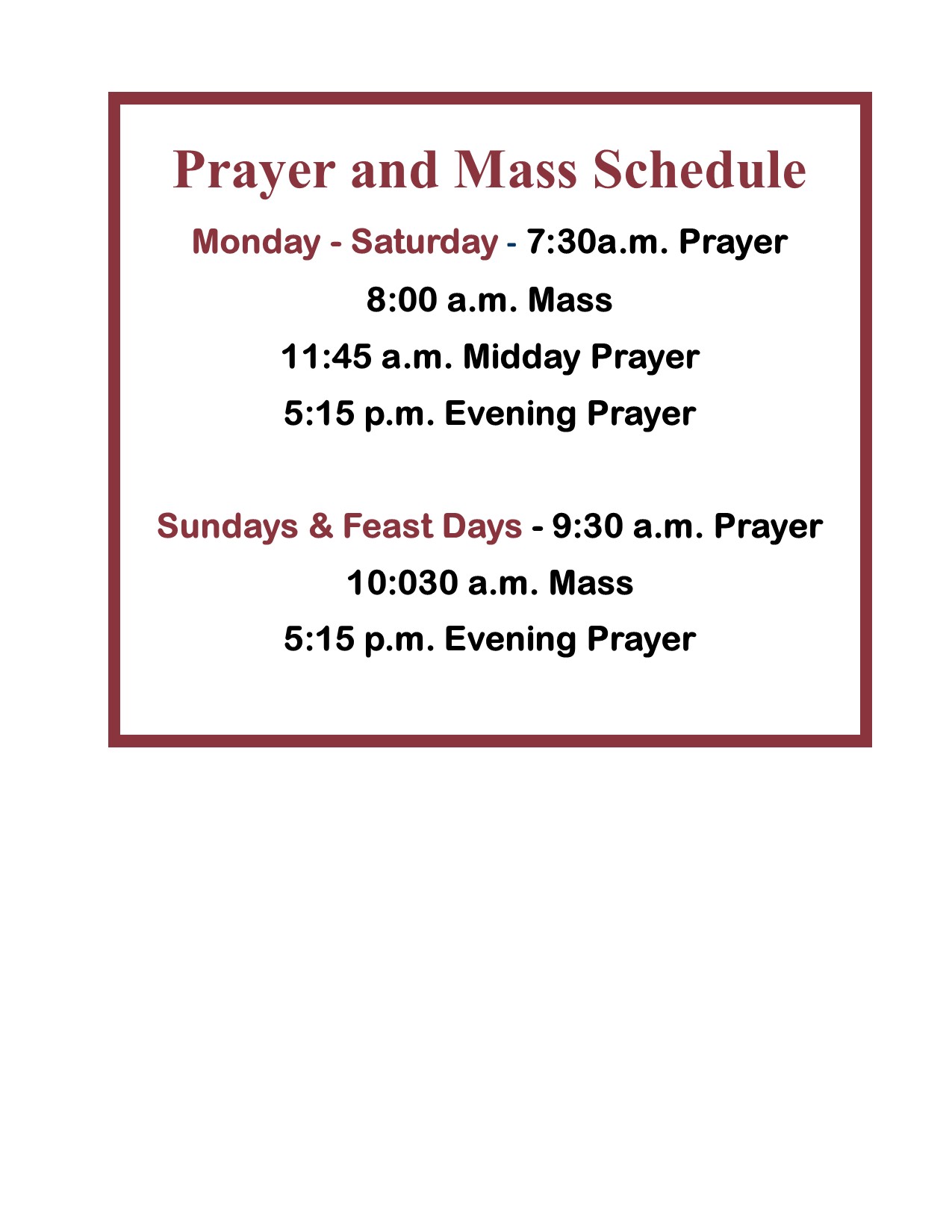
 Mass Schedule

Related Links

Copyright © 2026 · Benedictine Sisters of FL · Touching Lives Through Prayer and Service

Copyright © 2026 · Bendedictine Theme on Genesis Framework · WordPress · Log in