• Skip to primary navigation
  • Skip to main content
  • Skip to footer
Benedictine Sisters of FL

Holy Name Monastery
Founded 1889

Donate Now
  • Home
  • About Us
    • History
    • Being Benedictine
    • Benedictine Monasticism
    • Meet Our Community
    • Holy Name Academy-Alumnae
  • What We Do
    • Mission, Vision and Our Partners
    • Invitation to Retreat
    • Accommodations
    • Volunteer Programs
    • Oblate Program
    • Spiritual Direction
    • Aqua/Hydroponics
    • More of Our Ministries
  • What’s Happening
    • Articles of Interest
    • Events
    • Newsletters
    • Brochures
    • Links
  • Support Us
    • Gifts of Support
    • Wish List
  • Stories Shared
  • Galleries
    • Photos
    • Videos
      • Benedictine Sisters of FL Videos
      • Other Videos
  • Contact Us

Homily

30th Sunday in Ordinary Time

September 29, 2025 by Holy Name Monastery Leave a Comment

It is important to note at the outset of this particular reading just who it is that Jesus is speaking to. Luke says: “Jesus told this parable to some who trusted in themselves that they were righteous and treated others with contempt.”

But, then there’s this. Elsewhere in Scripture, Proverbs tells us: “To do righteousness is more acceptable to the Lord than sacrifice” and “Blessings are on the head of the righteous.” Turning to Isaiah we read: “The work of righteousness will be peace, and the effect of righteousness, quietness and assurance forever.”

So, why does Jesus seem to be criticizing the righteous one? One little word makes the difference. Jesus is talking to the self-righteous; those who trusted in themselves. They’re a little too sure they are right and anyone who thinks differently must be wrong. They (or is it we?) are so full of self that there’s little room for God’s grace to filter in.

It’s interesting when you think about it that everything the Pharisee says is true. He has set himself apart from others by his faithful adherence to the law. He is, by the standards of his day, a righteous man. It isn’t that the Pharisee is speaking falsely, but rather that the Pharisee misses the true nature of his blessing. As Luke says, he has trust in himself. His prayer of gratitude may be addressed to God, but it is really about himself. He credits his righteousness entirely to his own actions.

The tax collector, on the other hand, does not even raise his eyes to heaven. He knows that he possesses no means by which to claim righteousness. He declares he has done nothing of merit. So, he stands back, hardly daring to approach the Temple, and throws himself on the mercy of the Lord. He seems not so much humble as desperate. He stakes his hope entirely on the mercy of God.

At the end of the day, the Pharisee will leave the Temple and return to his home the same virtuous, honorable man he was when he came to the temple. That hasn’t changed. The Pharisee’s mistake, as Scott Peck says, is that he thinks that whenever he wants, he can pull “God out of his hip pocket.” On the other hand, the tax collector will go back to his home exalted in God’s eyes because he humbled himself.

If you’re spiritually alive, and give credit where credit is due, you’re going to love this take on the parable. If you’re spiritually dead, you won’t even want to hear it. If you’re spiritually curious, there is still hope!

A churchgoer wrote a letter to the editor of his hometown newspaper and complained that it made no sense to him at all to go to church every Sunday. He wrote: “I’ve gone for 30 years now, and in that time I have heard something like 3,000 sermons, but for the life of me, I can’t remember a single one of them. So, it’s been a waste of my time and on the part of homilists a waste of their time by giving sermons at all”.

This started a real controversy in the “Letters to the Editor” column. Much to the delight of the editor, it went on for weeks until someone wrote a real clincher: “I’ve been married for 30 years now. In that time my wife has cooked some 32,000 meals. But, for the life of me, I cannot recall the entire menu for a single one of those meals. But I do know this: they all nourished me and gave me the strength I needed to do my work. If my wife had not given me those meals, I would be physically dead today.”

We might say: I’ve been in community x number of years. In that time, I’ve been nourished and supported by my Sisters thousands of times in hundreds of different ways. But sadly, I can only recall a few, if any, instances in full detail. This much I DO know: without their support my spirit would have withered long ago. Likewise, if I had not gone to Mass and been faithful to my time of private and communal prayer, I would be spiritually dead today!

~Reflection by Sister Roberta Bailey, OSB


Yesterday was Oblate Sunday at the Monastery. We welcomed 15 Oblates for Mass, Dinner and an instructive gathering for an exchange of ideas based on assigned “Homework.”

A Benedictine oblate is a lay Christian who has made a spiritual commitment to live according to the Rule of Saint Benedict and be affiliated with a Benedictine monastery, though they do not take religious vows or live in the monastery. Oblates integrate Benedictine values of prayer, work, hospitality, and community into their daily lives in the world, forming an “extended family” to the monastery. For more information contact S. Mary David at mary.david.hydro@saintleo.edu or call 352-588-7176.


First Reading: Sirach 35:12-14, 16-18 Second Reading: 2 Timothy 4:6-8, 16-18
Gospel: Luke 18:9-14
Continue Reading

Filed Under: Blog, Front Page, Homily Tagged With: Jesus, Luke, Oblate, Oblate Sunday, Pharisee, Proverbs

25th Sunday in Ordinary Time

September 22, 2025 by Holy Name Monastery Leave a Comment

This parable is challenging to explain but, it came from the mouth of God’s Son so it must be important for us to grapple with. What might Christ be saying to us? Here is what I heard – colored by the recent readings from chapter 2 of Benedict’s Rule on the Qualities of the Prioress. The Gospel tells us if we can’t be trusted in little matters we certainly cannot be trusted with great ones. If you are not a leader in a Benedictine community it may be easy to breeze through chapter 2 with an attitude of ho, hum – that’s for them – glad it’s not me.

To say that Benedict lays down high standards for the superior may be an understatement. He places the chapter on leadership qualities early in the Rule, only after he defines the type of monk he is writing for. So we know he is writing about the qualities of the leaders of the “strongest kind of monastics” – the ones who have chosen to live under a Rule and a monastic leader.

I am thinking Benedict left it unsaid in Chapter 2, but he sprinkled exhortations regarding leadership for all the members elsewhere in the Rule. Benedict echoes Jesus when he presses home the “the person who is dishonest in very small matters will also be dishonest in great ones.” It does not require a great leap to apply this maxim to all of us – the youngest in community to the eldest. It seems to me Benedict is waving a banner before our eyes of what we each need to be so that a call to leadership does not include an abrupt change of lifestyle. Benedict knew from his own experience that the leader’s role in community is time-limited. He himself had experienced the call to leadership and call to a hermit’s life. He must have foreseen, perhaps with a nudge from his twin sister Scholastica, that the monastic must be prepared in all aspects of her life to move in and out of leadership roles. If the individual member does not engage in a lifelong endeavor to develop the attitudes, skills and qualities that Benedict laid out for the superior, (guess what?) an election or appointment to a leadership position will not ipso facto endow a saintly disposition. If a person has not learned to be accountable for her own actions (or at least tried to be), and to be solicitous for the welfare of those in her charge (as a teacher, principal, supervisor, kitchen manager, sacristan, chief floor scrubber, head nurse….), an imposition of hands or a community blessing, or even the bishop’s blessing will not infuse saintliness: responsibility, accountability, compassion or mercy.

You may remember the lesson of the geese who fly in V formation? As each bird flaps its wings, it creates an uplift for the bird following it. Combined, the whole flock adds 71% greater flying range than if the individual geese flew alone. Whenever a goose falls out of formation, it suddenly feels the drag and resistance of trying to fly alone and quickly gets back into formation. When the lead goose gets tired, it rotates back into the formation and another goose flies at the point position. The geese in the formation honk from behind to encourage those in front to keep up their speed.

Note that Benedict does not let the “honkers” off the hook. In speaking of the qualities of the abbot, Benedict intersperses words to the “monks in the pews.” If the prioress is to call the community or individuals to account, the member must be docile to listen. If the prioress is to be a shepherd, the sheep have to be willing to be corralled and led. It’s impossible to lead if no one follows.

Benedict reveals his keen insight into human nature when he talks about the cast of characters who can be gathered into one community. He reminds the leader, and by inclusion, all the members, to “accommodate and adapt themselves to the character and intelligence of their Sisters.” In conclusion, Benedict smiles upon the leader consoling her that she does not lack resources. He quotes Psalm 33: “Those who fear God lack nothing.” In helping others, the leader achieves the amendment of her own faults. Benedict does not mention, but I bet he knew, the gratifying support the prioress or the abbot, (or leaders of any sort) daily receives in unpretentious, quiet affirmations.

Like the story of the geese, in monastic life when the leader gets sick or is shot down (with arrows or words), individual members drop out of formation to help, protect and reaffirm the leader until she is either able to again take the lead or fly in formation with the other members. Jesus reminds us in this parable that, in the end, it doesn’t matter when you came into community, even when you came into the church. The reward for putting your hand to the plow will be the same: a day’s work in the kingdom for God’s daily wage … the last, the same as the first. It’s been that way for all eternity. You’ll find when you get there (I’m guessing) that your view from the mansion God is saving for you is just as magnificent as that of Moses or Adam and Eve or your favorite saints – everyone’s mansion has a “throne-side view” of heavenly glory.


P.S.  World Mission Sunday

World Mission Sunday is scheduled for the weekend of October 18-19, 2025, and this year’s theme is “Missionaries of Hope Among All Peoples.” During this Jubilee Year of Hope, the theme is most appropriate, and all are called to engage in missionary work in one form or another, thereby bringing hope to those in despair. This annual worldwide collection helps to provide aid to 1,124 dioceses that cannot sustain themselves because they are too poor, young, or actively persecuted.


~Reflection by Sister Roberta Bailey, OSB


First Reading:   Amos 8:4-7         Second Reading:  1 Timothy 2:1-8
Gospel:   Luke 16:1-13
Continue Reading

Filed Under: Blog, Front Page, Homily Tagged With: Benedict, Christ, geese, God, Gospel, st. benedict, The Rule, World Mission Sunday

Feast of the Holy Cross

September 15, 2025 by Holy Name Monastery Leave a Comment

Yesterday, September 14th, we celebrated the Feast of the Exaltation of the Holy Cross.  It was on this date, in the year 335, that the relics of the true Cross, that had been lost, had been miraculously rediscovered nine years earlier.  Today (in 335) the relics were brought outside the Church of the Holy Sepulcher in Jerusalem for public veneration. Because September 14 falls on a Sunday an average only once every seven years, only daily communicants regularly celebrate this feast liturgically. But we’re all called to celebrate this feast, allowing its meaning to penetrate our daily life. In order to do so, however, we first need to grasp better the shocking aspect of what we’re doing.

Most of us have marked ourselves with a cross with a holy water cross upon entering the Church.  We start almost every prayer with the sign of the Cross. All types of people wear a symbol of a cross, in some shape, around their necks, our bedrooms and dining rooms often have one on display.   The priest holds his arms in the shape of it during the Eucharistic prayer. It the focal point in Catholic Church.  For believers the Cross is not so much a symbol of pain as it is a reminder of the Love that Jesus has for us. Christ on the cross manifests the power of Christ’s love and they wisdom of God’s plan of salvation.  In 2014 Pope Francis reminded us the Cross of seems to declare the failure of Jesus, but in reality, but in reality, it marks His victory.

In commemoration of this day, I invite you the slowly and meditatively (perhaps spread over a few days)  the Divine Mercy Stations of the Cross.

The conversations are from the Diary of Saint Faustina Kowalska.

The silent soul is capable of attaining the closest union with God.”


~Reflection by Sister Roberta Bailey, OSB


In the Name of the Father,

and of the Son and of the Holy Spirit


First Reading:   Numbers 21:4b-9         Second Reading:  Philippians 2:6-11
Gospel:   John 3:13-17
Continue Reading

Filed Under: Blog, Front Page, Homily Tagged With: Exaltation of the Holy Cross, Feast of the Holy Cross, holy cross, holy water, Saint Faustina Kowalska, Stations of the Cross

23rd Sunday in Ordinary Time

September 8, 2025 by Holy Name Monastery Leave a Comment

Wow!  Talk about conflicts!  Jesus keeps teaching us to love our neighbors as ourselves, love our enemies and do good to those who hate us.  Now he says, “Hate your mother and father, your brother and sister, your wife and children, even your own life.”   Obviously, you cannot have it both ways: Love everybody and hate your family.

Jesus is inviting us to think it over seriously.  Listen to Him: “To be my disciple is unusually difficult. You must make a TOTAL commitment.  Nobody, absolutely nothing, can come before me. I am your one Lord and God. In case of conflict, your nearest and dearest must take second place.”

I’ll share now what Richard Rohr has to say on taking that first step to discipleship: recognize, acknowledge and accept the truth that we are everywhere and at all times in the presence of God.

We cannot attain the presence of God because we’re already totally in the presence of God. What’s absent is awareness.  Each time you take another breath, realize that God is choosing you again and again—and yet again. We have nothing to work up to or even learn. We do, however, need to unlearn some things, and most especially we must let go of any thought that we have ever been separated from God. Religion is to help us let go of illusions and pretenses so we can be more and more present to what actually is. We have to learn to see what is already here.

Such a simple directive is hard for us to understand. We have a “merit badge” mentality. We worship success. We believe that we get what we deserve, what we work hard for, and what we are worthy of. It’s hard for Western people to think in any other way.

Experiencing radical grace is like living in a different world. It’s not a world in which I labor to get God to notice me and like me. It’s not a world in which I strive for spiritual success.  Unfortunately, many good people are afraid of gratuity.  But God cannot be seen through such a small and dirty lens.

I suggest that this week we check our spiritual spectacles, clean off any smudges and be open to receiving the radical graces God has ready waiting for us.   In the Gospel, the two brief parables (a person constructing a tower and a king marching into battle) make Jesus’ lesson obvious – don’t start what you cannot finish. Jesus is asking us for TOTAL commitment.  We can only commit if we are prepared to put God before everything else.

We pray with words of the Responsorial Psalm: “In every age, O Lord, you have been our refuge; teach us to number our days aright, that we may gain wisdom of heart.  Fill us at daybreak with your kindness that we may shout for joy and gladness all our days.”

~Reflection by Sister Roberta Bailey, OSB


Please remember in prayer our Sister Jerome Leavy whose funeral we will celebrate Tuesday morning, Sept 9th at 10am.  Wake service and visitation will be 7pm Monday in our monastic chapel.

May Sister Jerome rest in eternal peace!


First Reading:   Wisdom 9:13-18b         Second Reading:  Philemon 9-10, 12-17
Gospel:   Luke 14:25-33
Continue Reading

Filed Under: Blog, Front Page, Homily Tagged With: conflict, disciples, God, Jesus, Richard Rohr, total commitment

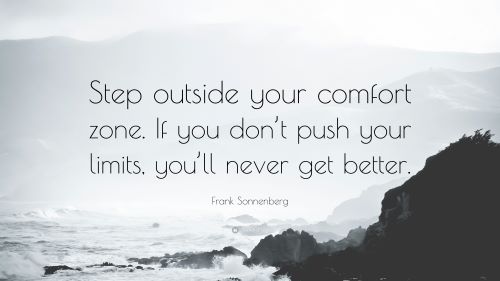
Don’t Stay In Your Comfort Zone

September 1, 2025 by Holy Name Monastery Leave a Comment

The advice in this Gospel is for us whether we are the guest or the hostess.  But it is not simply suggestions about etiquette. Something more is going on here. What Jesus advocates is not only for social occasions, but it’s meant to shape the entirety of our lives.

Jesus is advising us against staying in in our comfort zone. Rather than limiting our guest list to people who are clones of ourselves, people with whom we’re comfortable, who don’t threaten or even challenge us, Jesus encourages us to instead invite those who are different, people who make us uncomfortable, but whose difference from us may bring with it a blessing.

Repeatedly Jesus takes the low seat and invites unlikely types to be his guests.  Those who come to his banquet make it through the narrow door because they claim no merit of their own.  Jesus leaves the comfort zone of his place by his Father to come to earth as a tiny, helpless child. He leaves the comfort zone of earthly life, and allows himself to be placed in a narrow grave.

How can we move out of our comfort zone?

+   Develop a deeper spirituality,

+   Engage in service, – sit next to a stranger or a person you recognize but    want to know better.  It could even be a person you’ve lived with for years but who still feels like a stranger.

+   Help others on their spiritual journey – it’s amazing how you will change,
+   Keep saying “no” to the ways of the world and “yes” to the ways of God.

Jesus asks us that we do him the honor of keeping ourselves, our religion, our community from becoming trapped in some comfort zone.  For us in this Benedictine community, with the move to a new monastery in 2014 and all that involved choosing what to keep and what to divest ourselves of in gifts others was a daily reality.  We place great trust in God to guide us as we refuse to linger very long in any comfort zone, moving always past safety to encounter unexpected challenges to follow the crucified and risen One. This is what it means to live the life of faith – a life on the ladder of humility as described in the Rule of Benedict …  living in reverence and deference to others.

As Perpetual Adoration Benedictine Sister Mary Jane Romero puts it:  As a sister grows in humility, she is transformed interiorly, and it overflows into her exterior behavior.  She possesses a dignity that expresses her reverent attitude toward God, her sisters, and all of life.

Joan Chittister says it this way: Humility and contemplation are the invisible twins of the spiritual life.  (I like the symbol of twins … perhaps inspired by the image of Benedict and his twin sister.)  She continues: One without the other is impossible.  In the first place, there is no such thing as a contemplative life without the humility that takes us beyond the myth of our own grandeur to the cosmic grandeur of God.   Humility enables me to stand before the world in awe, to receive its gifts and to learn from its lessons.  But to be humble is not to be diminished.  Indeed, humility and humiliations are not the same thing.  Humility is the ability to recognize my right place in the universe, both dust and glory; God’s glory, indeed, but dust, nevertheless.  Being realistic about the self, the mind is free to become full of God.

Or consider this from Eugene Boylan in his book THIS TREMENDOUS LOVER: In the practice of humility, it is a very sound principle never to display a humility that is not sincere.  (Recall what Benedict directs: strive not to be called holy; rather, be holy.)  Frequent meditation on the Passion will bring us more quickly to humility than anything else, and while humility is dependent upon true self-knowledge, such knowledge is better obtained by studying what God is, than what we ourselves are.

A final thought …Humility is like underwear, essential, but indecent if it shows.

~Reflection by Sister Roberta Bailey, OSB


First Reading:   Sirach 3:17-18,20,28-29         Second Reading:  Hebrews 12:18-19,22-24
Gospel:   Luke 14:1,7-14
Continue Reading

Filed Under: Blog, Front Page, Homily Tagged With: comfort zone, don't stay in your comfort zone, Gospel, humility, Jesus, Joan Chittister

I Will Open the Door to You

August 25, 2025 by Holy Name Monastery Leave a Comment

Sometime back we heard the story of the man who eventually gave in and answered the door because his neighbor was persistent in knocking and calling out for bread.  Today the story is different – once the master locks the door there is no turning back.  We hear: “I don’t know you – depart from me!”  This parable is a message to those who have read Scripture, donned their “church clothes” every Sunday, sung the hymns, dropped money in the collection baskets in church and listened for years to sermons about Jesus without developing a personal relationship with Him.  Somehow the routines seem to fill their need for reassurance.  Because they have been “faithful” in coming to church, they feel that they have secured a place in heaven. What a distortion of the message that Jesus delivered. He’s tried, in various ways to tell the His followers to be wary of having too much religion and too little relationship with Jesus.

The world today is just as confused as the Jews of Jesus’ time about how one gets to heaven. There is a growing tendency to believe if a person is generally good and does good things for others during their lifetime, they will earn a place in Heaven.

Jesus does not imply that there is a specific route by which one must enter heaven.  He does mention a gate that is narrow and difficult to enter.   Because the gate is narrow, we must pass through one at a time.  But we will not get into heaven on someone else’s coat tails.    Each one will answer to God for herself.  Jesus tells the us how to be saved:  enter through the narrow gate, be strong when you knock, make certain that the Lord knows you, have meals together (the Eucharist), make friends with the prophets, associate with people from every corner of the world and don’t be concerned with where you are in line or at the table.  Jesus expands the picture for us when He says that people will come from the east and the west, the north and the south.

And He bids us come and recline at the table.  That’s not a typical image of us in church, is it?   How could it be when our parents, or the good Sisters, poked us on the shoulder to remind us to kneel up straight, get your butt off the seat…  Jesus, says come, recline at my table.  One of our challenges is to reserve a “table” where we can go to dine and converse with our most intimate friend, our God.    In spirit we “recline” stretch out, (remember, you have to fit through that narrow gate), We can tilt back, sprawl, loll in the Divine Presence. We recline with surety that our Host will recognize our voice because we’ve made a daily practice of “communing” with Him.   We need not have any concern for rank or place because He has promised: I will know your voice, I know where you are from, and I will open the door for you.

~Reflection by Sister Roberta Bailey, OSB


First Reading:   Isaiah 66:18-21         Second Reading:  Hebrews 12:57-, 11-13
Gospel:   Luke 13:22-30
Continue Reading

Filed Under: Blog, Front Page, Homily Tagged With: Door, Enter through the narrow door, Gate, Heaven, Jesus, narrow door, narrow gate, open

  • « Go to Previous Page
  • Page 1
  • Interim pages omitted …
  • Page 7
  • Page 8
  • Page 9
  • Page 10
  • Page 11
  • Interim pages omitted …
  • Page 93
  • Go to Next Page »

Footer

Prayer / Newsletter / Info

 Contact Info

Benedictine Sisters of Florida

PO Box 2450
12138 Wichers Road
St. Leo, FL 33574-2450
(352) 588-8320
(352) 588-8443

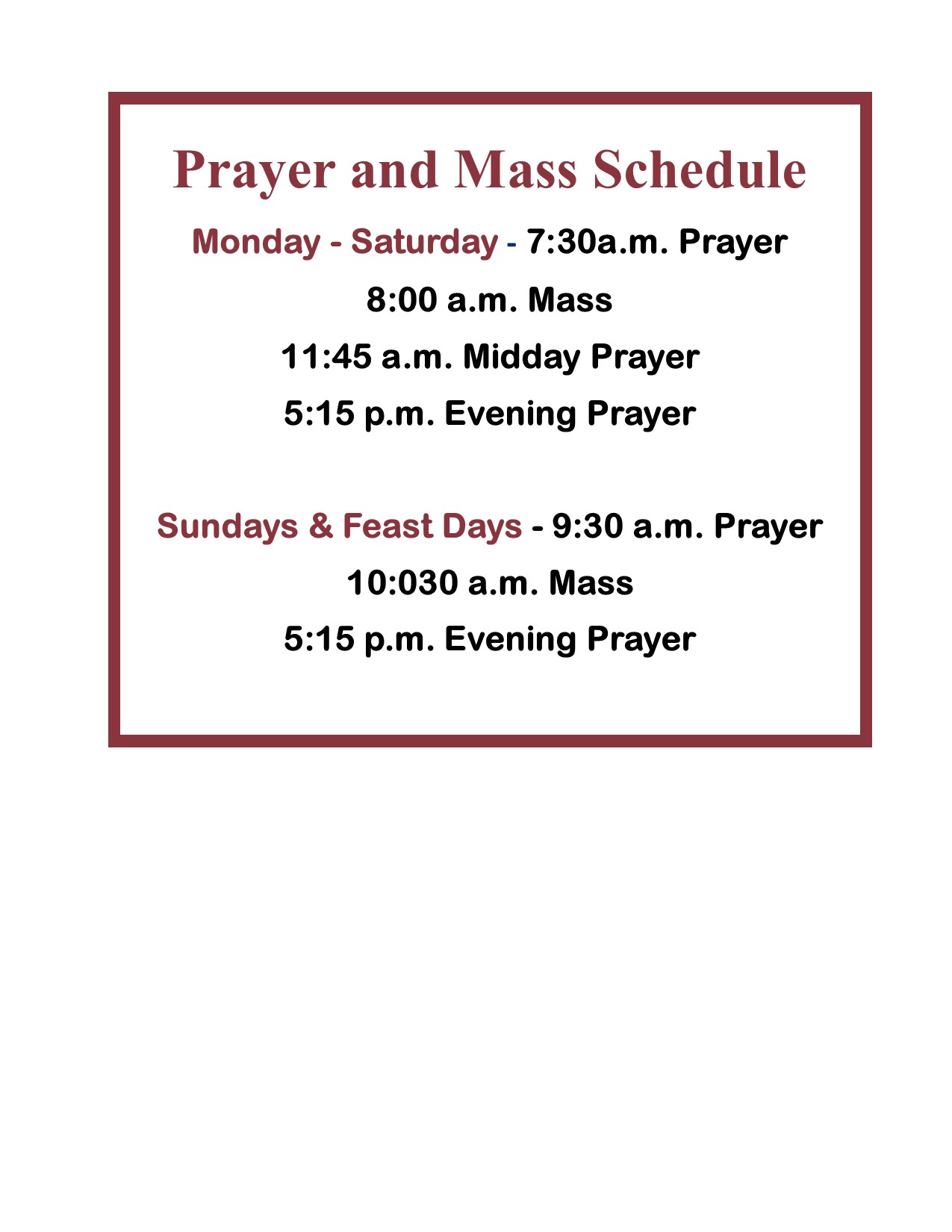
 Mass Schedule

Related Links

Copyright © 2026 · Benedictine Sisters of FL · Touching Lives Through Prayer and Service

Copyright © 2026 · Bendedictine Theme on Genesis Framework · WordPress · Log in