• Skip to primary navigation
  • Skip to main content
  • Skip to footer
Benedictine Sisters of FL

Holy Name Monastery
Founded 1889

Donate Now
  • Home
  • About Us
    • History
    • Being Benedictine
    • Benedictine Monasticism
    • Meet Our Community
    • Holy Name Academy-Alumnae
  • What We Do
    • Mission, Vision and Our Partners
    • Retreats
      • Invitation to Retreat
      • Accommodations
    • Volunteer Programs
    • Oblate Program
    • Spiritual Direction
    • Aqua/Hydroponics
    • More of Our Ministries
  • What’s Happening
    • Articles of Interest
    • Events
    • Commemorative Bricks
    • Newsletters
    • Brochures
    • Links
  • Support Us
    • Gifts of Support
    • Wish List
  • Stories Shared
  • Galleries
    • Photos
    • Videos
      • Benedictine Sisters of FL Videos
      • Other Videos
  • Contact Us

Lent

First Sunday of Lent

March 10, 2025 by Holy Name Monastery Leave a Comment

We all think we understand what temptation is.  Imagine this: there’s a little boy in a grocery store who walks by an open pack of chocolate-peanut butter cookies. A clerk notices him eye the cookies.  “Son, what are you doing there?” “Nothing,” replied the boy. “It looks to me like you’re trying to steal a cookie.” “No,” said the boy, “I’m trying not to.”  That’s temptation!

We understand that temptation leads to trouble.  Such was the plight of the man that I read about in Reader’s Digest. The man told this on himself.  He was shopping with his wife in the mall when a shapely young woman in a short, form-fitting dress walked by.  He followed her with his eyes.  Without looking up from the item she was examining his wife asked, “Was it worth the trouble you are in?”  That’s the trouble with temptation!

How many of us have shrugged and said, “The devil made me do it!” and used that as an excuse when caught doing something we weren’t supposed to?  It’s a convenient defense.  But there’s one problem: the devil can’t MAKE us do anything.  He may be clever, but he’s not all powerful.  It may feel that way, however, when we’re dangling on temptation’s hook, because the devil has a tried and true strategy for luring us into his net.  First, he lays out the bait like a skilled fisherman.  The devil has been following our clues and noting our habits and social media hangouts.  Then  a custom-made lure appears right in front of our noses.

Now comes the appeal.  We can’t be made to bite, but you know what happens when we catch a glimpse of the tantalizing bait like (maybe a snapshot promo on TV).  We’re drawn in, we linger over it. We toy with the idea and roll it over in our minds until it consumes our imagination.  We just HAVE to know what the gossip tidbit was we overheard.  Now the struggle really begins.  Our conscience jabs us in the ribs, the red flags go up, the warning sirens go off but that invitation looks so delightful.  What do we do?

Notice how Luke ends his report – the devil departed for a time. We know what happened to Jesus in the Garden of Gethsemane. The depth of Jesus’ trust in God is shown most fully when He rejects the temptation to turn away from his God-given mission.  Christ let Satan make us of all his evil conniving forces and defeated him at every angle until the devil got discouraged and left “for a time.”

Benedict knew this dynamic, didn’t he?  Remember in chapter 43 where he warns if the monastic comes late for chapel?!  Even though ashamed, she should still come inside lest she be tempted to return to bed and sleep, or worse, settle down outside and engage in idle talk, thereby giving occasion to the Evil One.  Latecomers should come inside so that they will not lose everything and may amend in the future.  Either we will resist or yield. We will swim away or swallow the temptation whole.  When you give in you know the feeling of emptiness and the pain that sticks in your throat or gut.  But, be alert when you do resist – be ready for the temptation to come from a different direction.  However, when you do resist you will know a feeling of blessed freedom.

You may have learned this little ditty of a prayer as a child.  It’s still a good one for nightly protection. I liken it to a child’s compline (evening prayer).

“Matthew, Mark, Luke, and John,
Bless this bed that I lie on.
Before I close my eyes in sleep,
I give my soul to Christ to keep.

Four corners to my bed,
Four angels ’round my head,
One to watch, one to pray,
And two to bear my soul away.

I go by sea, I go by land,
The Lord made me with his right hand,
If any danger come to me,
Sweet Jesus Christ, deliver me.

You are the branch, I am the flower,
I pray God send me a happy hour,

And if I die before I wake,
I pray the Lord my soul to take.

~Reflection by Sister Roberta Bailey, OSB


May you each have a spirituality enriching LENT 2025 experience! 


First Reading:   Deuteronomy 26:4-10         Second Reading:  Romans 10:8-13
Gospel:   Luke 4:1-13


Continue Reading

Filed Under: Blog, Front Page, Homily Tagged With: devil, First Sunday of Lent, for a time, Jesus, Lent, Luke, Prayer, satan, temptation

Ash Wednesday

March 6, 2025 by Holy Name Monastery Leave a Comment

Ashes of death on our foreheads,
seeds of hope in our hearts. 
As we begin the journey, beyond the cross,
let us remember,
God prepares us for life, not for death,
for resurrection and not for crucifixion,
for love and not for hate.
In a world where death holds us bound, and violence seems to reign
in thought and deed,
may this journey of Lent get us ready
to be God’s good news
of hope and wholeness,
peace and reconciliation,
and resurrection life.
Christine Sine

Continue Reading

Filed Under: Events Tagged With: Ash Wednesday, ashes, Christine Sine, Death, God, Lent, Sine

Eighth Sunday in Ordinary Time

March 3, 2025 by Holy Name Monastery Leave a Comment

This Sunday can fall either before Lent or after the Easter season, so it is not often celebrated.

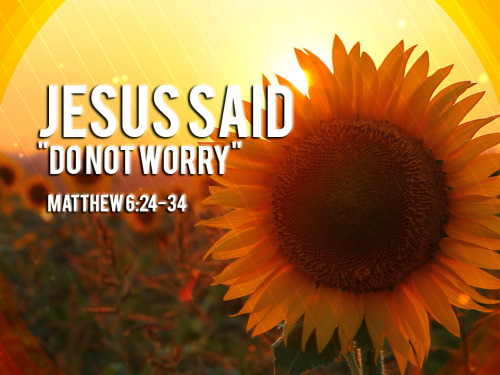
THE GOSPEL IS A STRONG CHALLENGE to the lifestyle that prevails in most of our cities in the so-called developed world.  Jesus puts it bluntly: “You cannot at the same time be the slave of God and “mammon.” What Matthew is pointing out is that since human beings are not self-sufficient, we are dependent on something outside ourselves. It should be God, not the material goods we own.  Matthew concludes by reminding us to use our “one day at a time” confidence and remember that we are in God’s loving care. The graces we need will be there when we need them.  We can’t stock-pile graces for a rainy day.

What is in question is our attitude towards “things.”  Lent is a good time to review  the contents of our closets and other possessions.  Jesus is teaching us that our only real security is total trust in God.  We have to make a choice between God’s vision of life and a preoccupation with possessions. That involves different goals and visions of what is most important in life.  We can wear a veneer of Christian practice, but it won’t penetrate below the surface of our skin.

Jesus preaches something akin to “holy indifference” toward material goods. It should be obvious that some material things — like food and clothing and shelter — are necessary for daily living and everyone has a right to have these things.  The attitude of ‘holy indifference’ is not to be confused with an attitude of not caring about anyone or anything.   On the contrary, a person who practices holy indifference cares much and deeply and says ‘yes’ only to what is needed.

In the ordinary run of things, worry is a waste of time and psychic energy because it’s all about being uneasy about what might happen and will probably never happen. (Father) Tony de Mello quotes the Buddhist axiom: “Why worry?  If you don’t worry, you die; if you do worry, you die.  So, why worry?”    Fr. Tony continues: “Be yourself.  Be here.  Be now.”  God has provided you with everything you need right now to be happy.”  Our lives would be transformed if only we could really take Jesus’ advice: “Do not worry about tomorrow: tomorrow will take care of itself.”

If you tend to be a worrywart, Jesus has a remedy for you.  He says, look at the birds of the air and the flowers in the field.  They do nothing except be themselves and God takes care of them.  People are often so busy regretting the past or fretting about what MIGHT BE in the future that they can’t enjoy life.

Sounds so logical but you and I both know that everyone here worries about something. Some of us probably only worry every now and then. Some of us could win the prize for the world’s “expert worrier”. If we find ourselves with nothing to worry about, we worry that there’s nothing to worry about… so we worry until we figure out what that “nothing” is.  Right?

You know, worry is almost always about assuming control over things.  That’s a control that God never meant for us to have. Assuming control for the future is just not part of what we’re designed to do. Jesus says, “Can any of you by worrying add a single hour to your span of life?”   We don’t have that kind of power.   But we can come into the peace of “the birds of the air and the flowers of the fields” when we are content with just being a human being and stop trying to be God.  “Let go, let God!”  This Gospel lesson reminds us that we are called to trust in God who knows what we need and when we need it.  We are called to believe that God will give it to us, when we need it.

~Reflection by Sister Roberta Bailey, OSB


Prepare ye that way for the good Lenten experience.

God bless!


First Reading:   Isaiah 49:14-15         Second Reading:  1 Corinthians 4:1-5
Gospel:   Matthew 6:24-34
Continue Reading

Filed Under: Blog, Front Page, Homily Tagged With: God, Gospel, happy, holy indifference, Jesus, Lent, things, worry

Fifth Sunday of Lent

March 18, 2024 by Holy Name Monastery Leave a Comment

Jesus must have been a visual learner – His words are so visually clear: “If a seed is planted into the ground and it does not die, it remains a seed.  But if it dies, it produces many seeds and seedlings and those seeds and their seedlings produce much fruit.”

We may think of seeds as a sign of new life, but the process really begins with the seed dying.  Could it be that the key to life is death?  Could it be that the key to living is dying?  Could it be that dying is important to living?  Listen once more to Jesus’ words: “Unless a seed dies, it remains a single seed, but if it dies, it produces many seeds and therefore much fruit.”

So, what happens when a seed dies?”   Inside every seed is an embryo, and in that embryo is a root which goes down into the ground; and a shoot that rises above. Every embryo has a root and a shoot; and inside (this is really a miracle), an “on” and “off” switch.

When a dormant seed is immersed in a growing medium, in optimal conditions, the switch goes “ON.”  The seed takes in water, and miraculously begins to expand.  I suspect you’ve seen it happen when as a youngster you put a lima bean in a wet paper towel inside a see-through container.  Anxiously, you watched to see whose seed would be the first to show signs of the miracle of growth.  That is what Jesus was describing: “Unless a seed dies, it remains a single seed; but if it dies, it produces many seeds and then much fruit.”

Isn’t this the story with us and our good intentions?  Some behavior must die, it must give way to a new “me.”  When conditions are just right, the switch goes ON, protective fear breaks loose, and we begin to practice a new way of conducting ourselves.  Like new seeds, without greenhouse coaxing, it takes 40 days to acquire a new habit.  Mmmm …  Did that figure into the reason there are 40 days in Lent?

A similar miracle of nature happens with salmon.  Salmon make their way ever so slowly along the water bottom, their noses worn white from abrasions by rocks and pebbles.   They travel hundreds of miles to their spawning fields.  My father, a career Coast Guard man, spent months at a time on patrol along the U.S. Pacific coast protecting spawning salmon from poachers.

Salmons’ instinct bring them back to the place of their birth. After spending a year or two or three out in the ocean and swimming back up to the stream of their birth, the salmon are preparing to die. At the end of their long laborious journey, they dig a hole and lay their eggs.  And, they die.  And out of those eggs comes new life.  For it is ONLY through dying that there is new life among the salmon. And so there is a parallel is there not, between the seed and the salmon?  For both, death is necessary for life.  In dying, new life springs forth.

And, therein is our Lenten lesson – it is in dying that we begin living.  In the words of St. Francis of Assisi’s famous peace prayer; “It is in giving that we receive; it is in dying that we are born again.”

How is your Lenten “dying” going?   On Holy Saturday evening, at the Easter Vigil service, as we ignite the new fire we will watch our Lenten resolutions go up in smoke.  What will have died in us?  Will self-will have resigned its place to deference?  Will compulsive appetites have given way to mortification?  Will my prompt to choices be less “what’s good for me” and be more “what’s good for the community?”   Will infidelity have yielded to loyalty?   Will self-pleasure have conceded to service to others?  Will the needs of others more likely motivate my actions?  Will I finally have relinquished a life-long destructive habit?  Will I have surrendered my quick tongue to gentleness of tone of voice?  What will have died?  What will spring up in its place?

Jesus summed it up for us:  “Whoever will find life must lose it, but whoever loses life will find it.  If anyone would serve me, they must follow me.”  Where?  You must follow Me in death to self.  The seed must first die.  Only then will Jesus “Easter” in us!


~Reflection by Sister Roberta Bailey, OSB


Happy St. Patrick’s Day (March 17), St. Joseph (March 19) and St. Benedict (March 21)  

Rejoice with me when on March 23 as I mark 65 years since I pronounced my vows as a Benedictine Sisters of Florida.


First Reading:   Jeremiah 31:31-34       Second Reading:  Hebrews 5:7-9
Gospel:   John 12:20-33
Continue Reading

Filed Under: Blog, Front Page, Homily Tagged With: 40 days, 5th Sunday of Lent, die, Fifth Sunday of Lent, fruit, Jesus, Lent, seed

Fourth Sunday of Lent

March 11, 2024 by Holy Name Monastery Leave a Comment

What’s weighing heavy on your heart? I’m here. Let’s talk.


In John’s Gospel, the evangelist has (already before Lent) walked us through the story of the Wedding at Cana.  Jesus, at a nudge from his mother Mary, interacted with the servers who followed his directions to fill the empty stone jars with water, only to be mystified when the water turns into the best wine in the house.   Now, John is the only evangelist who relates this story.  And, he is exact in some details: there were six jars, each 2-3 feet tall, each holding 9-10 gallons. That’s approximately 55 gallons of wine – which makes for quite a wedding!

Last Sunday, we witnessed an interaction of a different sort.  Jesus calls a halt to the desecration of His father’s house, the temple in Jerusalem.  Today’s Gospel takes a leap that skips over an interaction that sets up today’s teaching.  In that gap, we hear about the conversation between Jesus and the Pharisee Nicodemus who came to Jesus under the cover of darkness.  Nicodemus was struggling with some big questions.  As he said to Jesus: “I know you came from God.  Maybe you can shed some light on my quandary.”

Puzzled by what Jesus says, Nicodemus questions how an old man can be born again???  Jesus cautions him: “Don’t be amazed that I told you, ‘you must be born from above.’”  Here comes a sentence that I love: “The wind blows where it wills, you hear the sound it makes but you do not know where it comes from or where it goes.”  [Like Benedict said, Listen with the ear of your heart.”] Reminds me of a 70s folk song: “Blowin’ in the Wind” – “How many times must we look up before we can see the sky?  How many ears must we have before we can hear people cry?  The answer, my friend, is blowin’ in the wind.”

John reports that Jesus assures Nicodemus: “In all truth I tell you, we speak only about what we know and witness, what we have seen and heard.  And yet people reject our evidence.  If you do not believe me when I speak to you about earthly things, how will you believe me when I speak to you about heavenly things?”

Jesus calls Nicodemus’ attention to the story in the Book of Numbers, when the people were in the desert and they complained against God and Moses. “Just as Moses lifted up the serpent … so the Son of Man must be lifted up, so that everyone who believes in him may have eternal life.”  John reminds us: “God so loved the world that he gave his only Son, so that everyone who believes in him might have eternal life.  God did not send his Son to condemn the world, but that the world might be saved through him.”

Today, I believe, God is telling us: “What’s happening today: natural disasters, people against people violence, starvation and selfishness, dread illness …   It’s a wake-up call.  Like I said to the prophet Isaiah, yea these many years ago:  “I am the designer and maker of the earth.” Remember in Genesis, at the creation of life on this earth, I looked on all that had been created, and I said: “It is good. …  For, I am God, there is no other.  I will not speak in secret nor from some dark place.  I did not say: Look for me in chaos.  I promise justice, ‘the public face of love’.  I speak the truth.  Turn to me and be safe.  Say: From God alone comes my strength and safety.”

God continues speaking to us.  “All time is temporary in My eyes until you rest in ME eternally.  Today I tell you, just as I welcomed a midnight conversation with Nicodemus, I am here – day or night – for you.  What’s on your mind or weighing heavy on your heart?  Let’s talk.”

~Reflection by Sister Roberta Bailey, OSB


First Reading:   2 Chronicles 36:14-16      Second Reading:  Ephesians 2:4-10
Gospel:   John 3:14-21
Continue Reading

Filed Under: Blog, Front Page, Homily Tagged With: Fourth Sunday of Lent, God, Jesus, Lent, Nicodemus, Son

Third Sunday of Lent

March 5, 2024 by Holy Name Monastery Leave a Comment

It is to US that Jesus Entrusts Himself


Today we have by far the most famous story of Jesus’ anger, yet none of the gospel writers mention the word anger in it. They said rather that Jesus was “consumed with zeal.”   Zeal sometimes wears the face of persistence.  This is akin to four-year Jude who, when his mother asked him what he wanted for breakfast, replied: “Soup.”  His mother explained: “Son, you know that we don’t eat soup for breakfast. We eat soup for lunch. So, what would you like for breakfast?”  “Lunch,” he replied. Now that is certainly enthusiasm in pursuit of an idea!

The author of the book “Angry Like Jesus” (2015) writes “When I began to study Jesus’ anger, I was struck by the observation that every time Scripture says Jesus was angry, he’s the only one who was. Conversely, every time others were angry, Jesus was not.”  Notice in today’s story that no one except Jesus was “consumed with zeal” when money changers overtook the temple.

What can we learn from this?  First, we have to understand that anger is an automatic response which tells us to take care of ourselves.  If we stuff our anger, and blow up later at someone who has no clue what set us off, who’d want to be friends with us?  I could find nowhere in Scripture or the Rule of Benedict where anyone says: “Don’t get angry.”  One of Benedict’s Tools of Good Works tells us: “Do not act in anger” and in the Prologue he cautions: “Keep your tongue free from vicious talk and your lips from all deceit; let peace be your quest and aim.”  Chapter 4 has this admonition which covers a multitude of situations: “Your way of acting should be different from the world’s way.”

To understand Jesus’ anger that day, we need to get a handle on how important motivation is.  It was not wrong for the merchandisers to sell animals and doves. Nor was it wrong to change money.  That was helpful to the people who came unprepared to the temple.

Notice that no one stopped Jesus when he used his whip of cords.  Notice, too, the Gospel writer did not say Jesus did bodily harm to anyone.  He overturned tables, He spilled money and swung the whip of cords so all in his path scattered.

Then, like a child who has witnessed the fury of a disappointed parent l look up calmly and ask: “So, Mom, are we still going to McDonald’s?”  The Jews overlooked Jesus angry display and asked: “What sign can you show us for doing this?”  Jesus, probably shaking his head in amazement, answered: “If you destroy this temple, which took 46 years to build, I will raise it up in three days.”  They’d remember this later when Jesus was raised from the dead.  They didn’t ask why Jesus cleansed the temple because they knew they were guilty of wrongdoing.

The Gospel tells us while Jesus was in Jerusalem for this Passover many began to believe in his name.  But still he did not trust Himself to them.  It is to us that He entrusts Himself, in Sacrament and Word.  Individually and as a faith community, we are the sanctuary where Jesus has chosen to reside.  When He enters the temple each day, will he find it oriented to the purpose for which God has created you and me?  Or will he find cause to do some cleansing and cleaning?  We pray: Jesus, cleanse us as your temple and restore us, and keep us true to the purpose for which you created us.

~Reflection by Sister Roberta Bailey, OSB


First Reading:   Exodus 20:1-17       Second Reading:  1 Corinthians 1:22-25
Gospel:   John 2:13-25
Continue Reading

Filed Under: Blog, Front Page, Homily Tagged With: anger, Benedict, Jesus, Lent, Third Sunday of Lent, zeal

  • « Go to Previous Page
  • Page 1
  • Page 2
  • Page 3
  • Page 4
  • Interim pages omitted …
  • Page 6
  • Go to Next Page »

Footer

Prayer / Newsletter / Info

 Contact Info

Benedictine Sisters of Florida

PO Box 2450
12138 Wichers Road
St. Leo, FL 33574-2450
(352) 588-8320
(352) 588-8443

 Mass Schedule

Related Links

Copyright © 2026 · Benedictine Sisters of FL · Touching Lives Through Prayer and Service

Copyright © 2026 · Bendedictine Theme on Genesis Framework · WordPress · Log in