• Skip to primary navigation
  • Skip to main content
  • Skip to footer
Benedictine Sisters of FL

Holy Name Monastery
Founded 1889

Donate Now
  • Home
  • About Us
    • History
    • Being Benedictine
    • Benedictine Monasticism
    • Meet Our Community
    • Holy Name Academy-Alumnae
  • What We Do
    • Mission, Vision and Our Partners
    • Retreats
      • Invitation to Retreat
      • Accommodations
    • Volunteer Programs
    • Oblate Program
    • Spiritual Direction
    • Aqua/Hydroponics
    • More of Our Ministries
  • What’s Happening
    • Articles of Interest
    • Events
    • Commemorative Bricks
    • Newsletters
    • Brochures
    • Links
  • Support Us
    • Gifts of Support
    • Wish List
  • Stories Shared
  • Galleries
    • Photos
    • Videos
      • Benedictine Sisters of FL Videos
      • Other Videos
  • Contact Us

Christ

Fourth Sunday of Easter – Good Shepherd Sunday

April 23, 2024 by Holy Name Monastery Leave a Comment

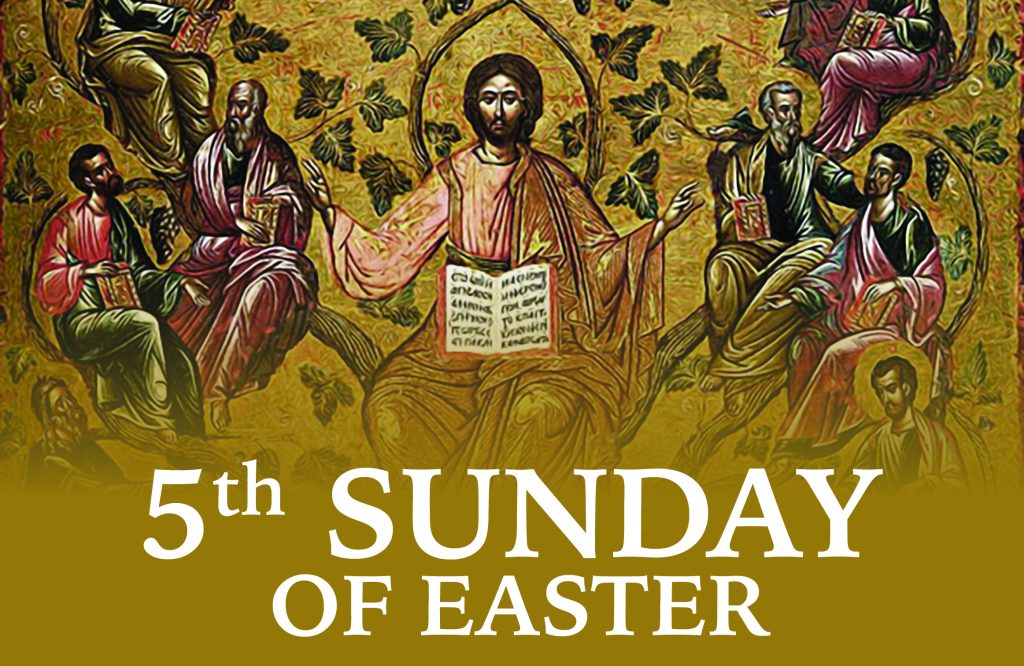
No wonder this is called Good Shepherd Sunday and the Church’s day of prayer for vocations.  Jesus’ identification as the Good Shepherd is read in all three cycles of the Sunday Gospels.  Jesus says: “I am the Good Shepherd.  I know my own and my own know me!”  One of the earliest paintings of Christ in the Roman catacombs represents him as carrying an injured sheep on his shoulders.  It was, and remains, an endearing and intimate image of a loving relationship – nurturing, life-giving, transforming, empowering.

I wonder aloud: why did Jesus choose SHEEP for his parable?  There are other animals native to the land where he spent his childhood: sand cats, camels, “man’s best friend”, or perhaps a goat or, heaven forbid: a pole cat.  Actually, there are 116 mammal species native to the Middle East.   What we do know is that he probably saw sheep most days of his life.  Jesus was teaching a lesson that would live LONG after He walked the face of this earth.  I can’t pretend or presume to read the mind of God.  But, Jesus, being God, knew that sheep would still be around today so that we 21st century people, living on the other side of the world, could identify with his example.

What is it about sheep that gives us some insight into our relationship with Jesus, the Good Shepherd?  I’ll describe a few.  Shepherds must anticipate the needs of their sheep for food, water, sleep, leadership and protection.  Sheep are commonly described as lacking initiative, dependent, copy cats but simple and playful.  They have insatiable appetites.  They seek sustenance, suckling from the moment they can stand upright. Sheep are skittish especially of loud noises and unpredictable in their reactions.   Maybe it’s their strong flocking instinct that most aptly applies to us who seek relationships in religious life?  Sheep are very social and need to see one another when grazing.  (Is that why we sit across from each other in chapel and at table?)

Sheep are agitated if separated from the flock (like humans who are forced to practice “social distancing”).  Sheep have excellent eyesight with their large, somewhat rectangular eyes, giving them a wide field of vision (like high sensates who take in every visual detail).   This feature, and a good sense of smell, alerts them to predators. Sheep are stubborn and unpredictable.  (Sound like anyone you know?) Head butting is both a natural and a learned behavior in sheep. (And, face it, some people are skilled in this behavior –  butting heads over trivial details.)

You see, we all act like sheep on occasion. We often ramble off from the flock to nibble at little bits of foreign pasture hanging over the fence. However, we have a Shepherd who understands us; one whose patience and love are infinite. He is always ready to go after us when we stray afar.  His voice is constantly reaching out to us in Lectio, retreats, sicknesses, crosses, this pandemic and other various ways. How many times have we already felt his loving grace calling and helping us back to the safety of His company? Once in a while we have even felt His shepherd’s crook around our neck, gently coaxing us back into the flock!

This Good Shepherd sermon preached by our Savior over two thousand years ago is still echoing and re-echoing around the world, calling on us, his faithful flock, to do all in our power to spread his Kingdom.  Do not shut your ears to this call of Christ today. Give him a helping hand by sharing the light of your faith, praying for and nurturing vocations.  And, ponder which sheep-like traits is Jesus coaxing to life in you?

~Reflection by Sister Roberta Bailey, OSB


First Reading:   Acts of the Apostles 4:8-12         Second Reading:  1 John 3:1-2
Gospel:   John 10:11-18
Continue Reading

Filed Under: Blog, Front Page, Homily Tagged With: Christ, Fourth Sunday of Easter, Good Shepherd, Good Shepherd Sunday, JesusGod, sheep

Second Sunday of Easter – Divine Mercy Sunday

April 8, 2024 by Holy Name Monastery Leave a Comment

Tomorrow has been known as “Low Sunday” – a lesser Easter celebration – or “Quasi-modo Sunday” from the first two words of the Entrance antiphon at Mass: “Like newborn infants” (speaking especially about those baptized at Easter).  It is the day that the newly baptized officially put away their white robes. Hence, it is known liturgically as the “Sunday of putting away the albs.”   And yes, the name of this feast is the origin of the name of the hunchback, Quasimodo, in Victor Hugo’s “The Hunchback of Notre Dame.” The foundling was so named because he was discovered at the cathedral on the second Sunday of Easter.

On that Second Sunday of Easter in the Jubilee Year 2000, at the Mass for the canonization of St. Faustina Kowalska, Pope John Paul II made a surprising announcement. “It is important that we accept the whole message that comes to us from the word of God on this Second Sunday of Easter, which from now on throughout the Church, will be called ‘Divine Mercy Sunday.”   Clearly it is not a new feast but neither is it an optional title for this solemnity; rather, Divine Mercy is the integral name for this Feast Day.

The Gospel begins with the risen Christ appearing to the apostles on Easter night. Jesus calms his disciples by saying and giving them “Peace.” He shows them the scars of his Passion, his wounded hands and side, the evidence of his saving work through his suffering, death and resurrection.  Then he breathes on them and explains what the divine breathing means with the words, “Receive the Holy Spirit. Whose sins you forgive are forgiven, whose sins you retain are retained.” He gives to the apostles, from the treasury of divine mercy, the power of mercy for penitents and the assurance there is nothing to fear.

The story of St. Faustina reveals the inspiration behind the Divine Mercy devotion. On February 22, 1931, at the age of 26, Sister Faustina experienced a life-changing vision of Christ. She saw him wearing a white robe and raising his right hand in blessing with his left hand resting on his heart from which flowed two rays of light. Jesus told her, “Paint an image according to the pattern you see, with the prayer, Jesus, I trust in you.”  Faustina could not paint but eventually she persuaded her spiritual director to find an artist to create the painting that was named The Divine Mercy.

Thankfully there is a trend among media services to make an effort to balance stories of horror and tragedy with illustrations of mercy.   For many people there are two stories that continue to stand out – The first is that of an Amish community that walked to the home of the man who had killed 5 of their children to tell his widow they forgave her husband for what he had done, and consoled her for the loss of her spouse. They buried their anger before they buried their children.

The other well-known story of forgiveness, you may recall, was depicted on the cover of TIME magazine 1984.  It pictured a prison cell where two men sat on metal folding chairs. The young man wore a black turtleneck sweater, blue jeans and white running shoes. The older man was dressed in a white robe and had a white skullcap on his head. They sat facing one another, up close and personal. They spoke quietly so as to keep others from hearing the conversation. The young man was an attempted assassin; the older man was Pope John Paul II, his intended victim. At the end of their 20-minute meeting, Ali raised the pope’s hand to his forehead as a sign of respect. John Paul shook Ali’s hand tenderly.

John Paul II and the Amish Christians teach us that forgiveness is central. They believe in a real sense that God’s forgiveness depends on their extending forgiveness to other people. That’s what the mercy of God is all about.  They are but two examples of God’s divine mercy in action, the same divine mercy whose message St. Faustina witnessed, the gift of mercy we celebrate on Divine Mercy Sunday.  This is also a good week for our prayer intention for vocations, formators and those they guide and mentor.  May God, in wisdom and mercy, see fit to bless us with the grace to persevere in our own vocations, and for insight and fortitude for all those involved in the ministry of religious formation.


~Reflection by Sister Roberta Bailey, OSB


First Reading:   Acts 4:23-35         Second Reading:  1 John 5:1-6
Gospel:   John 20:19-31 
Continue Reading

Filed Under: Blog, Front Page, Homily Tagged With: Christ, disciples, Divine Mercy Sunday, Jesus, Pope John Paul II, Second Sunday of Easter

Epiphany Sunday 2024

January 9, 2024 by Holy Name Monastery Leave a Comment

In the stories of Jesus’ birth, two special groups of people came to visit the new-born babe: the shepherds and the magi. The church has no special feast to commemorate the visit of the shepherds although the Christmas liturgy at dawn is sometimes referred to as the Shepherds’ Mass.    The shepherds learned of the birth of Jesus through a direct, supernatural revelation from angels. The magi, on the other hand, learned of the birth of Jesus by observing the stars. The stars did not speak in the same way the angel had so the wandering Magi had to interpret this natural sign. It is a unique story that represents all peoples of all nations and opens our eyes to the fact that God is not limited to any one religious tradition.

This solemnity has so long been associated with the image of “Three Kings” that it’s easy to forget that Matthew, who is the only evangelist who relates this particular story, nowhere mentions either the number of visitors or their kingly rank.  He does, however, call the visitors “magi,” which, in those days, could have meant anything from “wise man” or “sorcerer”; from “astrologer” and “astronomer” – all learned men respected for their wisdom.

With the Greek community, Tarpon Springs is so close to us that we are well aware of the tradition of young men diving into the bayou (no matter how cold the waters) in hopes of being the one to retrieve the cross believed to bring them a year of special blessings.

In Spanish-speaking countries, the tradition had long been to observe Christmas Day as a solemn religious occasion, reserving Three Kings Day for partying and exchanging gifts.  Similar to the new world custom of leaving a cookie on Christmas eve for Santa Claus, children leave a treat of hay in hopes that the camels will bring the Kings with a gift.

In India, the Epiphany is not a moveable feast.  It is celebrated on the 12th night after Christmas, January 6th.  It marks the manifestation of Jesus in a religious celebration honoring the Baptism of Jesus by John in the River Jordan.  It is also a reminder of St. Thomas, the Apostle, who brought Christianity to India in the living waters of the Sacrament of Baptism.  The church commemoration includes the sound of a generous pouring of water that can be heard by the congregation and live-screen audience.

The custom in Germany is that of a children’s festival. After a church service the children, dressed as kings, go from house to house to gather offerings for the poor.  At each house, they paint “20+C+M+B+the numeral for the year” (this year 24) which is Latin for Christ bless this house). Coincidentally the letters are the first letters of the names of the wise men: Caspar, Melchior and Balthazar.

In England, the traditional Yule log is kept burning until Twelfth Night (Epiphany) in order to bring blessings and good fortune throughout the upcoming year.  Several countries – most notably Italy and Russia – share the long-held tradition of a kindly old witch who makes her annual visit on the night of January 5, climbing down the chimney to bring presents to children.

The Irish people, (Google told me) know how to celebrate the feast of the Epiphany with deference to women.  On this day it is the tradition in Ireland for the women to get together and enjoy their own Christmas.  The men folk stay at home and handle the kids and the many chores their wives do daily.

The history of the King Cake has its roots in pre-Christian religions of Western Europe. During pagan harvest celebrations it was customary to choose a man to be the “sacred king” of the tribe for a year. That man would be treated like a king for the year. Then he would be sacrificed, and his blood returned to the soil to ensure that the harvest would be successful. The method of choosing who would have the honor of being the sacred king was the purpose of the “King’s Cake” in which a coin had been baked. Whoever got the slice that had the coin was the chosen “king for a year.”

The custom evolved and migrated from France to Louisiana. The ceramic baby hidden in the oval-shaped cake speaks to the fact that the three Kings had a difficult time finding the Christ Child. Whoever finds the ceramic baby hosts “King Cake parties” each day from Epiphany until Mardi Gras.

So, why would we be of interest to any of us?  It matters because we are a nation, and a community, from a variety of backgrounds.  Jesus’ arms were widespread on the cross to embrace all cultures, all peoples through all times.  As we enter a new year, our prayer is that it will be the dawning of a new day that will bring the gifts of a warm welcome, peace, financial security, equitable access to health care services and food; worthy companionship for migrants, immigrants, displaced placed person and all for whom we have promised to pray.  In fact let us pray for these things for the entire world – and let’s not overlook each other… As Tiny Tim says in Dickens’ A CHIRSTMAS CAROL: “God bless us everyone!”

~Reflection by Sister Roberta Bailey, OSB


First Reading: Isaiah 60:1-6              Second Reading: Ephesians 3:2-3a, 5
Gospel: Matthew 2:1-12


Continue Reading

Filed Under: Blog, Front Page, Homily Tagged With: Christ, Christmas, Epiphany, Epiphany Sunday, Jesus, Magi, Shepherd, Three Kings

New Year 2024

January 4, 2024 by Holy Name Monastery 1 Comment

“I Hope You Dance”


“The shepherds made known the message that had been told them about this child.  All who heard it were amazed by what had been told them.”  (Luke 2:17)

Those shepherds accepted the challenge of allowing God’s glory to be seen in their lives.  That same challenge is ours!  And when we manage to perceive God’s working in our lives, amazing things can happen! People behold the divine glory present and working in and through us. That’s why we dare to commit “ourselves and our resources to respond to the needs of our times with the very compassion of Christ.”  We respond not simply with Christ-like compassion, but with the very compassion of Jesus, our new-born savior and Lord of our lives.

I perceive that’s our challenge at this point in our history as individuals, and as a community.  On the cusp of one year, and the dawning of a new one, we have come to a greater acceptance of the reality of what Joan Chittister describes in her book THE WAY WE WERE: (Joan says) “Only one thing I know for sure.  I know we have to do more with less.  (I know) We are getting older.  And, we are getting smaller.  Most of all, I know we have to do it together.”  Think about it: (I am not the first to says this) the miracle of the Red Sea was not that the waters parted.  The miracle was that the first Jews dared to step into the open chasm. And others followed their lead.  And, miracle of miracles, they came out on the other side.

Recently I got a new purse.  That meant emptying the old one, digging to the bottom where I found a crumpled scrap of paper.  I smoothed it out as best I could.  What I read scribbled there must have been important the day in the past when I first wrote it.  And it seems to me it’s a good directive as we contemplate the days ahead in our unfolding future: “Look to the past.  Look to the future.  And, then do the dance in the middle.”  And I’ll add:  don’t be afraid to be the first one on the dance floor.  But neither do you have to be the first one – just don’t be a wall-flower. Heed the words of the Dan Schutte’s hymn: “Join in the dance of the earth’s jubilation! This is the feast of the love of God.”   Join the dance, be it a two-step or a three-step waltz, the twist, the Bunny Hop, a line dance, a square dance or a reel; a gentle swaying of the body or drumming one’s fingertips. Do not fear, others will eventually join in.  Remember, we’re together in the rhythm of the dance of community life.  We’re the ones who give expression to the music of creation that we call Community.

Dance to the rhythm of communal prayer and meal times. Dance to the call for extra service when substitutes are requested or extraordinary tasks need doing.  Dance to the silent beckoning of objects you spy out of place – return them to their usual home.  Don’t ignore the nudge of a soiled surface and dusty corners.  There’s a reason why God let you see their longing for a cleaner’s touch.  Dance lightly when a person’s distracted or has a blank look, a pinched brow, or seems to be waiting for a smile or a “hello” or “want to talk?”  Bend low with a ballet dancer’s grace as you offer gesture of gratitude.  And, when you feel like you’re dancing as fast as you can but the whole world is spinning beneath you, it is. In the words of Albert Einstein: “Life is like riding a bicycle. To keep your balance, you must keep moving.” 

Singer-Song writer Lee Ann Womack put words on my wish for you, for each, and all of us.  I paraphrase her life-affirming message that invites us to step out and embrace life, in her uplifting song, “I Hope You Dance.”

“I hope you never lose your sense of wonder but always keep that hunger.
May you never take one single breath for granted.

I hope you still feel small when you stand beside the ocean.

Promise me that you’ll give faith a fighting chance;
And when you get the choice to sit it out, or dance? I hope you dance.

I hope you never fear those mountains in the distance,
Never settle for the path of least resistance
Livin’ might mean takin’ chances but they’re worth takin’. 

Give the heavens above more than just a passing glance
And when you get the choice to sit it out or dance, I hope you’ll dance.”

Please, “when you have the choice

to sit it out or dance, I hope you’ll dance.”


~Reflection by Sister Roberta Bailey, OSB

Continue Reading

Filed Under: Blog, Front Page, Homily Tagged With: Christ, Community, I hope you dance, Jesus, Joan Chittister, Lee Ann Womack, Lord

“Christ Jesus Ruler, Christ Jesus Victor”

November 27, 2023 by Holy Name Monastery Leave a Comment

As we observe the Feast of Christ, the King, we are celebrating a ruler who was willing to die for us, for all humanity, to give us true freedom.  Jesus radically redefined the traditional concept of kingship.  His example of radical love and kindness is lived out by us, his followers, in our reaching out to those in need – beginning with those with whom we live.

For over four and a half thousand years there has stood a great obelisk in St. Peter’s Square in Rome.  The structure, originally located in the Temple of the Sun in the Egyptian city of Heliopolis, was brought to Rome by the dreaded Emperor Caligula.   He had it set right in the middle of a Roman racetrack known as the Circus of Nero. It was in that Circus that St. Peter was martyred.  On the base is inscribed two phrases, The first, in Latin, the words of a familiar hymn: Christ Jesus Victor!  Christ Jesus Ruler!  Christ Jesus Lord and Redeemer!”  The other is an inscription that proclaims: “The Lion of Judah has conquered.”  It may well have been the last earthly thing that St. Peter saw as has he hung upside-down crucified to die.

In 1925, Pope Pius XI universally instituted the Feast of Christ the King to be celebrated on the last Sunday of October.  However, since the reform in the liturgical calendar in 1969, the feast falls on the last Sunday of Ordinary Time, the Sunday before Advent.

At the time of the institution of the feast, secularism was on the rise and respect for Christ and the Church was waning.  Today, we witness the same sense of distrust of authority – accelerated by political situations and the rise of individualism.  Some reject the titles of “lord” and “king” for Christ, believing that such titles are borrowed from oppressive systems of government.  History proves that some kings have been oppressive.  Others have been converted to a more Christian style of ruling, often by the influence of a woman.

In 2015, during the Jubilee year of Mercy, Pope Francis added another part to the title: “…the living face of the Father’s mercy.”  The combined readings this year for the solemnity give us a glimpse of how Christ is at the same time both king and the face of the Father’s mercy.  In contrast to the oppression so prevalent in Jesus’ day, he connected his role as king to humble service, and taught his followers to be servants as well.  “You are my disciples if you do what I command you: love one another as I have loved you.”

Deep down do we believe JESUS IS LORD or is it just from force of habit that we say or sing those titles for Jesus?  At the opening of every Eucharistic gathering, the celebrant greets us with the words: “The Lord be with you.”  In tomorrow’s Responsorial Psalm we will proclaim: “The Lord is my shepherd.”  We will profess in the Creed: “I believe in one Lord Jesus Christ.”   We often raise a hand in benediction as we sing: “May the blessing of the Lord be upon you.”  If we believe it’s true that Jesus is Lord, why do we sometimes scramble to find a substitute to replace the word “Lord?”  It strikes me that while we may struggle with the concept of Jesus as king, somehow, especially on feasts of Mary most of us have no problem calling Mary queen: Queen of the Universe, Queen of Heaven, Regina Caeli.

At the end of this coming week, we will be jump-started into the season of Advent: an experience of an “ending that is a beginning” – a time of waiting for the One who will come.  This is the One who is promised to us in the Book of Revelation: “Behold, he is coming and everyone will see him; the Alpha and the Omega, the one who is and who was and who is to come.”

Let us pray that we can portray to the world the beneficence of a humble king, truly putting flesh on our Corporate Commitment: to be Christ to one another.  For it is not so much what we say or what we do that puts flesh on our commitment.  It is who we are that “responds with compassion to the hungers of God’s people.”

~Reflection by Sister Roberta Bailey, OSB


First Reading:   Ezekiel 34:11-12, 15-17         Second Reading:  1 Cor 15:20-26, 28
Gospel:   Matthew 25:31-46
Continue Reading

Filed Under: Blog, Front Page, Homily Tagged With: Advent, Christ, Jesus, King, Lord, queen, Victor

Transfiguration Sunday

August 7, 2023 by Holy Name Monastery Leave a Comment

In the chapter before this Gospel passage Jesus asked His disciples: “Who do people say the Son of Man is?”  They came up with a variety of answers.  Then Jesus asked “But what about you?  Who do you say that I am?”  You’ll remember Simon Peter’s answer, ‘You are the Christ, the Son of the living God.”

Well, Peter was correct.  But, a couple verses later we see that Peter still did not understand the full meaning of the declaration he had made.  When Jesus predicts His death, Peter takes him aside and rebukes him. “Never, Lord! This shall never happen to you!”  To which Jesus replied: “Get behind me Satan!  You do not have in mind the things of God, but the things of men.”

In today’s Gospel of the Transfiguration story of the uncovering of Jesus’ face and clothing reveal who Jesus really is!  Peter, James and John witnessed, if only for a moment, the glory of God revealed in the Son.  This was the true Jesus.  Time and stick-to-a-tive-ness in the relationship strengthened the bonds of friendship and discipleship.

The same goes for us.  Every time we come together for worship or any communal gathering or interaction with another is an occasion for a mountaintop experience.  Maybe it happens for you every day at the Consecration of the Mass or when you look across the chapel or the dining table.  Pope Francis challenges us in his July “Pope Video” saying: “If you are the same at the end of Mass as you were at the beginning, something is wrong.”  The transfiguration, in the exact way it happened in today’s Gospel, happened only once.  But the disciples had many more mountaintop experiences when the REAL Jesus revealed His fullness little by little to those who took the time and interest to stay with him and to follow his lead.  That’s how we build relationships, by spending time with each other; by getting to know and understanding the other, experiencing life with the other.  It’s how we live out our vow of stability.

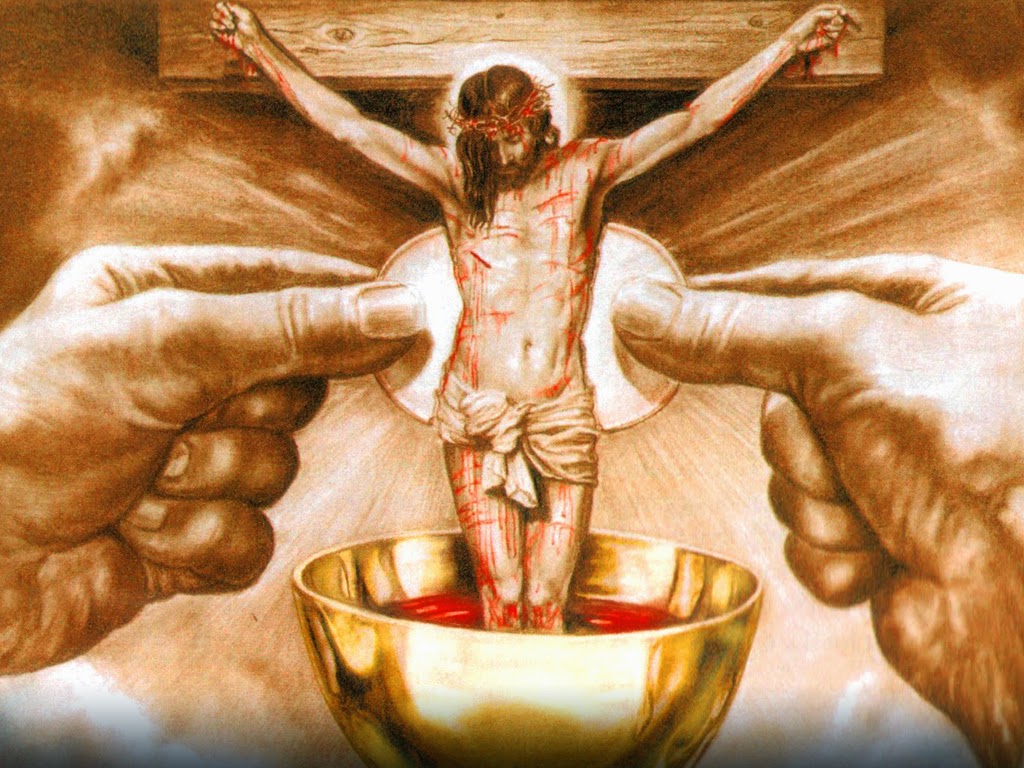
We manage to do this when we engage in the exchange at the reception of the Eucharist.  Eye to eye we exchange a proclamation, not simply an announcement, of what we hold in our hands and on our lips AND who is standing right before us.  “Body of Christ.  Blood of Christ!”  The minister greets us (hear that, greets US.)  And our “AMEN”, spoken confidently, affirms our belief that we are indeed “the Body of Christ.”  And in turn, it reminds us that the person holding the Precious Cup out to us is the “Body of Christ” standing right here before us in flesh and blood.  But it can become routine, just words we’ve memorized.  Our AMEN says we believe Jesus is here but does it move us beyond the cup to lock eyes with the person who stands in front of us?

If only, every time we open our mouth we were conscious that it is Christ using us to extend His love.  If our ears heard not simply the words spoken by the other but could sense God saying, “This is my beloved child in whom I am well pleased; hear her.”  How often words might die on our lips before they stir the air with sentiments that are not Christ-like.  It would be the death, wouldn’t it, of criticism or harshness of tone; of hurtful and negative comments about what’s over and done, out of our control.

Benedict realizes that “peace on earth” is a utopian dream even in a community of like-minded, good-hearted people.  He bades the superior to inspect beds for contraband like food and knives.  He instructs community officials what to do with recalcitrant members.  He recommends the recitation of the Our Father three times daily in petition for forgiveness for human frailty.

Peace most assuredly is our vision and mission.  Thus, we aim to extend the peace that we wish for each other at Mass, to flow throughout the day and beyond our doors.  We echo the words of Peter, James and John: “Lord, it is good for us to be here.”  But Jesus reminds us not to get too comfortable: “Rise,” he says, “Tell the vision to no one.”  So, how do we spread the Good News?  Live it! It’s that simple!

~Reflection by Sister Roberta Bailey, OSB


August 6 was our monthly day of Recollection with Holy Hour and Adoration of the Blessed Sacrement.  We pray also for our families and relatives, Oblates, guests, and benefactors.   May peace reign in our world!


First Reading:   Daniel 7:9-10,13-15         Second Reading:  Peter 1:16-19
Gospel:   Matthew 17:1-9
Continue Reading

Filed Under: Blog, Front Page, Homily Tagged With: Blood of Christ, Body of Christ, Christ, God, Jesus, Transfiguration, Transfiguration Sunday

  • « Go to Previous Page
  • Page 1
  • Page 2
  • Page 3
  • Page 4
  • Page 5
  • Interim pages omitted …
  • Page 10
  • Go to Next Page »

Footer

Prayer / Newsletter / Info

 Contact Info

Benedictine Sisters of Florida

PO Box 2450
12138 Wichers Road
St. Leo, FL 33574-2450
(352) 588-8320
(352) 588-8443

 Mass Schedule

Related Links

Copyright © 2026 · Benedictine Sisters of FL · Touching Lives Through Prayer and Service

Copyright © 2026 · Bendedictine Theme on Genesis Framework · WordPress · Log in