Christmas
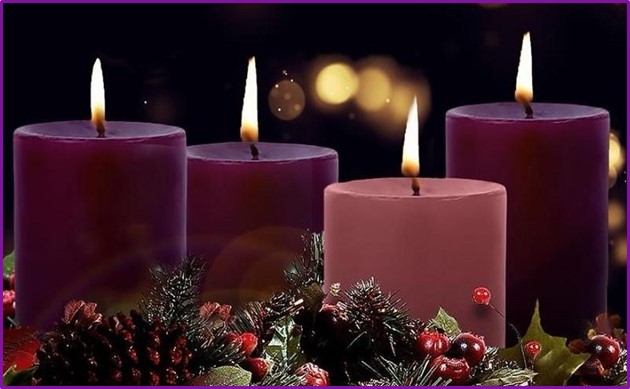
4th Sunday of Advent
Christmas Letter
 This week I will share with you my Christmas letter 2025.
Wishing you an abundance of grace-filled surprises this holiday season and graces a plenty throughout 2026 (and beyond).
In lieu of exchanging names for Christmas gifts our Sisters are contributing from their personal allowances (that range $25-70 monthly) to local local food distribution center and thrift store where some of our members volunteer each week. Sisters who have “advantage” cards make purchases to donate foods directly to the pantry. Rice, beans pasta, life-sustaining foods popular with Daystar clientele . The number of the needy who seek assistance each week is shameful in our lands of “milk and honey.” As Tiny Tim said, “God bless them all.”
~by Sister Roberta Bailey, OSB
Also below please find my Christmas greeting.
The past year past has been one of CHANGE for our community! In August Sister Roberta stepped aside as prioress and Sister Tonette Sperando was appointed and installed as our Canonical Administrator. Sister Tonette is from our daughter-house in Alabama where she served as Treasurer and Communications director and a 6-year term as Prioress. In 1902 our Sisters and sisters from Kentucky merged to form that monastery. So, we were already related! Transition has been for the most smooth – few bumps along the way but with the agility of experienced bike riders we keep foraging forward. I have experienced ups and downs health-wise: “fall and get up” has resulted in a couple hospital stays and a stint of 21 days in a rehab facility. I assure you (and myself) I’m home now and growing stronger day by day. See … Obviously, I can use a computer!
Greetings to each of you and prayers for you and your families. May God shower you and them with blessings. Have a pleasant holiday season, peace and God’s favor in the new year!
Sister Roberta
Musings from a Long-Ago Christmas
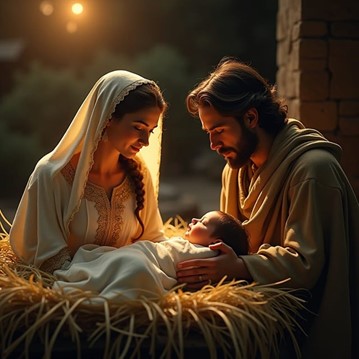
He lies there in His manger,
Straw tickling the soles of His bare feet,
Strands of hay clutched in His fists.
A smile plays on His lips
And there is a sparkle in His eyes.
I sense a wisdom beyond His years.
I reach out to touch His hand …
let Him grasp my little finger,
turning my hand, palm upward, outward, open:
to Him and to His father – to Life
I struggle to answer His gurgling question
Respond to His smile – Affirm His trust –
And then …. My furrowed brow softens,
The tense jaw relaxes,
The mind, imagination and eyes turn from
far-fetched worries
and imagined troubles of tomorrow
to meet His gaze, nod approval,
and laugh in child-like delight at His touch.
The touch goes beyond the warmth of His
hand in mine, Rigid structures I’ve erected
Melting the hardened portions of my stony heart And setting tomorrow in the beautiful
perspective of a little child:
“Live this day,” He seems to say, But He’s so small where does the message come from?
I look into His eyes and I know He speaks.
“Live this day … where every tomorrow becomes today – threads of yesterday weave them-selves into the fabric of the present moment.
Think of Me when anxiety and cares pile up.
Smile at me, the Infant in the crib …
with gentleness hold me close to your heart …
and relax… for I am ever near.
“When noise and busyness surround you …
Let your mind step aside and
recall the quiet of Bethlehem’s stall.
Be steeped in calmness.
If the daily becomes hum-drum, see me in Joseph’s shop Where every moment is a delightful discovery. Wood shavings curl around my ear and cling to my hair As I struggle to fashion a chair “just like my Daddy’s”.
At the end of a weary day, be mother to me…
Rock me to sleep… hum a lullaby until the cares disappear beyond the horizon, Your shoulders droop and your head gently rests atop mine.
Together we will rest, dream great dreams of conquering all the dragons in your world
And spread peace amid chaos
Puff softly, gently on the smoldering
bedside candle and
Close the door on war and strife …
As I whisper, “Good night, sweet dreams.”
Together we will rest – Together we will rise,
Praise the Father and greet the new day … EVERYDAY – until that day when you will rest upon me eternally, and in that heavenly rest,
RISE, GREET and PRAISE God FOREVER!
Continue Reading
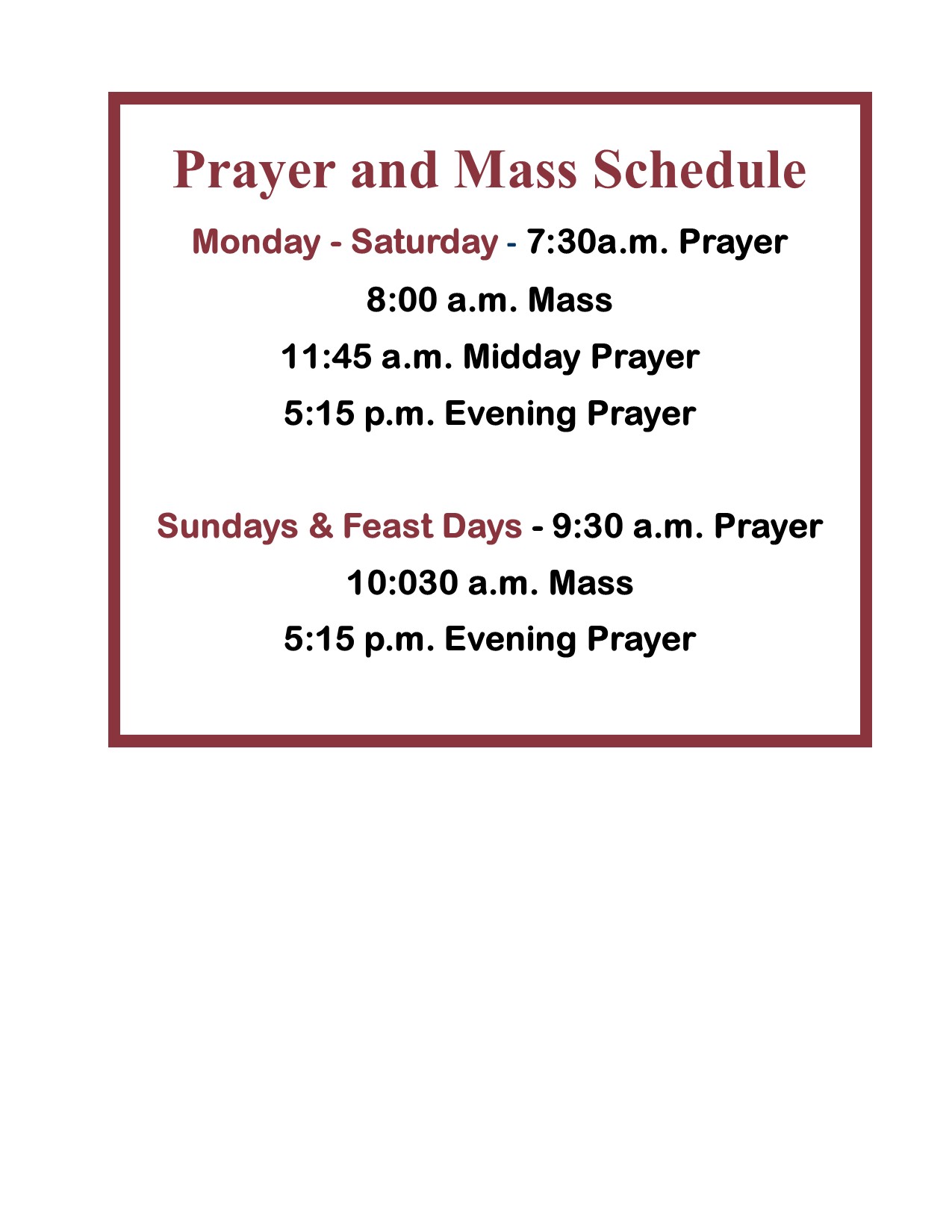
Christmas Mass Times
Christmas Day and New Year’s Day Mass at 10:00 am.
Weekend Sundays Mass as usual at 10:30 am.
Continue ReadingEpiphany Sunday 2024
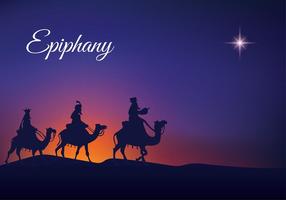 In the stories of Jesus’ birth, two special groups of people came to visit the new-born babe: the shepherds and the magi. The church has no special feast to commemorate the visit of the shepherds although the Christmas liturgy at dawn is sometimes referred to as the Shepherds’ Mass. The shepherds learned of the birth of Jesus through a direct, supernatural revelation from angels. The magi, on the other hand, learned of the birth of Jesus by observing the stars. The stars did not speak in the same way the angel had so the wandering Magi had to interpret this natural sign. It is a unique story that represents all peoples of all nations and opens our eyes to the fact that God is not limited to any one religious tradition.
This solemnity has so long been associated with the image of “Three Kings” that it’s easy to forget that Matthew, who is the only evangelist who relates this particular story, nowhere mentions either the number of visitors or their kingly rank. He does, however, call the visitors “magi,” which, in those days, could have meant anything from “wise man” or “sorcerer”; from “astrologer” and “astronomer” – all learned men respected for their wisdom.
With the Greek community, Tarpon Springs is so close to us that we are well aware of the tradition of young men diving into the bayou (no matter how cold the waters) in hopes of being the one to retrieve the cross believed to bring them a year of special blessings.
In Spanish-speaking countries, the tradition had long been to observe Christmas Day as a solemn religious occasion, reserving Three Kings Day for partying and exchanging gifts. Similar to the new world custom of leaving a cookie on Christmas eve for Santa Claus, children leave a treat of hay in hopes that the camels will bring the Kings with a gift.
In India, the Epiphany is not a moveable feast. It is celebrated on the 12th night after Christmas, January 6th. It marks the manifestation of Jesus in a religious celebration honoring the Baptism of Jesus by John in the River Jordan. It is also a reminder of St. Thomas, the Apostle, who brought Christianity to India in the living waters of the Sacrament of Baptism. The church commemoration includes the sound of a generous pouring of water that can be heard by the congregation and live-screen audience.
The custom in Germany is that of a children’s festival. After a church service the children, dressed as kings, go from house to house to gather offerings for the poor. At each house, they paint “20+C+M+B+the numeral for the year” (this year 24) which is Latin for Christ bless this house). Coincidentally the letters are the first letters of the names of the wise men: Caspar, Melchior and Balthazar.
In England, the traditional Yule log is kept burning until Twelfth Night (Epiphany) in order to bring blessings and good fortune throughout the upcoming year. Several countries – most notably Italy and Russia – share the long-held tradition of a kindly old witch who makes her annual visit on the night of January 5, climbing down the chimney to bring presents to children.
The Irish people, (Google told me) know how to celebrate the feast of the Epiphany with deference to women. On this day it is the tradition in Ireland for the women to get together and enjoy their own Christmas. The men folk stay at home and handle the kids and the many chores their wives do daily.
The history of the King Cake has its roots in pre-Christian religions of Western Europe. During pagan harvest celebrations it was customary to choose a man to be the “sacred king” of the tribe for a year. That man would be treated like a king for the year. Then he would be sacrificed, and his blood returned to the soil to ensure that the harvest would be successful. The method of choosing who would have the honor of being the sacred king was the purpose of the “King’s Cake” in which a coin had been baked. Whoever got the slice that had the coin was the chosen “king for a year.”
The custom evolved and migrated from France to Louisiana. The ceramic baby hidden in the oval-shaped cake speaks to the fact that the three Kings had a difficult time finding the Christ Child. Whoever finds the ceramic baby hosts “King Cake parties” each day from Epiphany until Mardi Gras.
So, why would we be of interest to any of us? It matters because we are a nation, and a community, from a variety of backgrounds. Jesus’ arms were widespread on the cross to embrace all cultures, all peoples through all times. As we enter a new year, our prayer is that it will be the dawning of a new day that will bring the gifts of a warm welcome, peace, financial security, equitable access to health care services and food; worthy companionship for migrants, immigrants, displaced placed person and all for whom we have promised to pray. In fact let us pray for these things for the entire world – and let’s not overlook each other… As Tiny Tim says in Dickens’ A CHIRSTMAS CAROL: “God bless us everyone!”
~Reflection by Sister Roberta Bailey, OSB
First Reading: Isaiah 60:1-6 Second Reading: Ephesians 3:2-3a, 5
Gospel: Matthew 2:1-12
Continue Reading
First Sunday of Advent
 Do you think maybe Jesus knew the childhood game of Hide and Seek? There are two ways to play the game. In one version, one person is the “hider” and everyone else is a “seeker”. The seekers close their eyes and count loudly from 100 down to 1. When the counting is done, all the seekers scatter and start searching for the hider. When a seeker finds the hider, then he or she joins that person in their hiding position. In the more familiar version of the game, one person the seeker, is “It”, and covers their eyes and starts counting down from 100. All the hiders scramble to the best place they can find to avoid being discovered. When “It” reaches 1, he or she calls out, “Ready or not — here I come!” He/she then begins searching and tagging all the hiders. In today’s gospel lesson Jesus is “IT,” the “seeker” saying to the world, “Ready or not — here I come.”
Ten years after the death of St. Paul, Mark reminded his community in Rome of Jesus’ words – and he shouts the same warning to us today: “Be constantly on the watch! Stay awake! You do not know when the appointed time will come.” Mark knew well the lesson we gradually learn i.e. when events don’t happen as quickly as we expect, we tend to forget what we know and slough off doing the things we know we ought to do.
There are no magic Advent practices to prepare for Christmas. There are the classic Christian exercises: works of charity, prayer, self-sacrifice, and penance. The Advent gospels will perk up your ears and catch your attention: “Take heed!” (Be on guard) and “Watch!” (Be alert, stay awake, and don’t grow careless). Don’t give up! St. Benedict admonishes us: “Never swerve from God’s instruction but faithfully observe God’s teaching in the monastery until death.”
In Chapter 67 of his Rule Benedict reminds us of the mutuality of journey prayers for each other. As travelers on our Advent journey, we ask for a blessing. And in return we promise to always remember in daily prayer our journey companions.
Advent is our annual journey from the warning to “stay awake” and “be alert” to the glorious memorial celebration of Jesus’ birth. Let’s heed the words of Benedict and be prayerfully conscious of each other on our individual and our communal Advent journey. We know this: God is in charge and God can be trusted. We just have to: “stay awake – be alert – watch!”
Here’s a simple Advent project that can help keep us alert and watchful. Every morning as you get up, pray, “Lord, show me someone today with whom I may share your love, mercy and forgiveness.” As you settle down for the night, ask yourself, “Where did I find Christ today?” The answer will be God’s Advent gift to you that day. It reminds me of a saying attributed to St. Thomas Aquinas: “Without God, I can’t. Without me, God won’t.”
~by Sister Roberta Bailey, OSB
Giving Tuesday was a huge success!
We couldn’t be more appreciative for the outpouring of generosity.
We exceeded our fundraising goal and raised $44,898 and with the generous match from John Picciano that gives the Sisters $82,398!
First Reading Isaiah 63:16b-17 Second Reading 1 Corinthians 1:3-9
Gospel Reading Mark 13:33-37
Continue ReadingFourth Sunday of Advent
 For many people this last week of Advent is fraught with frantic shopping, concern about who they’ve forgotten to get a gift for, cards that are not going to arrive before Christmas, children whose hopes are going to be dashed, worry about what food stamps will buy that will still look like a festive meal, the choice between food on the table or gifts under the tree, gas prices that prohibit travel to be with relatives, who’s going to watch the children while there’s no school, day care that’s not in the budget and parents who still have to go to work.
Our lifestyle should stand out in contrast to all the hustle and bustle, the preoccupations with secular concerns. We have the luxury and the burden of putting first things first. The sign Ahaz refuses to ask for in the first reading can be the one we project to the world. We can heed Isaiah’s alert and not weary people or our God. We can shorten real-life “posadas” by coming out of our shells when we’d like to hibernate in our self-made cocoons.
For the pregnant Mary these days just before giving birth to Jesus should have been “nesting days” but Mary was traveling. May we use this next week for “nesting” – readying our hearts and our living spaces for the Babe to take deeper residence in us and in our community.
These days are a time to listen like Jesus’ foster father Joseph to our dreams. Let us awake, arise and do what the Spirit commands. Sometimes it may be puzzling the connections we make. For instance, Joseph’s dilemma, and the angel’s intervention, had me humming two songs: “A Dream is a Wish Your Heart Makes” (from Cinderella) which continues: “…when you’re fast asleep; in dreams you will lose your heartaches, whatever you wish for, you keep. Have faith in your dreams and someday your rainbow will come smiling through.” The other dream song, “I Have A Dream” was written in memory of Martin Luther King, Jr: “I have a dream, a song to sing, to help me cope, with anything …I believe in angels, when I know the time is right for me …I have a dream, to help me through reality and my destiny.”
There is an air of festivity this time of year not solely in our faith tradition, but also, for instance, in the celebrations of Hanukkah and Kwanza as well. Christmas, sometimes referred to as Yuletide, is on a fixed date during the winter solstice. Kwanzaa was established in the 1960’s as a way to help African Americans connect with their African history and culture. It is a week-long spiritual festival celebrated December 26 to January 1. The seven-candle Kinara (candle holder) honors principles of Unity, Self-Determination, Responsibility, Cooperation, Purpose, Creativity and Faith.
Hanukkah is the eight-day Jewish festival that commemorates the victory of the Maccabees over the oppressive power of the Syrian-Greeks and the re-dedication of the Holy Temple in Jerusalem. The eight-candle menorah with its day-by-day increase in light, symbolizes the days of creation and the dependable guidance of God. There is a long-held Hanukkah tradition that delights children as well as adults: the practice of “gelt-giving” – money or chocolate coins – which teaches lessons in charitable giving.
Comparing these festivals, it’s easy to see that despite representing a variety of cultural and faith traditions, there are commonalities: honoring our ancestry, candle lighting, charity, gift-giving, family spirit.
Our prayer intention for the next two weeks will express our gratitude for God’s boundless generosity in the persons of our relatives, friends, and benefactors. May they know our gratitude and be blessed by God for their graciousness to us.
~by Sister Roberta Bailey, OSB