• Skip to primary navigation
  • Skip to main content
  • Skip to footer
Benedictine Sisters of FL

Holy Name Monastery
Founded 1889

Donate Now
  • Home
  • About Us
    • History
    • Being Benedictine
    • Benedictine Monasticism
    • Meet Our Community
    • Holy Name Academy-Alumnae
  • What We Do
    • Mission, Vision and Our Partners
    • Retreats
      • Invitation to Retreat
      • Accommodations
    • Volunteer Programs
    • Oblate Program
    • Spiritual Direction
    • Aqua/Hydroponics
    • More of Our Ministries
  • What’s Happening
    • Articles of Interest
    • Events
    • Commemorative Bricks
    • Newsletters
    • Brochures
    • Links
  • Support Us
    • Gifts of Support
    • Wish List
  • Stories Shared
  • Galleries
    • Photos
    • Videos
      • Benedictine Sisters of FL Videos
      • Other Videos
  • Contact Us

Second Sunday of Easter

Second Sunday of Easter

April 13, 2026 by Holy Name Monastery Leave a Comment

The Frailty of Easter  Based in part on a reflection by John Slattery  (adapted)

Easter is all about smallness.  That’s why we are drawn to reading and re-reading the Easter accounts in the Gospels each year.  Despite the ocean of books, songs, sermons, and lectures written about Easter or on Easter-themes, our Scripture includes just four small stories about this Jesus who rose from the dead.  The combined resurrection stories encompass about 3500 words–the equivalent of about 15 pages, the length of an average term paper.

Jesus’ resurrection was such a humble thing.  There were no angel trumpeteers or singers in the skies. It was more like the story in Psalm 119. “Without a word, without a sound, without a voice being heard, the message fills all the earth, resounding to the ends of the universe.”  First, Jesus surprised Mary in the garden.  She told a few other women, then they told a few men and soon Jesus appeared to them.  He spoke about peace, about the Spirit of God, about hope.  He showed his wounds.  He ate some food and then he drifted up into the clouds.  He didn’t march on Rome or lead a rebellion against those who brought him to Pilate.  After his resurrection He didn’t heal anyone else or preach to vast crowds as He had done previously.  He didn’t cast out any more demons, trade barbs with rabbis, or visit the Temple.  The resurrection, in many ways, was a quiet event.

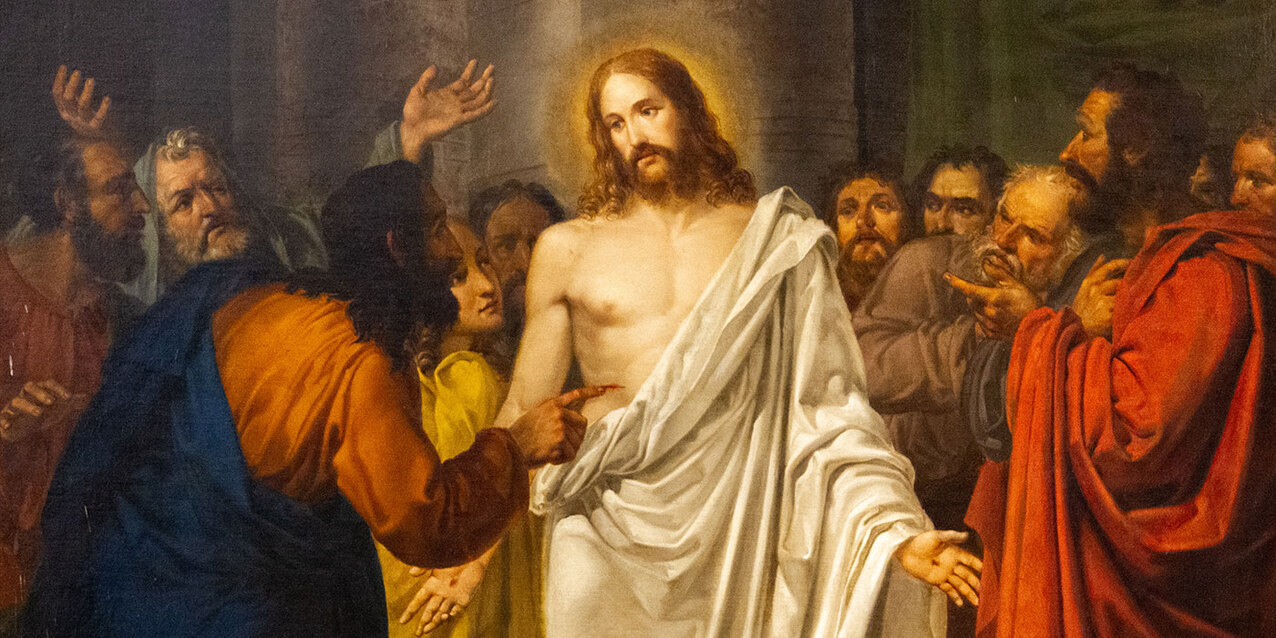
It challenges us to read that Jesus showed his followers his wounds.  “See,” he seems to say, “a broken body is not made whole by erasing the imperfections.  Feel this hole in my side,” he says to Thomas and to each of us.  “See, I have sanctified what the world calls spoiled.  A broken body is made whole not by removing the scars but by embracing the permanence of the wounds.”

We like this small and quiet resurrection where Jesus is not the definition of a contemporary superhero.  He doesn’t return triumphant and knock Pilate off his throne, bringing God’s wrath on the vicious Roman Empire.  He appears to his friends, simply showing his wounds and talking about love and peace.

Today’s story of Thomas illustrates our Christian experience. We are called to believe without seeing.  In fact, all Christians (after the first witnesses) have been called to believe without seeing. Thus, we sing “Without seeing you, we love you; without seeing you, we believe.”  Thomas’ doubt is hardly surprising; the news of Jesus’ appearance was incredible to the disciples who had seen him crucified and buried. Thomas’ human nature compelled him to want hard evidence that the Jesus, who appeared to the disciples after his death was indeed the same Jesus who had been crucified. Thomas is given the opportunity to act on that desire. He is our witness that Jesus is truly raised from the dead.  With him we proclaim: “We have been told, we’ve seen his face, and heard his voice alive in our hearts.”

Jesus wants us to be perfect, but not the kind of perfect that ninjas or Superman display.  Jesus wants us to be perfect “as our heavenly Father is perfect.”  God’s perfection and the message of Jesus’ Resurrection call us to an unconditional embrace of frailty, pain, and brokenness.

It is an embrace that calls us to resist all forms of violence, power, and hatred.  There is growing acknowledgement of that fact that TV and video game violence, like second-hand smoke affects one’s lungs, permanently affects our brains.  Many persons, families, and faith communities refuse to allow TV violence, fictionalized or news reports, to invade their living spaces.  Jesus did not arm his apostles with weapons for revenge — he armed them with prayer and baptized them in a spirit of hope and forgiveness.

We are surrounded today with so much sadness and fear and anger.  We who live in a peaceful community rejoice in the security and sanctity that empowers us to extend open arms in hospitality to those in the world who yearn for that same privilege.

At the end of our Gospel selection we read, “Jesus did many other signs that are not written in this book.  But these ARE written that you may come to believe …and through this belief you may have life in Jesus’ name.

We join the psalmist in singing: “By the Lord has this been done; it is wonderful in our eyes.  This is the day the Lord has made; let us be glad and rejoice in it.”

~Reflection by Sister Roberta Bailey, OSB


First Reading:   Acts of the Apostles 2:42-47         Second Reading:  1 Peter 1:3-9
Gospel:   John 20:19-31
Continue Reading

Filed Under: Blog, Front Page, Homily Tagged With: Easter, Gospel, gospels, Jesus, resurrection, Second Sunday of Easter, Thomas, wounds

Second Sunday of Easter – Divine Mercy Sunday

April 8, 2024 by Holy Name Monastery Leave a Comment

Tomorrow has been known as “Low Sunday” – a lesser Easter celebration – or “Quasi-modo Sunday” from the first two words of the Entrance antiphon at Mass: “Like newborn infants” (speaking especially about those baptized at Easter).  It is the day that the newly baptized officially put away their white robes. Hence, it is known liturgically as the “Sunday of putting away the albs.”   And yes, the name of this feast is the origin of the name of the hunchback, Quasimodo, in Victor Hugo’s “The Hunchback of Notre Dame.” The foundling was so named because he was discovered at the cathedral on the second Sunday of Easter.

On that Second Sunday of Easter in the Jubilee Year 2000, at the Mass for the canonization of St. Faustina Kowalska, Pope John Paul II made a surprising announcement. “It is important that we accept the whole message that comes to us from the word of God on this Second Sunday of Easter, which from now on throughout the Church, will be called ‘Divine Mercy Sunday.”   Clearly it is not a new feast but neither is it an optional title for this solemnity; rather, Divine Mercy is the integral name for this Feast Day.

The Gospel begins with the risen Christ appearing to the apostles on Easter night. Jesus calms his disciples by saying and giving them “Peace.” He shows them the scars of his Passion, his wounded hands and side, the evidence of his saving work through his suffering, death and resurrection.  Then he breathes on them and explains what the divine breathing means with the words, “Receive the Holy Spirit. Whose sins you forgive are forgiven, whose sins you retain are retained.” He gives to the apostles, from the treasury of divine mercy, the power of mercy for penitents and the assurance there is nothing to fear.

The story of St. Faustina reveals the inspiration behind the Divine Mercy devotion. On February 22, 1931, at the age of 26, Sister Faustina experienced a life-changing vision of Christ. She saw him wearing a white robe and raising his right hand in blessing with his left hand resting on his heart from which flowed two rays of light. Jesus told her, “Paint an image according to the pattern you see, with the prayer, Jesus, I trust in you.”  Faustina could not paint but eventually she persuaded her spiritual director to find an artist to create the painting that was named The Divine Mercy.

Thankfully there is a trend among media services to make an effort to balance stories of horror and tragedy with illustrations of mercy.   For many people there are two stories that continue to stand out – The first is that of an Amish community that walked to the home of the man who had killed 5 of their children to tell his widow they forgave her husband for what he had done, and consoled her for the loss of her spouse. They buried their anger before they buried their children.

The other well-known story of forgiveness, you may recall, was depicted on the cover of TIME magazine 1984.  It pictured a prison cell where two men sat on metal folding chairs. The young man wore a black turtleneck sweater, blue jeans and white running shoes. The older man was dressed in a white robe and had a white skullcap on his head. They sat facing one another, up close and personal. They spoke quietly so as to keep others from hearing the conversation. The young man was an attempted assassin; the older man was Pope John Paul II, his intended victim. At the end of their 20-minute meeting, Ali raised the pope’s hand to his forehead as a sign of respect. John Paul shook Ali’s hand tenderly.

John Paul II and the Amish Christians teach us that forgiveness is central. They believe in a real sense that God’s forgiveness depends on their extending forgiveness to other people. That’s what the mercy of God is all about.  They are but two examples of God’s divine mercy in action, the same divine mercy whose message St. Faustina witnessed, the gift of mercy we celebrate on Divine Mercy Sunday.  This is also a good week for our prayer intention for vocations, formators and those they guide and mentor.  May God, in wisdom and mercy, see fit to bless us with the grace to persevere in our own vocations, and for insight and fortitude for all those involved in the ministry of religious formation.


~Reflection by Sister Roberta Bailey, OSB


First Reading:   Acts 4:23-35         Second Reading:  1 John 5:1-6
Gospel:   John 20:19-31 
Continue Reading

Filed Under: Blog, Front Page, Homily Tagged With: Christ, disciples, Divine Mercy Sunday, Jesus, Pope John Paul II, Second Sunday of Easter

Divine Mercy Sunday

April 17, 2023 by Holy Name Monastery Leave a Comment

Yesterday, the Second Sunday of Easter, in days gone by, was known as “Low Sunday” – a lesser Easter celebration – or “Quasi-modo Sunday” from the first two words of the Latin entrance antiphon at Mass: “Like newborn infants” speaking about those baptized at Easter.  It is the day that the newly baptized officially put away their white robes, hence, it was known liturgically as the “Sunday of putting away the albs.”   And yes, the name of this feast is the origin of the name of the hunchback, Quasimodo, in Victor Hugo’s “The Hunchback of Notre Dame.” The foundling was so named because he was discovered at the cathedral on the Second Sunday of Easter.

For centuries the Easter liturgies have proclaimed the mercy of God.  From Holy Thursday to Easter Sunday to the Eighth Day of Easter, the divine love song of mercy is chanted with abundant alleluias.   In tomorrow’s responsorial psalm we will sing three times, “His mercy endures forever.”

In the year 2000, at the Mass for the canonization of St. Faustina Kowalska, Pope John Paul II made a surprising announcement in his homily.  “It is important that we accept the whole message that comes to us from the word of God on this Second Sunday of Easter, which from now on throughout the Church, will be called ‘Divine Mercy Sunday.’ ”   Clearly it is not a new feast, but neither is it an optional title for this solemnity; rather, Divine Mercy is the integral name for this Feast Day.

For many people there are two contemporary stories that continue to stand out in memory.  One is the story of the Amish community that walked to the home of the man who had killed 5 of their children to tell his widow they forgave her husband for what he had done, and they consoled her for the loss of her spouse. They buried their anger before they buried their children.

The other well-known story of forgiveness that you may recall was depicted on the cover of TIME magazine in 1984.  It pictured a prison cell where two men sat on metal folding chairs. The younger man wore a black turtleneck sweater, blue jeans and white running shoes. The older man was dressed in a white robe and had a white skullcap on his head. They sat facing one another, up close and personal. They spoke quietly to keep others from hearing their conversation. The young man was an attempted assassin; the older man was Pope John Paul II, his intended victim. The pope held the hand that had held the gun whose bullet had torn into his body.  At the end of their 20-minute meeting, Ali raised the pope’s hand to his forehead as a sign of respect. John Paul shook Ali’s hand tenderly.  When the pope left the cell he said, “What we talked about must remain a secret between us. I spoke to him as a brother whom I have pardoned and who has my complete trust.”

Our Gospel (you’ll recall) begins with the risen Christ appearing to the apostles on Easter night. Jesus calms his disciples by saying and giving them “Peace.” He shows them the scars of his Passion, his wounded hands and side, the evidence of his saving work through his suffering, death and resurrection.  Then he breathes on them and explains what the divine breathing means with the words, “Receive the holy Spirit. Whose sins you forgive are forgiven, whose sins you shall retain are retained.” He gives to the apostles, from the treasury of divine mercy, the power of mercy for penitents and the assurance there is nothing for us to fear.  That’s what the divine mercy of God is all about.

~Reflection by Sister Roberta Bailey, OSB


First Reading:  Acts 4:232-35         Second Reading:  1 John 5:1-6
Gospel:   John 20:19-31
Continue Reading

Filed Under: Blog, Front Page, Homily Tagged With: Divine Mercy, Divine Mercy Sunday, Easter, Jesus, Pope John Paull II, Second Sunday of Easter, time

Footer

Prayer / Newsletter / Info

 Contact Info

Benedictine Sisters of Florida

PO Box 2450
12138 Wichers Road
St. Leo, FL 33574-2450
(352) 588-8320
(352) 588-8443

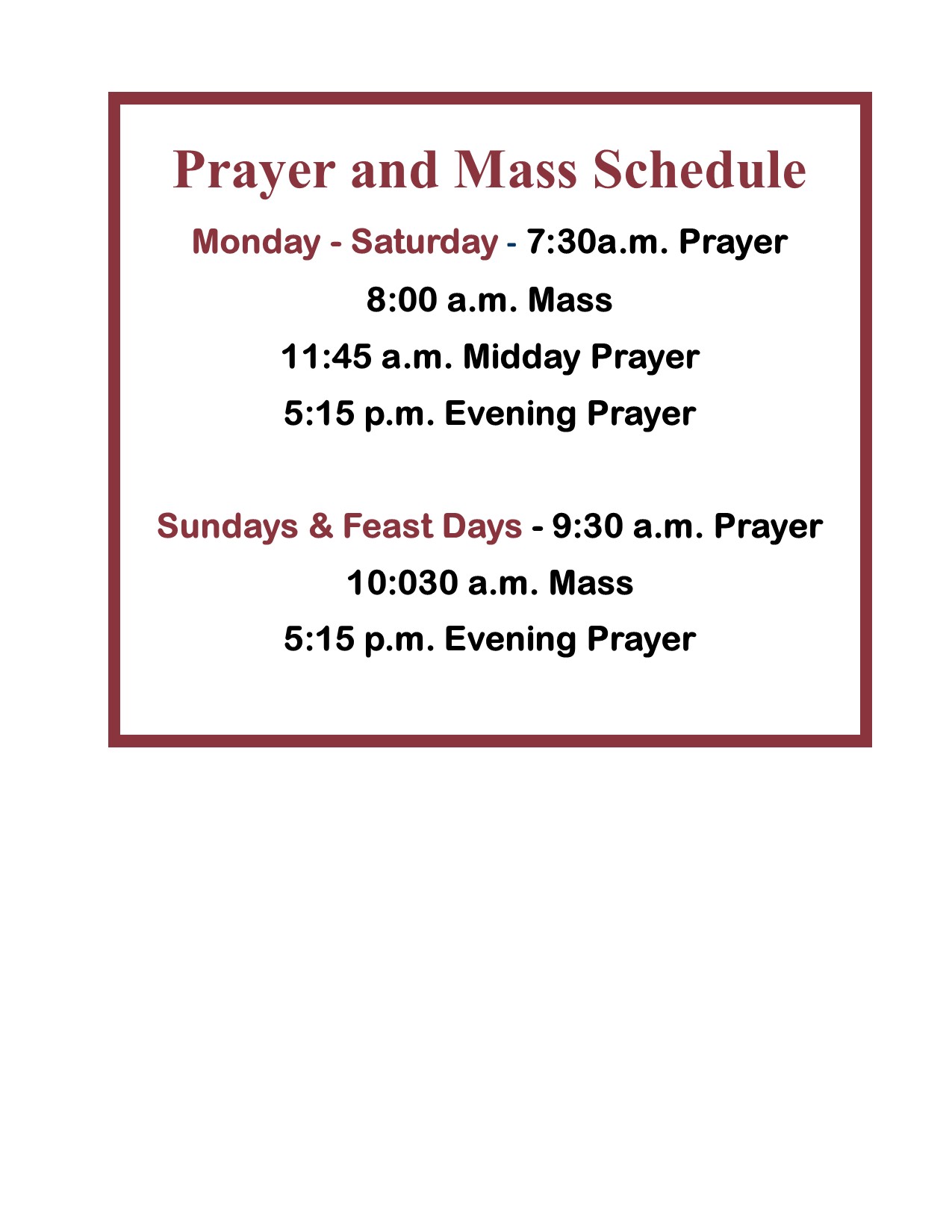
 Mass Schedule

Related Links

Copyright © 2026 · Benedictine Sisters of FL · Touching Lives Through Prayer and Service

Copyright © 2026 · Bendedictine Theme on Genesis Framework · WordPress · Log in