• Skip to primary navigation
  • Skip to main content
  • Skip to footer
Benedictine Sisters of FL

Holy Name Monastery
Founded 1889

Donate Now
  • Home
  • About Us
    • History
    • Being Benedictine
    • Benedictine Monasticism
    • Meet Our Community
    • Holy Name Academy-Alumnae
  • What We Do
    • Mission, Vision and Our Partners
    • Retreats
      • Invitation to Retreat
      • Accommodations
    • Volunteer Programs
    • Oblate Program
    • Spiritual Direction
    • Aqua/Hydroponics
    • More of Our Ministries
  • What’s Happening
    • Articles of Interest
    • Events
    • Commemorative Bricks
    • Newsletters
    • Brochures
    • Links
  • Support Us
    • Gifts of Support
    • Wish List
  • Stories Shared
  • Galleries
    • Photos
    • Videos
      • Benedictine Sisters of FL Videos
      • Other Videos
  • Contact Us

disciples

Second Sunday of Lent

March 17, 2025 by Holy Name Monastery Leave a Comment

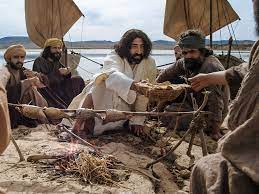
“Jesus took Peter, James and his brother John off by themselves and led hem up a high mountain.”  This transfiguration account appears just after Jesus has reminded the disciples, “Whoever loses your life for My sake, and the gospel – will save your life. Jesus lets these remarks soak in and take root for six days before he sets off up the mountain with Peter, James and John in tow.

The story (I believe) calls each one of us to examine what mountains we have yet to climb to see God’s glory.  We could apply the story to death or a near-death experience, but if we do that, we miss the everyday mountains that we must scale.  Call those mountains what you will, we must climb them to witness God’s glory: hurdles, challenges, enticing temptations, near occasions of sin, quirks of personality, Lenten resolutions, pet peeves…   They can be like a grain of sand inside your shoe.  Other times, they may feel like huge boulders that we need a backhoe to lever inch by inch.  Everyone’s mountain is different. To witness God’s glory, we must each climb our own “mountains”.

As we become aware that we are nearing a mountaintop, we must relax take a breather, yes, but with our spirit-eyes open to see God’s glory.  Stay alert, careful not to misread the signs; have the insight to know that we are at the top.  Gaze on the God of the Revelation.  In awe we may wonder: Why did God choose me?  Why does God love me so much?

What causes us to miss the “small miracles”, the “everyday transfigurations”?  The “Emmaus” moments along the path to Life? Gently remind yourself, that Jesus and the disciples also went back down the mountain.  Thank God when you get to top and do not be distracted with worry over “what’s going to happen next?”

Jesus did not become “more God” that day on the mountain.  It seems to me the change was not so much in Jesus, as it was in the disciples.  They were ready.  They had climbed the mountain.   And their eyes were open to witness the miracle of the moment.   What are those moments in your life?  Maybe it happens at the Consecration of the Mass or when you look across the dining table or at confreres across the aisle in chapel.

God is already there; is right here NOW.   Jesus invites us to go up the mountain with Him.  He leads the way.  We must open our awareness to witness the transfiguration. God reveals the Son little by little to those who take the time and interest to stay with him.  When we follow His lead, stay with the experience, do what it takes to build our relationship, foster life with the Other; in essence we live out our vow of stability; our promise of “stick-to-tive-ness.


~Reflection by Sister Roberta Bailey, OSB


First Reading:   Genesis 15:5-12, 17-18        Second Reading:  Philippians 3:17-4:1
Gospel:   Luke 9:28b-36


Continue Reading

Filed Under: Blog, Front Page, Homily Tagged With: 2nd Sunday of Lent, disciples, God, Jesus, Lent, Mountain, Second Sunday of Lent

We are called to BE the Good News

November 18, 2024 by Holy Name Monastery Leave a Comment

Last weekend we observed Jesus as he sat in the temple quietly taking in what was going on around him.  We heard His remark about the contributions being made to the temple treasury.  We saw what he saw.  A widow, as unobtrusive as she could be, slipped (almost unnoticed) among the other donors to deposit her “two cents” that settled softly with the rich folks’ paper money. And if you’ve read Mark’s gospel continuously from that incident to today’s Gospel you also know Jesus’ prediction about the destruction of the Temple, his teaching about the cost of discipleship, the woes that will accompany the end times and Jesus’ instruction to his disciples about the need for watchfulness so that they will not be caught unprepared for the final judgment.

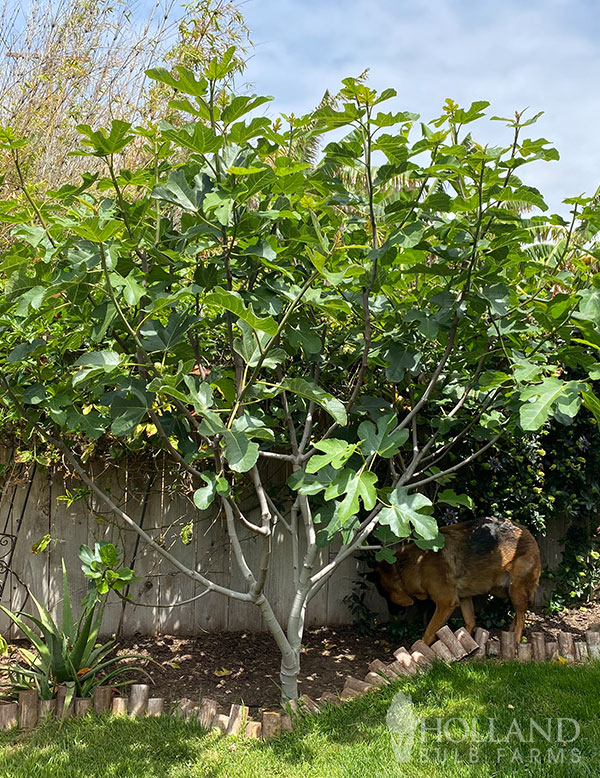
Jesus says: “Learn a lesson from the fig tree.”  Jesus could have said citrus tree or olive tree.  They grew nearby, too.  But, he says “fig tree” and happily for us we have fig trees to observe.   When the branch becomes tender and sprouts leaves, we know that another season of fruit is near.

After Jesus tells the parable of the fig tree, He gives several brief parables. We know that Jesus’ words are not spoken to frighten his disciples, nor should they frighten us.   The prophetic Word of God is as sure and secure as the rest of His message.  It is offered to prepare us for the changes we will experience during our lifetime and at the end time. Our consolation and hope are found in the lasting nature of Jesus’ words and God’s never-ending love for us.

When you see the things happening that Jesus talks about, know that he is near, at the gates.   “But,” says Jesus, “of that day or hour, no one knows, neither the angels in heaven, nor the Son, but only the Father.”    Then He assures us: “Heaven and Earth will pass away, but my words will not pass away.”

So, how, as followers of the Jesus, do we prepare in the face of struggles not unlike our times as community and as a nation?  How well do you read signs?  Can you train yourself to be more observant of the signs?  Do you naturally notice signs in nature?  Road signs?  How well do you read nonverbal body language?   Do you work to sensitize yourself to recognize everyday signs?  How do you heighten your sensitivity to spirit signs?  Do you use Scripture, the Rule, the example of a favorite saint? What helps you to listen more keenly to your heart in the quiet of the night when sleep eludes you?  Maybe your quiet time is walking, working or driving along a familiar road; passing through the hall at a leisurely pace; setting the table, readying yourself for communal prayer in the chapel – do you hear God’s whisper in your heart?

Cultivation of the inner spirit helps prepare us to see the direction of the cultural winds we face, whether agreeable or frightening.    God does not usually shout to us in fury or in a tumultuous hurricane.  Much of the time God speaks softly.  So stay tuned.  In the face of cultural garbage and shifting government structures or a changing church, we steady ourselves not to be tempted to hoard food and possessions.  We guard against the temptation to build a hermitage and hide out.  We pray to be strengthened to stay in the fray.  Many things will just happen in our lives – things not scheduled by the calendar, or watch, or clock or a computer “ding”.  With all the scheduled things we have to do, we are called by today’s Gospel to keep our hearts attuned to the significant things that just happen.

How can we do this day in and day out and year after year?  Can we do it by heeding Jesus’ directive to the disciples who accompanied Him in the garden the night before his death:  Stay here, watch and pray.   Watch: ask for God’s Wisdom to let us see God’s perspective so we discover our moment within our cultural context.  And, pray!  Remember, “to pray” is not simply to read books about God, spirituality or prayer, or to think about those topics.  To pray is simply – to pray!  We don’t even have to start the conversation.  Simply let God in.  Let us strive to keep in mind that we are called not so much to do the Good News.  We are called to be the Good News.

~Reflection by Sister Roberta Bailey, OSB


First Reading:   Daniel 12:1-3         Second Reading:  Hebrews 10:11-14,18
Gospel:   Mark 13:24-32
Continue Reading

Filed Under: Blog, Front Page, Homily Tagged With: disciples, fig tree, God, Good News, Jesus, Mark, Widow

Such a simple message

September 23, 2024 by Holy Name Monastery Leave a Comment

When Jesus and His disciples got to Capernaum, they entered into (some scholars say) the house of Peter and Andrew. Jesus asks them what they were disputing about as they approached the house and waits for them to ‘fess up.  No luck! They are like children who don’t want to tell their parents what they’ve been arguing about. The disciples had started out disputing over the meaning of Jesus’ prediction of his death and resurrection and ended up arguing over who would be the greatest when Jesus was no longer in their number. They were certain it would be one of them, not someone outside their circle.  They got caught up in the idea of being a follower without having a sense of what it takes to be a true disciple.  But Jesus knew these fellows had the capacity to refocus their energy on what was really important instead of promoting themselves as the “greatest” above everyone.  They (and we) might do well to heed the advice of Joe Kennedy to his son Ted: “Don’t look for credit.  If you succeed, there’ll be plenty of credit.  If you fail, you won’t want the credit”.

The greatness Jesus is talking about lies in welcoming one who is viewed as powerless.  This requires sensitive awareness to those around us.  Who is being left out of the conversation, who enters a room and seems unsure where she might be welcome to sit?  Who is listening to a conversation about a plan to go off-campus hoping to be invited?  Are we alert to welcome the visitor into the chapel, to lift a bundle for a struggling elder, to smile at a child in the shopping cart?   We can list hundreds of moments of random acts of kindness similar to those that Jesus is talking about.

Could it be that Jesus can so easily welcome children because he has personal memories of his own childhood experiences? Children in our 21st century America are in precarious, fragile, and dangerous places.  More than ever, children are abused, snatched, neglected or the opposite: over-protected by ‘helicopter’ parents.  There are latchkey kids; underfed, lonely, ignored children and many are victims of inadequate health care.  Now, more than ever, children need to be embraced by the church.  If the church leaves out children, it is leaving out God. If policy makers leave out children, they are leaving out God and they are placing the future of our world in jeopardy, forgetting who it is that is going to be caring for them (or not) in their sunset years.

Notice that Jesus did not say “receive this child.”  Rather he said, “Receive one such as this child.”  With a child in his arms, Jesus says that to welcome persons such as this little one is to welcome Him.    Our accomplishments and accolades, the certificates, the awards, as impressive as they might be, do not exemplify discipleship.  It’s our ability to be of service to others, to attend to the most vulnerable in our society, that makes us good disciples.  It is such a simple message that it is at the same time so difficult to put into practice!

~Reflection by Sister Roberta Bailey, OSB


This weekend we welcome our Oblates! Thirteen Oblates will join at the monastery for their quarterly meeting and for Mass and noon meal.  Wondering what’s an Oblate?  Contact S. Mary David at 352-588-7176 or mary.david.hydro@saintleo.edu.


First Reading:   Wisdom 2:12, 17-20         Second Reading:  James 3:16-4:3
Gospel:   Mark 9:30-37
Continue Reading

Filed Under: Blog, Front Page, Homily Tagged With: Andrew, Capermaum, children, disciples, Jesus, Peter

Who Do You Say I Am?

September 16, 2024 by Holy Name Monastery Leave a Comment

This is an interesting reading, and even a bit odd, giving us another insight into Jesus’ teaching methods.  First with those who are closest to him – who have been traipsing around the country for almost three years.  This is the group who believe in him so he is quick to correct their human thinking that gets in the way of their perception of just who he is.

I can see him (can you?) walking casually along with the twelve … the mix of who is nearest him changing every few minutes – as the group shifts, they compare notes about what he said to their group with what the others heard.   He stops and turns to the group and queries: Who do people say that I am?  Was He really in the dark?  Was he simply opening an opportunity for the disciples to express their loyalty to him?

At first, the disciples do not offer their personal feelings.  They repeat what they’ve been hearing: some say John, the Baptist; others say Elijah, or one of the prophets.   When Jesus continues: “But, you, who do you say that I am?”   A pregnant pause follows.  They’re waiting for a brave one to speak up.  Heads turn to Peter who seems to be never afraid to offer an opinion.    He doesn’t fail them.  “You are the Christ, son of the living God.”

Jesus seems quick to caution the disciples: “Don’t tell anyone.”  (Doesn’t he know by now that this is a sure-fire way to get the rumors flying?)   Does Jesus want us to hold miracles we experience or witness close to our hearts?  To be like Mary after the shepherds’ visit – pondering all these happenings in her heart?”  Or are we to be like the disciples?  Responsive, but as Jesus said, “Don’t tell until after the Son of Man has risen?

Our scene in today’s reading, turns from Jesus’ conversation with the disciples and his followers to what is to come.   Peter quakes in his boots conjuring up what Jesus is describing.  This is his friend!  So, he takes Jesus aside and in shock rebukes him, criticizes the one he has just acknowledged is the Son of God.  “You’ve got it all wrong!  What you say cannot happen to you.”

Have you ever done that?  Told Jesus he’s got it all wrong? Jesus cautions Peter, and us: “Wait a minute.  You are thinking not as God does but as human beings do.”  With that, Jesus summons the crowd.  Did you ever notice the settings that Scripture describes when Jesus speaks to the crowds on a hillside or from a boat?  Scripture usually says there were thousands of them!   No mic, no PA system, no big screen TV.   How did he do it?  I wonder, did the people really hear his voice or did they hear him in their hearts?  Or was it like the game of Gossip and his words spread rapidly from person to person???

Now Jesus next lets us know what it will take to continue to be a disciple of His.  Three qualities: deny yourself, take up your cross, and follow Me.   Easy as one, two three?  Not quite!

First: deny your worldly ways, drop your egotistical thinking and self-seeking and cease the ifs, ands and buts that are on the tip of your tongue in opposition to Jesus’ message.

Second: take up your cross.  It was personalized for just for you.  No two crosses are exactly the same.  You know the story of the person who rejected her God-given cross.  She asks God to exchange it for another.  So, God showed her his treasury of crosses.   You know which one she chose.  She spotted it immediately, the very one God knew all along would best fit her shoulders.

Third: (This is the good part.)  Follow Jesus.  You don’t have to invent the way.   Jesus has already cut the path for you.  Knock and the door will be opened.  Seek and you will find.  Listen and you will hear.

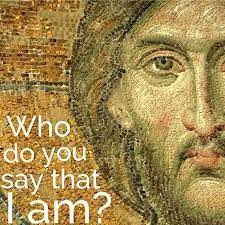
So, when at Mass, just after the homily, be ready to answer God in the words of the Creed: Who do YOU say that I am?  Ponder the titles of Jesus that have been your favorites through the years.  Who is Jesus for you at this stage in your life: Baby Jesus, Friend, Brother, Savior, Rock, Shepherd or on some days a shoulder to cry on, a friend to give you solace, or a pal to offer a gentle prod to do better, take the risk that looms before you.  Jesus asks each of us: “Who do YOU say that I am?”

~Reflection by Sister Roberta Bailey, OSB


First Reading:   Isaiah 50:5-9a         Second Reading:  James 2:14-18
Gospel:   Mark 8:27-35


Continue Reading

Filed Under: Blog, Front Page, Homily Tagged With: disciples, followers, Jesus, John, Peter, Who Do You Say I Am?

Tell All Around You of the Great Love of God

July 15, 2024 by Holy Name Monastery Leave a Comment

“Tell All Around You of the Great Love of God.

When All Else Fails, Use Words.”


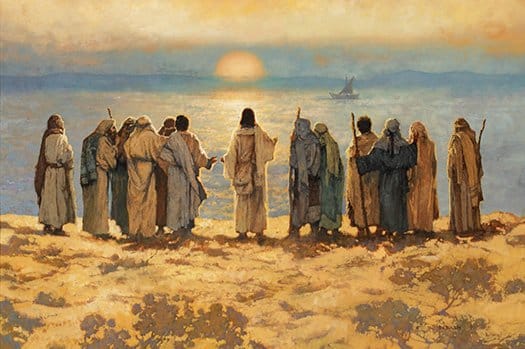
Today’s Gospel continues the messages of the readings we’ve heard for the last ten days or so and goes hand in hand with the current daily selections from the Holy Rule.  We get glimpses into Jesus’ practice of conferring extraordinary responsibility on ordinary people.  For instance, consider the amazing features of Jesus’ ministry in His choice of closest disciples.  They are hardly the kind of people we’d choose to put on a ministry team: fishermen, a former tax collector, a couple known to have quick tempers, a revolutionary and a traitor. Some were always getting into trouble, missing the point of Jesus’ teachings, putting a foot in the mouth. At times, they revealed their jealousy when folks outside their circle got too close to Jesus or when so-called outsiders were trying to perform healings.  When the going got tough, most of them walked away or denied their commitment to Jesus. Despite all this, Jesus used them to turn the world upside down. Doesn’t knowing that give us cause for hope?

Readings from the Rule of Benedict remind us three times annually that our founder picked up on Jesus’ theme when he reminds his followers to be satisfied with what the monastery has to offer.  The monks “must not eat with outsiders, unless perhaps the superior has ordered it.”  Concerning their clothing, Benedict recognizes that a monk’s everyday clothes – the clothes on his back – might disgrace him in public. He directs that the members should not come across as though they were better than the people they encountered.  Is he saying that we need not dress like the poor in order to minister to them?  We show respect for others by wearing attire which in an unspoken message conveys ‘You are special, I value you and so I made a special effort in my appearance to be with you.’   You’ll notice also that when Jesus sends His new missionaries out, it’s always in the plural: in pairs, two by two showing that His mission, our mission, is a communal endeavor.

And, when Jesus told the disciples to shake the dust from their sandals if they found themselves in a village where their message was rejected, this was not something new.  Jews often did this when they returned from a foreign land across the border back into their homeland. It represented a total disassociation from pagans and pollution.

Jesus did not limit his power to His little company of disciples.  He gives us, too, the grace to carry His message to the world.  We may feel inadequate but Jesus’ power rests in us and on us. Jesus assures us “Don’t worry about what you are to say.  At that moment, the words will be given to you” (Matt 10:19).  As one of our hymns says: “His love and grace, that’s enough for me!”

Surely you remember St. Francis, the son of a wealthy merchant who became known as the poor man of Assisi. He serves as an example of a Christian who responded to God’s call: “Repair my Church.” Asking another friar to accompany him to preach to the townspeople, the two walked together through the streets and returned home without ever uttering a word. Questioned by the friar as to when they would begin to preach, Francis replied, “We just did. Tell all around you of the great love of God. When all else fails, use words.”

This is the kind of pilgrimage 40,000 believers are taking along four (4) routes that lead to Indianapolis for the 5-day Eucharistic Congress that begins on July 17th.   Staff from our diocesan pastoral center, and over 100 Tampa Bay parishes, will be gathering in Indianapolis for liturgies, impact sessions, concerts and other faith-filled experiences culminating in a Eucharistic Procession through downtown Indianapolis. Let us pray daily this week that pilgrims may travel in safety and that their lives may be enriched by their experience.

Join us as we pray in spirit with the pilgrims at the Congress.  Choose your own prayer time or slip away for a few minutes at the times the Sisters will be at prayer.


EUCHARISTIC REVIVAL

Join Crusade: Pray 10,000 Holy Hours in July

Optional Holy Hours in union with pilgrims

At The Eucharistic Revival Congress


Tuesday, July 16 (travel Day)        4:45 p.m. + Vespers    


Wednesday, July 17                        10:45 a.m. + 11:15 Mass    


Thursday, July 18                              3-4 p.m.


Friday, July 19                                    6:30 + Compline


Saturday, July 20                              4:30 p.m. + Vigil Service


Sunday, July 21                                  4:30 p.m. + Evening


~Reflection by Sister Roberta Bailey, OSB


First Reading:   Amos 7:12-15         Second Reading:  Ephesians 1:3-14
Gospel:   Mark 6:7-13


Continue Reading

Filed Under: Blog, Front Page, Homily Tagged With: disciples, Gospel, Jesus, Love of God, monk, Rule of Benedict, use words

Second Sunday of Easter – Divine Mercy Sunday

April 8, 2024 by Holy Name Monastery Leave a Comment

Tomorrow has been known as “Low Sunday” – a lesser Easter celebration – or “Quasi-modo Sunday” from the first two words of the Entrance antiphon at Mass: “Like newborn infants” (speaking especially about those baptized at Easter).  It is the day that the newly baptized officially put away their white robes. Hence, it is known liturgically as the “Sunday of putting away the albs.”   And yes, the name of this feast is the origin of the name of the hunchback, Quasimodo, in Victor Hugo’s “The Hunchback of Notre Dame.” The foundling was so named because he was discovered at the cathedral on the second Sunday of Easter.

On that Second Sunday of Easter in the Jubilee Year 2000, at the Mass for the canonization of St. Faustina Kowalska, Pope John Paul II made a surprising announcement. “It is important that we accept the whole message that comes to us from the word of God on this Second Sunday of Easter, which from now on throughout the Church, will be called ‘Divine Mercy Sunday.”   Clearly it is not a new feast but neither is it an optional title for this solemnity; rather, Divine Mercy is the integral name for this Feast Day.

The Gospel begins with the risen Christ appearing to the apostles on Easter night. Jesus calms his disciples by saying and giving them “Peace.” He shows them the scars of his Passion, his wounded hands and side, the evidence of his saving work through his suffering, death and resurrection.  Then he breathes on them and explains what the divine breathing means with the words, “Receive the Holy Spirit. Whose sins you forgive are forgiven, whose sins you retain are retained.” He gives to the apostles, from the treasury of divine mercy, the power of mercy for penitents and the assurance there is nothing to fear.

The story of St. Faustina reveals the inspiration behind the Divine Mercy devotion. On February 22, 1931, at the age of 26, Sister Faustina experienced a life-changing vision of Christ. She saw him wearing a white robe and raising his right hand in blessing with his left hand resting on his heart from which flowed two rays of light. Jesus told her, “Paint an image according to the pattern you see, with the prayer, Jesus, I trust in you.”  Faustina could not paint but eventually she persuaded her spiritual director to find an artist to create the painting that was named The Divine Mercy.

Thankfully there is a trend among media services to make an effort to balance stories of horror and tragedy with illustrations of mercy.   For many people there are two stories that continue to stand out – The first is that of an Amish community that walked to the home of the man who had killed 5 of their children to tell his widow they forgave her husband for what he had done, and consoled her for the loss of her spouse. They buried their anger before they buried their children.

The other well-known story of forgiveness, you may recall, was depicted on the cover of TIME magazine 1984.  It pictured a prison cell where two men sat on metal folding chairs. The young man wore a black turtleneck sweater, blue jeans and white running shoes. The older man was dressed in a white robe and had a white skullcap on his head. They sat facing one another, up close and personal. They spoke quietly so as to keep others from hearing the conversation. The young man was an attempted assassin; the older man was Pope John Paul II, his intended victim. At the end of their 20-minute meeting, Ali raised the pope’s hand to his forehead as a sign of respect. John Paul shook Ali’s hand tenderly.

John Paul II and the Amish Christians teach us that forgiveness is central. They believe in a real sense that God’s forgiveness depends on their extending forgiveness to other people. That’s what the mercy of God is all about.  They are but two examples of God’s divine mercy in action, the same divine mercy whose message St. Faustina witnessed, the gift of mercy we celebrate on Divine Mercy Sunday.  This is also a good week for our prayer intention for vocations, formators and those they guide and mentor.  May God, in wisdom and mercy, see fit to bless us with the grace to persevere in our own vocations, and for insight and fortitude for all those involved in the ministry of religious formation.


~Reflection by Sister Roberta Bailey, OSB


First Reading:   Acts 4:23-35         Second Reading:  1 John 5:1-6
Gospel:   John 20:19-31 
Continue Reading

Filed Under: Blog, Front Page, Homily Tagged With: Christ, disciples, Divine Mercy Sunday, Jesus, Pope John Paul II, Second Sunday of Easter

  • « Go to Previous Page
  • Page 1
  • Page 2
  • Page 3
  • Page 4
  • Interim pages omitted …
  • Page 6
  • Go to Next Page »

Footer

Prayer / Newsletter / Info

 Contact Info

Benedictine Sisters of Florida

PO Box 2450
12138 Wichers Road
St. Leo, FL 33574-2450
(352) 588-8320
(352) 588-8443

 Mass Schedule

Related Links

Copyright © 2026 · Benedictine Sisters of FL · Touching Lives Through Prayer and Service

Copyright © 2026 · Bendedictine Theme on Genesis Framework · WordPress · Log in