• Skip to primary navigation
  • Skip to main content
  • Skip to footer
Benedictine Sisters of FL

Holy Name Monastery
Founded 1889

Donate Now
  • Home
  • About Us
    • History
    • Being Benedictine
    • Benedictine Monasticism
    • Meet Our Community
    • Holy Name Academy-Alumnae
  • What We Do
    • Mission, Vision and Our Partners
    • Retreats
      • Invitation to Retreat
      • Accommodations
    • Volunteer Programs
    • Oblate Program
    • Spiritual Direction
    • Aqua/Hydroponics
    • More of Our Ministries
  • What’s Happening
    • Articles of Interest
    • Events
    • Commemorative Bricks
    • Newsletters
    • Brochures
    • Links
  • Support Us
    • Gifts of Support
    • Wish List
  • Stories Shared
  • Galleries
    • Photos
    • Videos
      • Benedictine Sisters of FL Videos
      • Other Videos
  • Contact Us

Andrew

Jesus invited: Come after me.

January 26, 2026 by Holy Name Monastery Leave a Comment

Jesus invited: Come after me. 

At once they left their nets and followed him.
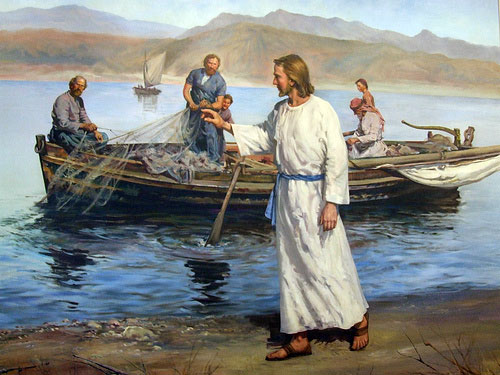
Our call to holiness is not a one-time beckoning.  Everything was not hunky-dory when Peter, Andrew, James and John rolled up their nets and walked away with Jesus.  The call back to the simple, predictable life of a fisherman may at times have been strong enough to give them second thoughts about this little-known upstart from Nazareth.  The barbs of criticism aimed at them and their hero and their suffering as the butt of jeers must have stung deeply.  But they were, for the most part, steadfast in their loyalty to the Master.  They could have spent time wringing their hands bemoaning the awful conditions of their known world.  Instead, they looked to Jesus for direction and followed his unwavering example of feeding the hungry, caring for the sick, comforting the sorrowful.

Even in the darkest hours they clung to hope.  Hope is a spark that can become a flame.  The same puff of breath that can snuff out the spark, more gently exhaled can coax the spark to burst into a lively flame.  The same vocabulary we use to engender hope, spoken in a derisive tone, may dash all hope to the ground.

In these days of our Sisters’ strategic planning I invite you to figuratively hold hands in fervent prayer that we will be courageous, hope-filled, sensitive, patient, considerate – truly “sisters” to one another as we grapple with the tough issues that lie in our laps.

We are made for this time.  Benedictines are committed to being life-long learners.  For all our preceding years we have been training, practicing, getting ready for this exact moment in our history. As Hel Basse writes in Give Us This Day for January 23, 2026: “If you want to go fast, go alone.  If you want to go far, travel together.”

A few years ago, Pope Francis said in one of this Sunday addresses: ”Go forth and don’t be discouraged.  Don’t be fools, remember, a Christian doesn’t have the luxury of being foolish.  An idiot, a fool – you can’t give yourself that luxury.  You have to be clever, be astute!”

Let us reach out.   Let us catch the light from each other’s flickering flames, coax them brighter and bring them closer together to shed a united light on possibilities that will lead us into the future God already has in mind for us.

Pray this week that you may discern what nets are holding  you back from following Jesus’ daily quiet calls.

~Reflection by Sister Roberta Bailey, OSB


This is also Oblate Sunday at the Monastery – they will gather at the monastery or via ZOOM for Mass and dinner with the Sisters.  This Sunday they will spend time with S. Tonette for a presentation on the obligations of Oblates.  As time permits, S. Mary David will lead a teaching session including discussion of the “homework” assignments.

Basically, a Benedictine oblate is a layperson or secular priest who associates themselves with a specific Benedictine monastery, committing to live according to the

Rule of Saint Benedict in their daily life. While not taking formal vows or living in the monastery, they become part of an extended monastic family, integrating prayer, work, and spiritual values into their personal lives in the world.

 Key Aspects of a Benedictine Oblate:

  • Spiritual Affiliation: Oblates affiliate with a particular monastery, participating in its spiritual life while maintaining their own vocations, whether single, married, or working.
  • The Rule of Saint Benedict: They adapt the principles of the Rule—such as moderation, community, and prayer—to their secular life.
  • Oblation as Self-Offering: The term means a “gift of themselves” to God in union with the monastery.
  • Promises: Oblates make promises that often include stability (a commitment to their monastery), fidelity to the spirit of the Rule, and obedience to God’s will.
  • Prayer Life: They often engage in the Liturgy of the Hours and Lectio Divina (sacred reading)


First Reading:   Isaiah 8: 23- 9: 3-6         Second Reading:  1 Corinthians 1: 10-13, 17
Gospel:   Matthew 4: 12-23
Continue Reading

Filed Under: Blog, Front Page, Homily Tagged With: Andrew, Come after me, fisherman, James, Jesus, Jesus invited, John, Peter, they left their nets and followed him

Such a simple message

September 23, 2024 by Holy Name Monastery Leave a Comment

When Jesus and His disciples got to Capernaum, they entered into (some scholars say) the house of Peter and Andrew. Jesus asks them what they were disputing about as they approached the house and waits for them to ‘fess up.  No luck! They are like children who don’t want to tell their parents what they’ve been arguing about. The disciples had started out disputing over the meaning of Jesus’ prediction of his death and resurrection and ended up arguing over who would be the greatest when Jesus was no longer in their number. They were certain it would be one of them, not someone outside their circle.  They got caught up in the idea of being a follower without having a sense of what it takes to be a true disciple.  But Jesus knew these fellows had the capacity to refocus their energy on what was really important instead of promoting themselves as the “greatest” above everyone.  They (and we) might do well to heed the advice of Joe Kennedy to his son Ted: “Don’t look for credit.  If you succeed, there’ll be plenty of credit.  If you fail, you won’t want the credit”.

The greatness Jesus is talking about lies in welcoming one who is viewed as powerless.  This requires sensitive awareness to those around us.  Who is being left out of the conversation, who enters a room and seems unsure where she might be welcome to sit?  Who is listening to a conversation about a plan to go off-campus hoping to be invited?  Are we alert to welcome the visitor into the chapel, to lift a bundle for a struggling elder, to smile at a child in the shopping cart?   We can list hundreds of moments of random acts of kindness similar to those that Jesus is talking about.

Could it be that Jesus can so easily welcome children because he has personal memories of his own childhood experiences? Children in our 21st century America are in precarious, fragile, and dangerous places.  More than ever, children are abused, snatched, neglected or the opposite: over-protected by ‘helicopter’ parents.  There are latchkey kids; underfed, lonely, ignored children and many are victims of inadequate health care.  Now, more than ever, children need to be embraced by the church.  If the church leaves out children, it is leaving out God. If policy makers leave out children, they are leaving out God and they are placing the future of our world in jeopardy, forgetting who it is that is going to be caring for them (or not) in their sunset years.

Notice that Jesus did not say “receive this child.”  Rather he said, “Receive one such as this child.”  With a child in his arms, Jesus says that to welcome persons such as this little one is to welcome Him.    Our accomplishments and accolades, the certificates, the awards, as impressive as they might be, do not exemplify discipleship.  It’s our ability to be of service to others, to attend to the most vulnerable in our society, that makes us good disciples.  It is such a simple message that it is at the same time so difficult to put into practice!

~Reflection by Sister Roberta Bailey, OSB


This weekend we welcome our Oblates! Thirteen Oblates will join at the monastery for their quarterly meeting and for Mass and noon meal.  Wondering what’s an Oblate?  Contact S. Mary David at 352-588-7176 or mary.david.hydro@saintleo.edu.


First Reading:   Wisdom 2:12, 17-20         Second Reading:  James 3:16-4:3
Gospel:   Mark 9:30-37
Continue Reading

Filed Under: Blog, Front Page, Homily Tagged With: Andrew, Capermaum, children, disciples, Jesus, Peter

Come and You Will See

January 15, 2024 by Holy Name Monastery Leave a Comment

This weekend we have two familiar stories in our Scripture selections: the dream-like vision of Samuel and the calling of Andrew and his brother Peter.  One of the risks we have with familiar stories is that we can be overconfident that we recall all the details.  But were all the details that surround the story included in the version we learned?   For instance, consider the line in Scripture that immediately precedes the opening of the story of Samuel: “When the boy Samuel was serving the Lord under the direction of Eli, there were few messages from the Lord, and visions were quite rare.”  This phrase “visions were rare” (some translations say “precious”) does not appear anywhere else in the entire Old Testament.  It’s no wonder it did not dawn on Samuel his summons might be from God.

The story tells us that Samuel is confused, not just your average sleepy-head befuddled, but really confounded.  Three times, Samuel responds to a calling – or is it really four times?  Three times he responds to what he thinks is Eli calling him: “Here I am.”  It’s not until Eli becomes more fully awake and realizes what is going on.  Then, he instructs the boy if he hears the voice again to respond: “Speak, for your servant is listening.”  Although Samuel’s obedience and quickness of response are to be admired, he mistakes the aging, ailing Eli for God’s actual voice.  Remember, that although Samuel had been anointed, Scripture says he was still very young in faith.

So were Peter and Andrew in the Gospel.  They were disciples of John the Baptist whom Jesus once called the greatest prophet who ever lived.   John had a few disciples, people who were devoted to him as their spiritual leader.  This day Jesus shows up. John realizes that he is now in the presence of One whose sandals he is not even worthy to untie.  John may be a prophet, but this man is the Lamb of God, the Son of the Most High, the very Savior of the world.

But, how’d we get here from Eli and Samuel, to John, Jesus, Peter and Andrew?  One of life’s challenges is recognizing and accepting your role at each stage of life.  You may have heard the term: “the grace of office”.  A smooth transition into or out of various roles in life is reliant on the kind of grace that Eli and John the Baptist showed in directing their disciples to turn their focus to Someone else, Someone greater. Eli and John were forerunners who knew, and fully accepted, that very role.

In her presentation on “Servant Leadership” S. Lynn McKenzie writes of this dynamic.  We know (She says) “One does not begin monastic life as a prioress but begins as a member of the community.  And one usually does not end monastic life as a prioress but as a member of that same community.”

This applies across the board despite what the person identified in the Rule of Benedict’s Chapter headings might lead one to believe.  The directives are addressed to the “rank and file.”  It’s not just the cellarer (buyer) who needs to give a gentle response even when the answer is NO.   Nor is it just the deans (assistants/councilors) who are reminded to keep confidential information sacred.  It’s not only the members sent on a short journey who should not broadcast every sight they’ve seen.  Nor are hospitality ministers the only ones who should be prompt to answer the door or phone.  Benedict is writing for all members when he cautions artisans not to be become “puffed up by their skillfulness”.  It’s not just the sub-prioress who should carry out her assignments with respect.  Kitchen servers aren’t the only ones that should be gracious in accepting help so they can serve without distress.  And it’s not only the sick who should not make excessive demands.  Nor is the prioress the only one who should practice what she preaches and keep in mind to Whom she will give an account.

Remember what Jesus asked the disciples who were trailing him: “What are you looking for?” His response was the same answer we’ve heard: “Come and you will see!”   Who has helped you along the way?  Who today gives you a hand to grasp, a “pointing finger” to follow, a prayerful nudge when life throws you a curve ball?  Who is there to keep track when Jesus seems to disappear just around the bend in the road ahead? Who reminds you, “Come and you will see?”

~Reflection by Sister Roberta Bailey, OSB


First Reading:   1 Samuel 3:3b-10, 19         Second Reading:  Corinthians 6:13c-15a, 17-20
Gospel:   John 1:35-42
Continue Reading

Filed Under: Blog, Front Page, Homily Tagged With: Andrew, Eli, Jesus, John, Peter, S. Lynn McKenzie, Samuel

Footer

Prayer / Newsletter / Info

 Contact Info

Benedictine Sisters of Florida

PO Box 2450
12138 Wichers Road
St. Leo, FL 33574-2450
(352) 588-8320
(352) 588-8443

 Mass Schedule

Related Links

Copyright © 2026 · Benedictine Sisters of FL · Touching Lives Through Prayer and Service

Copyright © 2026 · Bendedictine Theme on Genesis Framework · WordPress · Log in