• Skip to primary navigation
  • Skip to main content
  • Skip to footer
Benedictine Sisters of FL

Holy Name Monastery
Founded 1889

Donate Now
  • Home
  • About Us
    • History
    • Being Benedictine
    • Benedictine Monasticism
    • Meet Our Community
    • Holy Name Academy-Alumnae
  • What We Do
    • Mission, Vision and Our Partners
    • Retreats
      • Invitation to Retreat
      • Accommodations
    • Volunteer Programs
    • Oblate Program
    • Spiritual Direction
    • Aqua/Hydroponics
    • More of Our Ministries
  • What’s Happening
    • Articles of Interest
    • Events
    • Commemorative Bricks
    • Newsletters
    • Brochures
    • Links
  • Support Us
    • Gifts of Support
    • Wish List
  • Stories Shared
  • Galleries
    • Photos
    • Videos
      • Benedictine Sisters of FL Videos
      • Other Videos
  • Contact Us

Faith

Which One Are You?

October 3, 2016 by Holy Name Monastery Leave a Comment

cookieman-personal-touches-matter27th Sunday (October 2)

First Reading  Habakkuk 1:2-3; 2:2-4      Second Reading  2 Timothy 1:6-8,13-14
Gospel  Luke 17:5-10

In this Gospel the disciples ask Jesus for an increase of faith. The faith that is being asked for is not to have a better knowledge of our catechism. What is being asked for is a much deeper and stronger trust and confidence that our God is near us – the firm conviction that God will always take care of his own.

Our participation in God’s plans is God’s grace to us—nothing more, nothing less. Even when God works wonders through us, with our mustard seed-sized faith, we must not seek praise.  When we are graced enough to cooperate with God, the work we do is nothing more than our obligation as faithful stewards of what God has given us.   And yet, our faith enables us to believe that what we have offered in service to God, as his servants, can be made to produce (like that mulberry tree in the midst of the sea) a hundredfold.

Our relationship with God is not about a bargaining agreement; a bartering or a buying and selling contract, about giving to God and getting in return. No, our relationship with God is one of total and unconditional love. The joy and satisfaction is not in what we can do to squeeze favors from God but in what we can give and share of ourselves.

The reason for this, of course, is that no matter what we do we are in God’s debt. The very energies with which we serve God are pure divine gift to us. We are “merely servants.” It’s not a 50/50 deal with God.  We can never do more than “our duty.” However much we give to God it is a small repayment for all that has already been showered on us.

We’ve heard many everyday heroes say something of this nature, haven’t we?  When they are awarded medals or accolades for a so-called heroic act, many say “I didn’t do anything special.  I just did what anyone in the same circumstance would do.”  But, would they?  Would we – jump into murky waters of an icy cold river, onto subway tracks in the path of an oncoming train, risk being attack by a vicious animal, rush into a burning building?  Would we respond to the need of the moment, let the Spirit, whom we sometimes call “adrenaline” kick in and come to the rescue?  Or, if we had the opportunity would we consistently perform  less noticeable actions like we’ve seen lately in the news: leaving a highly paid chef’s position to serve gourmet meals in a soup kitchen, insuring that 2000 poor families get Christmas gifts, spend our weekend to provide  free health and dental care to help make people smile and laugh.  We can hope that would not hesitate, and pray our faith would sustain us to respond: “we have done what we were obliged to do.”

Remember the story that goes: There were four people named Everybody, Somebody, Anybody and Nobody.  There was an important task to be done and Everybody was sure that Somebody would do it.  Anybody could have done it, but Nobody did.  Somebody got angry about that, because it was Everybody’s job.  Everybody thought Anybody could do it, but Nobody realized that Everybody wouldn’t do it.  It ended up that Everybody blamed Somebody when Nobody did what Anybody could have done. Which one are you?

Jesus’ story today indicates that lack of faith is not really the issue when we fail to respond to the needs of others. Faith is not measured by its quantity, but simply by its presence. A mustard seed sized faith will accomplish impossible things. The real need, Jesus says is for more obedience and humility. We should view ourselves as God’s slaves who owe Him simple and unquestioning obedience. And, when we have done what He requires, we should not get puffed up with pride in our great obedience, but should simply say, “We are unworthy slaves; we have done only that which we ought to have done.”  As Benedict says in his chapter on obedience: If you notice something good in yourself, give credit to God, not to yourself.”  Keep before you Benedict’s admonishment: “Do not aspire to be called holy before you really are, but first be holy that you may more truly be called so.”

It reassuring to know we can rely on God to uphold his promises.  Recall the words of Psalm 89 that we prayed earlier this week: “God promises: I will never take back my love; my faithfulness will not fail.  I will never break my covenant or go back on my promise.”   Or take as your mantra this week the words of Jeremiah the prophet:  “This I recall to my mind, therefore I have hope. The Lord’s loving kindnesses indeed never cease, for His compassions never fail. They are new every morning; great is God’s faithfulness.”  And perhaps spend some time contemplating whether, when there is a task to be done, you are a Somebody, an Anybody, a Nobody or one among Everybody….

~ Reflection by Sister Roberta Bailey, OSB, Prioress
Continue Reading

Filed Under: Blog, Homily Tagged With: anybody, everybody, Faith, God, Jesus, Luke, Mustard seed, nobody, servants, somebody

These Were Benedictine Women With A Dream!

July 11, 2016 by Holy Name Monastery Leave a Comment

St. Leo Township 125th Anniversary

July 9, 2016


20160709_140120We preserve our stories because we want never to forget that the opportunities we have today were not simply lavished upon.  They were purchased at the great price of travel from home; cold, cracked work-worn knuckles; study by the light of midnight oil; stomachs that ached with hunger; raking, hoeing and watering groves and gardens – saving, scrimping and salvaging.

What firm faith and incredible courage our founding sisters must have had!  The records in the Pittsburg archives remind us of how adventurous and of the bravery of these young sisters who in 1889 set out for a long journey into the unknown.  There were clearly told if the venture did not work, they were not to return to Pennsylvania.  An examination of the papers shows us that of the five women who signed their severance papers on the evening of February 22, 1889, one never made it to Florida.  However, one of the Sisters who had served as a witness, must have decided overnight to join the mission band – she is named in the group of our five founders.

Imagine what daring it took to venture south into a faraway place.  These were Benedictine women with a dream!  In 1889 Rome considered the church in America “missionary territory.”  In relative terms, the slaves had only recently been freed.  Had our Sisters ever seen a person of color in their northern neighborhood?  Surely not an Indian and most assuredly not an alligator!

There is some evidence that the pioneer band traveled from Allegheny County (PA) to the Benedictine house in Covington, KY – then southward by train which would have deposited them in south GA or north FL.  It seems safe to me to guess that someone from San Antonio would have met the Sisters at the train to bring them in wagons or on horseback down along what is now Hwy 19 and 41 – parts of the Seminole trail.  Perhaps they met cattle drovers bringing their herds to Tampa or Punta Gorda.  By the time they reached San Antonio, traveling through the Florida wilderness – in February, probably not too many mosquitoes but surely they’d have heard or seen black bears and panthers, “Strange” birds, and had run across a snake or two…

On Thursday, February 28, I bet they breathed a sigh of relief to at last be among people they may not have personally known but whose northern cultural practices and manners, whose speech patterns were similar to their own.

Next day, March 1, being a Friday, and most probably a Lenten Friday, would have been a day was meat was NOT on the menu.  The sister would have partaken of very little, if any, breakfast.  They’d have prayer the Little Office of the blessed Virgin, an abbreviated for of the Divine Office they’d back home.  And as we know from our annals: “the great work was begun.”  Perhaps they had a main meal of fish fresh caught from Lake Jovita?  Evening came, and morning came, their second day in the mission land called “Land of the Flowers.”

The Sisters first home was a three-story wood-frame hotel which was located on the city park in San Antonio.   In 1911, the building was moved on logs to a location parallel to the shore of Lake Jovita in St. Leo.  In 1960, the “new” monastery building, which is now called Benedictine Hall and owned by Saint Leo University, replaced the original wood-frame building which the Sisters and academy boarders had called home for 71 years.

By March 11, less than two-week after their arrival, the Sisters had opened Holy Name Academy for girls and were teaching in St. Anthony School and St. Joseph School.  From 1929-59 they operated St. Benedict Preparatory for young boys.

In their history since 1889, the Sisters have served as town mayors and commissioners. At Saint Leo University, they have served as administrators, instructional staff, board members, campus ministers, directors of residential life and director of library services, archivist, clerical staff and food service managers.  From 1962 until 1997 they provided housing for university students.  Florida Benedictine women have staffed schools in Texas and Louisiana.  In Florida, they have been teachers and school principals, and worked in parish ministries, in San Antonio, St. Joseph, Lecanto, Jacksonville Beach, Miami, Quincy, Sarasota, Ocala, Lakeland, Venice, Beverly Hills, Apopka and Tampa.

The Benedictine Sisters have conducted summer religion programs at three diocesan camps.  They taught in summer Bible camps in DeLand, Plant City, Leesburg, Bartow and Naples, Florida.  Weekly religion (CCD) classes were taught by the Sisters in cities where they staffed schools and in Floral City, Brooksville, New Port Richey, Eustis, Arlington, Ponte Vedra, Masaryktown, Belleview, Reddick, West Ocala, Fruitland Park, Gainesville, Clermont, Dade City, Zephyrhills and at the Girls’ Detention Center in Ocala.

At the turn of the 20th century they attempted the founding of another motherhouse in Quincy, FL (which did not thrive) and within 10 years they had been invited to start a house in the Diocese of Birmingham, AL.  A year later 5 of “us” from FL joined with 5 Benedictine sisters from Kentucky to found the Benedictine convent in Cullman, Al.

At the present time, the Florida Benedictine Sisters continue to work on public, private and parochial school boards, and at Saint Leo University.  Individual Sisters are volunteers and serve on the boards of Catholic Charities, the Chamber of Commerce, Habitat for Humanity, Sunrise Spouse Abuse Shelter, Hospice, St. Vincent de Paul Society, soup kitchens and thrift stores.  Some of the Sisters minister within their community in administration, recruitment and formation of new members, business affairs, hospitality and retreat ministries, direct services to the poor, food service, horticulture.

And, now here we are at day 46,516 in the 127th year of our history – yes we were here before St. Leo was St. Leo Township!  And the Sisters have continued to happily be residents of St. Leo for all 125 years of the town’s incorporation.  And the GREAT WORK goes on.

As long as there are gaps between our ideals and our reality, there will always be great work to be done.  Our founding sisters, and the women who followed them into community, knew that they probably would not live to see all the changes they promoted.  Little did they know the hotel-turned-convent they so carefully hauled to the shores of Lake Jovita would be demolished in 1961, a new priory (as it was called then) erected and eventually sold to Saint Leo University.

We face challenges our foremothers could not have imagined.  And, our “daughters” will face challenges unimaginable to us.  This is part of our Florida Benedictine women’s experience – we still remember in the beginning our founders were told: if it doesn’t work, don’t come back.  We work to compassionate and caring, to preserve the earth and steward our resources, to keep faith with our founding ideals and to enflesh them into a reality worthy of those who will inherit what we build today.

~ Reflection by Sister Roberta Bailey, OSB, Prioress
Continue Reading

Filed Under: Blog, Homily Tagged With: 1889, Benedictine, Faith, journey, motherhouse, Saint Leo, San Antonio, St. Leo

Are You In Danger of Becoming a Pharisee?

March 14, 2016 by Holy Name Monastery Leave a Comment

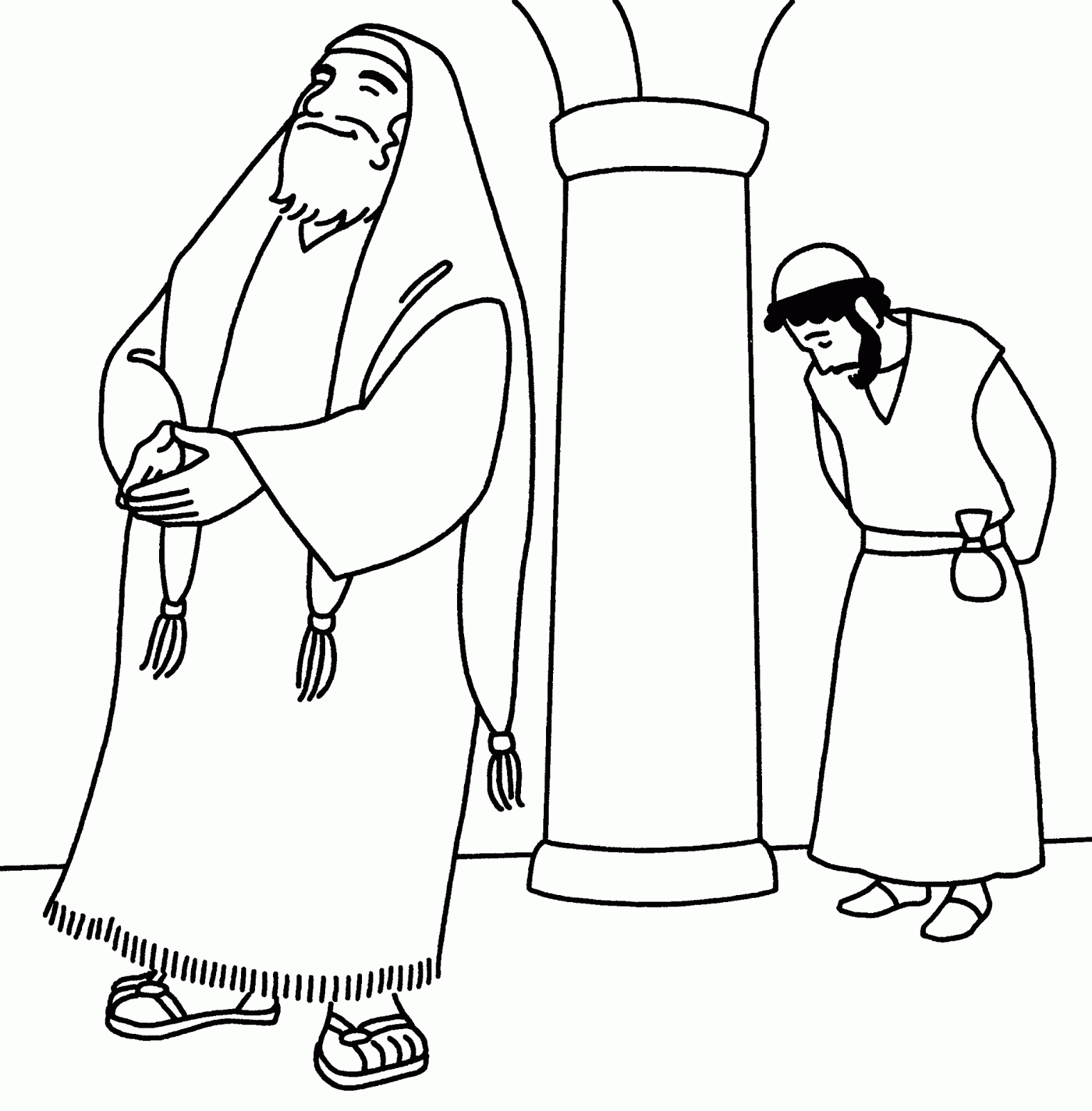
It’s pretty easy to spot a Pharisee, and we might not like it to admit it, but we can all behave like a Pharisee if we’re not careful.   How will you knowPharisees if you’re a Pharisee?

If your official title is longer than your given name.

  • If you’re willing to be merciful – once.
  • If you feel your rules are the REAL rules.
  • If everyone outside your immediate circle, and most within it, are always wrong.
  • If God’s still small voice… sounds exactly like your own.
  • If you feel all the apples are spilled out of your cart when a rule is bent.
  • If you know the Word of God, but not the God of the Word.

You see, the Pharisees of Jesus’ day had started out wanting TO PLEASE God. They began in a day when Israel was deeply tainted with immorality and unrighteousness and somebody needed to stand in the gap. And the Pharisees stepped up to fill that need. And in an era where many Jews had abandoned the law of God, the Pharisees became like prophets to their people pointing them back to the Law of Moses and obedience to God’s will.

The Pharisees were THE religious people of the day and they took their “faith” seriously. Any time people take their faith seriously, it’s not a big step over the line from pleasing God to disobeying God.

So we want to be careful WE don’t do that too.  You see the Pharisees didn’t set out to make God angry.   They wanted to obey every one of God’s commands. They didn’t wake up one morning saying: “I’m going to make God mad today!”  It was just that their thinking was warped.  Rules had become all-important – People were UNIMPORTANT.  When the Pharisees brought this adulterous woman to Jesus… they didn’t care about her. A rule had been broken. She needed to be exposed.  She was only a tool – an object lesson they wanted to use to get at Jesus. They really hated Jesus.

In their warped thinking, God’s agenda was what they decided. And, they believed as long as they kept the rules their personal sins could be covered up. In reality they had no intention of stoning the woman … she was just a prop.  In fact, they couldn’t stone her. Once Rome conquered Judah, Judah became a Roman territory, and under Roman law, only the Roman governors had the authority to condemn people to death. You only have to look at the Crucifixion of Jesus to see that truth.  Do you remember who’s approval the Pharisees and the teachers of the Law needed to have Jesus executed? That’s right – Pilate. He was the Roman Governor at the time.

It was a perfect trap.  They didn’t care about the woman. And they didn’t care about Jesus. In their minds both of them had broken their rules… and both needed to be destroyed.

You need to understand, these Pharisees saw Jesus as an enemy of THEIR god. Their god was on THEIR side… and so anyone who opposed them was opposing God.

We can end up making Jesus our enemy by substituting our personal agenda for His. And if you’re not careful… you’ll not even know you’ve done it.  BUT there is one symptom of this dangerous attitude. It should be like a road sign saying “Don’t go there.”

When you get mad people don’t listen to you. Your opinion is being ignored. Things aren’t going YOUR way.  That can make you really angry. YOUR agenda is obviously the right agenda.  If you’re right it follow the other must be wrong.  If you feel that’s happening, pay attention. It’s a sign that you’re in danger of becoming a Pharisee.

The Pharisees had convinced themselves that if they could “look” good on the outside, that was as good as “being good” on the inside.  They fooled themselves into thinking that obeying certain rules was just as good as being righteous before God.  In fact they got most of the rules right.  By contrast, a Pharisee could tell you were going to hell – and you could tell they were thinking “got what you deserved – glad you are on your way.”

As this true story illustrates, warped thinking can lead you down a Pharisee-like path:

A 4-year told his mother” “Mom, I’m not gonna be like those bad guys Jesus was talking to; I’m not going to sin anymore.”   “Well, that’s very nice,” (she said). “What made you decided not to sin anymore?”  He answered: “Cause Jesus said if you don’t sin, you can throw the first stone and I want to throw the first stone.”

Reflection by Prioress, Sr. Roberta Bailey, OSB
Continue Reading

Filed Under: Blog, Homily Tagged With: Faith, God, Jesus, Lent, Pharisee

First Sunday in Advent 2015

November 30, 2015 by Holy Name Monastery Leave a Comment

waiting-on-god-bannerHAPPY NEW YEAR!  Welcome to the Year of Luke!  This year we celebrate the full cycle (minus one day) of Advent!  Just as a reminder of a piece of Catholic trivia ..  Advent begins on the Sunday closest to the Feast of St. Andrew … since the feast is on a Tuesday, the closest Sunday is before the feast.

The opening article in the most recent LCWR newsletter entitled: “What Do We Do While We’re Waiting?” reminded me of my 3-year-old niece who was patiently waiting through what her mom had told her was my private time with God.  She had lasted through her first lectio experience with her books for 40 minutes.  She sat just outside the doorway where I was, heaved a heavy sigh and said: “OK, what do I do now God; she’s still talking to You!”

Advent is all about waiting.  But not waiting for someone else who is talking to God.  Is it wonderful that we do not have to take turns – we don’t have to wait to be in touch!  Advent is active waiting – that is what is at the heart of it. Even when we don’t know that we are waiting, we’re waiting. Even when we can’t find words for what we are waiting for, we’re waiting.

One of the ancient Advent prayers supplies us with a sentiment that Benedict echoes: “Give us grace that we may cast off the works of darkness and put upon us the armor of light.”    Many Advent hymns express the same theme.  For example: “When the darkness closes in, courage fails and hopes grow dim, clear the shadows from our sight, set our troubled world aright, fill our eyes with radiant light.  Come Lord Jesus, come!

We are waiting not just at Advent, but at all times for the advent of light, that ultimate light that is redemptive and terrifying at the same time. It is redemptive because it puts an end to the darkness, and that is also why it is terrifying because the light reveals all that was hidden in the darkness.  For so long, actually for most of our lives, the darkness has been home.  We’ve become comfortable in our incompleteness.   Now to leave home is downright scary. Change my ways of interacting with God and God’s people?  Whew!  Allow my rough edges to be smoothed – mmmm, sounds irritating (no pun intended).  We are gifted with Advent time to do personal “Isaiah work” of filling in every valley; leveling every mountain so the hills will become a plain, and the rough country will be made smooth.  As the familiar banner asks:  If not now, when?

Have you ever watched, or heard about the reality shows Restaurant Impossible or American Diner Revival.  Depending on which show you’re watching there’s a well-known renovation contractor and/or a chef that comes to a failing restaurant or diner and helps turn it around.  The premise is this:

Turning around a failing restaurant or diner is a daunting challenge under the best of circumstances. Attempting to do it in less than 36 hours, even with the help of the townsfolk, may be impossible.  But they’re ready to take on the challenge.  Can it be done?

From outdated décor to hip interior, from canned food to fresh ingredients, from surly employees to service-oriented staff, they attempt to overhaul the whole shebang with straight talk, great cooking skills, innovative, creative interior decorators and an excited team of mostly volunteers.  But, most importantly, when the TV crew arrives, the expectation is that the local staff will be ready with their own litany of what is going well and what needs to change.

This chef is no Christ figure, but there is an analogy here between our Advent Scriptures and theme of this human example of a dramatic overhaul driven by someone who knows what he’s doing.  The overhaul of the dilapidated restaurant and our personal overhaul is only possible if we’ll allow our premises to be placed under new management.

That turns our attention on the person who’s coming to town in the Advent scriptures.  The Gospel from Luke connotes a double reference to the already and the not yet.  Jesus berates the crowd for knowing how to interpret the weather, but not the present time.  This is where we, too, may fall short.  We listen to the weather reports and dress accordingly.  We gather in supplies and hunker down for the onslaught of a hurricane.  We see the waxing moon and wait patiently for the night of the full moon.  Such waiting requires discernment and alertness to natural signs.  Waiting for Jesus’ presence requires a deeper discernment and alertness to the signs of His appearance – the signs of the times.  And, so we question: do our community Directional Goals reflect awareness of God in our midst –  as well as in the signs of the times and what is to come

The hymn I referenced earlier reminds us how foolish we can be to overlook signs of the coming Christ: “Wise and foolish, still we wait. Is our Bridegroom at the gate? At his voice, our hearts have stirred, listening for his healing word, confident our cries are heard. Come, Lord Jesus, come!

Advent offers us time to waken to the signs of the times – Jesus, in the voice of Luke, reminds us we must remain on high alert awaiting the coming of the kingdom – it will be dramatic but that there will be little advance warning: “The kingdom of God is not coming with things that can be observed…  the kingdom of God is among you!   Remember:  “Heaven and earth will pass away, but God’s words will not pass away.”  The last Gospel we heard as the liturgical year ended (this morning) and the first Gospel for the New Year impress upon us the same warning: Beware that your hearts do not become drowsy!

                                                                                                       Reflection by S. Roberta Bailey, OSB, Prioress
Continue Reading

Filed Under: Homily, Prayer Tagged With: Advent, Christ, Faith, God, Waiting, Year of Luke

Our Blind Eyes Opened, Spread God’s Love

October 26, 2015 by Holy Name Monastery 2 Comments

eye for GodMark 10:46-57                                           Intention:  Jubilarians


The story of Bartimaeus rings with a familiarity of the plight of many people today.  He once had a family, a job, a house, kids, the whole works. He was active at the local synagogue. He would tell his children stories of their ancestors.  Then things started to change, he started to get these real bad headaches and his vision would become blurry. At first he did not allow this to bother him but kept on working and living, but eventually the blurred vision got worse and worse and eventually he could barely see his wife and children. He told them to leave because he wouldn’t be able to support them or protect them. Then things went black and that’s the way it was.

He would lay his cloak on the ground so people could throw their loose change on the ground next to him. Most people avoided him altogether because in those days many people felt that blindness was caused by sinfulness either by the person or by their parents, so they were avoided. That’s the way it was for years. He struggled to survive, always hungry and thirsty and everything always black.

Despite all the hardships that he faced he still loved God. He remember the stories that he told his children and he saw in his mind the people in those stories and how God always came through for them in the end. Now Bartimaeus sat daily next to the road listening to the people passing by. The conversation lately had been about this guy named Jesus who had healed people, even blind people. Some had even said that he was the messiah that had come to redeem Israel. Bartimaeus thought, “Wow, if only Jesus would come around here.”

Then one day there was a commotion. There were more people on the road than usual and then he heard the name, Jesus. He was coming. Should he say something? Would Jesus come to him? Could he restore his vision? Something deep inside said “Yes, call out the name.” Bartimaeus opened his mouth: the crowd around him tried to silence him. Yet Bartimaeus persised, calling out more loudly and with greater urgency. He will not be silenced or deterred from getting Jesus’ attention. We notice how quickly the crowd’s reaction changes when Jesus calls for Bartimaeus. Those who sought to quiet him now encourage him.

Bartimaeus recognized power and authority when he saw it. We do the same thing. If we had a broken leg we wouldn’t go to AutoZone to have it fixed.  If the doctor came in overalls, we might have a few questions, but if he was in a white coat, with a stethoscope and a pocket protector we would have no problem. Even though it might be some Joe Schmo from the street dressed as a doctor, we recognize the uniform as power and authority; we don’t ask for credentials or references, we simply accept what experience told us was the situation.

Bartimaeus recognized Jesus’ authority.  Jesus didn’t have on a uniform, even if he did Bartimaeus was blind he couldn’t see him anyway. He had heard stories, but he had heard false rumors, too. This recognition came from a place deep within him.

We have that some recognition of Jesus. We have never seen Him.  We’ve see artistic renditions of Jesus but our recognition originates from a different sense than sight..  It comes from a spiritual sense. It comes before anything. It is grace that allowed us to have that first moment with God, when God was not just a figure in religion classes or in the Bible but God became personal, a friend.

When Bartimaeus recognized Jesus, he still had a choice to make: act on that recognition or let it pass by.  Bartimaeus cries out, “Jesus, Son of David, have mercy on me!” He addressed Jesus by name and by title, Son of David, the messianic title reserved for the redeemer of Israel.   We cry out as well when we get to the last point, the straw that breaks the camel’s back.  We cry, “Help me, Jesus.” “Have mercy, Jesus” Or simply, “Jesus” “Got in Hiemel.”  “Mi Dios!”  We realize that only God can help us in whatever situation we are in. God’s grace not only gives us the ability to perceive God’s power and love. It also gives us the strength to respond to it. Unlike Bartimaeus however, we are not limited to a once in a lifetime response. We must continually respond to the gift of grace and power in our lives.

What is Jesus’ response to Bartimaeus? “Go; your faith has made you well.” It is interesting to see that Jesus says that it is Bartimaeus’ faith that produced his healing not Jesus’ faith that made him well.   Bartimaeus’ faith, and ours too, is not born out of nothing, it does not come out of thin air, but it is a response to the love and grace of God.  It was Bartimaeus’ response to God’s initial contact through grace that made him well – restored his sight. Our response to the power or grace is also a restoration and a reconnection.  We might not be blind, physically but spiritually we may be walking around aimlessly. Our spiritual vision may be black as night, but God still initiates the reconnection through grace and gives us the freedom to respond or reject His gift.

That’s the end of the story, right? Not quite. What does Bartimaeus do once he has been restored?  Immediately he follows Jesus on the way.  It is not the end, but the beginning of a journey.  We don’t receive the fire of the Holy Spirit, the connection with God, only to sit it in the corner or in the closet, or even the chapel.  Instead we must take up the invitation and follow Jesus on the way.  The question facing us is: Am I going to do for God today, or for myself?  Am I going to spend today in connection and in conversation with God or am I going to satisfy my own selfish wants and desires?  Our blind eyes opened, we have a unique opportunity to spread God’s love in the world.  Lord, we pray: open our eyes and strengthen us to following your prompt to be an expression of your compassion and mercy in our world.

                                                                                                                        By    Sister Roberta Bailey, O.S.B.
Continue Reading

Filed Under: Homily, Prayer Tagged With: Bartimaeus, Blind, Faith, family, God, Healing, Jesus, Mark

13th Sunday in Ordinary Time

June 29, 2015 by Holy Name Monastery Leave a Comment

jesus-heals-womanWe’ve just heard a story of healing that occurred because an ailing woman took a huge leap, a step forward, in faith.  In tomorrow’s Gospel you will hear a second healing miracle that concludes with Jesus insisting the on-lookers tell no one.  But, it seems to be impossible to obey what some refer to as “a messianic secret.”  Jesus seems to be telling us that each individual, each of us, must in the end, make our own act of affirmation that Jesus is our Savior.

Have you ever felt like the hemorrhagic woman – or known someone who did, or does?  Feeling like the bucket of life has a hole in it? That it leaks faster than you (or the person you are thinking of) can fill it? No matter what you do, how hard you work, where you go, what you try, you just can’t fill it up. Work, play, friends, family, community and even prayer somehow leave you feeling empty, restless, and searching. You can’t seem to get enough in your bucket. The outflow is greater than the inflow. You are left drained –  tired and weak, frustrated and hopeless, angry and resentful, sorrowful and grieving, fearful that you will never be as fulfilled as you figured you would be by the age you are. If you know what that is like, perhaps you know how hemorrhaging woman felt.

In the Gospel, we don’t know her name. We don’t know where she came from. She’s anonymous; just another face in the crowd. What we do know is that she is sick, desperate, and in need. She has been bleeding for 12 years. That’s 4,380 days. In all that time no one has been able to help her. She’s spent all she had – money and energy. She’s only gotten worse. Day after day, week after week, month after month, year after year it’s been the same.

This woman’s condition is more than physical. She’s losing more than blood. She’s losing her life, its warmth, vitality, and fruitfulness. That is more than a physical condition – it’s a spiritual matter.

At one level this is a story of this one woman.  Looked at from another level it’s our human story. Her story is our story. It’s not only about women.  It is as much about men. Drained of life, we go through the motions. We’re alive but not really living. Such people feel disconnected, isolated, and alone.

I suspect the bleeding women spent many of the last 4,380 days thinking, “As soon as.…” This particular day, however, something is different. Something in her has changed, shifted. She has heard about Jesus. Maybe she heard about his teaching, about him casting out demons, about him healing the sick, or about him calming the storm on the sea.

We don’t know what she had heard about Jesus but it was enough to make her believe in him. She was desperate.  She would no longer wait on others to fix her life. Today she would risk the crowd’s ridicule.  Today she would literally take matters into her own hands.  In her heart she knows, “If I but touch his clothes, I will be made well.”

Instantly a connection is made and a relationship established.  Life no longer leaked out of her but flowed into her.  And, Jesus knew that power had flowed out of Him.   “Who touched my clothes?”    It may take professional help, or a spiritual director, or a close friend to help us through the maze, but Jesus does offer each of us “life without hemorrhaging.”   We don’t have to live drained of life. We, too, can walk the path of peace fully alive if we but risk reaching beyond the circumstances of our lives. We don’t have to live “as soon as” lives.

We can begin by looking at the clothes Jesus wears.  Sometime he drapes himself in silence, solitude, and prayer. Sometimes it’s mercy and forgiveness. Sometimes it’s thanksgiving and gratitude. Other times it’s compassion and generosity. Always it is self-giving love. The very attributes and characteristics of his life are the clothes he wears and the clothes we are to touch.

If you are feeling drained, or for when you may in the future, I’ve put a few copies on the back table of a tool that may help the user get in touch with the area of life that may be the cause.  It can be used for self-examination, for self-direction or to discuss with a confidant.  If you would like a copy of this tool, just let Cheryl Chadick know at cheryl.chadick@saintleo.edu and she will send you one.

If you read the daily reflections in THIS DAY – on Thursday past you saw that the author refers to the Hemorrhaging Woman, the bleeding woman, as a First Century disciple.  When you feel you are living a drained life, call upon this woman in the crowd to intercede for courage to reach out and touch the clothes of Christ. Connect to Him.   Do whatever it takes to let Jesus transfuse you with his life, love, and power. Touch and be healed and go in peace.


                                                                                                                                        Sister Roberta Bailey, OSB


Continue Reading

Filed Under: Homily, Prayer Tagged With: Faith, Healing, Hemorrhagic Woman, Jesus, Woman

  • « Go to Previous Page
  • Page 1
  • Interim pages omitted …
  • Page 3
  • Page 4
  • Page 5

Footer

Prayer / Newsletter / Info

 Contact Info

Benedictine Sisters of Florida

PO Box 2450
12138 Wichers Road
St. Leo, FL 33574-2450
(352) 588-8320
(352) 588-8443

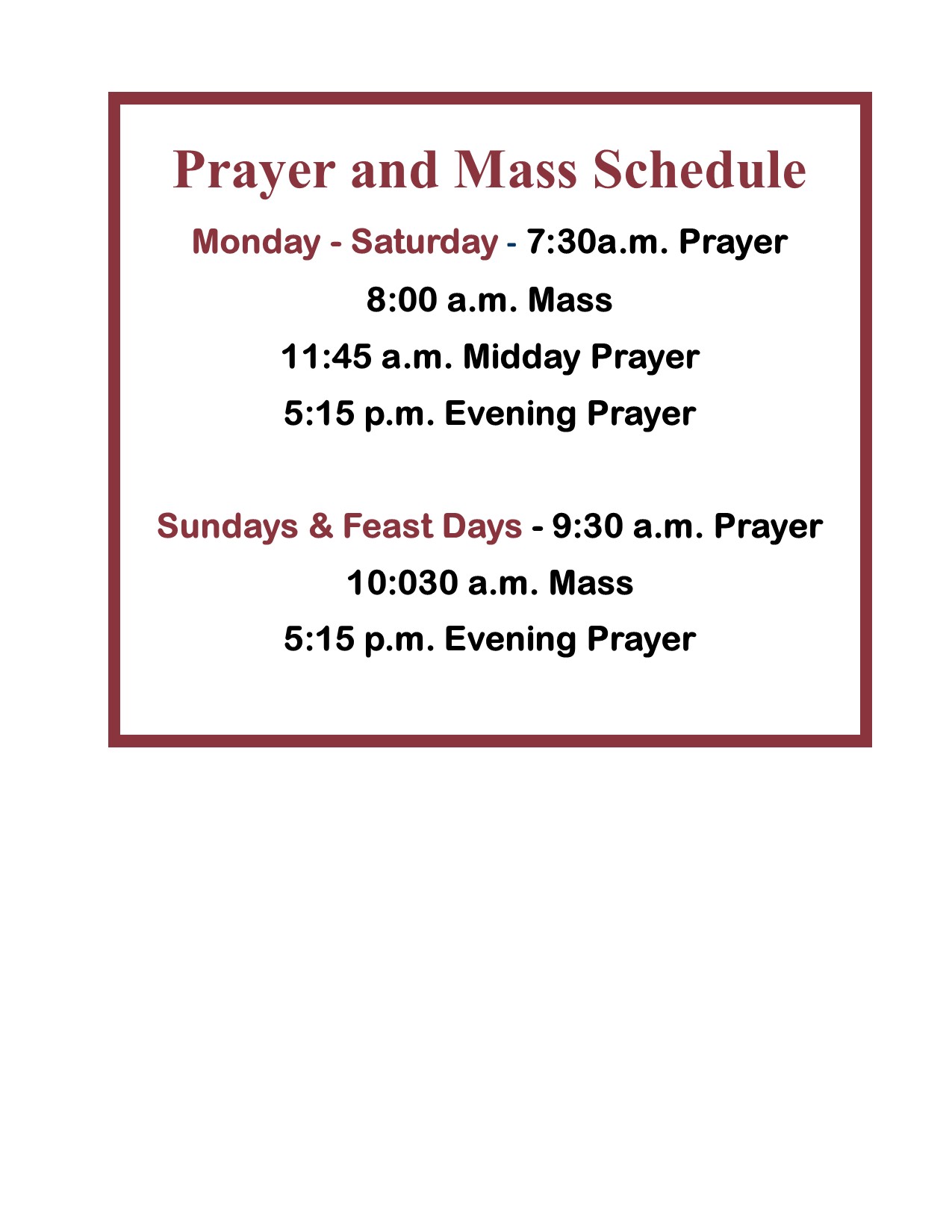
 Mass Schedule

Related Links

Copyright © 2026 · Benedictine Sisters of FL · Touching Lives Through Prayer and Service

Copyright © 2026 · Bendedictine Theme on Genesis Framework · WordPress · Log in