• Skip to primary navigation
  • Skip to main content
  • Skip to footer
Benedictine Sisters of FL

Holy Name Monastery
Founded 1889

Donate Now
  • Home
  • About Us
    • History
    • Being Benedictine
    • Benedictine Monasticism
    • Meet Our Community
    • Holy Name Academy-Alumnae
  • What We Do
    • Mission, Vision and Our Partners
    • Retreats
      • Invitation to Retreat
      • Accommodations
    • Volunteer Programs
    • Oblate Program
    • Spiritual Direction
    • Aqua/Hydroponics
    • More of Our Ministries
  • What’s Happening
    • Articles of Interest
    • Events
    • Newsletters
    • Brochures
    • Links
  • Support Us
    • Gifts of Support
    • Wish List
  • Stories Shared
  • Galleries
    • Photos
    • Videos
      • Benedictine Sisters of FL Videos
      • Other Videos
  • Contact Us

Homily

Leadership through Service

October 24, 2018 by Holy Name Monastery Leave a Comment

This lesson we just heard from Mark is interesting in that it differs from how Matthew related it.  Maybe it tells us something about the two evangelists.  In Matthew’s version of the story, it was the mother of James and John, who asks Jesus to give her sons positions of importance in the coming Kingdom.  Matthew must have thought that it was unbecoming for an apostle to make such a bold request.  Mark, however, appears to be more honest.  He wants us to understand that the disciples were very ordinary people.

Mark also gives us some insight into the character of James and John.  They may have been lowly fishermen but they certainly were not shy about taking this opportunity to look out for their future.  Like the other disciples, they believed in Jesus.  They were confident of his leadership – they just wanted be sure they were included.  They wanted to ride on his coat tails.  We all have seen that … people who are impressed with titles – who want to be buddy-buddy with the boss just because she has the title and they think she has the power.  Jesus did have the power but He wanted to impress upon the two brothers the price they’d have to pay for the privilege they wanted …  the service they’d have be prepared to render.

Jesus’ response to James and John reveals what He means when he speaks of greatness.  His definition is inevitably linked to service.  That which makes a person great is not their ability to rule over others.  Rather, it is the ability to invest one’s self for the welfare of others.  In a world where most people want to put as little as is possible into life and to get out as much as possible, our Lord speaks of a better way.

Jesus calls us to that “better way” today.  Only when we are willing to put more into life than we take out – to put service to others in a place of honor-only then, Jesus tells us, are we worthy to be called his followers.

The author Sue Monk Kidd says in her memoirs: we humans need stories almost as much as we need the air to breath.  Jesus often began: Sit down, let me tell you a story.  So, listen now to a new story with the same meaning as the gospel we just heard.

Once upon a time (that tells you it’s going to be a pretend story or a fable)… Well, once upon a time, in a far-off country, a king had twin sons.  One was strong and handsome.  The other was intelligent and wise.  As the ruler aged, everyone speculated about which son would be the king’s successor – the strong son or the wise son.

In this land, the sign of kingship was a royal ring.  Just before the king died, he had a copy of the royal ring made and presented one ring to each of his twin sons.  The chief advisors to the king asked him, “How shall we know which son wears the authentic royal ring?”

“You shall know,” answered the king, “because the chosen one will reveal his right to rule by his self-giving service to our people.”

[Richard Carl Hoefler, Insights, October 1988]

Sitting down, Jesus called the twelve and said to them, “If anyone wants to be first, he shall be last of all and servant of all.”

~Reflection by Sister Roberta Bailey, OSB, Prioress
First Reading   Isaiah 53:10-11             Second Reading   Hebrews 4:14-16    
Gospel Reading  Mark 10:35-45 (shorter form Mark 10:42-45)
Continue Reading

Filed Under: Blog, Front Page, Homily Tagged With: believe, disciples, James, Jesus, John, Mark, Matthew

Are You a Stumbling Block?

October 2, 2018 by Holy Name Monastery Leave a Comment

Last week we heard Jesus chastise his disciples for their arguing about who was the greatest in the group.  Today they take offense because they perceive a stranger’s action as a direct threat to their exclusive calling by Jesus.  Their attitude is clear: “you have no right; He gave us that job.”   They guard what they feel is their gift and they’re not about to share it.   Envy and jealousy raises its ugly head.

It seems we are witnessing how Jesus deals with this ages-old human condition.  We saw it first in the story of Cain and Abel.  In our own lives we may have been victim or culprit of it with our siblings or classmates.  St. Benedict guards against inroads of it in describing the Qualities of the Abbot, in the Tools of Good Works and the Steps of Humility; the distribution of labor and his directives about property and gifts.  The psalmist even applies the trait to God, and St. Paul says he experiences “a godly jealousy.”  We sing of it in our hymnody: “Our God is a jealous God.” And, here in this Gospel we hear the disciples grousing (Benedict called it “murmuring”) “How come they’re trying to use the gift you gave to us?”

So far they’ve missed the point of Jesus teaching about true discipleship.  That it’s how we relate to each other especially our interactions with the little ones and the least ones.  Jesus has shown by example that true disciples are to “forbid not the little ones to approach” and warned that true followers are not to “cause little ones to stumble.”

He’s been saying that who is included in the Kingdom is not within our authority, it’s not even within our concern!  Who is included in the Kingdom belongs alone to God.  Jesus makes it quite clear: whoever is not against us, is for us.  I think that’s why I struggle, and I know it really rankles with some, when an announcement is made at Mass about who can and cannot receive communion.

In this instance, Jesus in fact, immediately turns the tables on the disciples.  He warns them that they are the ones in danger of doing harm.  It’s as though Jesus says, “The problem is not those folks, guys.  Don’t worry about them — they are not the problem.  Rather, look at yourselves.  How are you getting in the way of the gospel?  Are you a stumbling block?”

We get a clear message that finger-pointing will not get us far with Jesus.   While the disciples are eager to bring judgment on the outsider who is acting in Jesus’ name, Jesus himself wants the disciples to pay attention instead to their own behavior.  Jesus couldn’t be more clear with his vivid example: a dire image of drowning to get his point across.  Better to drown (be thrown into the sea with a millstone around one’s neck) than do harm to “these little ones.”

He warns us that scrupulosity about others behavior or a judgement about their motivation can distract us so that we do harm and cause others to stumble.  Sometimes, even our best intentions to reprove others can have unintended consequences.  Jesus turns the focus back to our own behaviors, the ways we speak and reflect an image of Gospel living.  How authentic is it?

This gospel challenges us as individuals, and as community, to a self-examination.  What are the stumbling-blocks, the mind-fields we scatter before others that often unwittingly impedes the spread of the Good News?

~Reflection by Sister Roberta Bailey, OSB, Prioress
First Reading Numbers 11:25-29           Second Reading James 5:1-6
Gospel Mark 9:38-43,45,47-48
Continue Reading

Filed Under: Front Page, Homily Tagged With: Benedict, disciples, envy, God, jealousy, Jesus, little ones, stumbling block

That’s What Were Supposed To Do

September 25, 2018 by Holy Name Monastery Leave a Comment

Jesus teaches his disciples that the greatest are those who serve all.

Today the disciples are uncharacteristically silent, afraid and ashamed, seemingly unaware that Jesus had overheard their arguing.  A small child, like an eager puppy, has managed to squirm his way through the crowd and is waiting for Jesus to notice him.  Jesus lifts him up and the child settles comfortably onto his lap.  The child unknowingly becomes the lesson.

Now, don’t fail to understand the significance of this action.  You see, in first-century Palestine, children were without status or power, possessing no legal rights whatsoever.  They were totally subject to the authority of others.  Most often, when children are mentioned in the Scripture, they’re lumped together with the others considered lowest on the food chain: women, cattle and foreigners.

Using the child as an example, Jesus is teaching us that when we serve the least ones among us, we serve Jesus himself.  Who are the people today without power or status in our society that Jesus is calling us to serve?  Do we do so willingly?  Does our hospitality extend to the people Jesus would choose?  This is the criteria upon which we will be judged.

Jesus says: “See, the greatest people in the kingdom of God are not the rich and powerful.  They are the weak and powerless; not the ones with the most servants, but the ones who serve others the most.  The “greatest” are the servants of others … wash the dishes, do the laundry, sweep the floor, pull the weeds, visit the sick, sign up to read, take non-drivers shopping – you know the list … it goes on and on filled with everyday tasks that help make community life run smoothly.

What is the one human quality that was underlying the argument among the disciples?  The quality that drives us to success while causing all sorts of problems at the same time?  Ambition.  Ambition is one of the driving forces in our lives.  It propels us to excel in our jobs.  It pushes us to reach our goals.  It can give us a reason for living.  Ambition is one of the tools that the world uses to measure success.  But, it is only one tool.

If we measure success the way the world does, we will overlook some ordinary people who did extraordinary things.  They probably did not realize what a role they played in the “Greatest Story Ever Told” until perhaps they looked back on history form God’s heavenly perspective.

Just to name a few, let’s look at a some of the Scriptural figures we know – what do we remember them for?  Noah built; Abraham moved; Moses led; Josiah restored; David conquered; Nehemiah repaired; Ruth stayed; Jeremiah preached; Mary said “yes”; Joseph accepted; the poor widow gave; the Apostles went; the early church persevered.

An everyday example presented itself recently in a back-page news story about a couple of school children.  One had gotten into some minor trouble and was going to have to walk a few laps instead of playing at recess.  She wasn’t taking the news very well.  Another student, a by-stander who wasn’t even a close friend stepped up quietly to offer encouragement.  She whispered to her peer that she wouldn’t have to walk alone; she’d walk with her to cheer her on.  When the teacher remarked what a wonderful thing she had done, the student shrugged and replied, “It’s no big deal.  It’s what we’re supposed to do.”

Can you image our world if everyone had the same attitude?  It’s those kinds of thinkers who are changing the world.  Those who forgive, love, go the extra mile, and live righteously, not out of a sense of obligation, not to be seen and applauded by others, but simply because “that’s what we’re supposed to do.”

~Reflection by Sister Roberta Bailey, OSB, Prioress
First Reading  Wisdom 2:12,17-20               Second Reading  James 3:16—4:3
Gospel  Mark 9:30-37
Continue Reading

Filed Under: Blog, Front Page, Homily Tagged With: Child, disciples, God, Jesus, Scripture, teaching, what we're supposed to do

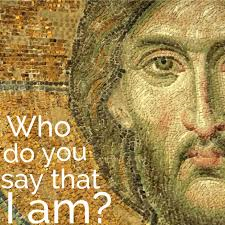
Who do you say that I am?

September 18, 2018 by Holy Name Monastery Leave a Comment

This is an interesting reading, and even a bit odd, giving us another insight into Jesus’ teaching methods.  First with those who are closest to him – who have been traipsing around the country for almost three years.  This is the group who believe in him so he is quick to correct their human thinking that gets in the way of their perception of just who he is.

I can see him (can you?) walking casually along with the twelve … the mix of who is nearest him changing every few minutes – as the group shifts, they compare notes about what he said to their group with what the others heard.  He stops and turns to the group and queries: Who do people say that I am?  Was He really in the dark?  After all he is God, doesn’t he know everything?  Was he simply opening an opportunity for the disciples to express their loyalty to him? 

At first, the disciples do not offer their personal feeling.  They repeat what they’ve been hearing: some say John, the Baptist (why they’d mix up the cousins, I don’t know), others say Elijah, or one of the prophets.  When Jesus continues: “But, you, who do you say that I am?”  A pregnant pause …  waiting for a brave one to speak up.  Heads turn to Peter who seems to be never afraid to offer an opinion.  He doesn’t fail them: “You are the Christ, son of the living God.”

Jesus seems quick to caution the disciples: “Don’t tell anyone.” (Doesn’t he know by now that this is a sure-fire way to get the rumors flying?)  Does Jesus want us to hold miracles we experience or witness close to our hearts?  To be like Mary after the shepherds’ visit – pondering all these happenings in her heart?”  Or are we to be like the disciples, quick as Jesus said, don’t tell until after the Son of Man has risen, shouted their Alleluias and spread the Good News?

Our scene in today’s reading, turns from Jesus conversation with the disciples and his followers to what is to come.  Peter quakes in his boots conjuring up what Jesus is describing.  This is his friend!  So, he takes Jesus aside and in shock rebukes him, criticizes the one he has just acknowledged is the Son of God.  “No! No you’ve got it wrong …. That can’t happen to you.”   

Have you ever done that …  told Jesus he’s got it wrong?  The hurricane can’t hit here.  My friend, my parent, my child can’t die now.  Please tell me that (whatever it is) didn’t happen.

Jesus cautions Peter, and us: “Wait a minute.  You are not thinking like God… you’re thinking like a human being.”   

With that, Jesus summons the crowd.  Did you ever notice the settings that Scripture describes when Jesus speaks to the crowds on the plain, on a hillside or from a boat … and there were thousands of them?  No mic, no PA system, no big screen TV …  How did he do it?  I wonder, did the people really hear his voice or did they hear him in their heart …  or was it like the game of Gossip …  his words spread rapidly from person to person???  (Just an aside.)

 (Back on track)  Jesus next lets us know what it will take to continue to be a disciple of His.  Three qualities: deny yourself, take up your cross, and follow Me.  Easy as one, two three?  Not quite.

 First: deny your worldly ways, drop your egotistical thinking and self-seeking and cease all the ifs, ands and buts you that raise in opposition to Jesus’ message. 

 Second: take up your cross.  It is fashioned for, personalized for just for you.  No two crosses are exactly the same.  You know the story of the person who rejected her God-given cross.  She asked God to exchange it for another.  So, God showed her his treasury of crosses.  You know which one she chose …. The very one God knew all along would best fit her shoulders. 

 Third: This is the good part …  follow Jesus.  You don’t have to invent the way – Jesus has already cut the path for you.  Knock and the door will be opened.  Seek and you will find.  Listen and you will hear. 

 So, when at Mass, just after the homily, be ready to answer God in the words of the Creed: Who do YOU say that I am?

~Reflection by Sister Roberta Bailey, OSB, Prioress
First Reading  Isaiah 50:5-9a                Second Reading  James 2:14-18
Gospel Mark 8:27-35
Continue Reading

Filed Under: Blog, Front Page, Homily Tagged With: Christ, cross, disciples, God, Jesus, listen

Rarely One “Right Way”

September 4, 2018 by Holy Name Monastery Leave a Comment

In this Gospel, Mark provides a significant amount of information about the Jewish observance of ritual-purity laws.  Most Scripture scholars believe that Mark’s purpose was to educate the Gentile Christians in his audience since they would have had little or no experience of these laws.

Jesus first criticizes the Pharisees for putting human tradition above God’s Law – for making the tradition of ritual purity equal to and as binding as the Law of Moses.

Next, Jesus comments on the meaning behind the Pharisees’ language of holiness – clean and unclean.  He teaches that a person is not defiled by the food that enters our bodies, but rather by the sin that emerges from our words or actions.  In this teaching, Jesus unmasks a deeper question behind the one posed to him by the Pharisees.  The real issue is holiness, which is not found in external acts alone.  Holiness comes from within and is evidenced in the actions and attitudes that emerge from a person’s life.

If we read today’s Gospel carefully, we will see a pattern in Jesus’ teaching method that will be repeated in the liturgical weeks ahead.  Jesus’ first teaching is directed to the Pharisees who questioned him.  Then He directs his words to the whole crowd, teaching that a person is defiled by their own words and actions – remember it’s not the food we take in but the words we spout out.  In the verses omitted in today’s reading, we learn that Jesus returned home with his disciples, who in turn quizzed him about what he had taught.  The words at the conclusion of today’s Gospel are addressed specifically to His disciples and challenge us as well.  In our desire to show that we are holy, we might also give too much credence to externals, following rules without thinking about the intention behind them.

Here’s where we need to really perk up and listen to the message in this Gospel: “Hear me, all of you, and understand.  You disregard God’s commandments but cling to human tradition.”  It seems to me Jesus’ underlying message to us, in this day and age and community, is that line about “teaching human precepts as divine doctrine.”  It’s a great temptation for many of us to elevate our wishes to the “right way” of doing things.  There is rarely only one RIGHT WAY in everyday matters.  Even Emily Post changed her mind about the “right way” to eat fried chicken. 

Jesus reminds us that we do not make ourselves holy by our actions.   Rather, we become holy when we allow God’s Spirit to transform us. Our actions should be an expression of the conversion of our hearts.

~ Reflection by Sister Roberta Bailey, Prioress, OSB
First Reading  Deuteronomy 4:1-2,6-8            Second Reading  James 1:17-18,21b-22,27
Gospel Mark 7:1-8,14-15,21-23
Continue Reading

Filed Under: Blog, Front Page, Homily Tagged With: God, holiness, Jesus, Pharises, Scripture, teaching

What bread will you and I eat today?

August 6, 2018 by Holy Name Monastery Leave a Comment

We live: hungry people in a hungry world.  Everyone is looking for something that will sustain and nourish their life, something that will feed and energize them, something that will fill and satisfy.  Everyone is looking for bread.  The problem is not that we are hungry, but the kinds of bread we eat.

Think about the variety of bread we eat at our own table: wheat, multi-grain, plain white; pita pockets, hoagie rolls, English muffins, French bread and Jewish bagels and Challah bread; And, oh my goodness, the homemade varieties we get: biscuits and scones, crescent rolls, pull bread, sliced bread …. Toasted, warmed, plain, garlic sprinkled, seeded or stuffed bread… Banana bread, raisin bread, cheese bread and don’t overlook all the gluten-free breads available in the markets.  The list goes on and on.  This is a short-list representative of the varieties of bread being eaten in our lives and in the world today.

In war-torn countries both sides are eating the bread of violence and war.  In our country in the political world Republicans and Democrats, share the bread of negativity, hostility, and name-calling.  In the social-corporate world both sides are eating the bread that objectifies and depersonalizes another human being.  Many eat the bread of having to be right and get our own way.  We eat the bread of hurt feelings and resentment.  Sometimes we eat the bread of loneliness, fear, and isolation.  There are times we eat the bread of sorrow or guilt.  Other times we eat the bread of power and control; or the bread of revenge or one-up-manship.  We eat all kinds of bread.  The bread we eat reveals something about the nature of our appetites.

The world is full of bread and yet far too many live hungry, empty; searching what will fill their bellies and sustain them; waking day after day disappointed, asking God for a miracle.  It’s a sure sign that the bread we have eaten cannot give real life.  It is perishable bread that nourishes only a perishable appetite so it leaves us wanting more, more, more.

The bread we eat may fill our belly, may even bloat us but it’ not of lasting value – it passes through our bodily system.  Not all bread is nutritious.  If you want to know the nutritional value of bread, you have to look beyond the bread.  Where did it come from?  What are its ingredients?

That’s what Jesus is teaching in this gospel.  The people have shown up hungry.  But, just yesterday Jesus fed 5000 of them with five loaves and two fish.  Today they show up and their first question is, “Rabbi, when did you come here?”

They do not marvel at yesterday’s miracle and give thanks for Jesus’ generosity, or even wonder who this rabbi is.  They’re just worried they might have missed the next meal, that Jesus started without them and they are too late.  They did not perceive the meaning of the sign, the miracle, in first feeding.  They saw just fish and bread.  They either refused or were unable to see beyond the fish and bread.  They are interested only in their own appetites and Jesus knows it.

“Very truly, I tell you, you are looking for me, not because you saw signs, but because you ate your fill.”  They are concerned for their bellies.  Jesus is concerned for their lives.  The people want to feed themselves with bread.  Jesus wants to feed them with God.  “Do not work for the food that perishes,” he tells them, “but for the food that endures for eternal life.”

The food that endures is Jesus himself.  He is the bread that is broken and distributed for the life of the world.  He is the bread that is broken and yet never divided.  He is the bread that is eaten and yet the value is never exhausted.  He is the bread that consecrates those who believe in and eat him – his flesh, his blood.

When we believe in Jesus, eating, ingesting, and taking him into our lives, we live differently.  We see ourselves and one another as persons created in the image and likeness of God.  We trust the silence of our prayer life.  We choose love and forgiveness and reconciliation.  We relate with intimacy and vulnerability.  We listen with “the ear of our heart” for God’s voice.

“I am the bread of life,” Jesus tells us.  “Whoever comes to me will never be hungry, and whoever believes in me will never be thirsty.”  Jesus is offering us himself – the imperishable bread that nourishes and sustains imperishable life.

So, what bread will we offer our guests and co-workers? What bread will you and I eat today?

~Reflection by Sister Roberta Bailey, OSB, Prioress
First Reading Exodus 16:2–4, 12–15                        Second Reading Ephesians 4:17, 20–24
Gospel John 6:24–35
Continue Reading

Filed Under: Blog, Front Page, Homily Tagged With: Bread of life, broken bread, fish, God, Jesus, Miracle

  • « Go to Previous Page
  • Page 1
  • Interim pages omitted …
  • Page 73
  • Page 74
  • Page 75
  • Page 76
  • Page 77
  • Interim pages omitted …
  • Page 92
  • Go to Next Page »

Footer

Prayer / Newsletter / Info

 Contact Info

Benedictine Sisters of Florida

PO Box 2450
12138 Wichers Road
St. Leo, FL 33574-2450
(352) 588-8320
(352) 588-8443

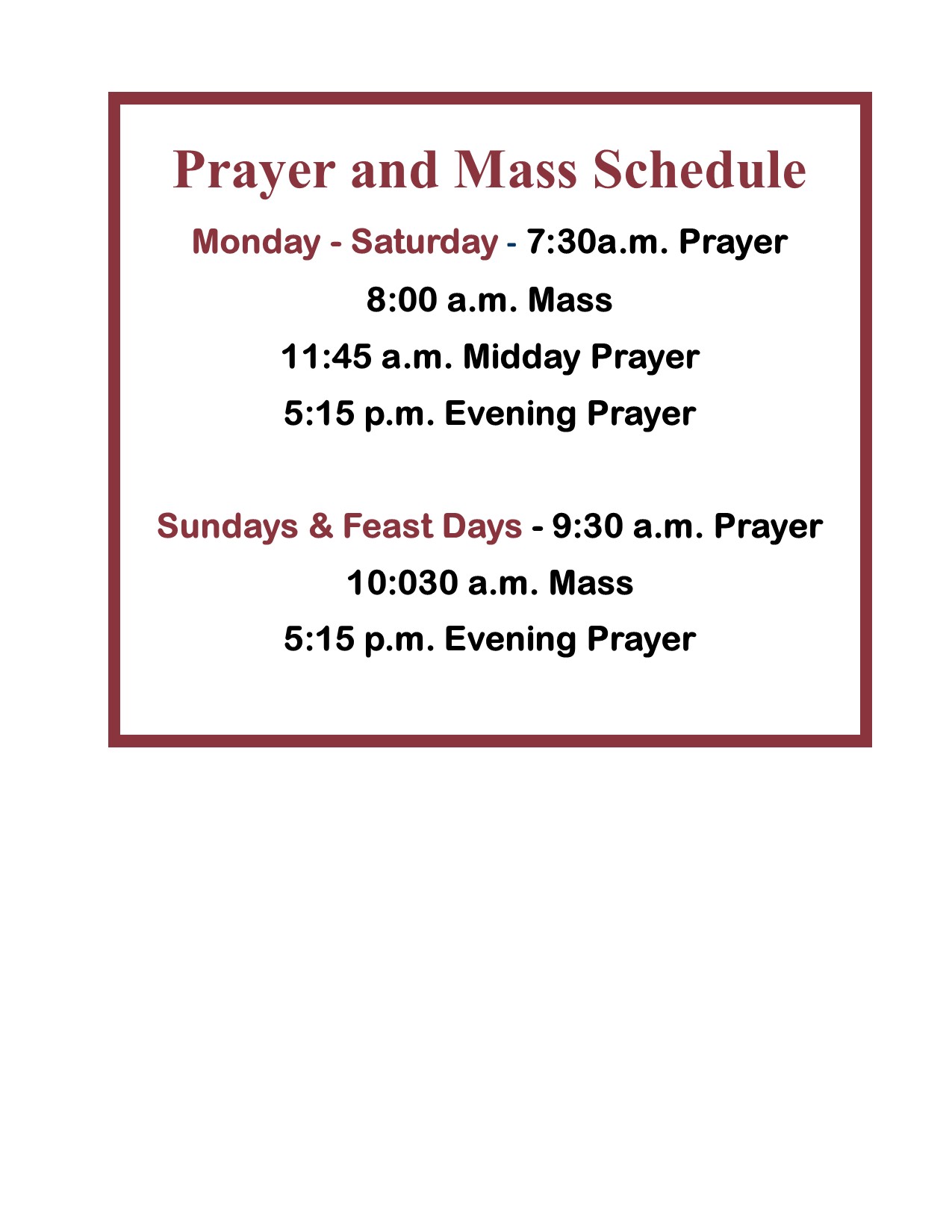
 Mass Schedule

Related Links

Copyright © 2026 · Benedictine Sisters of FL · Touching Lives Through Prayer and Service

Copyright © 2026 · Bendedictine Theme on Genesis Framework · WordPress · Log in