• Skip to primary navigation
  • Skip to main content
  • Skip to footer
Benedictine Sisters of FL

Holy Name Monastery
Founded 1889

Donate Now
  • Home
  • About Us
    • History
    • Being Benedictine
    • Benedictine Monasticism
    • Meet Our Community
    • Holy Name Academy-Alumnae
  • What We Do
    • Mission, Vision and Our Partners
    • Retreats
      • Invitation to Retreat
      • Accommodations
    • Volunteer Programs
    • Oblate Program
    • Spiritual Direction
    • Aqua/Hydroponics
    • More of Our Ministries
  • What’s Happening
    • Articles of Interest
    • Events
    • Commemorative Bricks
    • Newsletters
    • Brochures
    • Links
  • Support Us
    • Gifts of Support
    • Wish List
  • Stories Shared
  • Galleries
    • Photos
    • Videos
      • Benedictine Sisters of FL Videos
      • Other Videos
  • Contact Us

Mary

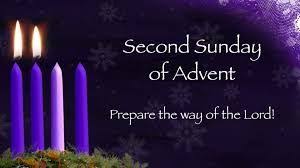
Second Sunday of Advent

December 12, 2023 by Holy Name Monastery Leave a Comment

Our God of the Promise


In Advent, like the child we once were, we eagerly await the coming of Christ as an infant in Bethlehem.  At the same time, we invite him into our hearts in the present, the “now” of our lives. And we look forward to his future coming as king of glory. Dwelling in the past or wishing for a perfect future can keep us from hearing the will of God NOW, in our today.  Many recognize in Pope Francis a voice that is, like that of John the Baptist, crying in the wilderness … urging us forward in the present to mend the past as we confront the life as it greets us today, in the NOW of our lives.

The opening lines in Mark’s gospel greet us with the words: “the beginning of the Gospel of Jesus Christ”.  But, the first character we meet is not Jesus, but John the Baptist, the fiery preacher who came out of the desert where he lived on honey and locusts.   And, he is no fashion plate, with his camel’s hair clothes, leather sandals, and leather girdle around his waist. His diet was very simple: locusts (grasshoppers) and wild honey. This is important, or it would not be here.  It is symbolic. But what does it symbolize? Well, you cannot wear anything more fundamental in the way of clothing, or eat a more basic diet, than John did. It is representative of his ministry — one of simple beginnings. It is not the end; it is the beginning.

John is very honest. He says, “Don’t look to me for answers beyond what I have already told you.  That must come from another, who is coming right after me. He is so much greater than I.  I am not even worthy to untie his shoes.”  Remember, this was Jesus’ cousin, his elder by six months, that he was talking about!  You’ll recall John jumped for joy, (maybe he was dancing) in his mother’s womb when he was introduced to Mary and Jesus.  John could bring people to God, but he could not take them beyond that.   Something drew these people into the desert to listen to this strange and rugged young preacher proclaim good news.  That’s all he did! He never told how it worked, or why; he just announced it.  And, this was in a desert in the wilderness.  But it worked, in part because In John’s day, as now in ours, people needed to know they can begin again.

But, keep in mind what the prophet Isaiah said about John’s message. This business of reconciliation will resemble a great bulldozer, building a highway in the middle of nowhere.  (I wonder if they put in roundabouts?)  John was God’s bulldozer to build that highway.  We know how roads are built; we see the process in almost any direction we go on the highway.  Isaiah says: “Every mountain shall be brought low, and every valley shall be lifted up; the crooked places shall be made straight and the rough places plain.”  And, that is what repentance does. It bulldozes down all the high peaks of pride that we stand on and refuse to admit we’re wrong. It takes the depressed areas of our life and lifts them up. It takes the crooked places and straightens them out. And it makes the rough places plain. Then, there is God!  God comes to us so that we can come to God.

Our hope is in the promise of God; in our God of the Promise.  It is a promise that was fulfilled in Jesus Christ.  It is a hope that will not be disappointed because God, although He may delay or tarry, He will not forget His promise.  Be assured: God will never let us down!


~by Sister Roberta Bailey, OSB
 

First Reading  Isaiah 40:1-5, 9-11                        
Second Reading 2 Peter 3:8-14  
Gospel Reading  Mark 1:1-8
Continue Reading

Filed Under: Blog, Front Page, Homily Tagged With: 2nd Sunday of Advent, God, Jesus, John, Mary

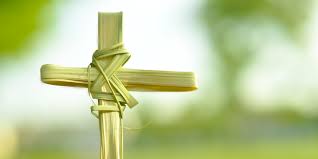
Palm Sunday

April 3, 2023 by Holy Name Monastery Leave a Comment

Vigil of Palm Sunday

The contemporary (former monk) author Thomas Moore says, “The whole point of a good story is to give birth to other stories and to deep reflection.”  The Palm Sunday stories certainly call us to reflection.  There are stories within stories that bring to mind more stories.   A temptation may be to try to reflect on too much.  In Lectio, as in any of the arts, we allow the music, the art, the Word to take over.  We become absorbed in the complex harmonies, tempos and textures, and become servant to the materials at hand.

Palm Sunday liturgy, it seems to me, is a potpourri of themes and a roller-coaster of emotions: high hosannas, a supper with friends, examples of loving humility, washing of feet and later washing of hands.  There are incidents of betrayal and mockery; bravery of Simon and Veronica; compassion of John and Mary.  All are acts of caring, courage and compassion.  The soldier’s declaration: “Surely this was an innocent man,” and, the donation of a burial place, the preparation of the body of a loved-one, the watching and waiting … and waiting … and waiting.

Palm Sunday services begin with such glorious solemnity: waving palms, processions, joyful singing of hosanna!  Within about an hour’s time we travel from cries of “Blessed is He who comes in the name of God!” to shouts of “Away with this man!  Crucify him!”  Then, we move on to the Eucharistic acclamation: “Christ has died, Christ is risen, Christ will come again!”  We pray for forgiveness and daily bread.  We exchange God’s own peace with each other.  We recall Jesus’ supreme sacrifice and take into ourselves His body and blood.  The communion antiphon calls us back to the beginning of the story and the thread that winds through the whole story: “Father, if you are willing, take this cup away from me.  Still, not my will but yours be done.”  A few hours later Jesus will utter: “Father, into your hands I commend my spirit.”

This same sentiment is echoed in the prayer often used at the Stations of the Cross: “Oh, my God, I love you.  I love you more than myself.  Grant that I may love you always, then do with me what you will.”  I hand myself over to God, as Jesus did, in an act of self-surrender, “Suscipe me.”  I am asking God to accept me just as I am now, open, vulnerable, powerless.  I am also saying that I am willing to receive whatever God has in store for me in the future: the journey onward, the Palm Sundays, the Good Fridays, the Easters in my life.  “Accept us O God, as you have promised; we shall live, and we shall not be disappointed in our hope.”  A good choice for the Palm Sunday may be to simply “sit with” the story.  I repeat: “The whole point of a good story is to give birth to other stories and to deep reflection.”  (Thomas Moore Original Self p. 66)

~by Sister Roberta Bailey, OSB

Continue Reading

Filed Under: Blog, Front Page, Homily Tagged With: Christ, God, Jesus, John, lectio, Mary, Palm Sunday

Fourth Sunday of Advent

December 19, 2022 by Holy Name Monastery Leave a Comment

For many people this last week of Advent is fraught with frantic shopping, concern about who they’ve forgotten to get a gift for, cards that are not going to arrive before Christmas, children whose hopes are going to be dashed, worry about what food stamps will buy that will still look like a festive meal, the choice between food on the table or gifts under the tree, gas prices that prohibit travel to be with relatives, who’s going to watch the children while there’s no school, day care that’s not in the budget and parents who still have to go to work.

Our lifestyle should stand out in contrast to all the hustle and bustle, the preoccupations with secular concerns.  We have the luxury and the burden of putting first things first.  The sign Ahaz refuses to ask for in the first reading can be the one we project to the world.  We can heed Isaiah’s alert and not weary people or our God.  We can shorten real-life “posadas” by coming out of our shells when we’d like to hibernate in our self-made cocoons.

For the pregnant Mary these days just before giving birth to Jesus should have been “nesting days” but Mary was traveling.  May we use this next week for “nesting” –  readying our hearts and our living spaces for the Babe to take deeper residence in us and in our community.

These days are a time to listen like Jesus’ foster father Joseph to our dreams.  Let us awake, arise and do what the Spirit commands.  Sometimes it may be puzzling the connections we make.  For instance, Joseph’s dilemma, and the angel’s intervention, had me humming two songs: “A Dream is a Wish Your Heart Makes” (from Cinderella) which continues: “…when you’re fast asleep; in dreams you will lose your heartaches, whatever you wish for, you keep.  Have faith in your dreams and someday your rainbow will come smiling through.”  The other dream song, “I Have A Dream” was written in memory of Martin Luther King, Jr: “I have a dream,  a song to sing, to help me cope, with anything …I believe in angels, when I know the time is right for me …I have a dream, to help me through reality and my destiny.”

There is an air of festivity this time of year not solely in our faith tradition, but also, for instance, in the celebrations of Hanukkah and Kwanza as well.  Christmas, sometimes referred to as Yuletide, is on a fixed date during the winter solstice.  Kwanzaa was established in the 1960’s as a way to help African Americans connect with their African history and culture.  It is a week-long spiritual festival celebrated December 26 to January 1.  The seven-candle Kinara (candle holder) honors principles of Unity, Self-Determination, Responsibility, Cooperation, Purpose, Creativity and Faith.

Hanukkah is the eight-day Jewish festival that commemorates the victory of the Maccabees over the oppressive power of the Syrian-Greeks and the re-dedication of the Holy Temple in Jerusalem.  The eight-candle menorah with its day-by-day increase in light, symbolizes the days of creation and the dependable guidance of God.  There is a long-held Hanukkah tradition that delights children as well as adults: the practice of “gelt-giving” – money or chocolate coins – which teaches lessons in charitable giving.

Comparing these festivals, it’s easy to see that despite representing a variety of cultural and faith traditions, there are commonalities: honoring our ancestry, candle lighting, charity, gift-giving, family spirit.

Our prayer intention for the next two weeks will express our gratitude for God’s boundless generosity in the persons of our relatives, friends, and benefactors.  May they know our gratitude and be blessed by God for their graciousness to us.


~by Sister Roberta Bailey, OSB


First Reading  Isaiah 7:10-14                       
Second Reading Romans 1:1-7  
Gospel Reading  Matthew 1:18-24
Continue Reading

Filed Under: Prayer Tagged With: Advent, Christmas, dream, fourth Sunday, fourth Sunday of Advent, Jesus, Martin Luther King, Mary

If You Listen For My Bell, I Promise I Will Listen For Yours

July 25, 2022 by Holy Name Monastery Leave a Comment

On Friday of this week the Church will celebrate the story of a special friendship: Jesus and Mary, Martha and Lazarus.   The two sections in today’s Gospel – the prayer of Jesus and the reminder that when we seek we shall find, and that our knock and will open the door –   each is a comforting promise of God’s personal gift of friendship. I’d like to share with you a story of friendship – imaginary but nonetheless one that I trust will touch your heart.


TALE of TWO HORSES

[Author unknown – adapted]

If you listen for my bell, I promise I will listen for yours

Picture if you will that just down the road from our monastery a field with two horses in it.  Standing at this distance, each looks like any other horse.  But, as you move closer to work in the outdoor garden or perhaps are walking nearby, you will notice something quite amazing.  Looking into the eyes of one horse will disclose that he is blind.  His owner has chosen not to have him put down. But, rather, has made a good home for him.  This in itself is amazing!

Now stand still.  Listen!  Really listen!  Do you hear the soft tinkle of a bell? When you spot the source of the sound, you see it comes from the smaller horse in the field.  Attached to her halter is a small bell and couple Christmas “jingle” bells.  The “Jingle, Jangle” sound lets her blind friend always know where she is.  Now he can follow her and avoid collisions with the fence and small trees and corrals her wandering too far afield.

As you stand in amazement watching these two friends, you’ll see how the blind friend is always checking on the other’s where-abouts.  He listens for her bell and then slowly walks forward trusting that his little friend will not lead him astray.  When the “faithful bell ringer”  returns to the shelter of the barn each evening, she stops occasionally and looks back, making sure her friend isn’t too far behind to hear the bell.

Like the owner of these two horses, God does not throw us away just because we are not perfect or because we have problems or challenges.  God watches over us and even brings others into our lives to help us when we are in need.  Sometimes we are the blind horse being guided by the little bell ringers –  those companions whom God places in our lives for as long as we need them.  At other times we are the guide horse, helping others see their way.

Good friends are like this …  You don’t always see them, but you know they are always there.

~by Sister Roberta Bailey, OSB


This week kindly include in your prayers our community, and our retreat director, Father Patrick Boland, O.S.B. from Subiaco Abbey Arkansas.  May God give him the grace to speak the words we need to hear.  And, in turn, may we each be open to receive the WORD.

As July comes to a close, following our retreat week, we will be engaged in four days of evaluation and planning for the next few years.  Our agenda will include 3rd year assessment of our direction statements – what have we done, what remains, is it still relevant, next steps for us?  Throw into the mix a movie, a TED Talk and a community game night along with a couple outside speakers, reports and culminating in proposal of, and commitment to, goals for 2022-23 and beyond

 Remember our out-reach project for June and July?  Support our friend S. Winny’s project to open a kindergarten and catechetical program in educational “desert” in Tanzania.  Refer to our website www.benedictinesistersoffl.org for how you can support this ministry.

God bless you and your families … be safe, stay hydrated, do what you can “climate control” Mother Earth … every effort does count!


Continue Reading

Filed Under: Blog, Front Page, Homily Tagged With: Friendship, God, Jesus, Lazarus, listen for my bell, Martha, Mary, tale of two horses

No Single Person Needs To Do It All

July 17, 2022 by Holy Name Monastery Leave a Comment

In the Gospel we hear: “as Jesus entered a certain village a woman named Martha welcomed Him into her home…. Mary sat beside the Lord at his feet listening to him speak.”  In tomorrow’s first reading from Genesis, we have the story of Sarah slaving in the kitchen and Abraham entertaining their three guests: bowing in greeting, sending them to wash up while he scurries about getting a choice steer and giving Sarah orders on what and how to prepare the meal which he alone hosts for his new buddies.

Both Scripture readings (it seems to me) concern more than the contrast between the activists – Martha behind the scenes and Abraham busy arranging the details – and the more reticent ladies, Mary and Sarah.   The incidents illustrate more than hostesses each doing what they do best to make an evening delightful.  There is a bit of all these characters in each of us – one or the other prevails from day to day, and situation to situation.

Jesus’ response to Martha’s “don’t you even care that I am stuck in the kitchen?” reminds us “only one thing is necessary.”  It causes us to realize that I, as an individual, do not have to do it all.  This is evident in our practice of taking only one role in at a time in the dining room or in a single liturgy – we acknowledge (for instance) that liturgy is a communal act where all present are on the same level: differing in gifts but equal in importance.  Everything needs to get done, there are plenty of roles to share: leaders and readers, cooks and servers, singers and keyboardists, prayer leaders and bell ringers, gift bearers and petitioners, Eucharistic ministers and the celebrant.   At times our ranks may be slim, especially when members are away or illness prohibits or limits our participation, but we strive to engage everyone in the communal roles.

This is the attitude we strive to express also in the distribution of daily chores.  No single person needs to do it all – choices have to be made.  Self-importance can creep in the way if I am not careful to realize the impression I make if I try single-handedly to assume the burden of chores failing to ask for assistance.  There are times, certainly, when we have to double up on duties but we need to be conscious of enabling others to offer service and to give them the respect of recognizing their capabilities.

The Gospel also gives us a glimpse of Jesus as a gracious guest: the object of Mary’s attentions and the recipient of Martha’s service.  Jesus knew his role as servant and the one being served – the contrast between serving and resting gently and securely in the role of being a servant or a guest.

To paraphrase some thoughts from Richard Foster in his book Celebration of Discipline:

  There is a difference between choosing to serve and choosing to be a servant (with emphasis on the word CHOOSING).    When we chose to serve, we are still in charge.  We decide whom we will serve and where we will serve and when we will serve.  And if we are in charge, we will worry a great deal about anyone stepping on us, that is taking charge over us.

     But when we choose to be a servant, we give up the right to be in charge.  There is a great freedom in this.  When we choose to be a servant, we surrender the right to decide who and where and when we will serve.  We become available and vulnerable.

We pray, then, for the grace to have a balance in our lives of being servant (a server) and of being open, receptive, gracious when others render us service – thus enabling them to achieve their God-given calling to serve.  We pray that God grant us the grace to be:

  • Humble when helpless
  • Patient when infirmed
  • Gracious when a guest
  • Comfortable when the object of service and attention, affection and praise from others

~Sister Roberta Bailey, OSB, Prioress


 Have good week … a little of “Martha” balance by some “Mary” in your life…


First Reading: Genesis 18:1-10         Second Reading: Colossians 1:24-28          Gospel: Luke 10:38-42
Continue Reading

Filed Under: Blog, Front Page, Homily Tagged With: chores, Gospel, Jesus, Martha, Mary, Mary and Martha, No single person needs to do it all, Sarah

Mother’s Day

May 9, 2022 by Holy Name Monastery Leave a Comment

One of the lovely, but often misunderstood, elements of our Catholic religion is our devotion to Mary, the Mother of God.  The Hail Mary is among the earliest prayers many of us learned, often from our mothers’ lips as our tired heads hit the pillow at night, or as the family gathered for the nightly recitation of the Family Rosary.  Some of you may have grown up in the time close to the 50th anniversary (1967) of Mary’s appearance to the children at Fatima.  There was a traveling statue that migrated from parish to parish.  This practice was revived in 2017 during the 100th anniversary year.

But, why talk about that today?  It was the description in the Gospel of a good shepherd.  You have heard that in ancient Israel, and even today particularly in South America, “good shepherds” are women.  In my office hangs a picture of the La Divina Pastora (note the final letter connoting a feminine shepherd).  Jesus says: “My sheep hear my voice; I know them.”  Doesn’t that sound like a mother on alert for the cries of her child at all hours of the day or night?  So, this being Mother’s Day weekend gives me an opening to reflect on devotion to Mary, Mother of our Savior.  It’s a heart-connection: a non-threatening, “she-understands-me” sort of relationship.  Stories of her miraculous appearances to people “just like us” fill us was with awe and a desire for closeness to Mary.  [A Catholic calendar lists a different Marian commemoration for each day of the year.]  We marvel at the believer’s relationship with Mary that naturally blends with their relationship with her Son, Jesus.  We trust her instincts.  We plead with her to “hold open the back door of heaven” for us.  And (here at the monastery) we remind Mary each evening “never was it known that anyone who sought your intercession was left unaided.”

To borrow words of praise on Mary from S. Joan Chittister: “Mary is not simply “Mary, the Mother of God.” No, on the contrary.  The Mother of God is the image of women everywhere.  The Mother of God is Mary, independent woman; Mary, the unmarried mother; Mary, the homeless woman; Mary, the political refugee; Mary, the Third World woman; Mary, the mother of the condemned; Mary, the widow who outlives her child; Mary, the woman of our time who shares the divine plan of salvation; Mary, the bearer of Christ.  Mary shows us the sanctifying power of a human being who has become fully human.” [Joan Chittister Women of Strength 2020]

It’s hard to explain in human words what a relationship with Mary means to me.  I grew up in a parish where the pastor had GREAT devotion to our Lady.  His voice softened when he spoke of her.  He led his parishioners in a variety of devotional practices like May processions and crowning of statues, the living rosary in October and the practice of the Family Rosary.  I’ve heard many converts to Catholicism say (in so many words) that it was through a loving relationship with Mary that they were encouraged to seek more information that eventually led them to enroll in an RCIA program … which led to their reception into the Church.

We echo the words of the angel’s greeting to Mary each time we pray the Hail Mary.  Jesus’ cousin, John the Baptist, the unborn child in Elizabeth’s womb, is said to have recognized the presence of the Lord and leaped for joy.  His mother Elizabeth is the “amazed saint” recognizing the unique blessedness of Mary.  The attitude of Elizabeth is representative of the attitude we aim to emulate.

When Jesus was 12-years-old his parents, Mary and Joseph suffered the awful experience of losing a child.  When they found him in the temple, “sitting among the teachers, listening to them and asking them questions” the only satisfaction they got from him was that he had to be about his Father’s business.  Many have thought his words to be disrespectful but if you know 12-year-olds they sound pretty typical.  At 12, every Jewish boy was expected to make his bar mitzvah and become a responsible subject of the law.  Jesus says that he was never lost; he was at home; He was in his Father’s house.

The most puzzling part of the story, however, is the way it ends: “Then he went down with them and came to Nazareth, and was obedient to them”.  The puzzle is this: If Jesus, already at the age of twelve, was ready to begin his public mission, and was evidently well prepared for it, why would he go down with his parents and spend the next eighteen years in the obscurity of a carpenter’s shed?  He only began his public ministry at the age of thirty when the supply of wedding wine ran out.  Mary jump-started his ministry with her directive to the servants – “Do whatever he tells you.”

When we reflect on the fact that for every one year of his public life Jesus spent ten years in family life, then we can begin to understand the importance and priority he gave to family life.  And, now you may have a clue why I chose to speak of Mary on this Mother’s Day weekend.  Maybe you, too, learned the simple prayer that begins: Lovely Lady, teach me how to pray; God was just your little boy, and you know the way.


~Reflection by Sister Roberta Bailey, OSB


Continue Reading

Filed Under: Blog, Front Page, Homily Tagged With: Elizabeth, Jesus, Joan Chittister, Mary, Mary Mother of Jesus, Mary of Fatima, Sister Joan Chittister

  • « Go to Previous Page
  • Page 1
  • Page 2
  • Page 3
  • Page 4
  • Page 5
  • Go to Next Page »

Footer

Prayer / Newsletter / Info

 Contact Info

Benedictine Sisters of Florida

PO Box 2450
12138 Wichers Road
St. Leo, FL 33574-2450
(352) 588-8320
(352) 588-8443

 Mass Schedule

Related Links

Copyright © 2026 · Benedictine Sisters of FL · Touching Lives Through Prayer and Service

Copyright © 2026 · Bendedictine Theme on Genesis Framework · WordPress · Log in