• Skip to primary navigation
  • Skip to main content
  • Skip to footer
Benedictine Sisters of FL

Holy Name Monastery
Founded 1889

Donate Now
  • Home
  • About Us
    • History
    • Being Benedictine
    • Benedictine Monasticism
    • Meet Our Community
    • Holy Name Academy-Alumnae
  • What We Do
    • Mission, Vision and Our Partners
    • Invitation to Retreat
    • Accommodations
    • Volunteer Programs
    • Oblate Program
    • Spiritual Direction
    • Aqua/Hydroponics
    • More of Our Ministries
  • What’s Happening
    • Articles of Interest
    • Events
    • Newsletters
    • Brochures
    • Links
  • Support Us
    • Gifts of Support
    • Wish List
  • Stories Shared
  • Galleries
    • Photos
    • Videos
      • Benedictine Sisters of FL Videos
      • Other Videos
  • Contact Us

Jesus

Each day is our moment to resist any act of violence against creation.

November 11, 2024 by Holy Name Monastery Leave a Comment

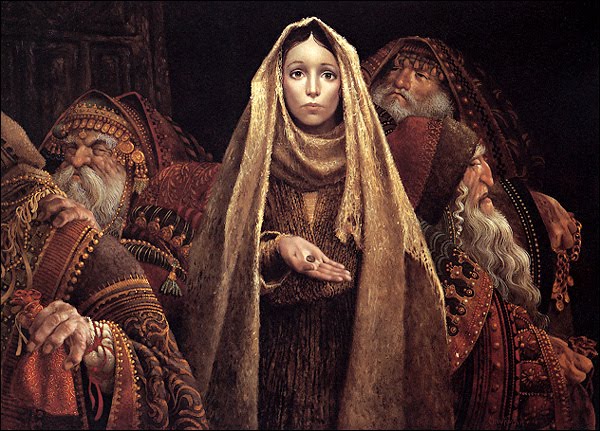
This weekend’s first reading, the story of the widow in Elijah’s time, and the Gospel of the widow in Jesus’ time, prompt us to take a hard look at our individual and communal giving practices.  As followers of Jesus Christ, we see clearly that God is the giver of all.  That raises the question: What portion of our blessings do we give back to honor God and build up God’s Kingdom on earth?

In this reflection, instead of emphasizing the spirit of giving often connected with the story of the widow’s mite, I’d like to share some ideas that convey the perspective that it is not all about GIVING.  This summer’s siege of storm devastation and raging fires in the western U.S. is often blamed on changing weather patterns.  But is not much of it due to poor land management, human carelessness and a growing history of trying to control the forces of nature?  The Benedictine value of STEWARDSHIP (preserving the earth and respecting people) calls us to responsible care rather than oppressive authoritative dominance.  Our current readings from the Rule of Benedict remind us: “Treat all things as INSTRUMENTS of the ALTAR.”  “A good word is better than the best gift.”  Living out the Benedictine value of prudent stewardship can require a radical shift in our thinking lest we too easily become accustomed to regarding earth’s resources as if they had no intrinsic worth.  For example, the demand for fast, prepackaged food contributes to the stripping of rain forests in order to provide pastureland.  In the process, many Indigenous peoples have been rendered homeless, and the habitat of endangered species has been lost forever.  Advances have been made in the production of biodegradable substances but so far, it’s only resulted in a reduction in the time it takes plastics and Styrofoam to disintegrate – they still constitute a hazard to the environment.

One of the biggest offenders is plastic bottles.  In landfills toxic gases are leached into the environment causing a variety of health issues.  Landfills in the U.S. have over 2- million discarded plastic bottles that each take up to 1,000 years to decompose.  How many thousand years did we toss into the landfill this week?  In the last month?  Trying to conserve by switching from plastic to glass containers is foiled here in our county because glass is not recycled.  Our primary motivation is that all (now and in the future) may have a share in God’s gifts. We have to think bigger than the cash register. Each day is our moment to resist any act of violence against creation.

We wrestle prayerfully with questions about how we can adopt, and adapt, to a simpler lifestyle: letting go of some things, being patient when our preferences are denied by unavailability of pantry supplies. We have to start where we are, doing what we can, with the insight and energy we have to make a difference.  Maybe we begin with one thing, one purchase, one habit a month that we change.  For example: spend a few pennies more to make a purchase from a local vendor that you usually make at a big box store.  Or make a pint or gallon purchase of hand soap instead of several smaller bottles.    Run 2-sided copies and use scrap paper for note pads. After a month, don’t forsake the new habit, keep it up and add a new pattern.  By the end of the year, you’ll be 12x more conservative.  You may ask: how does doing any of this help the people in the 3rd world?  The truth is, it doesn’t directly.  It changes YOU.   At the heart of our actions must rest the conviction that our world belongs to God and any misuse dishonors the Creator.

The widow in the Gospel was made destitute by life’s circumstances.  We by no means live a life of destitution – but we know people who do.  We are invited to ask ourselves: What can I, what can we, do to reverse the destructive patterns of life that are making a negative impact on our earth and in the lives of those we profess to serve?  In the mix, is the challenge THINK GLOBAL, ACT LOCAL.  Each day we are challenged to figure out what to do with our “too much”?  The answer is NOT to find an empty shelf, an empty room, to store it.  If we are not using it, do we REALLY need it? If we haven’t worn it since we moved into this building, who could use it?  If we have forgotten we ever had it, did we ever really need it?  Are we saving it because, deep down, we don’t trust God to come through for us on a “rainy day?”  We can only give from our need if we trust (really and truly deep down) that God will provide.   We can sing God’s praises with Elijah’s widow in tomorrow’s first reading because, for nigh on 137 years, our community “jar of flour has not gone empty” and “our jug of oil has never run dry”.

~Reflection by Sister Roberta Bailey, OSB


Thank God for the gift that Veterans have offered for our nation and for world peace ….   Remember, too, the families of veterans …  their lives too were, and are, affected by the impact on service women and me …  witnessing the effects of turmoil between peoples and nations.  Pray for strength for veterans and their families to be compassionate, supportive, faithful to relationships and seeking available medical and mental services.    

Have a good week!

 

First Reading:  Kings 17:10-16                 Second Reading:  Hebrews 9:24-28
Gospel:  Mark 12:38-44
Continue Reading

Filed Under: Blog, Front Page Tagged With: Benedict, Elijah, Elijah's widow, giving, God, Gospel, Jesus, Widow

“The Son – Who will take the Son?”

November 4, 2024 by Holy Name Monastery Leave a Comment

I want to tell you a story – it’s been in my collection just waiting to be told.   I trust, in the end, you will see how it relates to this weekend’s Gospel selection

A wealthy man and his son loved to collect rare works of art. They would often sit together and admire them.  When the conflict in the Mideast broke out and Desert Shield and Desert Storm were declared, the son went to war where he died in battle while rescuing another soldier. The father was notified and grieved deeply for his only son.

About a month later, just before Christmas, there was a knock at the door. A young man stood at the door with a large package in his hands.  He said, “Sir, you don’t know me, but I am the soldier for whom your son gave his life. He was carrying me to safety when a bullet struck him in the heart and he died instantly.  I recall that he often talked about you, and your love for art.  I’m not really a great artist, but I think your son would have wanted you to have this”.  It was a portrait of his son, painted by the young man. The father stared in awe at the way the soldier had captured the personality of his son. His eyes welled up with tears. He thanked the young man and offered to pay him for the picture. “Oh, no sir, I could never repay what your son did for me. It’s a gift.”

The father hung the portrait over his mantle. Every time visitors came to his home, he took them to see the portrait of his son before he showed them any of the other great works he had collected.  A few months later the older man died. There was to be a great auction of his paintings. Many influential people gathered, excited over seeing the great paintings and having an opportunity to purchase one for their collection.  On the platform sat the painting of the son. “We will start the bidding with this picture of the son. Who will bid for this picture?”

There was silence.  Then a voice in the back of the room shouted, “We want to see the famous paintings. Skip this one.”  But the auctioneer persisted. “Will somebody bid for this painting? Who will start the bidding? $100, $200?”  Another voice shouted angrily: “We didn’t come to see this painting. Get on with the real bids!”  But still the auctioneer continued. “The son! The son! Who’ll take the son?”

Finally, a voice came from the very back of the room. It was the longtime housekeeper of the man and his son. She bid her last penny.   “I’ll give $10 for the painting.”   The crowd shouted angrily: “Give it to her for $10. Let us see the works of the masters.”  The auctioneer pounded the gavel. “Going once, twice, SOLD for $10!”  A man sitting on the second row shouted, “Now, let’s get on with the collection!”

The crowd grew quiet; shocked when the auctioneer responded: “I am sorry. When I was called to conduct this auction, I was told of a secret stipulation in the will. Only the painting of the son would be auctioned. And, whoever bought that painting, would inherit the entire estate, including the paintings.  The person who took the son, gets everything!”

Much like that auctioneer, God’s message today is: “The Son, the Son, who’ll take the Son?”  Because, you see, whoever takes the Son gets everything!

In our Gospel today the Son reminds us of his two-pronged commandment: love of God and love of neighbor.  When we accept the Son, we accept the responsibility, along with all the blessings, the Son offers us.  Part of our acceptance package, like the housekeeper-bidder in our story, is the “whole collection.”  It is not an easy choice but one we know is possible because we trust the words of Scripture.  In the writings of the Evangelist John we read: “My friends, let us love one another, for love comes from God. Everyone who loves has been born of God and knows God. Since God so loved us, we also ought to love one another. God lives in us and his love is made complete in us.  God is love!  We love because God first loved us.”

What is your response when the auctioneer’s voice rings out in our assembly: “The Son – who will take the Son?”

~Reflection by Sister Roberta Bailey, OSB


Pray for a peaceful election season: Bless our nation in this time of great transition.


First Reading:   Deuteronomy 6:2-6         Second Reading:  Hebrews 7:23-28
Gospel:   Mark 12:28b-34


Continue Reading

Filed Under: Blog, Front Page, Homily Tagged With: auction, God, Jesus, painting, Son, who will take the Son

The story of blind Bartimaeus

October 28, 2024 by Holy Name Monastery Leave a Comment

The story of Bartimaeus has a familiar ring in the lives of many people today as it follows in the wake of storms, fires and other disasters of unheard proportions.   Imagine what might have been his story.   He once had a family, a job, a house, kids, the whole works. He was active at the local synagogue. He would tell his children stories of their ancestors.  Then things started to change and his vision would become blurry. At first, he did not allow this to bother him but kept on working and living, but eventually the blurred vision got worse and worse so that he could barely see his wife and children.   Then things went black and that’s the way they stayed.

He would lay his cloak on the ground so people could throw their loose change on the ground next to him. Most people avoided him altogether because in those days many people felt that blindness was caused by sinfulness either by the person or by their parents.

Despite all the hardships that he faced he still loved God. He recalled how God always came through in the end. Now Bartimaeus sat daily next to the road listening to the people passing by. The conversation lately had been about this guy named Jesus who had healed people, even blind people. Some had even said that he was the Messiah that had come to redeem Israel. Bartimaeus thought, “Wow, if only Jesus would come around here.”

Then one day there was a commotion. There were more people on the road than usual and then Bertimaeus heard the name, Jesus. Should he say something? Would Jesus come to him? Could he restore his vision? Something deep inside said “Yes, call out his name.”  But the crowd around him tried to silence him. Yet Bartimaeus persisted, calling out more loudly and with greater urgency.   Notice how quickly the crowd’s reaction changed when Jesus called for Bartimaeus. Those who sought to quiet him now encouraged him.

Bartimaeus recognized power and authority when he sensed it. We do the same thing. If we had a broken leg we wouldn’t go to AutoZone to have it fixed.  If the doctor comes into the examination room in overalls, we might have a few questions, but if he wears a white coat, with a stethoscope and a pocket protector, we generally don’t immediately ask for credentials or references.  Bartimaeus recognized Jesus’ authority.  Jesus didn’t wear a uniform, and even if he did, Bartimaeus was blind and he couldn’t see him anyway. He’d heard stories, and he’d heard false rumors, fake news.  This recognition of Jesus as a man of authority came from a place deep within him.   We experience that same recognition of Jesus. We have never seen Him.  We’ve seen artistic renditions of Jesus but our recognition originates from a different sense than sight.  It comes from a spiritual sense. It comes before anything. It is grace that allowed us to have that first moment with God, when God was not just a figure in CCD or Faith Formation classes or in the Bible. God became personal, a friend.

When Bartimaeus recognized Jesus, he still had a choice to make; act on that recognition or let it pass by.  Bartimaeus cries out, “Jesus, Son of David, have mercy on me!” He addressed Jesus by name and by title, Son of David, the messianic title reserved for the redeemer of Israel.   We cry out as well when we get to the last point, the straw that breaks the camel’s back.  We cry, “Help me, Jesus.” “Have mercy, Jesus” Or simply, “Jesus” “Gott im Himmel.”  “Mi Dios!”  We realize that only God can help us in whatever situation we are in. God’s grace not only gives us the ability to perceive God’s power and love. It also gives us the strength to respond to it. Unlike Bartimaeus however, we are not limited to a once in a lifetime response. We must continually respond to the gift of grace and power in our lives.

What is Jesus’ response to Bartimaeus? “Go; your faith has made you well.” It is interesting to see that Jesus says that it is Bartimaeus’ faith that produced his healing not Jesus’ faith that made him well.   Bartimaeus’ faith, and ours too, is not born out of nothing, nor does it come out of thin air.  It is a response to the love and grace of God.  It was Bartimaeus’ response to God’s initial contact through grace that made him well – restored his sight. Our response to the power or grace is also a restoration and a reconnection.  We might not be physically blind but spiritually we may be walking around aimlessly. Our spiritual vision may be black as night, but God still initiates the reconnection through grace and gives us the freedom to respond or reject His gift.

That’s the end of the story, right? Not quite. What does Bartimaeus do once his sight has been restored?  Immediately he follows Jesus on the way.  It is not the end, but the beginning of a journey.  We don’t receive the fire of the Holy Spirit, the connection with God, only to sit it in the corner or in the closet, or even the chapel.  We can’t isolate ourselves in a cozy niche.  We are impelled to take up the invitation and follow Jesus on the way.  The question facing us is: Am I going to do for God today or for myself?  Am I going to spend today in connection and in conversation with God and God’s people or am I going to satisfy my own selfish wants and desires?  Our blind eyes opened, we have a unique opportunity to spread God’s love in the world.  Lord, we pray: open our eyes and strengthen us to following your prompting to be an expression of your compassion and mercy in our world today.

~Reflection by Sister Roberta Bailey, OSB


Reminder: next weekend the time changes “fall back one hour”.

Have a good week and pray fervently for an optimal election outcome.


First Reading:   Jeremiah 31:7-9         Second Reading:  Hebrews 5:1-6
Gospel:   Mark 10:46-57
Continue Reading

Filed Under: Blog, Front Page, Homily Tagged With: Bartimaeus, Blind, crowd, Faith, Jesus

“When we become aware of our humility, we’ve lost it.”

October 23, 2024 by Holy Name Monastery Leave a Comment

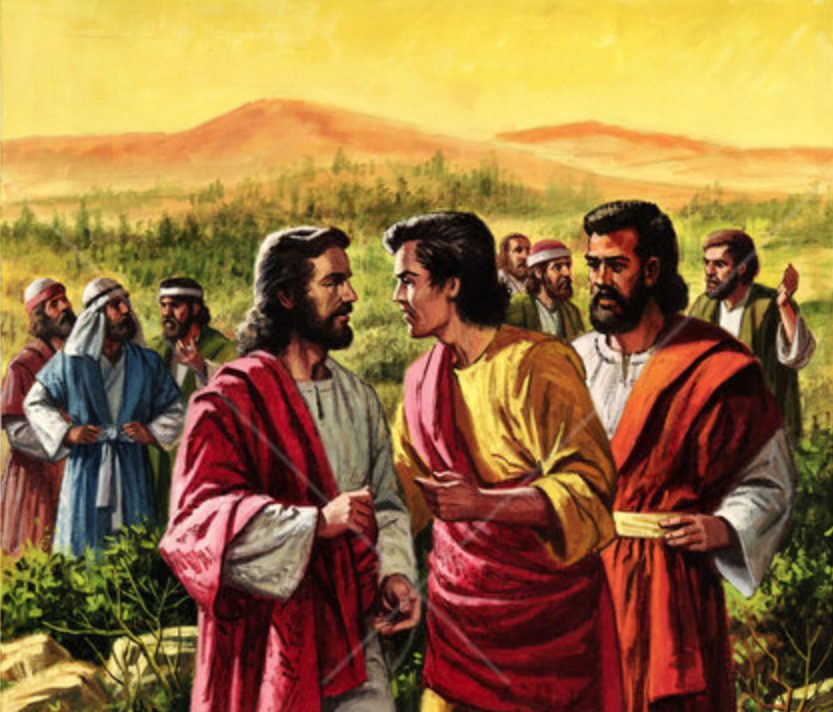
Here we have two brothers, who belong to the innermost circle of Jesus’ disciples, trying to insure they get special privilege in the kingdom to come.  But listen to Jesus: “The last be shall first and the first shall be last.”  Greatness, He says, consists not in what we have, or what we can get from others but in what we can give of ourselves to others.  Jesus asks us: Can you drink the cup I am going to drink?  These two brothers, in their eager ignorance, answer without hesitation: “No problem!”

For us as Benedictines – in Benedict’s view, we are all called to cultivate a humble awareness of our place in creation.  Being humble requires an unassuming trust in God’s providence.  For St. Benedict, everything a monastic does must be credited for the glory of God.  That’s why we were created.  Remember your Baltimore catechism?  We were made to know, love and serve God.  A fifth century monk says it well: A proud monk needs no demon. He has turned into one, an enemy to himself.

In our own lifetime, Mother Teresa gives us a few ways to practice humility that sound much like Benedict’s steps of humility.


To speak as little as possible of one’s self.

To mind one’s own business.

Not to want to manage other people’s affairs.

To avoid curiosity.

To accept contradictions and correction cheerfully.

To pass over the mistakes of others.

To accept insults and injuries.

To accept being slighted, forgotten and disliked.

To be kind and gentle even under provocation.

Never to stand on one’s dignity.

To choose always the hardest.


Words from Prayer for Humility by an Anonymous Abbess is worth pondering line by line.

Lord, you know better than myself that I am growing older and will soon be old. Keep me from becoming too talkative, and especially from the unfortunate habit of thinking that I must say something on every subject and at every opportunity.

Release me from the idea that I must straighten out other peoples’ affairs. With my immense treasure of experience and wisdom, it seems a pity not to let everybody partake of it. But You know, Lord, that in the end I will need a few friends.

Keep me from the recital of endless details; give me wings to get to the point.

Grant me the patience to listen to the complaints of others; help me to endure them with charity. But seal my lips on my own aches and pains — they increase with the increasing years and my inclination to recount them is also increasing.

I will not ask you for improved memory, only for a little more humility and less self-assurance when my own memory doesn’t agree with that of others. Teach me the glorious lesson that occasionally I may be wrong.

Keep me reasonably gentle. I do not have the ambition to become a saint — it is so hard to live with some of them — but a harsh old person is one of the devil’s masterpieces.

Make me sympathetic without being sentimental, helpful but not bossy. Let me discover merits where I had not expected them, and talents in people whom I had not thought to possess any. And, Lord, give me the grace to tell them so.

AMEN


~Reflection by Sister Roberta Bailey, OSB


Thank God for blessings received; pray for those who were no so fortunate.


First Reading:   Isaiah 53:10-11         Second Reading:  Hebrews 4:14-16
Gospel:   Mark 10:35-45
Continue Reading

Filed Under: Blog, Front Page, Homily Tagged With: Benedict, Benedictine, brother, brothers, humility, Jesus, Mother Teresa

Receive the kingdom of God like a little child

October 7, 2024 by Holy Name Monastery Leave a Comment

Isn’t it a shame that pastors have the option of omitting the last portion of this Gospel  – the part about the children.  I hope they don’t exercise that option especially after Pope Francis’ many displays of affection and regard for children.

In this Gospel the people were bringing their children to Jesus, much like they do today to Pope Francis.  It is the children (urged on by their parents) who can manage to break through security the lines, past the preoccupied patrols and approach Pope Francis.  But the disciples just don’t get it.  Jesus has summed up the lesson pointing out the value and importance of these “little ones” in the Kingdom of God. Jesus offers the children as an example of the kind of complete trust and dependence upon God that ought to be the attitude of all believers.

There is a subtle pressure in church and society to remain a dependent child.   Who is it (in life) that truly challenges you to liberate yourselves from immature dependencies to acceptance of the burdens of a responsible adults?

How can we heed Jesus’ injunction to accept the kingdom of God like a child?  Or risk never entering it?  What does it mean to be childlike, and not childish?  What qualities is Jesus asking us to hang on to in order to enter the kingdom not only beyond the “pearly gates” but right here on earth, in our community, where God’s kingdom exists?

A few qualities I think he might encourage would be:

  • Live Spontaneously – taking in every moment and the opportunities in unplanned instants.
  • How about never letting a lack of qualifications deter you –If you’ve never done something before, be fearless like a child who pulls out a kitchen drawer to scramble up to the cabinet to get the peanut butter.  Isn’t this how Olympic gymnasts start?
  • Kids Know Exercise Can Be Fun –It’s just a matter of finding an active, healthy activity we actually enjoy doing.
  • Keep an Open Mind –  Keep a childlike wide open mind and you’ll learn something new every day – maybe more than one thing.  Don’t let force of habit slow you down.   Ask questions: you’ll never get an answer if you never ask.  So, she might say NO – but did you give her a chance to say YES?
  • Express your feelings – nurture and value relationships – Open, honest, direct face-to-face expression of feelings makes communication easier, maintains sincerity and integrity in your life.  Children like nothing better than to “hang out” with their friends.  Do you look forward to unstructured time with community members – your “sisters?”
  • Use Your Imagination –  Robert Kennedy got credit, but Walt Disney said it first::  If you can dream it, you can do it!  If you have a creative idea, share it.  If it’s faster, smarter or better and see what happens.  You’ll never know unless you try.
  • Learn by Imitation – have you ever seen a little boy walking behind this father, trying determinately to imitate his father’ stride?  Or the little girl “clack-clacking” in her Mom’s high heel shoes.  St. Benedict was a firm believer in the axiom: “fake it til you make it.”  Live monastic traits until they become part of you.
  • Play  – Sometimes it’s healthy to fool around and engage in recreation for the sole purpose of having fun.

Paul in his letter to the Corinthians says: When I was a child I used to speak like a child, think like a child, reason like a child; when I became an adult, I put away with childish things.  Jesus will applaud you saying: Yes, put away child-ish ways but hang on to the delightful child-like traits that are the keys to the kingdom.

~Reflection by Sister Roberta Bailey, OSB


First Reading:   Genesis 2:18-24         Second Reading:  Hebrews 2:9-11
Gospel:   Mark 10:2-16
Continue Reading

Filed Under: Blog, Front Page, Homily Tagged With: Child, children, God, Jesus, Kingdom of God, Pope Francis

It is a story of commitment

September 30, 2024 by Holy Name Monastery Leave a Comment

The people to whom Jesus was speaking in this Gospel would have understood His references a little more clearly than we do.  The teaching is not meant to be taken literally.  It is a metaphor.   Many of the people to whom Jesus was speaking were farmers.  Injuries to hands, feet and eyes were the kinds of injuries farmers incurred frequently. So, they would not have flinched at the descriptive injury. Also, in Jesus’ time the idea of losing an offensive body part to prevent oneself from falling into sin was a common type of proverbial saying. Stories were also written with this underlying thought. The entire story of Oedipus is an example. Oedipus removes his own eyes rather than look at the children he begot with his own mother.  He did not know her to be his mother, but his lack of knowledge did not make him innocent.  Nor did he know the man he had slayed at the crossroads was his father.  Jesus’ audience would have fully understood these sayings as metaphors.  We may cry: “I didn’t know!”  That may be our reason; but it is no excuse.

So, what was Jesus saying metaphorically?  It is a story of commitment. The people to whom Jesus is talking are people who have agreed and want to follow him.   I guess one can say Jesus is asking them, “Just what do you believe? Do you believe in me as the Messiah? Do you believe in God’s way or do you believe in the ways of the world?”

How do we fare today? What do we believe about our calling to discipleship? To conversion of life? It is easy to stay committed when the times are easy. It is easy to say, “Yes, Lord, I believe,” when we are not asked to do anything out of the ordinary. But, how about when the times are tough? What do we believe when we are asked to do something we really don’t want to do? How do we respond when we are asked to take an unpopular stand?  To side with someone who is being ridiculed?  To speak our mind when we suspect it will be a minority position?  The real question for us is: Is following Jesus Christ the most important thing in my life? Or does something else take its place when being a Christian is not convenient?

Jesus calls us to a radical faith. How do we make credible the expression “radical hospitality?”  We are called to be radical not “radical” as in being crazy, but radical as different, radical as turning the world’s understanding of life upside down. Jesus is calling us to a radical expression of all aspects of our faith.  Jesus calls us to love our enemies when the world says destroy – bomb them, shoot them, destroy their reputation.  Listen to Jesus who says the greatest gift we can give is our life for the sake of another.  Life in this sense can often mean the gift of our time, our attention, our care and concern in concrete, real-time actions. These are radical ideas for this world. Alone we cannot hope to be that generous.   However, we know that with God all things are possible. Jesus has set the example.  He leads the way; He models the behaviors we are to imitate. His is an attitude of tolerance, compassion and acceptance of the gifts of others.  Jesus challenges us to be humble, inclusive and tolerant.

Jesus offered his life for us and He taught the twelve how to do the same. They scattered and hid at first, but eventually they got it right. They were not perfect, but they believed. Jesus is calling us to do the same. We may not always get it right; sometimes we falter.  There will be those times when we do get it right. At those times we humbly say, “Thank you, Lord – to You be the praise – that in all things God may be glorified!”  Ponder the closing sentences of the first reading, words attributed to Moses: “Would that all people of the Lord were prophets!  Would that the Lord might bestow His spirit on them all.”

~Reflection by Sister Roberta Bailey, OSB


Our chaplain will be in Lourdes and Ireland from October 4-18.   There will be no Mass at the monastery during that time.  The Sisters and our faith community will attend Sunday Mass (October 6 and 13) in one of the parishes.     May God bless Fr. John on pilgrimage and his family visit to his homeland. 


First Reading:   Numbers 11:25-29         Second Reading:  James 5:1-6
Gospel:   Mark 9:38-43, 45, 47-48
Continue Reading

Filed Under: Blog, Front Page, Homily Tagged With: apostles, commitment, Gospel, Jesus, Mark, radical hospitality, stories

  • « Go to Previous Page
  • Page 1
  • Interim pages omitted …
  • Page 12
  • Page 13
  • Page 14
  • Page 15
  • Page 16
  • Interim pages omitted …
  • Page 64
  • Go to Next Page »

Footer

Prayer / Newsletter / Info

 Contact Info

Benedictine Sisters of Florida

PO Box 2450
12138 Wichers Road
St. Leo, FL 33574-2450
(352) 588-8320
(352) 588-8443

 Mass Schedule

Related Links

Copyright © 2026 · Benedictine Sisters of FL · Touching Lives Through Prayer and Service

Copyright © 2026 · Bendedictine Theme on Genesis Framework · WordPress · Log in