• Skip to primary navigation
  • Skip to main content
  • Skip to footer
Benedictine Sisters of FL

Holy Name Monastery
Founded 1889

Donate Now
  • Home
  • About Us
    • History
    • Being Benedictine
    • Benedictine Monasticism
    • Meet Our Community
    • Holy Name Academy-Alumnae
  • What We Do
    • Mission, Vision and Our Partners
    • Invitation to Retreat
    • Accommodations
    • Volunteer Programs
    • Oblate Program
    • Spiritual Direction
    • Aqua/Hydroponics
    • More of Our Ministries
  • What’s Happening
    • Articles of Interest
    • Events
    • Newsletters
    • Brochures
    • Links
  • Support Us
    • Gifts of Support
    • Wish List
  • Stories Shared
  • Galleries
    • Photos
    • Videos
      • Benedictine Sisters of FL Videos
      • Other Videos
  • Contact Us

Blog

A Particular Kind of Love

May 7, 2018 by Holy Name Monastery Leave a Comment

The theme of this Gospel is clearly love but not the kind of love we see a film or television program, or hear on the radio or a CD.  Even in church hymns, we speak frequently about love.  But, as Oliver sings in the musical based on Charles Dickens’ story, “Where is love?”  We ask: what is love?

First, let’s look for a minute at where John places this reading.  It fits squarely between the Gospel readings from this morning (Saturday) and yesterday (Friday) and immediately after the Gospel proclaimed last Sunday: the vine and branches wherein we were reminded that it is only in our union with Jesus that we can render fruitful service.  Today’s reading, then, extends this teaching to the kind of service that we are called upon to offer: a particular kind of love, sacrificial love.

In the Greek, there are two words for love that are used interchangeably in this passage.  The first is agape. It is understood as the highest and most perfect kind of love and is used to describe love for persons and for God. The second is philia and is used to describe the affection of friendship.  John appears to use these words as synonyms so that we understand our relationship with God is based on friendship.  Sometimes we hear this word “love” used in such a way that we degrade, lessen or weaken its significance.  The way Jesus, or in this case John, uses the word for love just doesn’t apply to chocolate, a long drink or an afternoon nap.  We may like and enjoy those things a lot, but we don’t “love” them in the way we love our neighbor.

It is notable, I think, that Jesus gives us just one love commandment.  He does not say, “Love me, love my father or love God as I have loved you”. No, he says, “If you want to be my disciple, then you must love one another.” If we really love our brothers and sisters we do not have to worry if we love God. But, if we do not love everyone unconditionally, then there is no other way we can claim to love Jesus.  We need to love like God loves: without exception.

So we do not really have to ask or worry, “Is it a sin to do or say or think such and such a thing?”  The important thing to worry about or ask is: “When I do, say or think such and such, am I really a loving person?”  As our relationship with our Redeemer grows, the less and less we are hung up on rules and regulations.  We know in our heart what is the appropriate, loving thing to do or say.

In practice, of course, it’s easier said than done.  We are slow learners …some slower than others.  Some have a family history that promotes love in action; others struggle with a history of abuse in the home.  In addition, the prevailing culture thinks and acts differently.  Rough, raunchy, abusive language and tone of voice; behavioral violence can invade our homes every day on televised news.  The sounds of fictionalized gun and interpersonal violence may come into our living spaces.  Our blood pressure rises unnoticed, we flinch and blink our eyes not realizing that we are desensitizing ourselves to what we say we want controlled and petition lawmakers to protect us against.

Deep down, we all want to love people.  We like people to be our friends.  Yet, because of our past experiences, the influence of parents and other people around us, the pressures of our society and our traditions, we often do not know how to love, do not know how to forgive, do not know how to be reconciled, we do not practice the skills that promote healthy relationships.

Sometimes people will love us back; sometimes they will not.  Sometimes, even though we want to love people, they may reject us.  If they do reject us, we need not necessarily think that we have done wrong.  When people cannot return genuine love, it is they who have the problem.  Sad to say, due to past experiences not everyone is capable of loving.  All the more reason why we need to pray for and reach out to them.  People learn to love by being loved.

The most important thing is not that I am very clever, very successful, very rich, very famous… The most important thing is that I am someone who really loves.  When I genuinely love others, there will always be some who cannot love me back but there will be others who will really respond in love.  And it may be that my love has empowered them to be loving too.

Recall last evening reading from the Prologue of the Rule (of Benedict): “See how the Lord in his love shows us the way of life.  Let us set out on this way, with the Gospel for our guide,that we may deserve to see him who has called us to his kingdom.”

You’ve heard the saying, when in doubt, don’t!  But maybe a better point to ponder is:  WWJD – what would Jesus do?

 Our rose garden is in full bloom – certainly an example of “April showers bring May flowers!”

Next Sunday, Mother’s Day, our Sisters and volunteers will be serving the area’s monthly free Sunday meal for the homeless and needy.

First Reading   Acts of the Apostles 10:25-26,34-35,44-48
Second Reading   1 John 4:7-10    Gospel John 15:9-17
~Reflection by Sister Roberta Bailey, OSB, Prioress
Continue Reading

Filed Under: Blog, Front Page, Homily Tagged With: Agape, God, Gospel, Jesus, love

May: Month of the Blessed Mother

May 4, 2018 by Holy Name Monastery Leave a Comment

May is the month dedicated to Blessed Mary, mother of Jesus Christ.  A ceremony is scheduled at St. Jude’s Cathedral on Sunday, May 6th during which Bishop Parkes will consecrate our diocese and all people who live in the five counties of the Diocese of St. Petersburg to the Immaculate Heart of Mary. “Consecrating ourselves to Mary means accepting her help to offer ourselves and the whole of humankind to Him who is holy, infinitely holy; it means accepting her help – by having recourse to her motherly heart.”  (Bishop Parkes)

The Benedictine Sisters suggest this month that you consider reading and sharing with family from At Prayer with Mary by John Phalen, CSC and James Posluszny, CSC.  Or , you may choose to use any other material on Mary and the church, or spend some special time pondering the life of Mary and her impact on your life.    As Phalen outlines on the cover of the book,  readers are invited to reflect on the realities in the life of the Blessed Virgin Mary: her humanness, her poverty, and her daily struggles.  In focusing on these aspects of her life, we discover in Mary a model of Christian living who invites us to join her as disciples of her son, Jesus Christ.

Continue Reading

Filed Under: Blog, Front Page

“I should have known” experiences

April 16, 2018 by Holy Name Monastery Leave a Comment

On this third Sunday of Easter, we continue to hear Gospel accounts of Jesus’ appearances to his disciples following his Resurrection.  In each account Jesus greets his disciples with the words, “Peace be with you.”  Peace is their most obvious and pressing need.  They have witnessed the death of someone they loved dearly.

Two of the disciples recounted this touching story of PEACE invading their lives.  They had been pondering, exchanging views when suddenly a stranger slipped into their midst.  Now the Jewish custom of the day required that they invite the stranger, whom we know is Jesus, to join them for a meal.  In this case, the invitation included an overnight’s rest.  Later they realized Who had broken bread in their company.  Can’t you see Jesus’ delight in revealing himself.  He’d kept His identity hidden for a time.  Now the friends realized that their hearts had been afire as they listened to him break open the Scriptures with him.  What a Lectio experience!

We believe God is all around us: God is in nature, God is here with me now.  But do we really believe that God – in the person of Jesus – will drop into our company and chat with us…  in the person who is walking toward us?  How interesting that two people can be in the same circumstances but have two distinct “I should have known” experiences.

Once upon a time a child delivered something to me from her kindergarten teacher.  As I thanked her, she stepped back and politely said: “May I ask what you are going to use that wrapping paper for?”  From there the conversation went like this:  “Well, I am planning a prayer service for the Sisters at our chapel and I want to make a pretend well.”  “For the Sisters?”  “Yes.”  “Are you a Sister?”  (Now this was Lent and she had known me since August.)  When I answered, “Yes, that’s why you call me SISTER Roberta.” She slapped herself aside her head … “I should have known!”  Like the disciples’ AH-HA moment – they knew later if they had listened to their heart that they would have known Jesus in the breaking of the bread!

I am reminded of another story that the author calls:  The Best Sermon I Never Heard (By Frederick Hermann)  [Adapted here to fit our time constraints.]  Perhaps you will identify with one or the other of the players in the story.  I’ll relate it as if it happened to me …

“As soon as he started, I knew it was going to be bad.  The old priest began his sermon with a faltering voice, and proceeded to tell an obscure story that made no sense to me at all. I was quickly lost and bored.  This was not the church I usually attended but I was traveling, and went to a local church for evening Mass. The priest seemed unprepared, vague, and detached.  So I tuned him out, and started fuming inside my head – why hadn’t I pushed it to drive home tonight to the monastery?”

“Why didn’t he prepare better?  Didn’t he take a homiletics course (like Father Mike) in the seminary”   I felt like I had endured an eternity when finally the priest ended his sermon.

After Mass, I walked to the car in the parking lot. No longer able to contain my irritation, I complained out loud to a stranger walking beside me – and you know that’s like me to speak to a perfect stranger.   “So, what did you think of that sermon?”  She walked in silence beside me, lost in thought.  Actually I thought maybe she was deaf or that I hadn’t really spoken aloud.  Then she softly and gently spoke; “That was the most beautiful sermon I have ever heard.”

I was stunned, and looked up at her, expecting to see her grinning sarcastically. To my astonishment, I saw that tears were streaming down her cheeks …  her eyes glistened in the evening sunlight.  Finally she spoke: “I’ve spent most of my life estranged from God, going my own way, and doing my own thing. Last year I found God, or rather he found me.  Now I find him speaking to me in the most unusual ways. Like that sermon we just heard. It was all about waking up, and listening, and hearing God in new ways. That describes my life, and the love I have found.”  I was speechless!

As I drove away, I marveled at how God could use such a dull and ordinary priest to speak in such an extraordinary way to one of his beloved.  What is meaningless for me to hear, and a cross for me to bear, may be the fruitful words of life to a person sitting nearby – who may be hearing the voice of God speaking directly into their heart.

In the words of Job:  “God thunders with His voice wondrously, doing great things which we cannot comprehend.” (Job 37:5).  And, in the words of our Responsorial Psalm: “Know that the Lord does wonders for his faithful ones; and puts gladness into my heart.”

~Reflection by Sister Roberta Bailey, OSB, Prioress
First Reading  Acts of the Apostles 3:13-15,17-19  Second Reading 1 John 2:1-5a
Gospel Luke 24:35-48    Intention Mentally Ill
Continue Reading

Filed Under: Blog, Front Page, Homily Tagged With: broken bread, disciples, God, Gospel, Jesus, Peace, third Sunday of Easter

Just Like Kneading Dough

April 9, 2018 by Holy Name Monastery Leave a Comment

Have you read the reflection for tomorrow in THIS DAY?  Or, if not, do you remember watching someone, maybe your mom or grandmother making bread and kneading the dough – making biscuits or rolls or maybe you’ve seen someone tossing pizza dough?  Just thinking about it, don’t you get that feeling???  You can’t just “watch” – you have to get your hands on it, in it.  That reflection in THIS DAY continues with a quote from C.S. Lewis, “If you want joy, power, peace, eternal life, you must get close to, or even into, the thing that has them.  Thomas couldn’t just nod his head and blindly accept the news his friends excitedly shared that Jesus had visited them.   He had to put his hands on Jesus …  feel the warmth of His body, trace the scars.  The NASA engineer, a woman of color, I heard recently at PHSC, speaking of aspirations said it this way: You can’t aspire to something you’ve never seen.”  Thomas had to feel Jesus to know He was really, REAL.  You know what it is like when we haven’t seen a friend for a long time, we have to clasp hands, hug each other to assure ourselves us the moment is REAL.

This weekend we celebrate Divine Mercy Sunday.  How can we learn mercy if we never see mercy in action?  That thought alone should be an impetus to model a spirit of mercy in all our interactions.  Mercy isn’t weakness – it takes patience, insight, control of your tongue, a peaceful spirit to be merciful.

The celebration of Divine Mercy Sunday is a relatively new addition to our church calendar.  It was first promulgated by Pope John Paul II in 2000, the day that he canonized Saint Faustina.  Christ appeared to a Polish nun, Sr. Maria Faustina Kowalska, in a series of visions that took place over almost eight years.  In one of the visions Christ asked Sister Faustina to pray for nine days, beginning on Good Friday and ending on the Saturday after Easter—the eve of the Octave of Easter.  Thus, since the 9 days of a novena are commonly prayed in advance of a feast, the Feast of Divine Mercy—Divine Mercy Sunday—was born.

Sister Faustina is quoted from her diary:

“Oh, if only all souls knew Who is living in our churches?”  This belief is a taste of what Thomas experienced when, in his presence, Jesus appeared the second time to his disciples.  He was invited to “touch and believe”.  He recognized Jesus, his doubt was vanquished, and he professed His belief in Christ.

Do we recognize the Christ among us?  When the Eucharistic minister looks you in the eye to greet you: “Body of Christ.  Blood of Christ” is our AMEN simply a rote, expected response?  Or does your AMEN signify a true conviction that “yes, you and I are Christ for each other?”  If we cannot greet Christ in each other, how will we recognize Jesus at the pearly gates?

~Reflection by Sister Roberta Bailey, OSB, Prioress


First Reading  Acts of the Apostles 4:32-35    Second Reading   1 John 5:1-6
Gospel John 20:19-31
Continue Reading

Filed Under: Blog, Front Page, Homily Tagged With: C.S. Lewis, Christ, Divine Mercy, Easter, Good Friday, Jesus, Kneading Dough, spirit of mercy

The Law of Life

March 19, 2018 by Holy Name Monastery Leave a Comment

I’m sure you’ve heard it said there are three things that are best left out conversation at of family gatherings. You know them: Religion, sex, and politics.  But, unless your family has taken an oath of silence, we do talk about those things. We just do it really badly.  I think there may be one more topic we do not talk about.  Death.  Yes, we acknowledge death when it happens but for the most part we do not talk about death with any real depth or substance, and certainly not with any enthusiasm.  Most people try to deny it, ignore it or just avoid it.

The death of our loved ones is too real, too painful. Our own death is too scary. The relationships and parts of our lives that have died are too difficult. So, for the most part, we just avoid the topic of death. Besides it’s a downer in a culture that mostly wants to be happy, feel good, and avoid difficult realities.

In today’s reading Jesus brings up the topic of death in an indirect way.  You can almost see Jesus words when He says “I am troubled now.”  They are so visually clear.  He told his listeners: “If a seed is planted into the ground and it does not die, it remains a seed.  But if it dies, it produces many seeds and seedlings and those seeds and their seedlings produce much fruit.”

It all begins with the seed dying.   So, could it be that the key to life is death?  Could it be that the key to living is dying?  Could it be that dying is important to living? Think what happens when seeds are planted into the ground.

I came “this close” to being a biology major because in my early days in community someone thought it would be good if we had a member who could teach upper grades science.  [But I was saved by an educational career specialist who recognized that my talents – and bent – lay in another field and direction.]

If you’ve ever taught children in the lower grades, or you may remember yourself, putting a lima bean in a wet paper towel against the inside of a glass so you could see what would happen.  Recall how we put one of the containers with beans on a window sill and the other in a dark cabinet?   Then we noted our “observations” – our big new scientific word.  We witnessed what the teacher told us to be true.  Inside every seed is an embryo and every embryo has a root and a shoot; and inside that little embryo, (and this is the real a miracle), there is an “on” and “off” switch.  REALLY!  Every seed has a “on” and “off” switch; they really do!

There is also a thin coat around that seed which protects it from oxygen getting in prematurely.  When the dormant seed is planted into the ground, and allowed to mature naturally, at the right time, the switch goes “ON” and the seed takes in water, and it miraculously begins to expand –  the seed coat breaks and the seed begins to mature and produce sugar and protein. And then down goes the little roots and up grow the little shoots, and the shoots produce more seeds which produce more fruit.  And, that’s when the seed dies!

Jesus said this!   “Unless a seed dies, it remains a single seed; but if it dies, it produces many seeds and much fruit.”  This is the law of life that Jesus teaches us today.  It is in dying that we live.  In fact it is only by first dying that we will ever begin living.

When the cycle of nature is disrupted … when death does not produce new life, it is remains just a single seed … It might survive a while – but it never produces fruit.  If we refuse to die to self, we might survive, but we aren’t rally alive in the Spirit.  Resurrection is always hidden within death.  However, without death there can be no resurrection.

Lent is a good time to practices “little deaths” to self: giving up a self-serving idea, in good spirit changing an opinion, letting go of an ambition,  so that God might coax us (like the seedling) to follow the light in order stand erect and put down roots in the spirit of Benedict deep into  community life.

And when it is our time, when the water of God’s grace and the light of God’s love can penetrate our thick shells we will know, and be enabled to divest ourselves in favor of new life.  May we graciously lay down whatever the habit we have developed, or the challenge we’ve been stepping around for so long.  (In the image of the plant), allow those things to become fertilizer for the next seedlings God plants in our hearts.

Francis of Assisi knew all this well when he wrote in his famous Prayer for Peace; “It is in giving that we receive; it is in dying that we are born to eternal life.”

~Reflection by Sister Roberta Bailey, OSB, Prioress


First Reading  Jeremiah 31:31-34           Second Reading  Hebrews 5:7-9
Gospel  John 12:20-33
Continue Reading

Filed Under: Blog, Front Page, Homily Tagged With: cycle of nature, Death, Dying, Jesus, Living, seeds

First Sunday of Lent 2018

February 20, 2018 by Holy Name Monastery Leave a Comment

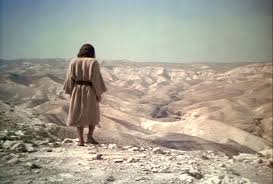
In the liturgical cycle of readings, this Gospel from Mark was originally only 2 verses – later the church added 2 verses – but it is still the one of the shortest Sunday readings.  It tells us only that Jesus was led into the desert by the Spirit immediately after his baptism to be tempted by the devil for 40 days.  Why do the evangelists make a point of 40 days?  You know that: it recalls the 40 years that the Israelites wandered in the desert.  And remember the prophet Elijah journeyed in a desert for 40 days and nights, making his way to Mt. Horeb.  Some say that 40 is simply a symbolic number.  Even if it is, Jesus chose to follow that symbolism as a lesson to us.  We set aside 40 days for our season of Lent, to travel through a wilderness of fasting, almsgiving, and prayer.

According to St. Benedict the purpose of Lent is to purify our way of life and to wash away negligences of the past, to make reparation for what we have done or failed to do.   He names five practices to help change our hearts

  • refuse to indulge in evil habits,
  • devote yourself to prayer,
  • holy reading,
  • compunction of heart and
  • self-denial.

We’ve heard the expression “practice makes perfect” so often that the full meaning may have lost its impact on us.  But consider the Olympic skater who has to forego serious practice for close to a year due to an injury.  Then only last month found out he would be in the Olympic competition.  In two rounds he fumbled, fell – he received a creditable score but did not do his personal best.  Until the third round, the fourth round … then he shone!

Each year at the beginning of Lent we may feel like that skater.  We’re not doing our personal best.  Lent gives us a “third round.”  As Benedict says in Chapter 49, during Lent we are called to be the kind of person we should be every day.  Lent gives us a jump-start of courage to pick up the practices that will support the values we profess to believe in.  The biggest temptation most of us have to face is to “give up” because we stumble, maybe fall – like that skater we may have to put a hand on the floor once in a while to balance ourselves.  The only way  to rise to the challenge of Easter is to persevere … in doing what we know is right, in being faithful to what we’ve promised God, in heeding that first word in the Rule – “listen” – and in loving others as God loves them, and us.

This evening at the close of prayer we will ask God’s blessing on our attempts to be what we were created to be.  We promise to pray for each other and ask God’s gift of strength and courage to persevere in our Lenten resolutions.


BLESSING RITE (for resolutions papers)

Aware that Lent is not merely a time of atoning for sins but a time of preparation.  We prepare throughout Lent to become at Easter what we were once baptized into: Christ’s own body.  We will practice habits which will break us open, let God in, and train us to love like Christ.

Therefore, our loving God, we come before you at this time in our lives to bring, praise – a plea – and a promise – that we will gently remind ourselves that (all) “Lent is a process of rending our hearts, filling the broken places with God’s love, and fearlessly loving as Christ loved.

We place before you, O God, our sincere promises to use your grace to become the people You call us to be.  Trusting in your all-powerful goodness, we dare to ask:

  • L) Give us renewed fervor to be faithful to our commitments. AMEN
  • L) Help us to be compassionate and supportive to one another.  AMEN
  • L) Bless our efforts to make a good Lent.  AMEN
  • L) And support us to be faithful to our Lenten resolutions.  AMEN
 ~by Sister Roberta Bailey, OSB, Prioress
Genesis 9:8-15         1 Peter 3:18-22         Mark 1:12-15
Continue Reading

Filed Under: Blog, Front Page, Homily, Prayer Tagged With: 40 days, Christ, desert, Lent, Mark

  • « Go to Previous Page
  • Page 1
  • Interim pages omitted …
  • Page 76
  • Page 77
  • Page 78
  • Page 79
  • Page 80
  • Interim pages omitted …
  • Page 90
  • Go to Next Page »

Footer

Prayer / Newsletter / Info

 Contact Info

Benedictine Sisters of Florida

PO Box 2450
12138 Wichers Road
St. Leo, FL 33574-2450
(352) 588-8320
(352) 588-8443

 Mass Schedule

Related Links

Copyright © 2026 · Benedictine Sisters of FL · Touching Lives Through Prayer and Service

Copyright © 2026 · Bendedictine Theme on Genesis Framework · WordPress · Log in