• Skip to primary navigation
  • Skip to main content
  • Skip to footer
Benedictine Sisters of FL

Holy Name Monastery
Founded 1889

Donate Now
  • Home
  • About Us
    • History
    • Being Benedictine
    • Benedictine Monasticism
    • Meet Our Community
    • Holy Name Academy-Alumnae
  • What We Do
    • Mission, Vision and Our Partners
    • Invitation to Retreat
    • Accommodations
    • Volunteer Programs
    • Oblate Program
    • Spiritual Direction
    • Aqua/Hydroponics
    • More of Our Ministries
  • What’s Happening
    • Articles of Interest
    • Events
    • Newsletters
    • Brochures
    • Links
  • Support Us
    • Gifts of Support
    • Wish List
  • Stories Shared
  • Galleries
    • Photos
    • Videos
      • Benedictine Sisters of FL Videos
      • Other Videos
  • Contact Us

Articles of Interest

Fourth Sunday of Easter – Good Shepherd Sunday

April 23, 2024 by Holy Name Monastery Leave a Comment

No wonder this is called Good Shepherd Sunday and the Church’s day of prayer for vocations.  Jesus’ identification as the Good Shepherd is read in all three cycles of the Sunday Gospels.  Jesus says: “I am the Good Shepherd.  I know my own and my own know me!”  One of the earliest paintings of Christ in the Roman catacombs represents him as carrying an injured sheep on his shoulders.  It was, and remains, an endearing and intimate image of a loving relationship – nurturing, life-giving, transforming, empowering.

I wonder aloud: why did Jesus choose SHEEP for his parable?  There are other animals native to the land where he spent his childhood: sand cats, camels, “man’s best friend”, or perhaps a goat or, heaven forbid: a pole cat.  Actually, there are 116 mammal species native to the Middle East.   What we do know is that he probably saw sheep most days of his life.  Jesus was teaching a lesson that would live LONG after He walked the face of this earth.  I can’t pretend or presume to read the mind of God.  But, Jesus, being God, knew that sheep would still be around today so that we 21st century people, living on the other side of the world, could identify with his example.

What is it about sheep that gives us some insight into our relationship with Jesus, the Good Shepherd?  I’ll describe a few.  Shepherds must anticipate the needs of their sheep for food, water, sleep, leadership and protection.  Sheep are commonly described as lacking initiative, dependent, copy cats but simple and playful.  They have insatiable appetites.  They seek sustenance, suckling from the moment they can stand upright. Sheep are skittish especially of loud noises and unpredictable in their reactions.   Maybe it’s their strong flocking instinct that most aptly applies to us who seek relationships in religious life?  Sheep are very social and need to see one another when grazing.  (Is that why we sit across from each other in chapel and at table?)

Sheep are agitated if separated from the flock (like humans who are forced to practice “social distancing”).  Sheep have excellent eyesight with their large, somewhat rectangular eyes, giving them a wide field of vision (like high sensates who take in every visual detail).   This feature, and a good sense of smell, alerts them to predators. Sheep are stubborn and unpredictable.  (Sound like anyone you know?) Head butting is both a natural and a learned behavior in sheep. (And, face it, some people are skilled in this behavior –  butting heads over trivial details.)

You see, we all act like sheep on occasion. We often ramble off from the flock to nibble at little bits of foreign pasture hanging over the fence. However, we have a Shepherd who understands us; one whose patience and love are infinite. He is always ready to go after us when we stray afar.  His voice is constantly reaching out to us in Lectio, retreats, sicknesses, crosses, this pandemic and other various ways. How many times have we already felt his loving grace calling and helping us back to the safety of His company? Once in a while we have even felt His shepherd’s crook around our neck, gently coaxing us back into the flock!

This Good Shepherd sermon preached by our Savior over two thousand years ago is still echoing and re-echoing around the world, calling on us, his faithful flock, to do all in our power to spread his Kingdom.  Do not shut your ears to this call of Christ today. Give him a helping hand by sharing the light of your faith, praying for and nurturing vocations.  And, ponder which sheep-like traits is Jesus coaxing to life in you?

~Reflection by Sister Roberta Bailey, OSB


First Reading:   Acts of the Apostles 4:8-12         Second Reading:  1 John 3:1-2
Gospel:   John 10:11-18
Continue Reading

Filed Under: Blog, Front Page, Homily Tagged With: Christ, Fourth Sunday of Easter, Good Shepherd, Good Shepherd Sunday, JesusGod, sheep

Third Sunday of Easter

April 15, 2024 by Holy Name Monastery Leave a Comment

Two of the disciples of Jesus were on the road that leads to Emmaus. They were low because their Master had been crucified like a common thief. But now they’ve heard reports that their Master was not dead at all. Reliable sources have told them that he has appeared to some of their most trusted friends. Was he really alive? Should they believe the good news or the bad? And that’s our dilemma, isn’t it? DO WE BELIEVE THE GOOD NEWS OR THE BAD? The good news is that Christ is alive. The sad news is how little impact that event is having in our world.

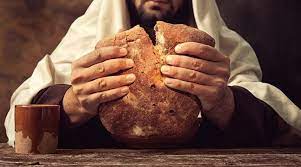
The Jewish custom required that the two disciples invite Jesus to a meal. Hence, they invited Him for a night’s rest in their house–and Jesus accepted the invitation. During the meal, when Jesus broke the bread, the disciples realized that this stranger was not after all a stranger – this was Jesus, the Risen Christ. Later they said to each other, “Did not our hearts burn within us when he opened up the Scriptures to us?”  Hidden for a time, Jesus took delight in revealing himself in the breaking of the bread.  I don’t know how He’d said it in Yiddish or Hebrew the translation is: “Eat up! It’s good for you!”

You will recall on Easter morning that Jesus told the disciples to “go home.”  This time they “go back” a long path – walking 7 miles to Jerusalem to share their story.   They were probably pondering all along the way how they, like Mary Magdalene, did not recognize Jesus.  For Mary the revelation (Jesus’ delight) came when she heard Jesus’ voice.  For the Emmaus disciples it was the breaking of the bread.  That continues to this day.  Jesus meets us on our way to Emmaus, in the ordinary experiences of our lives, and in the places to which we retreat when life is too much for us. The story warns us, however, that the risen Lord will take delight in coming to us when we least expect him.

A young boy was walking home through the park after attending a Sunday school class. Somehow, he couldn’t stop thinking about the Bible lesson for that day. What impressed him most was when the teacher said, “You will find the risen Jesus in everyone you meet.” As he continued through the park, he noticed an old woman sitting on a bench. She looked lonely and hungry. So he sat down next to her, took out the chocolate bar he had saved and offered some to her. She accepted it with a beautiful smile.  They sat together in silence, just smiling at each other.  When the boy was leaving, he had gone a short distance when he ran back to the bench, and gave the woman a big hug. When he arrived home, his mother asked, “What’s making you so happy today?” He said, “I shared my chocolate bar with Jesus.” Before his mother could ask more questions, he added, “You know, she has the most beautiful smile in the world.”  Meanwhile, the old woman returned to her little apartment where she lived with her sister who remarked, “You seem really happy today.”  “I am,” she replied, “I was sitting in the park, eating a chocolate bar with Jesus. And, you know, he looks a lot younger than I expected.”   Isn’t that the lesson in today’s gospel?  We will meet and experience the risen Jesus in unexpected places and persons.  Make someone smile and notice God’s delight in the smile returned to you.

~Reflection by Sister Roberta Bailey, OSB


First Reading:  Acts 3:13-15,17-19         Second Reading:  1 John 2:1-5a
Gospel:   Luke 24:35-48
Continue Reading

Filed Under: Blog, Front Page, Homily Tagged With: Bible, Easter, Jesus, Mary, Risen Christ, third Sunday of Easter

Second Sunday of Easter – Divine Mercy Sunday

April 8, 2024 by Holy Name Monastery Leave a Comment

Tomorrow has been known as “Low Sunday” – a lesser Easter celebration – or “Quasi-modo Sunday” from the first two words of the Entrance antiphon at Mass: “Like newborn infants” (speaking especially about those baptized at Easter).  It is the day that the newly baptized officially put away their white robes. Hence, it is known liturgically as the “Sunday of putting away the albs.”   And yes, the name of this feast is the origin of the name of the hunchback, Quasimodo, in Victor Hugo’s “The Hunchback of Notre Dame.” The foundling was so named because he was discovered at the cathedral on the second Sunday of Easter.

On that Second Sunday of Easter in the Jubilee Year 2000, at the Mass for the canonization of St. Faustina Kowalska, Pope John Paul II made a surprising announcement. “It is important that we accept the whole message that comes to us from the word of God on this Second Sunday of Easter, which from now on throughout the Church, will be called ‘Divine Mercy Sunday.”   Clearly it is not a new feast but neither is it an optional title for this solemnity; rather, Divine Mercy is the integral name for this Feast Day.

The Gospel begins with the risen Christ appearing to the apostles on Easter night. Jesus calms his disciples by saying and giving them “Peace.” He shows them the scars of his Passion, his wounded hands and side, the evidence of his saving work through his suffering, death and resurrection.  Then he breathes on them and explains what the divine breathing means with the words, “Receive the Holy Spirit. Whose sins you forgive are forgiven, whose sins you retain are retained.” He gives to the apostles, from the treasury of divine mercy, the power of mercy for penitents and the assurance there is nothing to fear.

The story of St. Faustina reveals the inspiration behind the Divine Mercy devotion. On February 22, 1931, at the age of 26, Sister Faustina experienced a life-changing vision of Christ. She saw him wearing a white robe and raising his right hand in blessing with his left hand resting on his heart from which flowed two rays of light. Jesus told her, “Paint an image according to the pattern you see, with the prayer, Jesus, I trust in you.”  Faustina could not paint but eventually she persuaded her spiritual director to find an artist to create the painting that was named The Divine Mercy.

Thankfully there is a trend among media services to make an effort to balance stories of horror and tragedy with illustrations of mercy.   For many people there are two stories that continue to stand out – The first is that of an Amish community that walked to the home of the man who had killed 5 of their children to tell his widow they forgave her husband for what he had done, and consoled her for the loss of her spouse. They buried their anger before they buried their children.

The other well-known story of forgiveness, you may recall, was depicted on the cover of TIME magazine 1984.  It pictured a prison cell where two men sat on metal folding chairs. The young man wore a black turtleneck sweater, blue jeans and white running shoes. The older man was dressed in a white robe and had a white skullcap on his head. They sat facing one another, up close and personal. They spoke quietly so as to keep others from hearing the conversation. The young man was an attempted assassin; the older man was Pope John Paul II, his intended victim. At the end of their 20-minute meeting, Ali raised the pope’s hand to his forehead as a sign of respect. John Paul shook Ali’s hand tenderly.

John Paul II and the Amish Christians teach us that forgiveness is central. They believe in a real sense that God’s forgiveness depends on their extending forgiveness to other people. That’s what the mercy of God is all about.  They are but two examples of God’s divine mercy in action, the same divine mercy whose message St. Faustina witnessed, the gift of mercy we celebrate on Divine Mercy Sunday.  This is also a good week for our prayer intention for vocations, formators and those they guide and mentor.  May God, in wisdom and mercy, see fit to bless us with the grace to persevere in our own vocations, and for insight and fortitude for all those involved in the ministry of religious formation.


~Reflection by Sister Roberta Bailey, OSB


First Reading:   Acts 4:23-35         Second Reading:  1 John 5:1-6
Gospel:   John 20:19-31 
Continue Reading

Filed Under: Blog, Front Page, Homily Tagged With: Christ, disciples, Divine Mercy Sunday, Jesus, Pope John Paul II, Second Sunday of Easter

Palm Sunday

March 25, 2024 by Holy Name Monastery Leave a Comment

Vigil of Palm Sunday


The contemporary author Thomas Moore writes: “The whole point of a good story is to give birth to other stories and to deep reflection.” The Palm Sunday liturgy, it seems to me, is a potpourri of themes and a roller-coaster of emotions: high hosannas, a supper with friends, an example of loving humility, washing of feet and later washing of hands, betrayal and mocking.  A temptation may be to try to reflect on these events too much.   So, a good choice may be to simply “sit with” the story as told by the evangelists.  I’ll share a little of one of my reflections with you.  It is a story of watching and waiting … and waiting … and waiting.

A crowd gathers as Jesus enters the holy city on this special day.   It’s not unusual for this crowd but today they are “over the top” with exuberance. “Hosanna!” rings from the crowd. They frantically wave branches, spread their cloaks on the street and shout with joy.  Then, days later the crowd does an about-face. Their shouts of joy turn to murderous clamor. No longer do they sing, “Hosanna in the highest.” As if from a snap of fingers, now the crowd shouts, “Crucify him!”  Then suddenly in a flash, there is no crowd.  There is only the tomb and two of his closest friends. 

We linger with Mary Magdalene and the other Mary as they remain sitting there facing the tomb. It seems the end.  There is only the Lord, placed in the tomb.  We sit quietly, silently.

And waiting, waiting, waiting.  One can only imagine the depth of our sorrow.  We must appear to be graveyard statues blending with the gravestones.  Mystified. Not understanding the work of the Lord.  But we are so bound to him by love that not even death can pierce our loyalty.  Oh! The wonders we have seen (even still see) bind us all the more to him. Now is not the time to abandon him. Now is not the time to turn from faith. Now is the time to cling to him – to comfort Him. We refuse to be cut off from our Lord!

The Lord has so much more for us. The Lord will not be bound by death!  Yes, we are two of his friends seated beside the tomb donated by the rich man Joseph of Arimathea.  We are shaken by our loss and what we’ve witnessed.  We can’t take in what is happening because we do not yet see all that will come to be. However, we are determined we will not turn our backs on Jesus. We will not be among those who forsake him.

These last few days of Lent 2024 we will use our precious time alone.  We will spend time with our King, our Jesus. May our hearts reach out to him. May our minds gaze upon him. For if we remain with him, watchful and waiting, we will not miss the glory He intends to reveal to us at Easter.

  ~by Sister Roberta Bailey, OSB

Continue Reading

Filed Under: Blog, Front Page, Homily Tagged With: Crucify, hosasnna, Jesus, Palm Sunday, Thomas Moore, Vigil of Palm Sunday, Waiting

Fifth Sunday of Lent

March 18, 2024 by Holy Name Monastery Leave a Comment

Jesus must have been a visual learner – His words are so visually clear: “If a seed is planted into the ground and it does not die, it remains a seed.  But if it dies, it produces many seeds and seedlings and those seeds and their seedlings produce much fruit.”

We may think of seeds as a sign of new life, but the process really begins with the seed dying.  Could it be that the key to life is death?  Could it be that the key to living is dying?  Could it be that dying is important to living?  Listen once more to Jesus’ words: “Unless a seed dies, it remains a single seed, but if it dies, it produces many seeds and therefore much fruit.”

So, what happens when a seed dies?”   Inside every seed is an embryo, and in that embryo is a root which goes down into the ground; and a shoot that rises above. Every embryo has a root and a shoot; and inside (this is really a miracle), an “on” and “off” switch.

When a dormant seed is immersed in a growing medium, in optimal conditions, the switch goes “ON.”  The seed takes in water, and miraculously begins to expand.  I suspect you’ve seen it happen when as a youngster you put a lima bean in a wet paper towel inside a see-through container.  Anxiously, you watched to see whose seed would be the first to show signs of the miracle of growth.  That is what Jesus was describing: “Unless a seed dies, it remains a single seed; but if it dies, it produces many seeds and then much fruit.”

Isn’t this the story with us and our good intentions?  Some behavior must die, it must give way to a new “me.”  When conditions are just right, the switch goes ON, protective fear breaks loose, and we begin to practice a new way of conducting ourselves.  Like new seeds, without greenhouse coaxing, it takes 40 days to acquire a new habit.  Mmmm …  Did that figure into the reason there are 40 days in Lent?

A similar miracle of nature happens with salmon.  Salmon make their way ever so slowly along the water bottom, their noses worn white from abrasions by rocks and pebbles.   They travel hundreds of miles to their spawning fields.  My father, a career Coast Guard man, spent months at a time on patrol along the U.S. Pacific coast protecting spawning salmon from poachers.

Salmons’ instinct bring them back to the place of their birth. After spending a year or two or three out in the ocean and swimming back up to the stream of their birth, the salmon are preparing to die. At the end of their long laborious journey, they dig a hole and lay their eggs.  And, they die.  And out of those eggs comes new life.  For it is ONLY through dying that there is new life among the salmon. And so there is a parallel is there not, between the seed and the salmon?  For both, death is necessary for life.  In dying, new life springs forth.

And, therein is our Lenten lesson – it is in dying that we begin living.  In the words of St. Francis of Assisi’s famous peace prayer; “It is in giving that we receive; it is in dying that we are born again.”

How is your Lenten “dying” going?   On Holy Saturday evening, at the Easter Vigil service, as we ignite the new fire we will watch our Lenten resolutions go up in smoke.  What will have died in us?  Will self-will have resigned its place to deference?  Will compulsive appetites have given way to mortification?  Will my prompt to choices be less “what’s good for me” and be more “what’s good for the community?”   Will infidelity have yielded to loyalty?   Will self-pleasure have conceded to service to others?  Will the needs of others more likely motivate my actions?  Will I finally have relinquished a life-long destructive habit?  Will I have surrendered my quick tongue to gentleness of tone of voice?  What will have died?  What will spring up in its place?

Jesus summed it up for us:  “Whoever will find life must lose it, but whoever loses life will find it.  If anyone would serve me, they must follow me.”  Where?  You must follow Me in death to self.  The seed must first die.  Only then will Jesus “Easter” in us!


~Reflection by Sister Roberta Bailey, OSB


Happy St. Patrick’s Day (March 17), St. Joseph (March 19) and St. Benedict (March 21)  

Rejoice with me when on March 23 as I mark 65 years since I pronounced my vows as a Benedictine Sisters of Florida.


First Reading:   Jeremiah 31:31-34       Second Reading:  Hebrews 5:7-9
Gospel:   John 12:20-33
Continue Reading

Filed Under: Blog, Front Page, Homily Tagged With: 40 days, 5th Sunday of Lent, die, Fifth Sunday of Lent, fruit, Jesus, Lent, seed

Fourth Sunday of Lent

March 11, 2024 by Holy Name Monastery Leave a Comment

What’s weighing heavy on your heart? I’m here. Let’s talk.


In John’s Gospel, the evangelist has (already before Lent) walked us through the story of the Wedding at Cana.  Jesus, at a nudge from his mother Mary, interacted with the servers who followed his directions to fill the empty stone jars with water, only to be mystified when the water turns into the best wine in the house.   Now, John is the only evangelist who relates this story.  And, he is exact in some details: there were six jars, each 2-3 feet tall, each holding 9-10 gallons. That’s approximately 55 gallons of wine – which makes for quite a wedding!

Last Sunday, we witnessed an interaction of a different sort.  Jesus calls a halt to the desecration of His father’s house, the temple in Jerusalem.  Today’s Gospel takes a leap that skips over an interaction that sets up today’s teaching.  In that gap, we hear about the conversation between Jesus and the Pharisee Nicodemus who came to Jesus under the cover of darkness.  Nicodemus was struggling with some big questions.  As he said to Jesus: “I know you came from God.  Maybe you can shed some light on my quandary.”

Puzzled by what Jesus says, Nicodemus questions how an old man can be born again???  Jesus cautions him: “Don’t be amazed that I told you, ‘you must be born from above.’”  Here comes a sentence that I love: “The wind blows where it wills, you hear the sound it makes but you do not know where it comes from or where it goes.”  [Like Benedict said, Listen with the ear of your heart.”] Reminds me of a 70s folk song: “Blowin’ in the Wind” – “How many times must we look up before we can see the sky?  How many ears must we have before we can hear people cry?  The answer, my friend, is blowin’ in the wind.”

John reports that Jesus assures Nicodemus: “In all truth I tell you, we speak only about what we know and witness, what we have seen and heard.  And yet people reject our evidence.  If you do not believe me when I speak to you about earthly things, how will you believe me when I speak to you about heavenly things?”

Jesus calls Nicodemus’ attention to the story in the Book of Numbers, when the people were in the desert and they complained against God and Moses. “Just as Moses lifted up the serpent … so the Son of Man must be lifted up, so that everyone who believes in him may have eternal life.”  John reminds us: “God so loved the world that he gave his only Son, so that everyone who believes in him might have eternal life.  God did not send his Son to condemn the world, but that the world might be saved through him.”

Today, I believe, God is telling us: “What’s happening today: natural disasters, people against people violence, starvation and selfishness, dread illness …   It’s a wake-up call.  Like I said to the prophet Isaiah, yea these many years ago:  “I am the designer and maker of the earth.” Remember in Genesis, at the creation of life on this earth, I looked on all that had been created, and I said: “It is good. …  For, I am God, there is no other.  I will not speak in secret nor from some dark place.  I did not say: Look for me in chaos.  I promise justice, ‘the public face of love’.  I speak the truth.  Turn to me and be safe.  Say: From God alone comes my strength and safety.”

God continues speaking to us.  “All time is temporary in My eyes until you rest in ME eternally.  Today I tell you, just as I welcomed a midnight conversation with Nicodemus, I am here – day or night – for you.  What’s on your mind or weighing heavy on your heart?  Let’s talk.”

~Reflection by Sister Roberta Bailey, OSB


First Reading:   2 Chronicles 36:14-16      Second Reading:  Ephesians 2:4-10
Gospel:   John 3:14-21
Continue Reading

Filed Under: Blog, Front Page, Homily Tagged With: Fourth Sunday of Lent, God, Jesus, Lent, Nicodemus, Son

  • « Go to Previous Page
  • Page 1
  • Interim pages omitted …
  • Page 26
  • Page 27
  • Page 28
  • Page 29
  • Page 30
  • Interim pages omitted …
  • Page 132
  • Go to Next Page »

Footer

Prayer / Newsletter / Info

 Contact Info

Benedictine Sisters of Florida

PO Box 2450
12138 Wichers Road
St. Leo, FL 33574-2450
(352) 588-8320
(352) 588-8443

 Mass Schedule

Related Links

Copyright © 2026 · Benedictine Sisters of FL · Touching Lives Through Prayer and Service

Copyright © 2026 · Bendedictine Theme on Genesis Framework · WordPress · Log in
