• Skip to primary navigation
  • Skip to main content
  • Skip to footer
Benedictine Sisters of FL

Holy Name Monastery
Founded 1889

Donate Now
  • Home
  • About Us
    • History
    • Being Benedictine
    • Benedictine Monasticism
    • Meet Our Community
    • Holy Name Academy-Alumnae
  • What We Do
    • Mission, Vision and Our Partners
    • Retreats
      • Invitation to Retreat
      • Accommodations
    • Volunteer Programs
    • Oblate Program
    • Spiritual Direction
    • Aqua/Hydroponics
    • More of Our Ministries
  • What’s Happening
    • Articles of Interest
    • Events
    • Commemorative Bricks
    • Newsletters
    • Brochures
    • Links
  • Support Us
    • Gifts of Support
    • Wish List
  • Stories Shared
  • Galleries
    • Photos
    • Videos
      • Benedictine Sisters of FL Videos
      • Other Videos
  • Contact Us

Messiah

Third Sunday of Lent

March 13, 2023 by Holy Name Monastery Leave a Comment

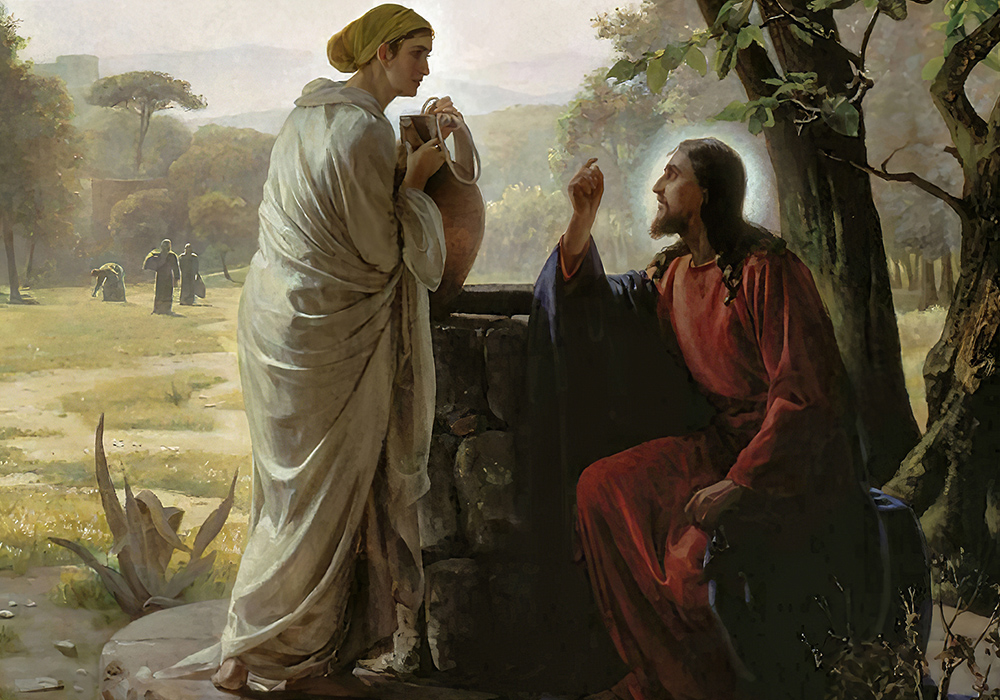
The most startling aspect of this famous conversation is that it happened at all. The woman herself alludes to the break from tradition: “How can you, a Jew, ask me, a Samaritan woman, for a drink?”  What a turmoil of feelings must have muddled her mind!  Here she was a Samaritan.  And not only a foreigner but a WOMAN at that!  Was she embarrassed, ashamed, confused, amazed, or afraid when Jesus spoke to her?  Not only did Jesus converse with the woman, he also asked to share her drinking vessel, an action that makes him unclean according to Jewish law.  Has he thrown caution to the wind?  Is he the only person who hasn’t heard she’s known to mix with the wrong crowd?  What does he mean: bring your husband?  Surely, he must have heard she’s been married five times and man she’s living with now is not her husband.  The thing is it doesn’t matter to Jesus.  Nor does it seem to have mattered to the Evangelist John or else he wouldn’t have included this story.

This woman is like so many other female figures in the Scripture.  She’s only identified by her gender, her ethnicity, and her place in society.  She’s an outcast.  Why would she come to the well in the heat of the day?  Only one thing could explain that.  She has no friends among the women who come to the well in the cool of the day.

Don’t you just love Jesus?  He’s out in the hot sun.  He’s thirsty.  He’s pondering how to get some water out of the well.  Then along comes this woman with a jug.  Maybe it sparked a memory of this mom going to the well, chatting with friends and, when her bucket is full, how she’d beckoned him to help her lug the water back home.

He strikes up a conversation with the woman.  Slowly, slowly he stirs her interest.  To her relief he was not fresh with her – she did not feel intimidated.  He offers her living water as he gently starts talking about her personal life.  The two of them have the longest 1:1 conversation recorded in Scripture.

It was COOL!  The woman recognizes his specialness.  She thinks: “This man must be a prophet.”  The high point of the conversation is when Jesus reveals himself to her as the Messiah.  She abandons her jug and runs through the streets telling her story to every person she meets.  She knows she does not have all the answers.  She does not demand that they believe her tale.  She lets her hearers arrive at their own conclusions about Jesus.  And they do: “This is indeed the Savior of the world.”

For centuries after this day, this woman’s encounter story will be told and retold.  This one day Jesus shared time, a conversation, and the gift of himself with another.  The woman went home that day from the village well with a tale to tell.

The story offers us, I suggest, a model for hospitality and friend cultivation.  As Benedict says, guests may arrive at odd hours.  Take time with the guests; engage them in conversation.  Notice that the woman did not just sit on the edge of the well every day waiting to see who might happen by.  She may have been friendless and lonely, but she did not sit with her skirts spread prettily around her hoping some thirsty visitor would drop by.  She was doing an ordinary chore, her daily chore of getting water.  She may have been wary but she did not run when the stranger approached.  She shared her good fortune: “Come and see” who I bumped into at the well.

Each one of us spent the first 9 months of our existence in an environment surrounded by water.  Likewise, we were baptized in water and we are nourished daily by the Living Waters.  This woman’s story and her encounter with Jesus show us that grace, living water, is within our reach to refresh the parched earth and its peoples.

The setting the of this Scriptural story is casual (a village well); the exchange, intimate and deep.  Our lesson: we can’t sit on the front doorstep or the backyard swing and wait for guests to show up.  We have to step into “scary places”.  We have to venture out to the “village square at high noon”.  If we offer the richness from the source of our life together, like ripples on the surface of the water in the well, one by one strangers will become friends.

Jesus tells us: “Whoever drinks the water I shall give will become a well-spring of water welling up to eternal life.”  We pray: “Sir, give us of this water; that we may not be thirsty again.”

~Reflection by Sister Roberta Bailey, OSB
 

 Have an enjoyable St. Patrick’s Day! Our bishop has granted a dispensation for “Fish Friday” with the stipulation that we choose another day this week to abstain from meat. Do you know why we “don’t eat meat on Fridays”?? You may quickly reply: Jesus died on a Friday.  But, why refrain from meat???

Looking forward to next week when we will celebrate St. Joseph on Monday and St. Benedict on Tuesday 😊 and the Annunciation of the Lord on Saturday (the 24th)


First Reading:   Exodus 17:3-7       Second Reading:  Romans 5:1-2,5-8
Gospel:   John 4:5-42
Continue Reading

Filed Under: Blog, Front Page, Homily Tagged With: 3rd Sunday of Lent, conversation, Jesus, Lent, Messiah, Third Sunday of Lent, well, Woman

Second Sunday of Advent

December 5, 2022 by Holy Name Monastery Leave a Comment

Over the next few days in our Advent journey the church invites us to consider John the Baptist’s relationship to Jesus.  John appears in the tradition of the great prophets of Israel, preaching repentance and reform.  In fact, the description of John found in this reading is reminiscent of the description of the prophet Elijah.  John words are not directed only to the Pharisees and Sadducees.  John’s message is a pointed call to repentance aimed in our direction: “Repent, for the kingdom of heaven is at hand!”

John makes very clear that his relationship to the Messiah is one of service and subservience: “The one who is coming after me is mightier than I.  I am not worthy to carry his sandals.”  The highlight of John’s ministry was the fantastic success he enjoyed way out in the wilderness.  This man does not care what people think.  And his style worked!  He certainly was no fashion plate, with his camel hair clothing, leather sandals and the cincture around his waist.  His diet was simple: locusts and wild honey.  This note must have been important to the evangelists, or it wouldn’t be included in their Gospels.  It is symbolic.  You can’t wear anything more simple in the way of clothing, or eat a more basic diet.  John’s ministry, and our inheritance, is one of very simple beginnings.

But what does it say to us?  What is God, the Divine architect, designing and constructing in our lives?  When our life’s valley is filled in and the road made smooth, the crooked straight, will we be ready to “see the Son of Man coming in a cloud?”  As we approach the off-ramp of life, will we be attuned to the divine whisper that is familiar from our daily Lectio?  Will we hear clearly the voice of the One crying out to us?  Will we stand erect and call to others: “Look! The salvation of our God is at hand?”

What will it take to raise our weariness to consciousness, and conscientious attention to those with whom we live?  What will it take to crack the ridged set in our ways?  How many hosing-downs does it take to quiet a hot temper or a sharp tongue?  How can we remove our spiritual cataracts so we can see the bigger picture?  What kind of corrective lens do we need to protect our eyes from worldliness?  What strength of binoculars will it take to zero in on the faulty behavior we what to eradicate?  What kind of safe-guards will we need to keep us on the straight and narrow?  Is our prayer life regular enough, strong enough, secure enough to protect us from inevitable temptation?

No matter how we might like to think that we’ve got it all together, sooner or later we all need to have a maintenance check-up and a little divine repair job.  When a hurtful word slips through our lips or cares and daily concerns erode our promised Lectio time; when we are battered by life’s challenges, God promises to strengthen the areas of weakness that plague us.  Our God promises to fix what’s broken in our lives.

Paul reminds us in the Second Reading: “Whatever was written previously was written for our instruction, that by endurance and by encouragement you may think in harmony with one another … that with one accord in one voice you may glorify God.”  John’s message prepared the way for Jesus in the first century.  We are called to be prophets in today’s world.  Each of us has a mission to communicate Christ’s message of hope, freedom, and peace; to help people fill in their valleys and make their rough paths more smooth.  “Prepare the  way of the Lord, make straight his paths: all shall see the salvation of our God!”


~by Sister Roberta Bailey, OSB


First Reading  Isaiah 11:1-10                        
Second Reading Romans 15:4-9  
Gospel Reading  Matthew 3:1-12
Continue Reading

Filed Under: Blog, Front Page, Homily Tagged With: God, Jesus, John, John the Baptist, Messiah, Paul, Second Sunday of Advent

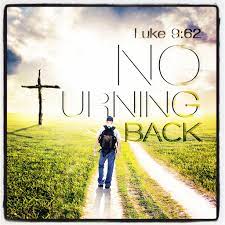
No Turning Back!

June 27, 2022 by Holy Name Monastery Leave a Comment

Let Go of Your Past

In this Gospel we join Jesus on this His last journey to Jerusalem.  He has warned us of his impending suffering.  Along with his disciples we have confessed our faith in him as Messiah on more than one occasion.   We’ve been to the Mount of His transfiguration with Peter, James and John.  With them we’ve witnessed the appearance of Moses and Elijah appearing with Jesus as He was transfigured, his face and clothes becoming dazzlingly bright.  None of us can begin to imagine the horror of Jesus’ last days. But Jesus knows something we don’t!   And, He has “set his face” toward Jerusalem with unwavering determination.

He is so concentrated on his destiny that he shocks us giving seemly little notice to the Samaritan villagers.  But He sees it all!  So, when with the disciples, we want to call down fire on people who snub us, Jesus instead speaks of discipleship and the implications of following him. To make his point he speaks in an exaggerated manner.  You heard what he said: “Be willing to let go of the past; bury the dead and move on.”  Like an Alzheimer patient, let the offensive memories stay buried; rejoice in the simple pleasantness of each new day; greet each person like you’ve never met before.

And what’s this Jesus is saying?  “No one who puts a hand to the plow and looks back is fit for the kingdom of God”?  This a different metaphor but the same message, “Don’t let the past control the present, or your future”.  Anybody who has plowed a field or prepared a garden bed knows that you have to keep your eyes intently on the path ahead to keep the rows straight.   Look backward, and you’re bounded to veer off track.

How ironic it is that we, like the disciples, do exactly that.  In their despair and confusion following the crucifixion and resurrection, they looked back and fall back into that they knew best (their comfort zone): their previous occupation of fishing.  It wasn’t until Pentecost, when the Holy Spirit empowered them, and they began their true work of spreading the Gospel of Jesus.  When did you have your “Pentecostal experience?”  How is your life different?  Consider the once-popular bumper sticker that challenges us: “If you were on trial for being a Christian, would there be enough evidence to convict you?”

~Sister Roberta Bailey, OSB, Prioress

Continue Reading

Filed Under: Blog, Front Page, Homily Tagged With: bury the dead, Jesus, last journey, Let go of your past, Messiah, No turing back

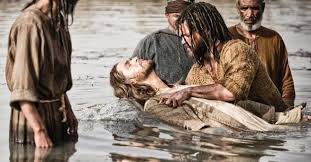
Baptism of Jesus

January 11, 2021 by Holy Name Monastery Leave a Comment

Baptism of Jesus

Maybe you’ve heard the story about the poor wandering soul, lost in thought, who stumbled upon a baptismal service one Sunday afternoon.  This was one of those “down by the river” sort of baptisms in the warm waters of the South.  Curious about what was going on, this fellow walked right down into the water and stood next to the Preacher.  When the minister finally noticed him, he asked the young man, “Are you ready to find Jesus?”  With a quizzical look and some hesitancy in his voice, he answered: “Yes, Preacher, I think I am.”  The minister then dunked the fellow under the water and pulled him right back up.

“Did you find Jesus?”  “No… should I have?”  The preacher then dunked him under for a bit longer, brought him up and said, “Now, brother, have you found Jesus?”  “No … I haven’t, Preacher.”  The preacher in disgust held the man under for at least 30 seconds this time; brought him to the surface of the water and repeated the question, “Friend, are you sure you haven’t found Jesus yet?”  The confused fellow wiped his eyes and gasping for breath said,.. “Naw, Sir, are you sure this is where he fell in?”

That’s sometimes us, with our heads under the waters that wash over us …  cares, distractions, prayer for others’ intentions, confused by the circumstances of our lives …  looking for Jesus in muddy waters of our own making.

In the Summa Theologiae, (12th century theological summary), St. Thomas Aquinas teaches that “Jesus did not become God’s son at his Baptism; he is the Son of God from all eternity.  Nor did He become the Messiah at this point; he was the Messiah from the moment he became man.  Baptism is the public manifestation of Jesus as Son of God and as Messiah, ratified by the presence of the Blessed Trinity.  The Holy Spirit descended visibly in bodily form upon Christ …  so that we may believe him to descend invisibly upon all those who are baptized.”

We know the facts, right – but how slow we can be to absorb the meaning.  We are witness to Peter’s awakening in the Second Reading from Acts.  And what a day of enlightenment it must have been for him.  He was deep in Lectio …  the Scriptural account says: “He fell in to a trance and saw a vision in which a sheet came down from heaven full of all kinds of animals.  God told him to get up, kill, and eat whatever he wanted.

What a surprise that must have been – now he could taste foods he’d been forbidden under Jewish law.  Of course, God wasn’t really concerned that Peter could enjoy his first ham sandwich.  God was teaching Peter, and us, that there is no distinction between “clean” and “unclean” neither in animals nor in people.  The almighty’s plan of salvation wasn’t just for the Jewish people; it was for the Gentiles – for everyone – everyone is included in God’s far-sighted providence.

You’ll remember the story as it continues in Acts.  The very next day Peter “got ready and went” to the home of Cornelius and “some of the believers from Joppa went with him…. Cornelius met him, fell at his feet and bowed down before him.  But Peter made him rise: Stand up, I myself am only a man.”  Cornelius related what led to his requesting Peter’s visit, ending his story with these words: “Now we are all here in the presence of God, waiting to hear anything that the Lord has instructed you to say.”  Sounds like the sentiment of an opening to any Lectio time: “I am here, Lord, in Your presence, waiting to hear anything You are ready to say to me.”

The Cornelius story is the lead-in to Sunday’s Second Reading when Peter shares his awakening, “I now realize that it is true that God treats everyone on the same basis…. (he continued) You know the message that God sent to the people …  You know the great event that took place throughout the land.  You know about Jesus of Nazareth and how God poured out on him the Holy Spirit and power.  We are witnesses of everything that he did.”

If you continue reading in Acts, beyond tomorrow’s selection, you’ll see – as Paul Harvey used to end his TV evening news – you’ll “know the rest of the story.”  While Peter was still speaking, the Holy Spirit came down on all those who were listening.”

We hear the same message from St. Paul in his Letters to the Ephesians, Galatians and the Romans when he writes: “There is neither Jew nor Greek, slave nor free, male nor female, for we are all one in Christ Jesus.”  And isn’t this same message in the Holy Rule?  It’s true that in Chapter 2, Benedict is directly addressing the Prioress but it’s a top-down principle and, with the rotation of roles in monastic life, is intended for all.  “We are all cautioned “… to avoid all favoritism in the monastery … “not to love one more than another.”  Benedict echoes Paul when he writes: “One born free is not to be given higher rank than one of lowly birth … for God shows no partiality among persons.”  Step by step, Benedict leads his followers from non-partiality in Chapter 2 to the ideal of mutual obedience and good zeal (in the closing chapters of the Rule): Deference, Respect and the pursuit of “nothing whatever to the Love of Christ.”

~Reflection by Sister Roberta Bailey, OSB


On Monday we begin what the Church refers to as “Ordinary Time” – Oh, if only!  But the COVID and unrest in our country still rages … What’s the psalmist say “like a roaring lion.”

Praise God with us – we are grateful – that at Holy Name Monastery, we have received our first dose of the COVID Vaccine – knowing full well we still need to practice universal precautions with lots of extra hand-washing and marked social distancing. 

We look forward the time when we can open our doors and welcome guests.   

Thank you each for your loyal friendship, support and prayers.

Sister Roberta Bailey, OSB


First Reading   Isaiah 47:1-4, 6-7           Second Reading  Acts 10:34-38
Gospel  Mark 1:7-11


Continue Reading

Filed Under: Blog, Front Page, Homily Tagged With: Baptism, Baptism of Jesus, God, Jesus, Jesus Baptism, Messiah, Peter, Ready to find Jesus?, Son of God, St. Paul

Soul-shaking Change

March 20, 2017 by Holy Name Monastery Leave a Comment

2017 Third Sunday in Lent

First Reading  Exodus 17:3-7              Second Reading  Romans 5:1-2,5-8
Gospel  John 4:5-42

This unnamed but well-known woman experienced a major change in her life.  She was engaged in the longest recorded conversation with Jesus.  The most starting aspect of the conversation is that it happened at all.  Jesus, an observant Jew, was expected to avoid conversation with women in public.  Move than that, to begin with, the animosity between the Jews and the Samaritans would have prevented the conversation in the first place.  The woman herself mentions it, “How can you, a Jew, ask me, a Samaritan woman, for a drink?” Yet Jesus not only converses with her, he also asks her to share her drinking vessel, an action that, according Jewish law, makes him unclean.

The high point of the conversation is when Jesus reveals himself to her as the Messiah.  As this, the woman becomes a disciple.  She, an outcast and not a Jew, returns to her town to round up people to come meet Jesus for themselves.  This personal encounter has both a social and an educational dimension.  The woman became an evangelist to her own people and Jesus uses the incident to incident to teach the disciples a lesson in mercy.

Don’t you love how Jesus gently converses with this woman!  In the view of his disciples she was the wrong gender, from the wrong place, and lives a wrong life.  But, this day, Jesus is tired and thirsty.  Then, this lady (though her neighbors would never have called her a lady) approaches.  No one went to the well at high noon – it was just too hot.  She is skittish at the sight of a strange man.  She had to get her water when she thought no one else would be around.  She’s grown accustomed to suffering two extremes:  guys’ catcalls as she walked down the road or she’d been ignored.  Her defenses were up.  She wasn’t going to take any guff (she may have thought another word for it).  But, she wasn’t stupid; she was gutsy.  Despite the taboo of tradition, she talked back to Jesus.  And Jesus in the words of Psalm 34 “watched over the righteous and listened to her cry; He rescued her from her troubles and drew near to this one who was discouraged; He saved her who had lost hope.”  “Give me a drink.”

The exchange continued between the two of them.  He offered her living water.  This must have sounded GREAT!  She wouldn’t have to go to that well anymore!   She wouldn’t have to suffer the jeers, the whispers, the stares and finger-pointing.  She took in all Jesus said, pondered his words, digested it and then insisted the townspeople listen to her.  It was such an amazing, remarkable experience she couldn’t keep it to herself.  She ran shouting: “Come, see a man who told me everything that I did.  Can this be the Christ?!“    In the end, they answered for themselves, “This is indeed the Savior of the world.”

In Joan Chittister’s blog this week there is an excerpt from her book ILLUMINATED LIFE.  Joan reminds her readers that there is a lot more involved than may at first appear in making a soul-shaking change in our lives.  In Joan’s words:

Changing the way we go about life is not all that difficult. We all do it all the time. We change jobs, states, houses, relationships, lifestyles over and over again as the years go by. But those are, in the main, very superficial changes. Real change is far deeper than that. It is changing the way we look at life that is the stuff of conversion.

Metanoia, conversion, is an ancient concept that is deeply embedded in the monastic worldview. Early seekers went to the desert to escape the spiritual aridity of the cities, to concentrate on the things of God. “Flight from the world”—separation from the systems and vitiated values that drove the world around them—became the mark of the true contemplative. To be a contemplative in a world bent on materialism and suffocated with itself, conversion was fundamental. But conversion to what? To deserts? Hardly. The goal was purity of heart, single-mindedness of search, focus of life.

We do not need to leave where we are to become contemplative. “Flight from the world” is not about leaving any specific location. (Remember the Samaritan woman didn’t leave town – she ran back to the villagers. Joan continues:)  “Flight from the world” is about shedding one set of attitudes, one kind of consciousness for another. We simply have to be where we are with a different state of mind. We have to sit at home … with the good of the whole world in mind…

What needs to be changed in us? Anything that makes us the sole-center of ourselves. Anything that deludes us into thinking that we are not simply a work in progress… all of those professional degrees, status, achievements, and power are no substitute for the wisdom that a world full of God everywhere, in everyone, has to teach us.

To become a contemplative, a daily schedule of religious events and practices is not enough. We must begin to do life, to be with people, to accept circumstances, to bring good to evil in ways that speak of the presence of God in every moment.

[from Illuminated Life by Joan Chittister]

Continue Reading

Filed Under: Blog, Homily Tagged With: Flight from the world, Jesus, Joan Chittister, Lent, living water, Messiah, Soul searching, Woman

“Pursue What We Judge is Better for the Other Rather than Self”

June 27, 2016 by Holy Name Monastery 1 Comment

who-do-you-say-i-amWhile there are a number of crucial spiritual questions, none is more important than this question asked:  “But you, who do you say that I am?  Peter might have answered “Son of Mary and Joseph” or “Son of the carpenter” or “A great teacher.”  Or he might have uttered one of descriptions he’d learned since childhood from the Torah – titles we heard in last night’s reading from Judith: “Creator of the rivers, king of all creation, protector of the people.”  But, in a graced moment Peter cut to the heart of Jesus’ identity:  “You are Messiah, the Christ, son of the Living God.”

It’s crucial for each individual person to answer correctly.   Peter got it right but he did not realize the full impact of his answer.   It is the first time a disciple refers to Jesus as Messiah.  But, he and the other disciples had the wrong notion of Messiah.  To them it connoted a reigning King. They did not understand it involves suffering and death.   Their idea of a Messiah was all glory; no guts.

Only one answer is objectively correct to Jesus query:  “Who do you say I am?”  Jesus didn’t say, “Great answer, Peter! Do any of the rest of you have anything to add?  You others, how do you feel?”  How you feel about Jesus doesn’t change who He is. There is a single correct answer to the question that is not based on feelings or personal opinions, but on objective revealed truth.

To stretch their understanding,  Jesus immediately mentions His impending death and resurrection and the cost of discipleship.  He’s hinted at it before but this is the first explicit mention of it. From here on, it will become a frequent theme as Jesus makes this intention known to go to Jerusalem.   The disciples still did not really comprehend this until after Jesus’ resurrection. Once they had a fuller understanding of what Jesus meant – they were enabled to go out as bold witnesses.

Think about how difficult it must have been for the disciples to commit themselves to Jesus as the Christ? For centuries, faithful Jews had been waiting and looking for the promised Messiah. Many lived and died without seeing that hope fulfilled. Sometimes prophets came on the scene, raising hopes that they might be the Messiah. But they died and the people kept waiting. Then, suddenly there came upon the scene this young upstart, a mere carpenter from Nazareth who began preaching and performing miracles. Could He be the one? He certainly didn’t fit popular image of what the Messiah would be like. But the disciples committed themselves to Jesus as that long-awaited Messiah.

Remember, they didn’t have the 2000 years of church history that we have to confirm their faith.   They were the first ones to say, “This is the One!” And they had to say it in the face of public opinion that didn’t agree with them. This fact is underscored by the contrast between Jesus’ first question, “Who do the multitudes say that I am?” and His second question, “But you, who do YOU say that I am?”

The disciples had to stand against strong currents to affirm their conviction that Jesus is the Christ. The Roman government didn’t care if Christians followed Jesus as long as they affirmed Caesar as Lord.

They also had to go against the opinions of the Jewish religious crowd, which had varying notions of who Jesus might be. The disciples had to stand apart from the Jewish religious crowd to affirm Jesus as Messiah.

Perhaps the most formidable ones that the disciples had to oppose were the Jewish religious leaders. The disciples were not formally educated as their leaders were in the Hebrew Scriptures.  They had no public influence; they were not the recognized interpreters of the Law of Moses nor were they guardians of the Jewish law. Who did this bunch of uneducated fishermen think they were to go against the opinion of that august body of scholars?

This question: “Who do you say I am?” still divides people. It takes a strong faith, firm conviction and undying loyalty to take your stand with Peter and the disciples.  And, it takes an unwavering friendship with Jesus to steadfastly affirm your conviction.

And, how do we do that AND follow Jesus directive: do not tell anyone?  He said the same thing on the mount of the Transfiguration: “Tell the vision to no one.”  I wonder, was it His way of saying: actions speak louder than words?

In the next few lines of the Gospel, Jesus cautions: If you are sincere in saying you want to follow Me, you must deny yourself to the point of losing your life.  That’s a tall order!  But, not much less that Benedict telling us to keep death daily before our eyes.  That doesn’t mean being preoccupied with death because Jesus adds “you will have life.” So, be preoccupied with life – the opportunities of the moment.

Think about all the little deaths Jesus endured along the way: spending hours with the crowds when he might have preferred a quiet get-away for prayer – taking time to feed the crowd when it might have been simpler to take the disciples to mom’s for a home cooked meal; taking the energy to clear the temple of the sellers of unnecessary and costly sacraficial offerings when He might have slipped in through the side door to avoid the commotion at the main entrance.

We have abundant, daily opportunities to “die” these kinds of deaths. All that is required according to Benedict (in RB 72) is that we “pursue what we judge is better for the other rather than self.”  Or as we challenge and promise each other (in one of our Benedictine Sisters’ Community statements):  “We seek to form bonds of mutual love and respect and to call forth the best in one another.”    When it is exhausting or especially trying, remember what Jesus promised: whoever takes up her daily crosses, gives up herself for my sake, will save herself – you will have life!

~ Reflection by Sister Roberta Bailey, OSB, Prioress


Continue Reading

Filed Under: Blog, Homily Tagged With: Benedict, Christ, Jesus, Messiah, Peter, Scripture

  • Page 1
  • Page 2
  • Go to Next Page »

Footer

Prayer / Newsletter / Info

 Contact Info

Benedictine Sisters of Florida

PO Box 2450
12138 Wichers Road
St. Leo, FL 33574-2450
(352) 588-8320
(352) 588-8443

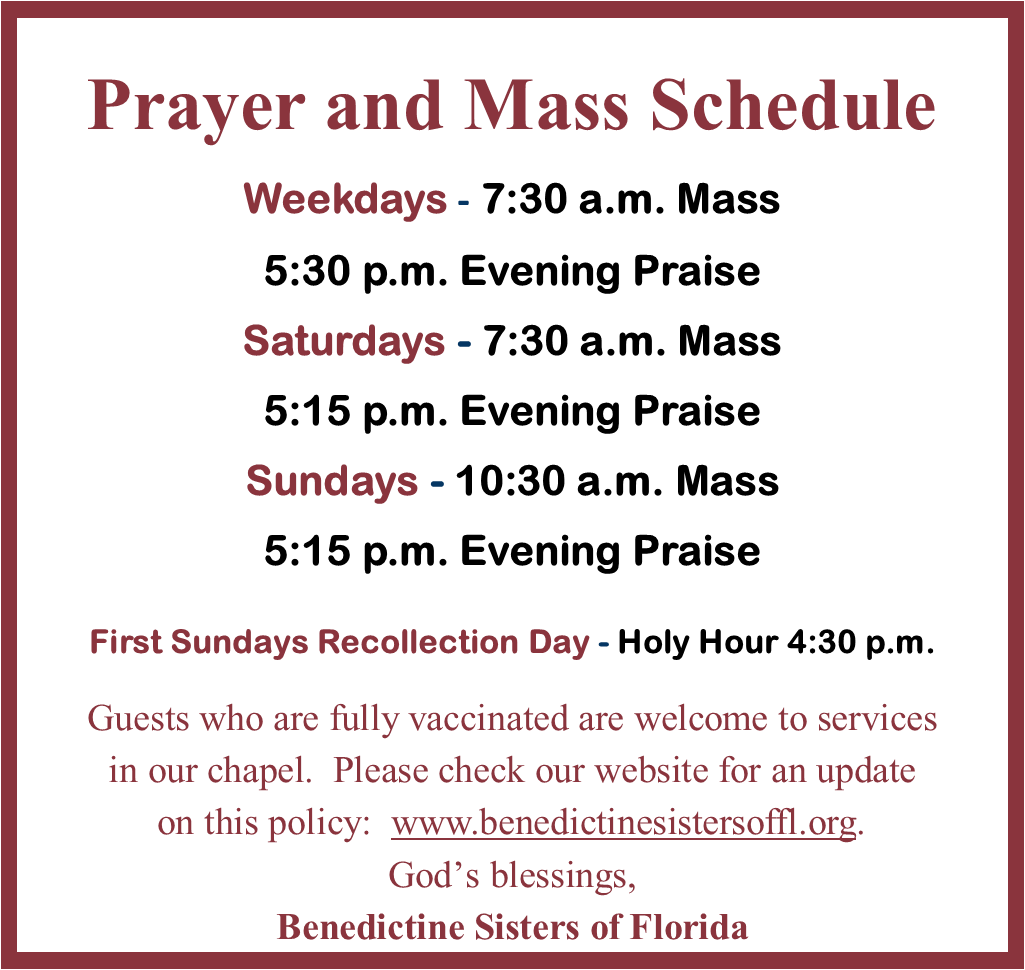
 Mass Schedule

Related Links

Copyright © 2026 · Benedictine Sisters of FL · Touching Lives Through Prayer and Service

Copyright © 2026 · Bendedictine Theme on Genesis Framework · WordPress · Log in