• Skip to primary navigation
  • Skip to main content
  • Skip to footer
Benedictine Sisters of FL

Holy Name Monastery
Founded 1889

Donate Now
  • Home
  • About Us
    • History
    • Being Benedictine
    • Benedictine Monasticism
    • Meet Our Community
    • Holy Name Academy-Alumnae
  • What We Do
    • Mission, Vision and Our Partners
    • Retreats
      • Invitation to Retreat
      • Accommodations
    • Volunteer Programs
    • Oblate Program
    • Spiritual Direction
    • Aqua/Hydroponics
    • More of Our Ministries
  • What’s Happening
    • Articles of Interest
    • Events
    • Commemorative Bricks
    • Newsletters
    • Brochures
    • Links
  • Support Us
    • Gifts of Support
    • Wish List
  • Stories Shared
  • Galleries
    • Photos
    • Videos
      • Benedictine Sisters of FL Videos
      • Other Videos
  • Contact Us

Luke

Righteousness

October 24, 2022 by Holy Name Monastery Leave a Comment

It is important to note at the outset of this particular reading just who it is that Jesus is addressing.  Luke says: “Jesus told this parable to some who were convinced of their own righteousness and despised everyone else.”

But, then there’s this.  Elsewhere in Scripture, Proverbs tells us: “To do righteousness is more acceptable to the Lord than sacrifice” and “Blessings are on the head of the righteous.”  Turning to Isaiah we read: “The work of righteousness will be peace, and the effect of righteousness, quietness and assurance forever.

So, why does Jesus seem to be criticizing the righteous one?  One little word makes the difference.  Jesus is talking to the self-righteous; those who trust in themselves. They’re a little too sure they are right and anyone who thinks differently must be wrong.  They (or is it we?) are so full of self that there’s little room for God’s grace to filter in.

It’s interesting when you think about it. Everything the Pharisee says is true. He has set himself apart from others by his faithful adherence to the law. He is, by the standards of his day, a righteous man.   It isn’t that the Pharisee is speaking falsely, but rather that the Pharisee misses the true nature of his blessing. As Luke says, he has trust in himself. His prayer of gratitude may be addressed to God, but it is really about himself. He credits his righteousness entirely to his own actions.

The tax collector, on the other hand, does not even raise his eyes to heaven.  He knows that he possesses no means by which to claim righteousness. He declares he has done nothing of merit. So, he stands back, hardly daring to approach the Temple, and throws himself on the mercy of the Lord.  He seems not so much humble as desperate.  He stakes his hope entirely on the mercy of God.

At the end of the day, the Pharisee will leave the Temple and return to his home the same virtuous, honorable man he was when he came to the temple.  That hasn’t changed.  The Pharisee’s mistake, as Scott Peck says, is that he thinks that whenever he wants, he can pull “God out of his hip pocket.”   On the other hand, the tax collector will go back to his home exalted in God’s eyes because he humbled himself.

If you’re spiritually alive, and give credit where credit is due, you’re going to love this take on the parable.  If you’re spiritually dead, you won’t even want to hear it.  If you’re spiritually curious, there is still hope!

A Church goer wrote a letter to the editor of his hometown newspaper and complained that it made no sense to him at all to go to church every Sunday.  He wrote: “I’ve gone for 30 years now, and in that time I have heard something like 3,000 sermons, but for the life of me, I can’t remember a single one of them.  So, it’s been a waste of my time on my part and on the part of homilists who are wasting their time by giving sermons at all”.

This started a real controversy in the “Letters to the Editor” column.  Much to the delight of the editor, it went on for weeks until someone wrote a real clincher:  “I’ve been married for 30 years now. In that time my wife has cooked some 32,000 meals. But, for the life of me, I cannot recall the entire menu for a single one of those meals.  But I do know this: they all nourished me and gave me the strength I needed to do my work.   If my wife had not given me those meals, I would be physically dead today.”

We might say: I’ve been in community x number of years.  In that time, I’ve been nourished and supported by my Sisters thousands of times in hundreds of different ways. But sadly, I can only recall a few, if any, instances in full detail. This much I DO know: without their support my spirit would have withered long ago.  Likewise, if I had not gone to Mass and been faithful to my time of private and communal prayer, I would be spiritually dead today!


~by Sister Roberta Bailey, OSB


First Reading  Sirach 35:12-14,16            
Second Reading  2 Timothy 4:6-8,16-18    
Gospel Reading  Luke 18:9-14
Continue Reading

Filed Under: Blog, Front Page, Homily Tagged With: God, Isaiah, Jesus, Lord, Luke, Pharisee, Proverbs, righteousness, tax collector, temple

Leadership

September 19, 2022 by Holy Name Monastery Leave a Comment

This parable, like many of Jesus’ folksy stories, is challenging to explain.  “Make friends for yourselves with dishonest wealth… “  (Luke 16:9)  But since it came from the mouth of God’s own Son it must be important for us to grapple with.  Our application is shaped and colored by the Scripture readings we had this past week and the section of the Holy Rule read each day at Evening Prayer.  (Chapter 2 Qualities of the Superior)

The Gospel tells us if we can’t be trusted in little matters we certainly cannot be trusted with great ones. Now don’t go figuring that you are not a leader in a Benedictine community because each is a leader in her own realm. It could be tempting to breeze through Benedict’s Chapter 2 with an attitude of “ho hum” – that’s for her, glad it’s not me and I hope she is listening.

To say that Benedict holds high standards for the superior may be an understatement.  Notice he places the chapter on leadership qualities early in the Rule, only after he defines the type of monastic for whom he is writing.  We know he is writing about the qualities of the leaders of the “strongest kind of monastics”; the ones who have chosen to live under a Rule and a monastic leader.

Benedict may have left it unsaid in Chapter 2, but he sprinkles exhortations about qualities of leadership for all the members elsewhere in the Rule.  Benedict echoes Jesus when he presses home that the “person who is dishonest in very small matters will also be dishonest in great ones.”  It does not require a great leap to apply this saying to all of us – the youngest or newest in community to the eldest and more seasoned member.

Benedict is waving a banner before our eyes of what each of us always need to be so that a call to leadership does not cause an abrupt change of lifestyle.  Benedict knew from his own experience that the leader’s role in community is time-limited.  He himself had experienced both a call to leadership and a call to a hermit’s life.  He must have foreseen, perhaps with a nudge from Scholastica, that the monastic must be prepared in all aspects of her life to move in and out of leadership roles.

If the individual member does not faithfully engage in a life-long endeavor to develop the attitudes, skills, and qualities that Benedict lays out for the superior, guess what?  An election or appointment to a leadership position will not ipso facto endow a generous, caring disposition.  If a person has not learned to be accountable for her own actions (or at least tried to be), and to be solicitous of others, an imposition of hands, a community affirmation, or a bishop’s blessing will not infuse the gift of saintliness.

Do you recall the lesson of the geese who fly in “V” formation?  As each bird flaps its wings, it creates an uplift for the bird following it.  [Drivers on I-75 try to take advantage of this dynamic by traveling in the tail wind of a semi.]  Combined, the whole flock of geese adds 71% greater flying range than if one flew alone.  Whenever a goose falls out of formation, it suddenly feels drag and resistance and quickly gets back into formation.  When the lead goose gets tired, it rotates back into the formation and another goose flies at the point position.   The geese in the formation honk from behind to encourage those in front to keep up their speed.

Benedict smiles upon the leaders in community, consoling them with the fact that they do not lack resources.  He quotes Psalm 33: “Those who fear God lack nothing.”  In helping others, the leader achieves the amendment of her own faults.  Benedict does not mention, but I bet he knew, the gratifying support the superior receives daily in unpretentious, quiet affirmations from individual members.  Like the story of the geese, when the leader is “shot down” by illness, or by words or attitudes in monastic life, individual members drop out of formation to help, protect, and reaffirm the leader until she is either able to again take the lead or fly in formation with the other members.

Jesus reminds us in the parable in the Gospel that, in the end, it doesn’t matter when you came into community, parenthood or ministry of any sort.  The reward for putting your hand to the plow will be the same: a day’s work in the kingdom for God’s daily wage.  The last will receive the same as the first.   It’s been that way for all eternity.  We’ll find when we get there (I’m guessing) that our view from the mansion God is saving for each of us is just as magnificent as that of Moses and Adam and Eve and our favorite saints: Everyone’s mansion has a “throne-side view” of heavenly glory.


~by Sister Roberta Bailey, OSB


First Reading  Amos 8:5-7     
Second Reading  1 Timothy 2:1-8
Gospel Reading  Luke 16:1-13
Continue Reading

Filed Under: Blog, Front Page, Homily Tagged With: Bendict, Benedictine Rule, God, Jesus, leadership, Luke, Qualities, Rule, The Rule

Humble Yourself the More, the Greater You Are

August 29, 2022 by Holy Name Monastery Leave a Comment

Yesterday’s reading from Sirach addresses us thus: “My child, conduct your affairs with humility.  Humble yourself the more, the greater you are. And you will find favor with God.”  So, how can one develop humility without becoming proud of how humble you are?

In practical everyday terms how can we recognize this amazing quality of humility?  How can you develop this wonderful trait?  We know we can quickly spot what it is NOT.  It is not judgmental, does not have room for vanity.  The one who is humble is not self-consumed, is not a door mat, is not rough with others but treasures and respects the value of all persons.

Benedict, in the Prologue and opening chapters of the Rule, prescribes humility as an essential quality of monastics in community.  He speaks of the necessity for humility for the superior and sub-prioress, the artisans, the cellarer, the readers, visiting clerics and relationships with each other in community.  He helps us recognize the role of humility in perfect love when we make satisfaction for mistakes, for broken dishes and tools, in our acceptance of what the cook offers and what the superior supplies for the members, when we consciously blend voices with others in communal prayer and graciously receive guests who share our monastic space.

Let’s look at three proven hindrances to growth in humility.

PRIDE – which focuses on self rather than others.  Listen to yourself.  How often do you start a conversation with “I”?

INSECURITY and/or OVER-CONFIDENCE – Both are forms of unhealthy self-centeredness and oppose humility because these people spend too much time “navel gazing” – examining themselves. Can you graciously digest criticism and suggestions without scrambling to justify your action or point a finger at what someone else did?  Do you smile and accept a compliment without downplaying its value with a comment like: “This old dress?  I got it long ago at Daystar.” or “Oh, it was nothing. There’s an app that does all the work.”   “The project turned out OK but it wasn’t my best.”

SELFISHNESS – As long as you focus exclusively on your own perceived personal needs and desires – forget the idea of humility – it will only be a distant dream.  Remember Benedict’s advice: “Pursue what you judge better for someone else, love humbly and prefer nothing whatever to Christ.”

The practice of humility begins in little everyday ways:

+  The words we speak: no boasting, bragging or pushing your opinion down others’ throats.

+ The way you treat others: not looking for choice places at table or seeking to rub shoulders with only the rich and famous but treating each person as one of value.

+ How you treat yourself. The humble person values herself and her abilities.  She does not spoil herself, is not self-centered; refrains from superficial behavior, is not obsessed with her appearance, her likes and dislikes, her opinions or material possessions.

What begins as a single humble act multiplies, and becomes a life-long, positive habit that impacts not only your own life, but the lives of those around you.

So, in real life what does humility look like?

  • Humble people handle challenging situations with a sense of peace because they RESPOND rather than REACT to life’s challenges.
  • The humble person focuses on service to others and not her own problems, weaknesses, health or likes and dislikes.
  • Humble people are good at networking because they attract others by making them feel comfortable, wanted and valued.
  • Humble people are wise because they listen well, do not speak impulsively and value what words they do share.
  • Humble persons are perceived as trustworthy because their goals are not self-motivated.
  • Humble persons create loyalty because they take pleasure in the successes of others.

It goes without saying that practice of humility requires sacrificing pride and moving out of your “comfort zone.”  It takes a complete a turn-around from self-centeredness.  Humility is not popular in today’s world so dare to be different.  The benefits are worth any cost: healthier relationships, mutual respect, wisdom and a quiet peace.


~by Sister Roberta Bailey, OSB


First Reading  Sirach 3:17-18, 20, 28-29      
Second Reading  Hebrews 12:18-19;22-24
Gospel Reading  Luke 14: 1, 7-14
Continue Reading

Filed Under: Blog, Front Page, Homily Tagged With: favor with God, greater you are, hebrews, humble, humble yourself, humility, Luke, Rule, Rule of Benedict, Sirach

Knock at the Door Saying “Lord, Open to Us”

August 22, 2022 by Holy Name Monastery Leave a Comment

This Gospel from Luke’s memory, it seems to me, is one of those times when Jesus takes a circular route to answer a question from the crowd.  Instead of a direct answer Jesus seems to be avoiding the question.  Did He consider it of no merit?  Or was He giving us time to let the answer we’d heard before rise to the surface? If we place the question in the Gospel side by side with the words of Isaiah in the first reading, we’ll realize how generous divine hospitality is. The question from the crowd was, “Will only a few people be saved?”   We find reassurance spoke through the mouth of the prophet Isaiah. “I come to gather peoples of every language, from the distant coastlands, from all nations, brothers and sisters.”

Jesus gets to the crux of the question by telling the hearers not to be headcounters but to be personally concerned how to be saved.  Enter through the narrow gate, be strong when you knock, make your presence known at the Lord’s banquet table!   Make friends with the prophets, associate with people from every corner of the world and don’t be concerned with where you are in line.  This past week we heard Jesus say that the first shall be last; the last will get the same reward as those who signed on to Jesus’ work crew early in the day.  So, you don’t need to call DIBS on first place in line.  The important thing is to be IN the line.

Saying “be in the line” brings a flashback of how expressions can have different meanings especially to young children and language learners.  At the beginning of a new term, when I would direct the youngsters “line up to go to outside” I could find those new to the group in the middle of the classroom quietly waiting on the taped story-time circle on the floor, or near the clothesline in the housekeeping area looking puzzled at the children gathered near the exit door.  Lesson: be sure you know which is the line where Jesus will be looking for you to join.

Tomorrow’s reading from Paul’s Letter to the Hebrews offers us some tips to prepare for the heaven’s entry door: do not lose heart, joyfully accept discipline, strengthen your drooping hands and your weak knees; straighten your crooked paths, be careful not to turn your ankle or trip up anyone else.   Jesus expands the picture. He says people will come from the east and the west, the north and the south.  This connects with our prayer intention for this week: God’s blessing on the new school year at Saint Leo University.  We pray for the students coming from all over the U.S. and from several foreign countries; for the administration, the faculty and staff; the board, donors and patrons.

Jesus’ answer to the crowd lets us know that the “door of opportunity” will not remain open indefinitely.  Remember Jesus said: “When once the head of the house has risen and shut the door, you begin to stand outside and to knock at the door, saying, ‘Lord, open to us’.  When the door is closed, it is closed and will not be reopened for persons whose only claim is a false one of entitlement that Jesus once visited their temple, their church or chapel, their town or village or preached in their streets or that they once saw Jesus in a crowd.   Remember the 10 virgins?  Five missed the boat due to a lack of future planning, having a Plan B and foreseeing consequences.

The gift of the Open Door is pure gift. Have we had sincere encounters that He will he answer us, ‘I do not know where you come from.”  It’s best not to delay your planning to be among the chosen. Don’t put off to tomorrow what can be done today.  Lectio and personal prayer; some form of fasting whether from food, or technology or juicy gossip is a daily opportunity.  And, look again at what Isaiah instructs us to do: “Bring all your brothers and sisters from all the nations as an offering to the Lord.”  In the words of the Responsorial Psalm: “Steadfast is the kindness of the Lord toward us, and the fidelity of the Lord endures forever.”

~by Sister Roberta Bailey, OSB


First Reading  Isaiah 66:18-21    

Second Reading  Hebrews 12:5-7, 11-13
Gospel Reading  Luke 13:22-30

Continue Reading

Filed Under: Blog, Front Page, Homily Tagged With: Enter through the narrow door, hebrews, Isaiah, Knock at the door, Lord open to us, Luke

Stay Awake and Be Ready

August 8, 2022 by Holy Name Monastery Leave a Comment

It strikes me that the three readings for this weekend give us a powerful image of not only early Christian living but one that we can depend on to this day.

The first passage that jumped out is found in the aptly titled “The Book of Wisdom.”  We are let in on a secret: “the holy children of the good were offering sacrifice.”  In religious houses, in parishes, not just Catholics, but all over the world, God’s faithful are quietly, unpretentiously, without fanfare offering prayer and good deeds on behalf of all God’s people.  The author of the Book of Wisdom promises us thus: they are putting into effect with one accord the divine institution.

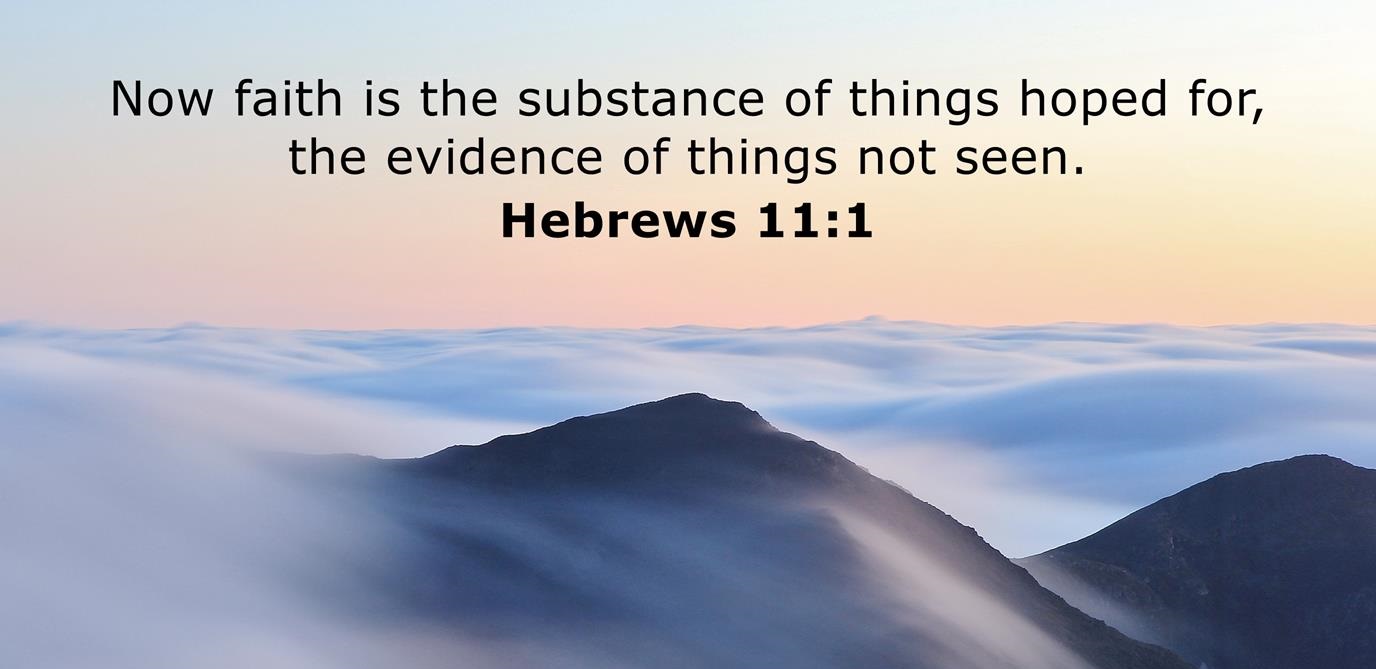
Paul reminds the Hebrews (and us) in tomorrow’s 2nd reading: Faith is the realization of what is hoped for, and evidence of things not seen. Here again we are reminded of quiet, unseen, out-of-the-limelight evidence of the “divine institution.”   Paul was referring to the folks traipsing through the desert ages before.  They must have had waves of hopelessness bolstered by waves of hope.  We are reassured by the hopeful words of Paul when he says to us: “They did not receive what had been promised but saw it and greeted it from afar.”  …  Margaret Wheatley in her book TURNING TO ONE ANOTHER describes hope this way: “Hope is not the conviction that something will turn out well, but the certainty that something makes sense regardless of how it turns out.”

How fitting it is that our community intention this week is that “all peoples of the world will be people of peace.”   May they, and all of us, live in hope confident that however things turn out, it makes sense in God’s plan.   Our daily stance must be words of the Gospel Acclamation: “Stay awake and be ready.”

The church offers the choice of dividing the Gospel passage into two sections.  It is the part that may be omitted that tells us: “Much will be required of persons entrusted with much.”  Luke couched that grim reminder with Jesus’ comforting words to his disciples: “Do not be afraid.”  We have been entrusted with so much, individually and collectively, that the words about the reciprocal demand could frighten us into inaction.  Our fears could make us feel that our feeble attempts to bring about peace and compassion and reconciliation are futile.  But we have the assurance of Jesus: Do not be afraid, for your Father is PLEASED to give you the kingdom.  God is more than willing – God is PLEASED to give us the kingdom.   Thus, we must take delight in receiving all that the kingdom has to offer.  Do not be afraid but do be prepared.  Stay awake!  Be prepared to see and greet the kingdom from afar.  Do not be afraid.


I will close with an excerpt of Nelson Mandela’s 1994 Inaugural Speech.

(Mandela’s words could be a homily in itself.)


Our deepest fear is not that we are inadequate.

Our deepest fear is that we are powerful beyond measure.

It is our light, not our darkness, that most frightens us.

We ask ourselves, who am I to be brilliant,

successful, talented and fabulous?

Actually, who are you not to be?

You are a child of God.

Your playing small doesn’t serve the world.

There’s nothing enlightened about shrinking

so that other people won’t feel insecure around you.

We were born to make manifest the glory that is within us,

It’s not just in some of us;

It’s in everyone.

And as we let our own light shine,

We unconsciously give other people permission to do the same.

As we are liberated from our own fear,

Our presence automatically liberates others.


~by Sister Roberta Bailey, OSB


First Reading  Wisdom 18:6-9      Second Reading  Hebrews 11:1-2, 8-19
Gospel Reading  Luke 12:32-48


Continue Reading

Filed Under: Blog, Front Page, Homily Tagged With: be ready, book of wisdom, Faith, hebrews, Jesus, Luke, Nelson Mandela, stay awake, stay awake and be ready

Rich Fool Parable

August 1, 2022 by Holy Name Monastery Leave a Comment

Teaching is not what Jesus did; it’s who he was

This Gospel sets us pondering what is important in our lives.  The man in the incident Luke describes holds a world view that is fairly exclusive, doesn’t he?  It’s just him and HIS things.  Now he’s shocked to learn that he is about to lose his life.  What good are his possessions going to be to him now?  Jesus makes his opinion quite plain.  “You fool!  This very night your life will be taken away.  To whom will everything belong then?!”

As the story goes, the man is disgruntled over a long-standing disagreement with his brother.  And it sounds like he thinks he is justified in his complaint.  So, he figures he will follow the customary practice of taking his dispute to the rabbi.  (Expecting the rabbi, of course, take his part and set his brother right.)  He further thinks maybe this new rabbi, the one he’s heard everyone talking about, won’t know about his reputation for pettiness.  Surely he will get a favorable settlement for the row against his brother.  But, surprise!  Jesus refuses to take the case.  Instead, Jesus gives the squabbling brothers a parable to “mull over”.

And, what’s the point of Jesus’ story?  It’s not even remotely related to the problem that the two brothers are having.  It features a wealthy landowner that doesn’t describe either of the siblings.  Then Jesus lumps the boys in the same pot as the landowner.  He calls them all “fools”.

Better take fair warning, Boys.  And all you other listeners, too.  There is danger in thinking this parable applies only to “those rich people.”  To put the matter more pointedly, thinking of those rich fools enables me NOT to think of myself as a “rich fool.”

This a lesson about covetousness and jealousy.  Envy is related but perhaps less “green.”  You’ve heard the expression “green with envy.”  Envy, like jealousy, is a desire to have what the other has but it’s maybe a little less “green”.  It’s a desire to ALSO have what the other has.  But not like jealousy wanting to have it INSTEAD of the other.  Envy says: “I wish I could go too.”  “I wish I could be as gentle and kind as she is.”  Envy does begrudge the gifts of the other.  It’s a prompt to imitate the others’ Christian example.

In this little parable Jesus probes our hearts.  “Where is your treasure?” he asks.  Don’t make the mistake that this farmer made.  Examine my story.   Just what is the farmer’s error.  He wasn’t wicked.  He didn’t gain his wealth illegally or by taking advantage of others.  He’s not particularly greedy.  So, what’s wrong with building larger barns, renting a storage unit, getting a POD in the back yard to store away some of today’s bounty for a leaner tomorrow?  This kind of thinking can lead us to ask: Is there anything wrong with hanging on to clothing we’ve outgrown but might wear again someday?  Or stockpiling furniture that serves only as a “catch all” because it’s just too nice to give away.  What about requesting more allowance than we actually need?  But, never finding a charity other than ourselves.  Or accepting, or worse asking for money gifts or gift cards from lay people giving them the impression that our community does not take care of our needs.  We might answer that none of this sounds so terribly wrong compared to the horrors of violence … except for two things.

Notice what the farmer’s consistent focus is.  “What should I do?  I have no place to store my crops?”  “I will do this: I will pull down my barns and build larger ones, and there I will store all my grain and my goods.”  It’s his relentless use of “I” and “my” that betray a preoccupation with self.  He’s fallen prey to worshiping the most popular of gods: the Unholy Trinity of “me, myself, and I.”  He gives no thought to using the abundance to help others.  This most likely is what leads to a second mistake: foolishness in thinking that making provision for the future; will secure one’s future.

Jesus used the opportunity as a “teachable moment.”  Life, he impresses upon us, does not consist in things; not even in having MANY things.  The farmer in the parable is a rich man, who fears that is not rich enough.  Jesus didn’t judge him; He did teach.  He was teaching all of us how to live.  To paraphrase President Joe Biden’s words in his speech at the Democratic convention, when he referred to his wife who was a teacher: “Teaching is not what Jesus did; it’s who he was.”

~by Sister Roberta Bailey, OSB


First Reading  Ecclesiastes 1:2; 2:21-23        Second Reading Colossians 3:1-5,9-11
Gospel Reading  Luke 12:13-21


Continue Reading

Filed Under: Blog, Front Page, Homily Tagged With: Jesus, Luke, parable, rich Fool, teaching, Teaching is not what he did it's who he was, who he was

  • « Go to Previous Page
  • Page 1
  • Page 2
  • Page 3
  • Page 4
  • Page 5
  • Page 6
  • Go to Next Page »

Footer

Prayer / Newsletter / Info

 Contact Info

Benedictine Sisters of Florida

PO Box 2450
12138 Wichers Road
St. Leo, FL 33574-2450
(352) 588-8320
(352) 588-8443

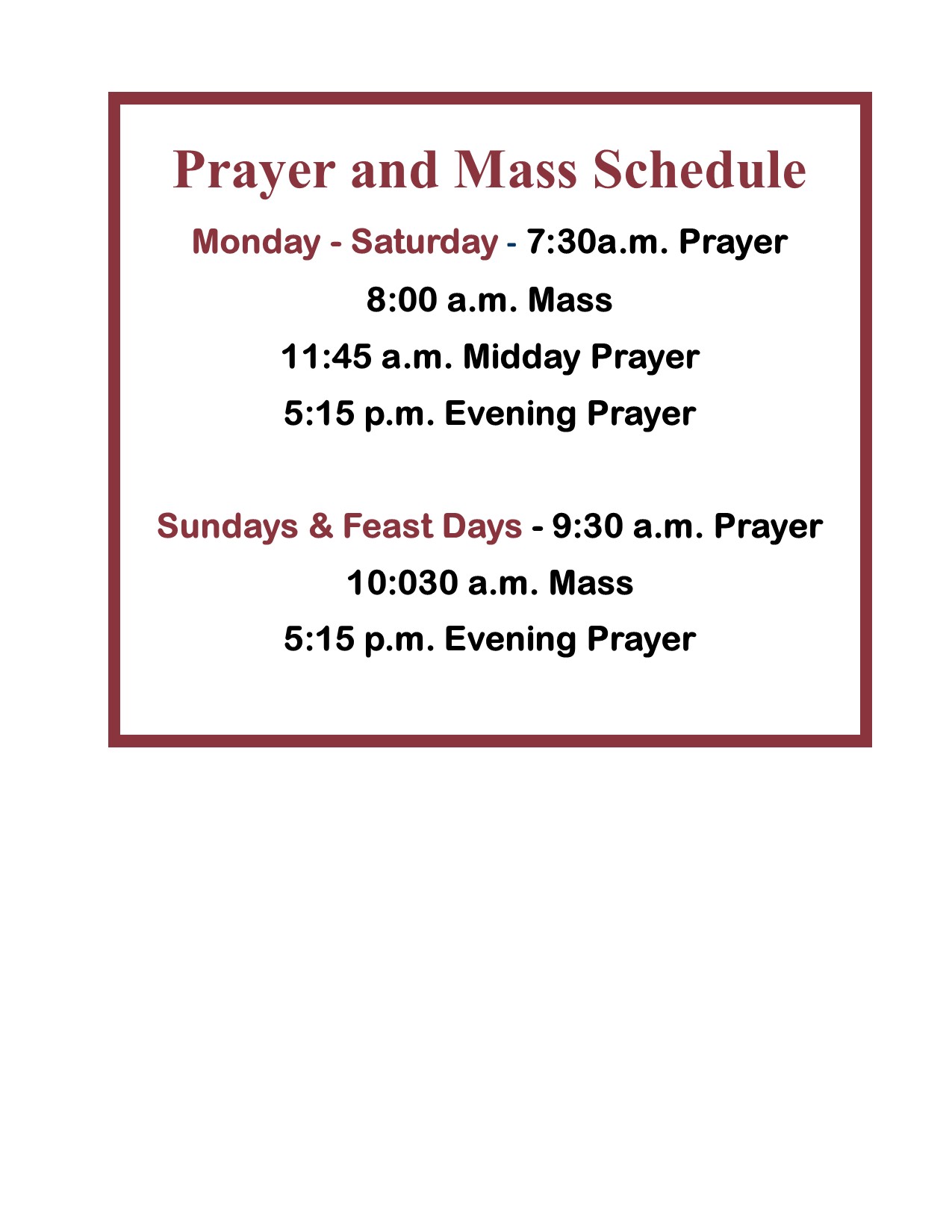
 Mass Schedule

Related Links

Copyright © 2026 · Benedictine Sisters of FL · Touching Lives Through Prayer and Service

Copyright © 2026 · Bendedictine Theme on Genesis Framework · WordPress · Log in