• Skip to primary navigation
  • Skip to main content
  • Skip to footer
Benedictine Sisters of FL

Holy Name Monastery
Founded 1889

Donate Now
  • Home
  • About Us
    • History
    • Being Benedictine
    • Benedictine Monasticism
    • Meet Our Community
    • Holy Name Academy-Alumnae
  • What We Do
    • Mission, Vision and Our Partners
    • Retreats
      • Invitation to Retreat
      • Accommodations
    • Volunteer Programs
    • Oblate Program
    • Spiritual Direction
    • Aqua/Hydroponics
    • More of Our Ministries
  • What’s Happening
    • Articles of Interest
    • Events
    • Commemorative Bricks
    • Newsletters
    • Brochures
    • Links
  • Support Us
    • Gifts of Support
    • Wish List
  • Stories Shared
  • Galleries
    • Photos
    • Videos
      • Benedictine Sisters of FL Videos
      • Other Videos
  • Contact Us

temple

You don’t need a building to represent God’s presence – God is ever near

November 10, 2025 by Holy Name Monastery Leave a Comment

Have you ever had the experience of talking to someone who is behind you?   You think you are having a really good conversation only to discover the other person has long since left the room or fallen asleep in the back seat.  Not long ago I experienced this when trying to converse with a friend as we walked down a long busy hallway.  What my friend did not realize was that someone had stepped between us while she continued speaking over her shoulder. “Let’s go into town tonight, find a good dancing place; maybe have a drink or two.”  Imagine her surprise when a male voice responded: “I’d like that – Is it OK if I bring my wife?”

That’s similar to what is happening in this Gospel story.  Folks are going through all kinds of activities directed to a God who has long stopped paying attention to all of their religious rituals, performances and pretenses.  What was taking place in the Temple was all the outward activity with none of the genuine reality. The motives had become mixed: it was much more about what they could get from the Temple rather than responding in gratitude for what God has done for them and their ancestors.

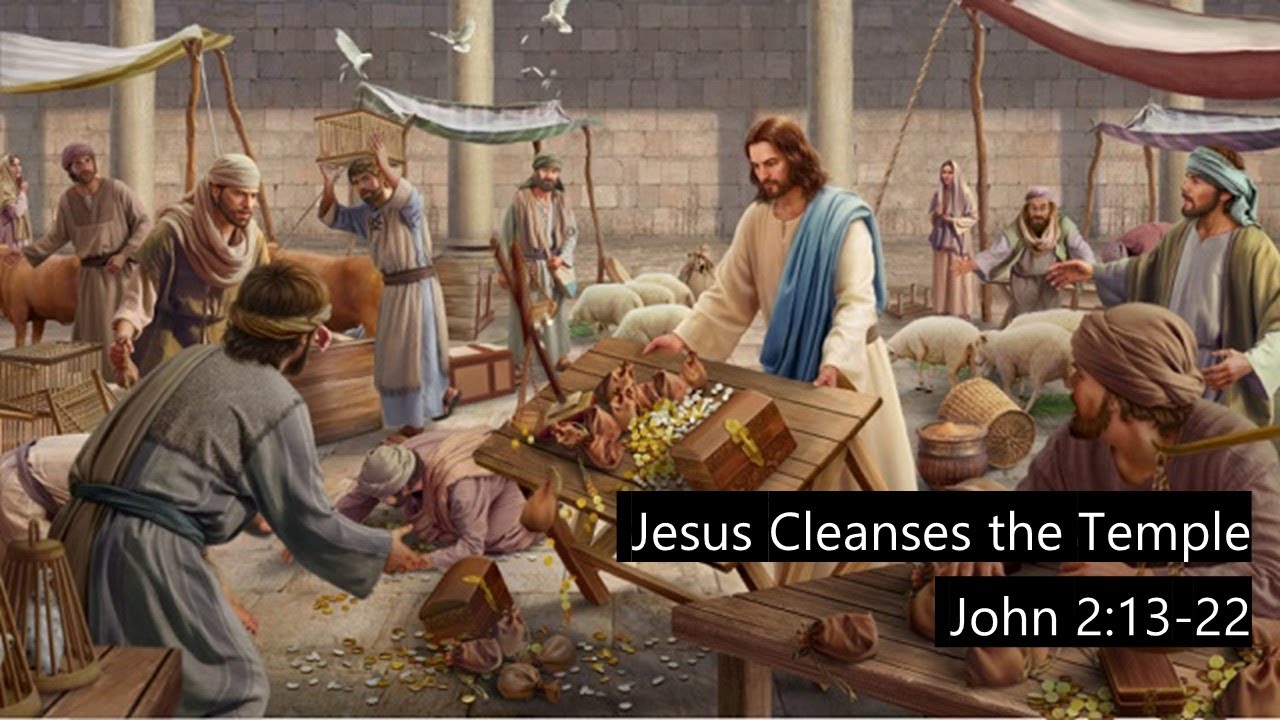
The picture here is not a gentle, soft-spoken Jesus – not the smiling Jesus calmly confronting the religious establishment with authoritative teaching and divine wisdom.  He does not ask the vendors to kindly remove their display tables outside the temple.  Nor does he ask the buyers to hold on to their money and put it in the donation basket.  Rather, he appears with His sleeves rolled up ready for a fight. He makes his own whip and chares through the heart of the religious establishment striking forcefully and aggressively at a religious system that has become skewed. Imagine it! Jesus is opening the cages of sheep, and doves with one hand, while, wielding a whip of cords in the other. He is driving animals and people alike into confusion and retreat.

The Jewish leaders ask Jesus for his credentials: what sign does he offer for taking this radical action?  Their demand is amazing but it seems a fair question.  They are checking what right He has to clear the Temple. Even among those who trusted Jesus, there is something that is not trustworthy. Jesus knew that even among those who believe, there is something fundamentally wonky. We are prone to get it wrong. Even among those who have true faith in Jesus, there is the possibility that we will let ritual replace reality.

Recall Jesus’ response to his critics in the temple?  “You want proof that I have the right to condemn religious pretension.   Let me give you the sign that I have the authority to condemn the Temple. You are going to kill me, and when you destroy me, I will raise it up again.” He is saying that resurrection is the ultimate authentication that he is who he says he is.  The religious leaders were incredulous.

He’s telling them and us: You don’t need a building to represent My presence because I am the connecting point between you and God.  In just a little more a month we will be celebrating Christmas and singing about Emmanuel, God with us. Authentic worship is not attached to Jerusalem or any other place. It is attached to Jesus. You / we won’t be making a pilgrimage to Jerusalem. But, we will be moving through Advent – a movement of the heart.  Turn away, Jesus says, from all that detracts from Me and our relationship.

So, if the Gospel message is that we don’t need a building to find and worship God, why are we celebrating the dedication a basilica today?  Parishes commemorate their founding dates but that’s usually a local celebration.  Why does the dedication of a building in a faraway city supersede the 32nd Sunday liturgy?  This church, the Lateran Basilica, not St. Peter’s, is a diocesan cathedral, the pope’s church, in his role as bishop of Rome.  It was built in the 4th century on donated land.  The structure has suffered fire, earthquake and ravages of war.  The present structure was commissioned 1200 years later, in 1646.  Beneath its high altar rests the remains of a small wooden table, on which according to tradition, St. Peter celebrated Mass.  The building may have been repaired and its role changed since the fourth century, but Jesus Christ remains its cornerstone.  This is our mother church, the spiritual home of the people who are the church.

Shortly before his death, Pope Francis give us insight into his concept of Church:

“I would like a more missionary church, not so much a tranquil church, but a beautiful church that goes forward in joy.”    At the opening of the Synod on the Family Pope Francis made it clear no question would be out of place, Discussion was not to be censored; no topics or questions were to be off the table. He wanted full, robust debate.   Then, in his closing remarks at the Synod he challenged the bishops with homework: “We still have one year to mature, to find concrete solutions to so many difficulties and innumerable challenges to confront; to give answers to the many discouragements that surround and suffocate.”

Our gospel is not a bedtime pretend story about some long-ago hypocritical religious leaders. It’s really our story too.  Our covenant relationship with Jesus, with God is not just about becoming a better version of ourselves through self-improvement.  It’s not about following a set of rules, reading the words of someone else’s prayers, being on our knees or sitting down, genuflecting or bowing.  It’s about becoming the best we can be – living to our full potential – not putting ourselves down in false humility or denying God’s free gifts to us.

A very real question is whether we believe that the resurrection fact or fiction?  Do we truly believe the sign that Jesus gives us, that He rose after three days buried in the earth?   If you believe He did, then we need to pay attention, because this is no ordinary man.  Let us, pray, then THAT our community, that every community of faith gathering to worship, may go forth from church buildings into their everyday lives to share their faith and resources with those in need.

~Reflection by Sister Roberta Bailey, OSB


First Reading:   Ezekiel 47:1-2,8-9,12        Second Reading:  1 Corinthians 3:9-13,16-17
Gospel:   John 2:13-22
Continue Reading

Filed Under: Blog, Front Page, Homily Tagged With: building, God, God's presence, Gospel, Jesus, leaders, Pope Francis, temple

Mercy Over Merit

October 27, 2025 by Holy Name Monastery Leave a Comment

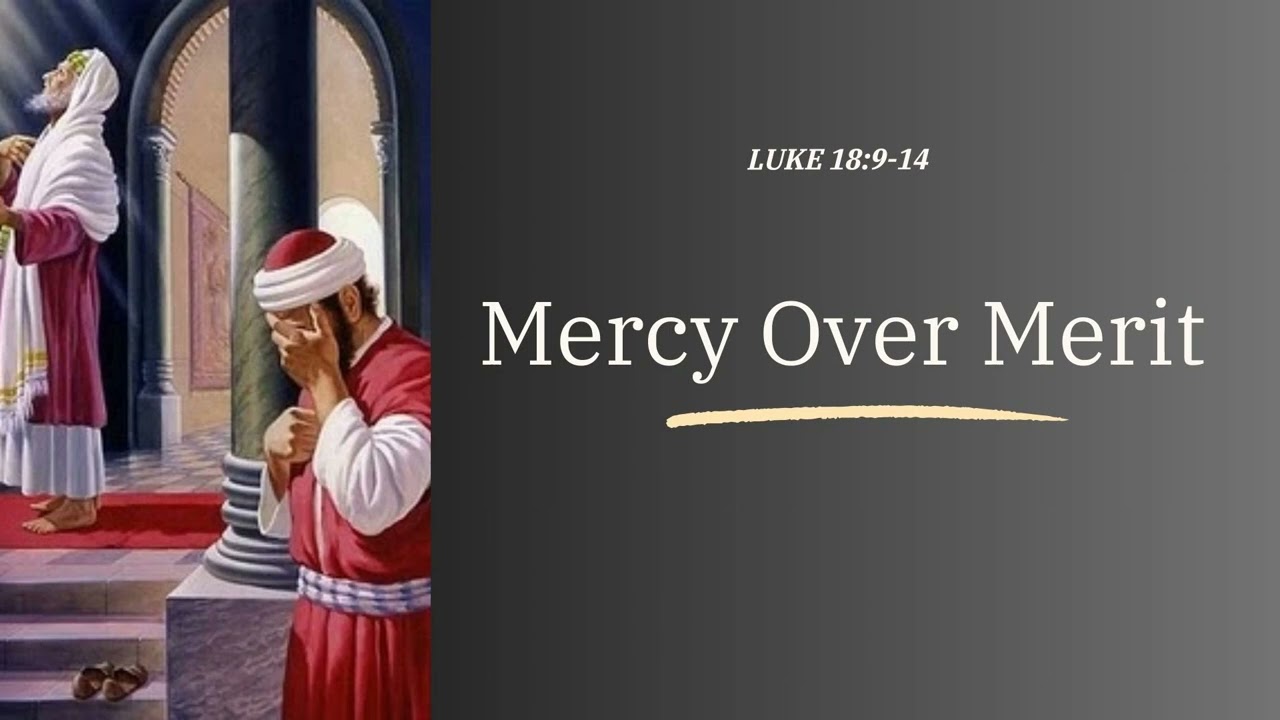
It is important to note at the outset of this particular reading just who it is that Jesus is speaking to.  Luke says: “Jesus told this parable to some who trusted in themselves that they were righteous and treated others with contempt.”

But, then there’s this.  Elsewhere in Scripture, Proverbs tells us: “To do righteousness is more acceptable to the Lord than sacrifice” and “Blessings are on the head of the righteous.”  Turning to Isaiah we read: “The work of righteousness will be peace, and the effect of righteousness, quietness and assurance forever.”

So, why does Jesus seem to be criticizing the righteous one?  One little word makes the difference.  Jesus is talking to the self-righteous; those who trusted in themselves. They’re a little too sure they are right and anyone who thinks differently must be wrong.  They (or is it we?) are so full of self that there’s little room for God’s grace to filter in.

It’s interesting when you think about it that everything the Pharisee says is true. He has set himself apart from others by his faithful adherence to the law. He is, by the standards of his day, a righteous man.   It isn’t that the Pharisee is speaking falsely, but rather that the Pharisee misses the true nature of his blessing. As Luke says he has trust in himself. His prayer of gratitude may be addressed to God, but it is really about himself. He credits his righteousness entirely in his own actions.

The tax collector, on the other hand, does not even raise his eyes to heaven.  He knows that he possesses no means by which to claim righteousness. He declares he has done nothing of merit. So, he stands back, hardly daring to approach the Temple, and throws himself on the mercy of the Lord.  He seems not so much humble as desperate.  He stakes his hope entirely on the mercy of God.

At the end of the day, the Pharisee will leave the Temple and return to his home the same virtuous, honorable man he was when he came to the temple.  That hasn’t changed.  The Pharisee’s mistake, as Scott Peck says, is that he thinks that whenever he wants, he can pull “God out of his hip pocket.”   On the other hand, the tax collector will go back to his home exalted in God’s eyes because he humbled himself.

If you’re spiritually alive, and give credit where credit is due, you’re going to love this take on the parable.  If you’re spiritually dead, you won’t even want to hear it.  If you’re spiritually curious, there is still hope!

A Church goer wrote a letter to the editor of his hometown newspaper and complained that it made no sense to him at all to go to church every Sunday.  He wrote: “I’ve gone for 30 years now, and in that time I have heard something like 3,000 sermons, but for the life of me, I can’t remember a single one of them.  So, it’s been a waste of my time and on the part of homilists a waste of their time by giving sermons at all”.

This started a real controversy in the “Letters to the Editor” column.  Much to the delight of the editor, it went on for weeks until someone wrote a real clincher:  “I’ve been married for 30 years now. In that time my wife has cooked some 32,000 meals. But, for the life of me, I cannot recall the entire menu for a single one of those meals.  But I do know this: they all nourished me and gave me the strength I needed to do my work.   If my wife had not given me those meals, I would be physically dead today.”

We might say: I’ve been in community x number of years.  In that time, I’ve been nourished and supported by my Sisters thousands of times in hundreds of different ways. But sadly, I can only recall a few, if any, instances in full detail. This much I DO know, without their support my spirit would have withered long ago.  Likewise, if I had not gone to Mass and been faithful to my time of private and communal prayer, I would be spiritually dead today!

~Reflection by Sister Roberta Bailey, OSB


Sending from home of OSB sisters in Pittsburgh PA where I am on vacation for a month – sunny 43 degree, some Fall colors.

Unsure if for next few weekends will be sending reflections …  Know that I will remembering you and your intentions in prayer.


First Reading:   Sirach 35:12-14, 16-18         Second Reading:  2 Timothy 4:6-8, 16-18
Gospel:   Luke 18:9-14
Continue Reading

Filed Under: Blog, Front Page, Homily Tagged With: God, Jesus, Luke, mercy, Mercy over merit, merit, Pharisee, Pharisees, temple

Righteousness

October 24, 2022 by Holy Name Monastery Leave a Comment

It is important to note at the outset of this particular reading just who it is that Jesus is addressing.  Luke says: “Jesus told this parable to some who were convinced of their own righteousness and despised everyone else.”

But, then there’s this.  Elsewhere in Scripture, Proverbs tells us: “To do righteousness is more acceptable to the Lord than sacrifice” and “Blessings are on the head of the righteous.”  Turning to Isaiah we read: “The work of righteousness will be peace, and the effect of righteousness, quietness and assurance forever.

So, why does Jesus seem to be criticizing the righteous one?  One little word makes the difference.  Jesus is talking to the self-righteous; those who trust in themselves. They’re a little too sure they are right and anyone who thinks differently must be wrong.  They (or is it we?) are so full of self that there’s little room for God’s grace to filter in.

It’s interesting when you think about it. Everything the Pharisee says is true. He has set himself apart from others by his faithful adherence to the law. He is, by the standards of his day, a righteous man.   It isn’t that the Pharisee is speaking falsely, but rather that the Pharisee misses the true nature of his blessing. As Luke says, he has trust in himself. His prayer of gratitude may be addressed to God, but it is really about himself. He credits his righteousness entirely to his own actions.

The tax collector, on the other hand, does not even raise his eyes to heaven.  He knows that he possesses no means by which to claim righteousness. He declares he has done nothing of merit. So, he stands back, hardly daring to approach the Temple, and throws himself on the mercy of the Lord.  He seems not so much humble as desperate.  He stakes his hope entirely on the mercy of God.

At the end of the day, the Pharisee will leave the Temple and return to his home the same virtuous, honorable man he was when he came to the temple.  That hasn’t changed.  The Pharisee’s mistake, as Scott Peck says, is that he thinks that whenever he wants, he can pull “God out of his hip pocket.”   On the other hand, the tax collector will go back to his home exalted in God’s eyes because he humbled himself.

If you’re spiritually alive, and give credit where credit is due, you’re going to love this take on the parable.  If you’re spiritually dead, you won’t even want to hear it.  If you’re spiritually curious, there is still hope!

A Church goer wrote a letter to the editor of his hometown newspaper and complained that it made no sense to him at all to go to church every Sunday.  He wrote: “I’ve gone for 30 years now, and in that time I have heard something like 3,000 sermons, but for the life of me, I can’t remember a single one of them.  So, it’s been a waste of my time on my part and on the part of homilists who are wasting their time by giving sermons at all”.

This started a real controversy in the “Letters to the Editor” column.  Much to the delight of the editor, it went on for weeks until someone wrote a real clincher:  “I’ve been married for 30 years now. In that time my wife has cooked some 32,000 meals. But, for the life of me, I cannot recall the entire menu for a single one of those meals.  But I do know this: they all nourished me and gave me the strength I needed to do my work.   If my wife had not given me those meals, I would be physically dead today.”

We might say: I’ve been in community x number of years.  In that time, I’ve been nourished and supported by my Sisters thousands of times in hundreds of different ways. But sadly, I can only recall a few, if any, instances in full detail. This much I DO know: without their support my spirit would have withered long ago.  Likewise, if I had not gone to Mass and been faithful to my time of private and communal prayer, I would be spiritually dead today!


~by Sister Roberta Bailey, OSB


First Reading  Sirach 35:12-14,16            
Second Reading  2 Timothy 4:6-8,16-18    
Gospel Reading  Luke 18:9-14
Continue Reading

Filed Under: Blog, Front Page, Homily Tagged With: God, Isaiah, Jesus, Lord, Luke, Pharisee, Proverbs, righteousness, tax collector, temple

Are you “braver than most or else just silly?”

March 8, 2021 by Holy Name Monastery Leave a Comment

Today we get a different, maybe a little amusing image of Jesus – Jesus the housekeeper.  How do you know when it’s time to clean house, to clean your space?  Maybe you’ve become aware that the cup supply in the dining room is getting low and you come to the realization that YOU know where the missing cups are.  Or you’ve had that library book on your desk for a year or more.  Or what about the stack of valuable handouts from 2014?  Or your laundry hamper won’t hold one more sock.  Or there are enough dust bunnies under your bed to help God create another person from dust.  And, what about your Lenten resolutions?  Are they the same ones you’ve recycled year after year or do you discern the signs of the times and sweep with Jesus’ “whip of cords”?

This story from John’s Gospel is about a day when Jesus did some housecleaning in the temple.  It’s a pretty famous story, they say, of Jesus’ anger yet none of the gospel writers actually use the word “anger.”  The word used translates closer to “consumed with zeal.”  And have you noticed when the evangelists speak of this and similar occasions nobody else seems to be upset.  Jesus is the only one who’s acting out.  And when the crowd, his naysayers are riled up, Jesus remains unruffled.  John really doesn’t say Jesus was angry.  He says his disciples recalled the scripture verse: “Zeal for your house will consume me.”

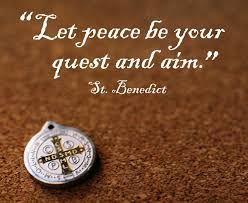
What can we learn from this?  First, we have to understand that anger is an automatic response that rises up in us.  Rightly directed anger can serve a good purpose; it’s a call for change.  If we stuff our anger, and blow up later at someone who has no clue what set us off, who’d want to be our friend?  You won’t find a proverb in Scripture; and nowhere in the Rule of Benedict does it say: “Don’t get angry.”  One of Benedict’s Tools of Good Works tells us: “do not act in anger” and in the Prologue he cautions: Keep your tongue free from vicious talk and your lips from all deceit … let peace be your quest and aim.”

To understand Jesus’ action that day in the temple, it helps to have an understanding of how important motivation is.  It was not wrong for the merchandisers to sell animals and doves.  Nor was it wrong to change money.  That was helpful to the people who came unprepared to the temple.  They’d grown to depend on the availability of such services.  Much like people today have come to expect businesses to take credit/debit, on-line payments.  Sit up and take notice:  no one stopped Jesus when he used his whip of cords: not the temple guards, not the priests, not the sellers, not the buyers, not anyone.  And the Gospel writer doesn’t say Jesus did bodily harm to anyone.  He overturns tables, He spills the money and He swings the whip of cords and scatters THINGS.

Everyone present, except maybe the disciples, seem to overlook the display.  They’re like a child who has witnessed the fury of a disappointed parent.  Then reaches out to take mom’s hand, looks up calmly and asks: “So, Mom, are we still going to McDonald’s?”  The Jews do ask, “What sign can you show us for doing this?”  The disciples must have shaken their heads in amazement.  What does that have to do with what just happened???”  They’d remember later, when Jesus was raised from the dead, what he had said on this occasion.  But for today, all the Jews wanted to know was by what authority Jesus interrupted the activity in the temple.  They didn’t ask why Jesus cleansed the temple because they knew they were guilty of wrong-doing.

John tells us in the days after Jesus display of authority, many began to believe in his name.  But still he did not trust Himself to them.  It is to us that He entrusts Himself, in Word and Sacrament.  He trusts us to act in moral outrage against injustice, abuse and violence.  To pay attention to the needs around us, of God’s people.  To be aware when are we asked for action beyond a petition at Mass.  When He asks, will we be ready for action?  Will He find cause to do some clearing and cleaning?

In one of the Narnia chronicles by CS Lewis’ The Lion, the Witch, and the Wardrobe, the story reminds us that the divine-human struggle is neither tidy nor tame, but it is nonetheless one that we can live with in confidence.  The story’s characters, Susan and Lucy, ask Mr. and Mrs. Beaver to describe Aslan (Lewis’ representation of Jesus).  They ask if Aslan is a man.  Mr. Beaver replies, “Aslan a man?  Certainly not.  I tell you he is the King of the wood and the son of the great Emperor-beyond-the Sea.  Don’t you know who is the King of Beasts?  Aslan is a lion — the Lion, the great Lion.”  “Ooh!” said Susan.  “I’d thought he was a man.  Is he — quite safe?  I shall feel rather nervous about meeting a lion.”  “That you will, dearie, and make no mistake,” said Mrs. Beaver, “if there’s anyone who can appear before Aslan without their knees knocking, they’re either braver than most or else just silly.”

After the cleansing of the temple entryway Jesus disappeared for a few hours.  The witnesses might have lost some sleep trying to figure out the meaning of it, but they set out once again looking for him – asking for more signs and looking for miraculous bread.  Jesus tells them there will be no more signs.  It’s time to wake up and “read the signs.”

~Reflection by Sister Roberta Bailey, OSB, Prioress


March 8th – 12th is Catholic Sisters Week.

Kindly remember us in your thoughts and prayers.


First Reading Exodus 20:1-17                      Second Reading  1 Corinthians 1:22-25   
Gospel Reading  John 2:13-25
Continue Reading

Filed Under: Blog, Front Page, Homily Tagged With: anger, Catholic Sisters Week, housecleaning, Jesus, John's Gospel, March 8th-12th, Narnia, Narnia chronicles, Peace, temple, Tools of Good Works, zeal

Footer

Prayer / Newsletter / Info

 Contact Info

Benedictine Sisters of Florida

PO Box 2450
12138 Wichers Road
St. Leo, FL 33574-2450
(352) 588-8320
(352) 588-8443

 Mass Schedule

Related Links

Copyright © 2026 · Benedictine Sisters of FL · Touching Lives Through Prayer and Service

Copyright © 2026 · Bendedictine Theme on Genesis Framework · WordPress · Log in