• Skip to primary navigation
  • Skip to main content
  • Skip to footer
Benedictine Sisters of FL

Holy Name Monastery
Founded 1889

Donate Now
  • Home
  • About Us
    • History
    • Being Benedictine
    • Benedictine Monasticism
    • Meet Our Community
    • Holy Name Academy-Alumnae
  • What We Do
    • Mission, Vision and Our Partners
    • Retreats
      • Invitation to Retreat
      • Accommodations
    • Volunteer Programs
    • Oblate Program
    • Spiritual Direction
    • Aqua/Hydroponics
    • More of Our Ministries
  • What’s Happening
    • Articles of Interest
    • Events
    • Newsletters
    • Brochures
    • Links
  • Support Us
    • Gifts of Support
    • Wish List
  • Stories Shared
  • Galleries
    • Photos
    • Videos
      • Benedictine Sisters of FL Videos
      • Other Videos
  • Contact Us

Homily

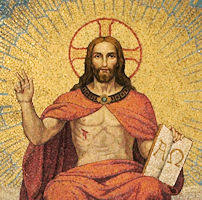
Christ the King

November 25, 2019 by Holy Name Monastery Leave a Comment

This feast was instituted by Pope Pius XI in 1925, during a time – like today – when respect for Christ and the Church was waning.  Originally, the full title of the celebration was “The Solemnity of Christ, the King of the Universe.”  In 2015, during the Jubilee year of Mercy, Pope Francis added another part to the title: “…the living face of the Father’s mercy.”  Christ is the one who binds up our wounds, heals us, blesses us, and saves us.  The combined readings for the solemnity, taken from Samuel, the Letter to the Colossians and the Gospel of Luke – give us a glimpse of how Christ is at the same time both king and the face of the Father’s mercy.

Daily we say these words in Jesus’ prayer: “thy kingdom come.”  Thankfully, Jesus has shown us how to bring about that kingdom.  We must abandon what the world considers important and be prepared to be ridiculed as Jesus was.  It is not easy, nor will it ever be easy, to remain true to values that are at odds with the society we live in.  It cost Jesus his life.  On that day he made a pledge to all his followers; “Indeed I promise you today, you will be with me in paradise.”

This Gospel pointedly reminds us that Jesus’ kingship is one of love and sacrifice, not power and domination.  The traditional way of referring to the day of Jesus’ death is “Good” Friday.  The mocking, derisive jabs that Jesus endured ironically proclaimed his true identity: the messiah, the chosen one, the king of the Jews and savior of all people.

When Isaiah crafted his description of the crucifixion, 700 years before it happened, he made Christ’s cross most prominent.  He described Jesus’ cross with many verses in careful detail and then simply stated that Jesus would be “numbered with the transgressors.”

Luke’s gospel tells us about one of the “transgressors” commonly referred to as the “good thief.”  As the crowd jeers, the thief hanging on the cross to one side of Jesus recognized Jesus as Messiah and King, and that day, that minute finds his salvation.

In tomorrow’s responsorial psalm we will sing: “Jesus is Lord – I will go rejoicing to the house of the Lord!”  Elsewhere we’ll say: “The Lord is king, in splendor robed.”  We’ll profess in the Creed: “I believe in one Lord Jesus Christ.”  The priest-celebrant will greet us: “The Lord be with you.”  We sing a blessing on each other: “May the blessing of the Lord be upon you.”  In our hymns we sing: “Rejoice the Lord is King; our Lord and King adored.”  Is it just from the force of habit we say or sing those titles for Jesus?  Or deep down do we believe JESUS IS LORD?  And if we do – why do we sometimes scramble to find a substitute to replace the word “Lord”?

As we ponder that question, we might pray the sentiments of the 12th century prayer of St. Bernard of Clairvaux –

“I accept that Jesus is my Lord. I keep myself for him since I acknowledge his rights over me.  To me he is God, to me he is the Lord, and I declare: I will have no king but the Lord Jesus!  Come then, Lord, … reign in me, for you are my king and my God.”

~Reflection by Sister Roberta Bailey, O.S.B., Prioress
34th Sunday: Solemnity of Christ the King
First Reading 2 Samuel 5:1-3    Second Reading  Colossians 1:12-20
Gospel   Luke 23:35-43
Continue Reading

Filed Under: Blog, Front Page, Homily

A Line from Star Wars

November 11, 2019 by Holy Name Monastery Leave a Comment

In the 2nd reading for this 32nd Sunday in Ordinary Time, Paul says to the Thessalonians: Pray that the word of the Lord may speed forward and be glorified.”  Sounds like a line from Star Wars or the Narnia Chronicles.  “Speed the Word of God forward.”  Paul continues – “I am confident that you are doing and will continue to do as the Lord directs your hearts to the love of God and the endurance of Christ.”  The “endurance of Christ.”  A reminder that, yes, we are the hands and heart of Christ in our world.

Relating to the Gospel seems a bit more tricky.  The Sadducees are once again challenging Jesus…  describing a most unlikely situation and quoting Moses as their authority.  One woman being wed, in turn to seven brothers.  Often Jesus answers a question with a question.  He responds differently this time.  But this time he uses the occasion for instruction.  Actually, Jesus makes four points.

First:  life here on earth and life after death are not alike.  The kingdom of heaven is not simply an extension of the good things in this life.  Even though some give the impression “if ice cream will make you happy, yes, you’ll have it in heaven.”  Jesus makes it clear that eternity is more than just an extension of what we have here.

Second: Jesus explains that there is no marriage in “that age.”  He doesn’t say that a married couple won’t know each other in the age to come, but, Jesus let us know rather that the relationship will be different.

Jesus’ third point, is that there is no death in “that age.”  Jesus identifies the quality of life when He says “neither can they die anymore,” it’s all about eternal life.

The fourth thing Jesus points out, is that the redeemed will be “like” the angels in heaven – not that they will be angels, but “like” the angels they will be forever praising and serving God.

And, if we drill deeper into the Jesus story, we’ll discover that the Sadducees were impressed with Jesus.  Like the twelve-year-old in the temple who amazed the people with his knowledge.  The Sadducees congratulated Jesus on his logic and his use of Scripture.  Jesus proved, from Scripture, that there are some references to life after death.

As we wrestle with questions about resurrection and after life, especially in this month when we honor our deceased Sisters and our loved ones.  And, at times like this week’s Veterans’ Day celebrations, we confirm our belief in Jesus’ promise of life beyond this one.  The trivia of this life loses much of its importance, while the values, the important things take on added meaning.  Living with the assurance of heaven, we live differently, we live for God.  The promise of eternal life is not just some pie in the sky hope for us. In eternity, in the everlasting life, we’ll be ourselves at our ultimate best and will be more loveable and more capable of loving than ever before.  [And it would serve us well, also, to think about the one who just jostled our nerves: she’ll/he’ll be more loveable in the life to come.]

[I’ve a story to share but could not figure out how to slip it into the body or the reflection….]

A newly-assigned young pastor had just received his first visitor.  The parish council president came by to visit him on a Sunday afternoon.  The man was a highly respected member of this congregation for over 25 years and president of the Parish council.

It was a balmy – not too humid kind of day – unusual for a day in August.  Taking advantage of the nice day, they were sitting on the back porch of the rectory.  The man seemed uneasy but slowly started to speak, “Father, first off I want to tell you this is a personal matter – nothing to do with Parish council business.  I want to share this with you, and seek your advice.  I’ve never told this to a soul, it’s extremely difficult to tell you this now.  Well, here goes:  “My wife and I have had a fight almost every day for the past 30 years of our marriage.”

The young priest was taken aback.  He nervously took a sip of his sweetened Southern iced tea.  He didn’t know what to say.  He had never personally experienced that kind of thing growing up.  Of course he’d taken counseling courses in the seminary.  He wanted to respond with compassion.  This was real life, not a set-up scenario from seminary days.

After a brief pause, he asked:  “Everyday?”  “Yes, just about every day.”  “Did you fight before you came to church this morning?”  “Yes.”  “Well, how did it end up?”  “It was different this time. She came crawling to me on her hands and knees.”

Trying to hide this shock, and keep his voice calm, Father ask:  “Oh, my goodness what did she say?”  “She pounded the floor with her hand and said in a voice that I’ve never heard before.  It was low and commanding as she growled: “Come out from under that bed, you coward, and fight like a man!”

~Reflection by Sister Roberta Bailey, OSB, Prioress


32nd Sunday, November 10, 2019
2 Macabees 7:1-2, 9-14   2 Thessalonians 2:16-3::5
Gospel Luke 20:27-38
Continue Reading

Filed Under: Blog, Front Page, Homily Tagged With: Christ, God, Gospel, Jesus, Life and death, Paul, Star Wars, Veterans Day, Word of God

A Modern Day Parable

October 31, 2019 by holyname Leave a Comment

Jesus began his parable thus:  Two people went up to the temple area to pray…”

So, you know this parable – you’ve heard it many times – Luke says Jesus told the people about some who trusted in themselves, who believed that they were righteous, and they treated others with contempt.

This time around,  I will leave you simply to contemplate an adaptation of an ages-old story – a modern-day parable.

It goes like this ….   Three women religious – we’ll call them Sisters, but not siblings, you understand?   Well, these three Sisters were praying in their monastery chapel.  Two were on their knees; one sat (the picture of exhaustion). 

After a short time, one Sister felt herself rising out of her body.  She felt ever so holy.   As she moved closer to heaven, she could see the other Sisters (poor sinners – God have mercy).  She prayed for them, those poor souls! 

A second Sister was ecstatic – she was caught up in a trance – she felt a vision coming  on –  she began to hear heavenly voices of the angel choirs singing HER praises. 

The remaining Sister was filled with distractions ….  She wasn’t aware if the others were sitting, standing, kneeling or bowing.  Thoughts flitted everywhere!  She’d never finished that memo – oh, and she’d forgotten to return that phone call. Her thoughts took off in another direction.  How long it had been since she’d had a good cup coffee.  Oh, what she wouldn’t give for a Dairy Queen blizzard!  Or even a McDonald’s burger – or a Sonic shake.  Oops, missed it again – that’s our side of the chapel praying – better tune in.

Later that night the devil’s assistant was reporting on the day’s activity.  “Well,” the little apprentice devil said, “It was really quite interesting. I was working on three of those nuns at Holy Name in St Leo.   They all looked quite pious at their Evening Prayer Service.  But, I suppose I failed at the job you gave me.  I was successful in tempting only two of them!”

Reflection by Sister Roberta Bailey, OSB, Prioress

First Reading – Sirach 35:12-14, 1618 * Second Rading – 2 Timothy 4:6-8, 16-18 * Gospel – Luke 18: 9-14


Continue Reading

Filed Under: Blog, Front Page, Homily

Persistent as a Boxer

October 22, 2019 by Holy Name Monastery Leave a Comment

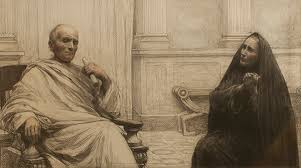
One of the keys to understanding the meaning of this Gospel can be found in the description of the judge as corrupt and unjust.  Jesus is saying that if even an unjust judge responds to the persistence of the widow, how much more will God heed our prayers.  Didn’t Jesus say: “Ask and you shall receive?”  Jesus is telling us that God wants us to be like the persistent widow, persisting in our relationship with God, confident that God hears and answers prayers.  Jesus also understands how easy it is to lose heart.  Maybe that’s why Jesus asks: “Will such faith be found when the Son of Man returns?”

The Gospel implies “yes” but it may be in unexpected places, not among the ones certain of their own righteousness, but among the “widows” among us –  the outsiders, the unlovely, the unclean, the ones certain of their sinfulness.

If we could read the Greek version of this parable, we’d get a glimpse of Jesus sense of humor.  In the Greek Scriptures the judge gives in to the widow because if he doesn’t he fears she may give him a black eye.  Jesus uses this metaphor from boxing to make his point about the need to continue in prayer.  Be as persistent as a boxer in the ring.

We say, but do we really believe, God always answers our prayers.  We just don’t know WHEN because God takes the long view.  Sometimes we have to wait for answers until we’re, as they say: on the other side of the grass.”

Now, I think it’s a safe bet that I don’t have to explain “stubbornness.”  Some of us had it sprinkled on us in our cradles!  We can prettify it, call it by another name, whatever we want: high principles, perseverance, tenacity, determined or we can call it what it is: just plain pig-headedness.”  Some of us seem to be naturally endowed with the “great gift of stubbornness.”  We ask God’s help to learn how to be stubborn for the right causes.  In that case, we may talk about a “holy stubbornness.”  That happens when we start not only to say our prayers, but when we start to live our prayers.  In other words, we put our actions where our words are … we put flesh on our Corporate Commitment.

“Will the Son of man find faith when he returns?”  That depends.  Can prayer move our own arms?  Are we willing to put flesh on our words?  God always has relied on his children–people like you and me–to usher in His Kingdom.  Are our prayers effective?  The answer lies squarely with each of us: “it depends on how effective we help make them.”

And, just suppose as Fr. Ed (Lamp) suggests (based on an idea he gleaned from S. Melannie Svoboda) that the characteristics of the widow and the judge are reversed:

What happens, if we say that we are the judge and God is the widow?  We, like the judge in the parable, are basically unjust.  And, sometimes we have no fear of God; that is, we do not allow God to scare us into being good.  Similarly, like the judge we persist in refusing to listen to the cries of the poor all around us. 

So, suppose God is the persistent widow who will not go away.  God keeps badgering us, refusing to accept as final our “no” to love.  God will persist until we render a just judgement, that is, until we let the goodness out, until we learn to love.  In Genesis we are told we are made in the image and likeness of God.  (Fr. Ed suggests) Perhaps our prayer this week could be: “Dear God, Persevering One, make us more like you!”


(See prayer down below)


‘Who Do You Say I Am?’


Lord Jesus, You are a Lord who walks beside your people.

So I pray for people who march for justice.


You are a Lord who raises up those who are bent low.

So I pray for those held down by the grindings of life and the indifference of the world.


You are a Lord who feeds the hungry.

So I pray for all who long for bread and the means to provide it.


You are a Lord who celebrates the small and the insignificant.

So I pray for the children and for those who are never noticed.

You are a Lord who says ‘Follow me.’


So we pray for courage, faith and cheerfulness in my heart that I may take up the cross and find it leads to life. Amen.


Kathy Galloway (adapted)
 The Gift of this New Day: Praying
with the Iona Community,
Wild Goose Publications


Continue Reading

Filed Under: Blog, Front Page, Homily Tagged With: boxing, Faith, God, Jesus, judge, persistance, Prayer, stubborn

Gratitude

October 15, 2019 by Holy Name Monastery Leave a Comment

“And, one of them, realizing he had been healed, returned, glorifying God in a loud voice; and he fell at the feet of Jesus and thanked him.”

We’re not told how these men discovered that they were healed, but it probably didn’t take long.  Looking at one of his comrades, a leper probably said something like, “Where is your leprosy?  Your face is clear.  The skin of your hands is soft and even.”  Then all of them begin to examine themselves and, sure enough, they ARE healed.  What “whoop and holler” must have gone up as they took off running toward the priests’ village.

But only one man returned to give thanks – that gives us the moral of the story:   Jesus expects us to show gratitude.  But thankfulness is a learned trait – at least the outward expression is.  If you don’t actually remember hearing this expression, you surely had it ingrained into the fiber of your being.  When you were handed a gift or a compliment, Mom would prompt: “What do you say?”  Most of us were taught the value of a thank you note (now an e-card).  However, we must train ourselves to show thanks, to give thanks, to be filled with thanksgiving.

But this thankfulness is sometimes time-consuming.  Sometimes it requires going out of our way, delaying what we had at the top of our TO DO list.  A life of thanksgiving is a life of prayer.  Prayer first.  Before going to the priests to be declared healed.  Prayer first.  Before the things we have to do.  Prayer first.  Before we get immersed in our everyday activities.  Prayer first.  Thanksgiving first.

Finally, gratitude is an important component in our salvation.  Were all ten lepers healed?  Yes.  Were they all saved?  Yes, in the sense that they were rescued from their disease.  But maybe not in the sense of drawing closer to God in thankfulness and dependence.  Please God that may we be ever thankful for favors great and small, seen and unseen.  In the words of tomorrow’s Gospel Acclamation: “In all circumstances, give thanks, for this is the will of God for you in Christ Jesus.

Recently I heard a true story of gratitude that wrought salvation.  The lady who told the story works downtown in a large city.  Every morning, she encountered a middle‑aged woman in a shabby coat soliciting spare change from passers-by.  She greeted everyone with a smile and a pleasant “Good morning.”  The lady who told the story almost always gave her something.  After almost a year of this routine, however, the woman in the shabby coat disappeared.  My friend wondered what had happened to her.

Then, one beautiful morning, she was in her place in front of the church, still wearing the same, shabby coat.  As folks reached into their purses or pockets for their usual donation, the woman stopped each of them.  “Thank you for helping me all those days,” she said.  “You won’t see me again because I’ve found a job.”  With that, she reached into a bag and handed each one a wrapped package.  She had been standing at her old spot waiting, not for a handout, but for the people she recognized so that she could give each of them a doughnut.  She recognized those who had given to her in her time of need.  This is gratitude!

Hearing the woman’s story, have pondering the story of the grateful cured man, I am reminded of the words of Hosea, the words that inspired the Weston Priory hymn: “Come back to me with all your heart, don’t let fear keep us apart.”

It took courage for the now-cleansed man to retrace his steps back to Jesus, to publicly – loudly – glorify God and proclaim his thanks to Jesus.   Deep in his heart he must have sensed the spirit of the words of Hosea: “Come back to me.”

~Reflection by Sister Roberta Bailey, OSB, Prioress


First Reading   2 Kings 5:14-17          Second Reading   2 Timothy 2:8-13
Gospel Luke 17:11-19
Continue Reading

Filed Under: Blog, Front Page, Homily Tagged With: God, gratitude, healed, Jesus, leper, Thankful, thankfulness, Thanksgiving

“What do we want to be caught dead doing?”

October 1, 2019 by holyname Leave a Comment

This Gospel seems to be a case of “too little, too late.”  In desperation, finally, the rich man – suffering the consequence of his insensitivity to everyone but himself, makes a grand gesture.  When it dawns on him that he cannot save himself his early training takes over.  He calls on Abraham to have pity on his siblings.  He begs Abraham to at least give them a “heads up” about the dire cost of the repeated selfish pattern of their lives.  In the end, he acknowledges it is too late to save himself.  He has strayed too far from the kindness his mother had instilled in him in early childhood.

You may ask is this an historical account or is it a parable?  Or, is there a difference?  Is it the true story of two men who lived and died during the time of Christ’s earthly ministry?  Or is it a story made up by Jesus to drive home a point?

You see, by definition, a parable is a true-to-life story used to illuminate a truth. This is true even if all of the details never occurred exactly as presented in the story. Parables are special stories that may, or may not, reflect historical events. Nevertheless, they must be true-to-life – they must be based on a real-life situation that the hearers are familiar with. In other words, the story itself has to be based on events that could have happened, whether they ever actually did.

A parable must be a true-to-life story in order for it to have any meaning to those who hear it. To try to use a fanciful story containing elements that have no basis to the world in which men and women live would only serve to confuse people rather than providing them with spiritual light.

We can relate to the main character’s growing insensitivity.  How easily we too can become desensitized!  In some ways it’s good.  We can train ourselves by cultivating the habit of “selective sensitivity” (selective hearing and seeing) so that little annoyances fade into the background where it takes a concerted effort to notice them.  The crunch of fresh potatoes chips, the click of heels on the hall surface, the fan motor on the AC, even the blinking light on the chapel.

However, the opposite, too, may prevail.  I fear that as a nation, as individuals we can be bombarded by so many sources of media featuring stories of horrible torture and inhumane treatment; sustained hunger; the effects of natural disasters that it overwhelms our sensitivities so deeply that emotionally we shut down.  We suffer brain over-load.  We hear but we don’t listen.  We direct our attention to the next graphic depiction of raging violence or the devastation wrought by climate change on the New Jersey shoreline. The images flash, and the newspapers stories and pictures, slip through our minds like the story in a novel or frames in a comic book.  After a while we fail to separate between fact and fiction; between everyday happenings and once-a-week invented TV dramas.  How does this happen?  How can we continue to stay in touch with our gentler nature, our God-eyes and ears – the compassion of Christ that we promise to extend “to all those in our realm of influence”?  (Corporate Commitment)

Our dedication in being true to our corporate commitment is living proof that we are learning the lesson Jesus is teaching … We share in the ministry of the compassion of Jesus when we provide hope and comfort to God’s people.  The moral of the story, I believe, is captured in the prompting of Joan Chittister when she asks: “What do we want to be caught dead doing?”

I would like to suggest that our prayer intention for this week, to pray for an end to human trafficking, can be tied to the Gospel lesson.  We chose that intention without knowing (if I recall correctly) that Pope Francis would call upon the Catholic Church to celebrate this Sunday the World Day of Prayer for Migrants and Refugees with the theme “It is not just about migrants.” The week of prayer provides an opportunity, in Francis words, to recognize that “it is not only the cause of migrants that is at stake; it is not just about them, but about all of us, and about the present and future of the human family.”

I encourage each of you to read Pope Francis’ message that was released in advance of the celebration.  (It is below for readers – and posted in the Community for those in the house.)  You’ll see it highlights the theme and provides guidance to everyone who works on this issue.

Amos 6:1a-7/  1 Timothy 6:11-16/  Luke 16:19-31                                                         Sister Roberta Bailey, OSB

The Holy See MESSAGE OF HIS HOLINESS POPE FRANCIS

FOR THE 105th WORLD DAY OF MIGRANTS AND REFUGEES 2019

 [29 September 2019]

“It is not just about migrants” Dear Brothers and Sisters, Faith assures us that in a mysterious way the Kingdom of God is already present here on earth (cf. Gaudium et spes, 39). Yet in our own time, we are saddened to see the obstacles and opposition it encounters. Violent conflicts and all-out wars continue to tear humanity apart; injustices and discrimination follow one upon the other; economic and social imbalances on a local or global scale prove difficult to overcome. And above all it is the poorest of the poor and the most disadvantaged who pay the price. The most economically advanced societies are witnessing a growing trend towards extreme individualism which, combined with a utilitarian mentality and reinforced by the media, is producing a “globalization of indifference.” In this scenario, migrants, refugees, displaced persons and victims of trafficking have become emblems of exclusion. In addition to the hardships that their condition entails, they are often looked down upon and considered the source of all society’s ills. That attitude is an alarm bell warning of the moral decline we will face if we continue to give ground to the throw-away culture. In fact, if it continues, anyone who does not fall within the accepted norms of physical, mental and social well-being is at risk of marginalization and exclusion.

For this reason, the presence of migrants and refugees – and of vulnerable people in general – is an invitation to recover some of those essential dimensions of our Christian existence and our humanity that risk being overlooked in a prosperous society. That is why it is not just about migrants. When we show concern for them, we also show concern for ourselves, for everyone; in taking care of them, we all grow; in listening to them, we also give voice to a part of ourselves that we may keep hidden because it is not well regarded nowadays.

“Take courage, it is I, do not be afraid!” (Mt 14:27). It is not just about migrants: it is also about our fears. The signs of meanness we see around us heighten “our fear of ‘the other’, the unknown, the marginalized, the foreigner… We see this today in particular, faced with the arrival of migrants and refugees knocking on our door in search of protection, security and a better future. To some extent, the fear is legitimate, also because the preparation for this encounter is lacking” (Homily in Sacrofano, 15 February 2019). But the problem is not that we have doubts and fears. The problem is when they condition our way of thinking and acting to the point of making us intolerant, closed and perhaps even – without realizing it – racist. In this way, fear deprives us of the desire and the ability to encounter the other, the person different from myself; it deprives me of an opportunity to encounter the Lord (cf. Homily at Mass for the World Day of Migrants and Refugees, 14 January 2018).

“For if you love those who love you, what recompense will you have? Do not the tax collectors do the same?” (Mt 5:46). It is not just about migrants: it is about charity. Through works of charity, we demonstrate our faith (cf. Jas 2:18). And the highest form of charity is that shown to those unable to reciprocate and perhaps even to thank us in return. “It is also about the face we want to give to our society and about the value of each human life… The progress of our peoples… depends above all on our openness to being touched and moved by those who knock at our door. Their faces shatter and debunk all those false idols that can take over and enslave our lives; idols that promise an illusory and momentary happiness blind to the lives and sufferings of others” (Address at the Diocesan Caritas of Rabat, 30 March 2019).

“But a Samaritan traveler who came upon him was moved with compassion at the sight” (Lk 10:33). It is not just about migrants: it is about our humanity. Compassion motivated that Samaritan – for the Jews, a foreigner – not to pass by. Compassion is a feeling that cannot be explained on a purely rational level. Compassion strikes the most sensitive chords of our humanity, releasing a vibrant urge to “be a neighbor” to all those whom we see in difficulty. As Jesus himself teaches us (cf. Mt 9:35-36; 14:13-14; 15:32-37), being compassionate means recognizing the suffering of the other and taking immediate action to soothe, heal and save. To be compassionate means to make room for that tenderness which today’s society so often asks us to repress. “Opening ourselves to others does not lead to impoverishment, but rather enrichment, because it enables us to be more human: to recognize ourselves as participants in a greater collectivity and to understand our life as a gift for others; to see as the goal, not our own interests, but rather the good of humanity” (Address at the Heydar Aliyev Mosque in Baku, 2 October 2016).

 “See that you do not despise one of these little ones, for I say to you that their angels in heaven always look upon the face of my heavenly Father” (Mt 18:10). It is not just about migrants: it is a 2 question of seeing that no one is excluded. Today’s world is increasingly becoming more elitist and cruel towards the excluded. Developing countries continue to be drained of their best natural and human resources for the benefit of a few privileged markets. Wars only affect some regions of the world, yet weapons of war are produced and sold in other regions which are then unwilling to take in the refugees produced by these conflicts. Those who pay the price are always the little ones, the poor, the most vulnerable, who are prevented from sitting at the table and are left with the “crumbs” of the banquet (cf. Lk 16:19-21). “The Church which ‘goes forth’… can move forward, boldly take the initiative, go out to others, seek those who have fallen away, stand at the crossroads and welcome the outcast” (Evangelii Gaudium, 24). A development that excludes makes the rich richer and the poor poorer. A real development, on the other hand, seeks to include all the world’s men and women, to promote their integral growth, and to show concern for coming generations.

 “Whoever wishes to be great among you will be your servant; whoever wishes to be first among you will be the slave of all” (Mk 10:43-44). It is not just about migrants: it is about putting the last in first place. Jesus Christ asks us not to yield to the logic of the world, which justifies injustice to others for my own gain or that of my group. “Me first, and then the others!” Instead, the true motto of the Christian is, “The last shall be first!” “An individualistic spirit is fertile soil for the growth of that kind of indifference towards our neighbors which leads to viewing them in purely economic terms, to a lack of concern for their humanity, and ultimately to feelings of fear and cynicism. Are these not the attitudes we often adopt towards the poor, the marginalized and the ‘least’ of society? And how many of these ‘least’ do we have in our societies! Among them I think primarily of migrants, with their burden of hardship and suffering, as they seek daily, often in desperation, a place to live in peace and dignity” (Address to the Diplomatic Corps, 11 January 2016). In the logic of the Gospel, the last come first, and we must put ourselves at their service.

“I came so that they might have life and have it more abundantly” (Jn 10:10). It is not just about migrants: it is about the whole person, about all people. In Jesus’ words, we encounter the very heart of his mission: to see that all receive the gift of life in its fullness, according to the will of the Father. In every political activity, in every program, in every pastoral action we must always put the person at the centre, in his or her many aspects, including the spiritual dimension. And this applies to all people, whose fundamental equality must be recognized. Consequently, “development cannot be restricted to economic growth alone. To be authentic, it must be well rounded; it must foster the development of each man and of the whole man” (SAINT PAUL VI, Populorum Progressio, 14).

 “So then you are no longer strangers and sojourners, but you are fellow citizens with the holy ones and members of the household of God” (Eph 2:19). It is not just about migrants: it is about building the city of God and man. In our time, which can also be called the era of migration, many innocent people fall victim to the “great deception” of limitless technological and consumerist development (cf. Laudato Si’, 34). As a result, they undertake a journey towards a “paradise” that inevitably 3 betrays their expectations. Their presence, at times uncomfortable, helps to debunk the myth of a progress that benefits a few while built on the exploitation of many. “We ourselves need to see, and then to enable others to see, that migrants and refugees do not only represent a problem to be solved, but are brothers and sisters to be welcomed, respected and loved. They are an occasion that Providence gives us to help build a more just society, a more perfect democracy, a more united country, a more fraternal world and a more open and evangelical Christian community” (Message for the 2014 World Day of Migrants and Refugees).

Dear brothers and sisters, our response to the challenges posed by contemporary migration can be summed up in four verbs: welcome, protect, promote and integrate. Yet these verbs do not apply only to migrants and refugees. They describe the Church’s mission to all those living in the existential peripheries, who need to be welcomed, protected, promoted and integrated. If we put those four verbs into practice, we will help build the city of God and man. We will promote the integral human development of all people. We will also help the world community to come closer to the goals of sustainable development that it has set for itself and that, lacking such an approach, will prove difficult to achieve.

In a word, it is not only the cause of migrants that is at stake; it is not just about them, but about all of us, and about the present and future of the human family. Migrants, especially those who are most vulnerable, help us to read the “signs of the times”. Through them, the Lord is calling us to conversion, to be set free from exclusivity, indifference and the throw-away culture. Through them, the Lord invites us to embrace fully our Christian life and to contribute, each according to his or her proper vocation, to the building up of a world that is more and more in accord with God’s plan.

In expressing this prayerful hope, and through the intercession of the Virgin Mary, Our Lady of the Way, I invoke God’s abundant blessings upon all the world’s migrants and refugees and upon all those who accompany them on their journey.

 From the Vatican, 30 April 2019 FRANCIS

Continue Reading

Filed Under: Blog, Front Page, Homily

  • « Go to Previous Page
  • Page 1
  • Interim pages omitted …
  • Page 65
  • Page 66
  • Page 67
  • Page 68
  • Page 69
  • Interim pages omitted …
  • Page 92
  • Go to Next Page »

Footer

Prayer / Newsletter / Info

 Contact Info

Benedictine Sisters of Florida

PO Box 2450
12138 Wichers Road
St. Leo, FL 33574-2450
(352) 588-8320
(352) 588-8443

 Mass Schedule

Related Links

Copyright © 2026 · Benedictine Sisters of FL · Touching Lives Through Prayer and Service

Copyright © 2026 · Bendedictine Theme on Genesis Framework · WordPress · Log in