• Skip to primary navigation
  • Skip to main content
  • Skip to footer
Benedictine Sisters of FL

Holy Name Monastery
Founded 1889

Donate Now
  • Home
  • About Us
    • History
    • Being Benedictine
    • Benedictine Monasticism
    • Meet Our Community
    • Holy Name Academy-Alumnae
  • What We Do
    • Mission, Vision and Our Partners
    • Retreats
      • Invitation to Retreat
      • Accommodations
    • Volunteer Programs
    • Oblate Program
    • Spiritual Direction
    • Aqua/Hydroponics
    • More of Our Ministries
  • What’s Happening
    • Articles of Interest
    • Events
    • Newsletters
    • Brochures
    • Links
  • Support Us
    • Gifts of Support
    • Wish List
  • Stories Shared
  • Galleries
    • Photos
    • Videos
      • Benedictine Sisters of FL Videos
      • Other Videos
  • Contact Us

Blog

The Prodigal Son

March 8, 2016 by Holy Name Monastery Leave a Comment

prodigalIf you were around before Vatican II for long Latin choir rehearsals, you may recall the melody of the antiphon that announced the Fourth Sunday of Lent.  It’s one of those that stays with you … (sing) Laetare translates from Latin to English “Rejoice”.   This is also known as “Refreshment Sunday” – a day when the austerity of Lent is relaxed a little, and the violet vestments of Lent can be replaced with rose-colored ones.   A special kind of fruit cake was often served on this Sunday modestly breaking the Lenten Fast.

According to another old tradition, although it probably is not on anyone’s list of approved feast days, is “Laugher Sunday” or “Holy Humor Sunday” – a day celebrating the big joke that God pulled on Satan.  Thus the name: God’s Joke or the Easter Laugh – a day to lighten up, relax, and recall the joy and the goodness of the Lord.  (We anticipated it a bit with our Hoedown!)  In honor of Laughter Sunday, here’s one to tickle your funny bone.    During a lesson on Easter, a religious education teacher asked the class, “What did Jesus do on this day?  Getting no response, she prompted: It begins with R. “I know!” blurted out a child: “Recycle.”

But on a more serious bent … The context of today’s Gospel is not to be made light of.  Sinners and social outcasts were “all seeking the company of Jesus to hear what he had to say”. The Pharisees and Scribes, who were the “good and religious” people, were shocked and disturbed. “This man welcomes sinners and [even worse] eats with them.” By their standards, a “good” person avoids “bad company”. To be quite honest, don’t we think the same? If so, then we are not thinking like Jesus.

We typically title this Gospel story the “Prodigal Son” but, in fact, the emphasis is less on the son than on the father, who clearly represents God and Jesus.

No one can deny the appalling behavior of the younger son in this Gospel. He took all that his father generously gave to him as his inheritance and used it in leading a life of total debauchery and self-centered indulgence. Eventually, he had nothing and was reduced to living with pigs, something utterly abhorrent to the Jewish mind, and even sharing their slops, something even we would find appalling. “Served him right,” might be the reaction of many, especially the good and morally respectable.

This, however, is not the reaction of the father, who has only one thought in his mind – how to get his son to come back to where he belongs. The father does not say: “This son has seriously offended me and brought disgrace on our family. He better not come crawling back here.  I disown him!”  Instead he says: “My son went away, is lost and I want so much to have him back.” He stands in the doorway of his house many long hours, watching, waiting, longing … His love for his wayward son has not changed one iota.

There is no force involved. The police are not sent out. There is not an “Amber” alert. Servants are not instructed to haul him back. No, the father waits. It is up to the son himself to make the crucial decision: does he want to be with his father or not?

Eventually he “came to his senses”, that is, he realized the wrongness of what he had done. He became aware of just how good his father had been. The process of repentance had begun. He felt deeply ashamed of his behavior and then, most significant of all, he turned around to make his way back to his father.

The father, for his part, filled with compassion for his son’s experiences, runs out to meet him, embraces him and brushes aside the carefully prepared speech the son had prepared. If the son had known his father better, he would have realized that such a speech was unnecessary. Immediately, orders are given to bring the very best things in the house and a banquet is laid out.   This is forgiveness on the part of both the father and the son – a return to where each ought to be in relationship to the other.

This is where the elder son comes in. He simply cannot understand what is happening. “It’s just not fair!” How many times have we heard this spoken or, be truthful, felt in our hearts?  “It’s not fair, just because she’s the baby; you didn’t let me stay out that late when I was her age!”  And the litany grows.  We challenge our parents and one another’s generosity, operating from the perspective of limited resources. If she gets it, perhaps there won’t be enough for me.

Jesus wants his hearers (us) to understand that this is not how it is with God’s mercy, love and forgiveness. God offers love to all of us in abundance. The forgiveness of the father in the parable is an image of God’s love for us: generosity beyond measure!

By our standards, even God is unjust.  In fact, he is corrupted by love! That’s fortunate for us!  Supposing we went to confession one day and the priest said, “Sorry, that’s it. No more forgiveness, no more reconciliation. You’ve used up your quota. Too bad! ” Of course, it’s not like that.  Thankfully there is no limit to God’s forgiveness, mercy and love.  God has a deep desire to forgive – to be totally reconciled with us when we’ve severed the bond of relationship.  There is always a place in God’s company for us.  The question is: Do you truly believe that God acts this way towards us?  Can we humbly accept divine mercy without jealousy, knowing that God’s love for another does not diminish the love shown and showered upon us?

4th sunday web

Continue Reading

Filed Under: Blog, Homily Tagged With: Easter, forgiveness, God, Jesus, Lent, love, mercy, Prodigal son

What have your relationships taught you?

February 8, 2016 by Holy Name Monastery Leave a Comment

joan chittisterLife goes through a good many more stages, I think, than the ones most commonly identified—childhood, youth, adulthood, middle age, old age. I don’t think that life’s stages have much to do with age, with the number of years we’ve spent breathing, at all. I think the parts of life are best described by the kinds of relationships most commonly made in each.

The years and phases of life call for different levels of relationship. We talk, for instance, about playmates, buddies, gangs, schoolmates, friends, acquaintances, colleagues, lovers, soul mates, and then, at the end, friends again. Each of these various types of relationships represents a stage in our own maturity and development. They teach us, a level of the soul at a time, what it means to discover that we are not alone in life, not the center of life, not the standard of value for anyone else’s journey through life.

We learn something valuable from each and every one of them about what it means to be alive, a social being, a companion on the journey.

Playmates provide companionship; buddies give us a sense of security as we begin to learn our way through life; gangs give us a feeling of belonging; schoolmates bring a feeling of camaraderie in the face of the crowd; friends provide the beginning of intimacy; acquaintances become a lifeline in strange places; colleagues provide professional identity; lovers teach us the otherness of life; soul mates bring us home to the self; friends put cement under our feet again just when we begin to realize that our own legs are not as strong as they used to be. It is a lifelong series of coming to understand ourselves through our feelings.

The relationships we form at each stage make every stage that follows both easier to negotiate and more meaningful. It is a precious thing, relationship, meant to be savored and certain to be demanding. It is our relationships that teach us how to be a human being rather than a prima donna, a useful member of the human race rather than a spoiled diva.

Our relationships grow us up and make life possible—all the way to the grave. It is incumbent upon us to make them possible, both for the other’s sake and for our own.

—from Joan Chittister: Essential Writings
Continue Reading

Filed Under: Blog Tagged With: change, feelings, Joan Chittister, journey, life, relationships

Third Sunday in Ordinary Time

January 25, 2016 by Holy Name Monastery Leave a Comment

Epiphany3_YearC_scrollAfter the opening verses in today’s Gospel, Luke leap frogs over the chapters where we would find the Infancy Narratives, Jesus’ baptism by John, the temptations Jesus faced in the desert, and the beginning of Jesus’ public ministry.  The writer picks up in chapter four where we find Jesus in the synagogue on the Sabbath – it seems obvious this was his custom.  No one seems surprised to see him there.  What does raise some eyebrows is when he stands and reads from the scroll handed to him.  He announces his mission is in continuity with Israel’s prophetic tradition.  He speaks of a “year acceptable to the Lord” making reference to the Jewish tradition of Sabbath every 7th year and jubilees celebrated every 50th year – times when the land was left fallow and food stores were to be shared equally with all.  A time of renewal in which debts were forgiven and slaves were freed.

Luke clearly acknowledges that he himself never saw Jesus. His gospel was written at least 50 years after Jesus’ death and resurrection. Yet he wants to assure his readers that what he writes is accurate and is based on the experiences of people who did know Jesus personally. At the same time he lets us know he is not writing a biography. His purpose is not to relate a chronology but to tell us the meaning of Jesus’ life, death and resurrection for our personal lives and why we should accept and follow Jesus as our King and Lord.

People get different things out of going to church, depending, it would seem, on what they expect to get when they go there.  There’s a story about an elderly couple that was walking out of church one Sunday. The wife said to the husband, “Did you see the strange hat Mrs. O’Brien was wearing?” “No, I didn’t,” replied her husband. “Bill Smith badly needs a haircut, doesn’t he?”  “Sorry, I didn’t notice.” “You know John,” said the wife impatiently,” Sometimes I wonder if you get anything at all out of going to church”.

I wonder what the people who were in the synagogue that day when Jesus read aloud expected to get out of the service. Certainly they didn’t expect to see Jesus stand and read a portion of Scripture, let alone comment on it.

What did this message mean to the people in the synagogue? What does it mean to us today? It meant that day what it means today: that Jesus in the promised Messiah, the anointed one sent by God to redeem his people. It means that Jesus frees His listeners from the bonds of sin and guilt.  He came then, and He continues to come each and every day, to set us free. Why do we continue to try to solve our problems by ourselves instead of turning to God?

We are all captives to something, whether it is our ministry, our role in community, favorite TV shows, certain foods especially ones that aren’t good for us, shopping or something else. All of us can awaken to God’s anointing power. It constantly inspires, enlivens and guides us.  It soothes, comforts, welcomes and transforms us.

We can listen to that still small Voice of God within or in the words of a mentor and spiritual director or our comrade in community.  Or we can refuse to listen, we can refuse to believe, and we can refuse to let it make a difference for us, but it is still true. The Word of God stands forever!   Jesus’ one-sentence sermon that day in the synagogue was the shortest in history, but it is also one of the most powerful.

And, we believe it because we believe in the one who spoke it.  We love the man Jesus and believe he is the Son of God.  When Jesus taught in the synagogue, people listened but they did not understand everything, and perhaps they understand nothing at all. However, they were struck by a word, a sentence and they remembered it.  They continued to think about it…  Sounds like our lectio experience.  That’s when the Spirit goes into action and enlightens us, at first only a little, and later on more powerfully and persuasively.  That’s why it is important to spend open-ended time with the Word, with God.  We may have some favorite prayers we say that someone else wrote.  But how would you feel if one you call “friend” only shared with you something they’d memorized as a child or words from someone else’s pen?

We decide how to nourish our minds and feed our spirits by choosing what to read and to watch, what to reflect on.  And, we decide how to protect our minds and spirits by not reading or watching what does not uplift us and make a positive impact on our lives and those we engage with in conversation.  Like Scholastica and Benedict on that memorable night, we want to spend time in “holy conversation.”

Sometimes we forget how precious the Word of God is.  A powerful example is in this true story.  In 1964 the Romanian government released religious and political prisoners. Among them was one who had spent nearly three of his fourteen years in prison in solitary confinement. After his release, he wrote a book entitled In God’s Underground in which he describes how one day a new prisoner was brought in. The upper part of his body was in a plaster cast. When the guards withdrew, he slipped out a small tattered book secretly hidden between his skin and the plaster cast. None of the other prisoners had seen a book for years. They asked him what the book was. It was the Gospel of John.  The author of the story writes that he took the book in his hand and no life-saving drug could have been more precious to him. From that day the tattered little book went from hand to hand, many learned it by heart and each day they would discuss it among themselves. That reminds us that sometimes we forget the importance of the Word of God in our lives.

                                                                                                 Reflection by Sister Roberta Bailey, OSB, Prioress


Continue Reading

Filed Under: Blog, Homily Tagged With: God, Jesus, John, Luke, scroll, Word of God

Two Cents

November 9, 2015 by Holy Name Monastery 1 Comment

two centsI would venture to say that most hearers or readers think that this Gospel passage is only about the widow or about how honorable the poor are for being generous.  If we do, we’re missing the point.   Of course we cannot simply look at the story of the widow: (having lost her spouse – possibly at a young age given men’s’ life expectancy then – she might have had no children; now she’s considered a burden to both her parents and her in-laws.

Jesus commended her giving, in contrast to that of the scribes, because she gave everything she had! She could have kept one of those coins for herself, but she willingly gave everything she had to Jesus.  That widow could never have known what her gift would accomplish. She walked into the Temple, ignored by the rich, the religious and those caught up in the celebrity worship of the day. She walked in with her little gift and she gave it without fanfare – no trumpet blare, no applause. Everything that poor woman had earned for her own needs was given willingly to the Lord. She is an example of extravagant giving!

The rich gave, too.  Some came in with great fanfare, standing back and tossing in their gift for the greatest effect. Others gave with a frown on their face, holding onto their coins as tightly as they could to the very last second. Others probably stopped to make sure that everyone was watching them as they gave their offerings. They wanted to be recognized, honored and in control – they wanted a say in everything.  People like that are dangerous, divisive people! They are religious fools.

They received their applause and they walked proudly away. This poor widow gave her “two cents” and walked away, but her gift is still giving today. How many people have been challenged to go ahead and give their little because of this woman’s example?

Why would she bother to give such an insignificant gift? Her two cents among the thousands of dollars given by the wealthy seems so small. Why bother? This little lady is everything the religious scribes and the rich hypocrites were not. Why would she bother to give such an insignificant gift?

It’s her attitude that speaks volumes: humble, unassuming, unpretentious.   One’s attitude makes all the difference.  How we give is far more important than what we give!  Reminds me of a definition I heard many moon ago of the difference between cooperation and collaboration.  Cooperation is when all the stakeholders put their money on the table; collaboration happens when they put their hands in their laps.

In her quiet giving she was preaching a powerful sermon. Hear her as she humbly explains:

  • I give because God loves me and I love in return
  • I give because I trust God
  • I give because God has given to me

Three other lessons we might glean:

  • God will do great things with our small offerings –We do not know what any others giver put in the basket that week in the temple. But, after over 2,000 years the tiny gift of that widow has been multiplied into untold billions as people have been motivated to give out of their own poverty.
  • The Lord will settle His accounts one day – The scribes and the wealthy men there that day had their reward then and there – they blew their own trumpets – they got public attention and admiration. This widow will receive hers later! Do what you do for God – just keep it simple and silent.  Be honest: have you ever taken credit for a gift NOT given … failed to contribute to a collection (like we do for Daystar, the Heritage Christmas or AIM) but smiled as if you had contributed when the community is praised for its generosity?
  • God does not want our money; He wants us – He wants our love and our devotion and when He has that, He has everything else that we possess. When God has us, He has our pocketbooks.

So, in summary, the important lesson we might take from this story is: that real giving is sacrificial and reckless.  How much of your personal monthly allowance do you dedicate to doing good for someone else?  Do you contribute at the end of the month if you have something left over?  Or do you automatically designate 10% of your allowance to a cause each month?

If you remember nothing else, remember this: the attitude of your heart in giving makes all the difference.  How we give is far more important than what we give!

                                                                                                                Reflection by S. Roberta Bailey, OSB, Prioress
Continue Reading

Filed Under: Blog, Homily, Prayer Tagged With: gift, give, God, humble, Jesus, Two Cents, Widow

Why are costumes worn on Hallowe’en or All Hallows’ Eve?

October 28, 2015 by Holy Name Monastery Leave a Comment

Vintage_Halloween_Costumes

(Photo of costume party in 1890)


Rev. Dr. Eddie J. Smith offers a religious perspective in his book Halloween, Hallowed Be Thy Name.

He suggests that by dressing up as creatures “who at one time caused us to fear and tremble,” people are able to poke fun at Satan “whose kingdom has been plundered by the Savior.”


Continue Reading

Filed Under: Blog

  • « Go to Previous Page
  • Page 1
  • Interim pages omitted …
  • Page 87
  • Page 88
  • Page 89

Footer

Prayer / Newsletter / Info

 Contact Info

Benedictine Sisters of Florida

PO Box 2450
12138 Wichers Road
St. Leo, FL 33574-2450
(352) 588-8320
(352) 588-8443

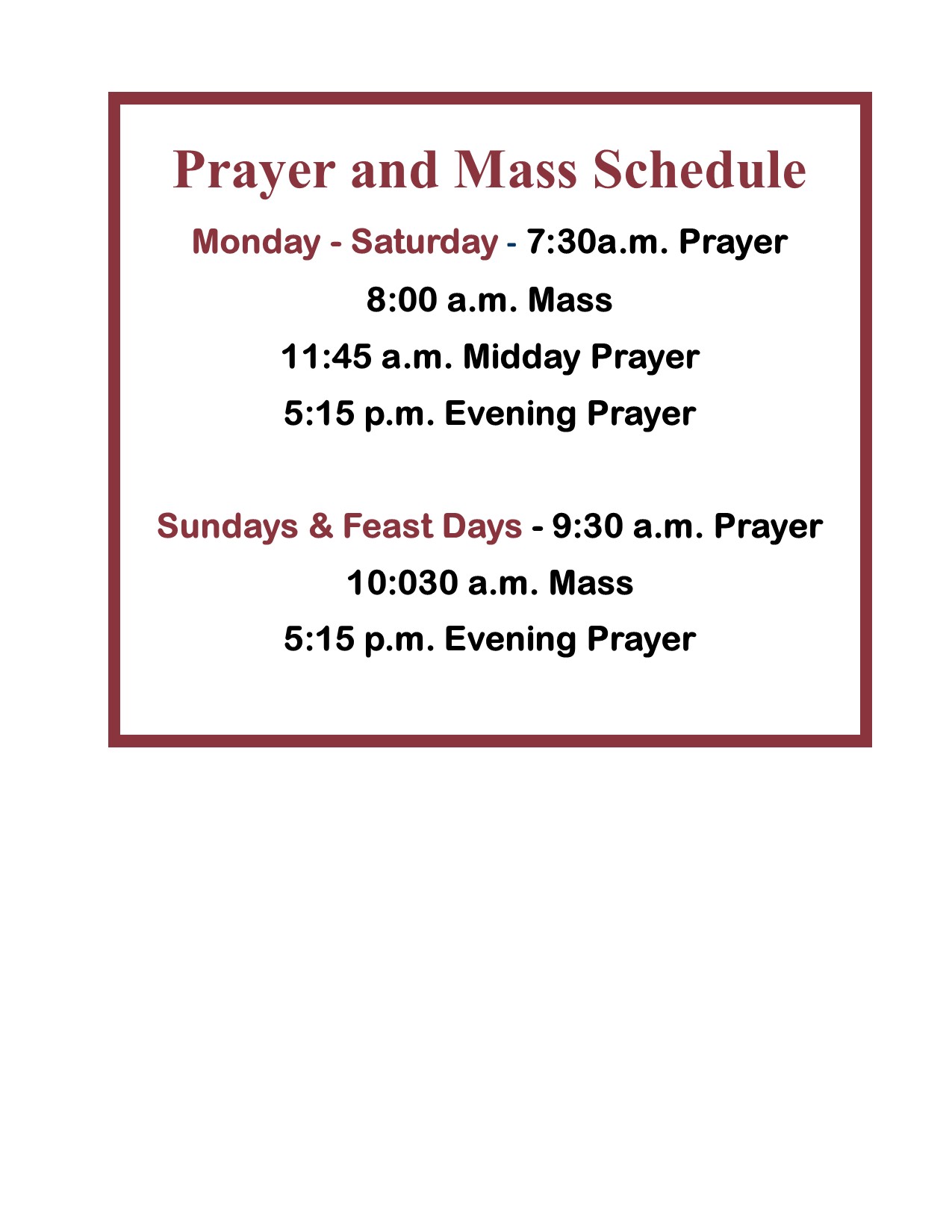
 Mass Schedule

Related Links

Copyright © 2026 · Benedictine Sisters of FL · Touching Lives Through Prayer and Service

Copyright © 2026 · Bendedictine Theme on Genesis Framework · WordPress · Log in