• Skip to primary navigation
  • Skip to main content
  • Skip to footer
Benedictine Sisters of FL

Holy Name Monastery
Founded 1889

Donate Now
  • Home
  • About Us
    • History
    • Being Benedictine
    • Benedictine Monasticism
    • Meet Our Community
    • Holy Name Academy-Alumnae
  • What We Do
    • Mission, Vision and Our Partners
    • Retreats
      • Invitation to Retreat
      • Accommodations
    • Volunteer Programs
    • Oblate Program
    • Spiritual Direction
    • Aqua/Hydroponics
    • More of Our Ministries
  • What’s Happening
    • Articles of Interest
    • Events
    • Commemorative Bricks
    • Newsletters
    • Brochures
    • Links
  • Support Us
    • Gifts of Support
    • Wish List
  • Stories Shared
  • Galleries
    • Photos
    • Videos
      • Benedictine Sisters of FL Videos
      • Other Videos
  • Contact Us

disciples

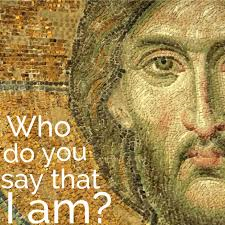
Who do you say that I am?

September 18, 2018 by Holy Name Monastery Leave a Comment

This is an interesting reading, and even a bit odd, giving us another insight into Jesus’ teaching methods.  First with those who are closest to him – who have been traipsing around the country for almost three years.  This is the group who believe in him so he is quick to correct their human thinking that gets in the way of their perception of just who he is.

I can see him (can you?) walking casually along with the twelve … the mix of who is nearest him changing every few minutes – as the group shifts, they compare notes about what he said to their group with what the others heard.  He stops and turns to the group and queries: Who do people say that I am?  Was He really in the dark?  After all he is God, doesn’t he know everything?  Was he simply opening an opportunity for the disciples to express their loyalty to him? 

At first, the disciples do not offer their personal feeling.  They repeat what they’ve been hearing: some say John, the Baptist (why they’d mix up the cousins, I don’t know), others say Elijah, or one of the prophets.  When Jesus continues: “But, you, who do you say that I am?”  A pregnant pause …  waiting for a brave one to speak up.  Heads turn to Peter who seems to be never afraid to offer an opinion.  He doesn’t fail them: “You are the Christ, son of the living God.”

Jesus seems quick to caution the disciples: “Don’t tell anyone.” (Doesn’t he know by now that this is a sure-fire way to get the rumors flying?)  Does Jesus want us to hold miracles we experience or witness close to our hearts?  To be like Mary after the shepherds’ visit – pondering all these happenings in her heart?”  Or are we to be like the disciples, quick as Jesus said, don’t tell until after the Son of Man has risen, shouted their Alleluias and spread the Good News?

Our scene in today’s reading, turns from Jesus conversation with the disciples and his followers to what is to come.  Peter quakes in his boots conjuring up what Jesus is describing.  This is his friend!  So, he takes Jesus aside and in shock rebukes him, criticizes the one he has just acknowledged is the Son of God.  “No! No you’ve got it wrong …. That can’t happen to you.”   

Have you ever done that …  told Jesus he’s got it wrong?  The hurricane can’t hit here.  My friend, my parent, my child can’t die now.  Please tell me that (whatever it is) didn’t happen.

Jesus cautions Peter, and us: “Wait a minute.  You are not thinking like God… you’re thinking like a human being.”   

With that, Jesus summons the crowd.  Did you ever notice the settings that Scripture describes when Jesus speaks to the crowds on the plain, on a hillside or from a boat … and there were thousands of them?  No mic, no PA system, no big screen TV …  How did he do it?  I wonder, did the people really hear his voice or did they hear him in their heart …  or was it like the game of Gossip …  his words spread rapidly from person to person???  (Just an aside.)

 (Back on track)  Jesus next lets us know what it will take to continue to be a disciple of His.  Three qualities: deny yourself, take up your cross, and follow Me.  Easy as one, two three?  Not quite.

 First: deny your worldly ways, drop your egotistical thinking and self-seeking and cease all the ifs, ands and buts you that raise in opposition to Jesus’ message. 

 Second: take up your cross.  It is fashioned for, personalized for just for you.  No two crosses are exactly the same.  You know the story of the person who rejected her God-given cross.  She asked God to exchange it for another.  So, God showed her his treasury of crosses.  You know which one she chose …. The very one God knew all along would best fit her shoulders. 

 Third: This is the good part …  follow Jesus.  You don’t have to invent the way – Jesus has already cut the path for you.  Knock and the door will be opened.  Seek and you will find.  Listen and you will hear. 

 So, when at Mass, just after the homily, be ready to answer God in the words of the Creed: Who do YOU say that I am?

~Reflection by Sister Roberta Bailey, OSB, Prioress
First Reading  Isaiah 50:5-9a                Second Reading  James 2:14-18
Gospel Mark 8:27-35
Continue Reading

Filed Under: Blog, Front Page, Homily Tagged With: Christ, cross, disciples, God, Jesus, listen

“I should have known” experiences

April 16, 2018 by Holy Name Monastery Leave a Comment

On this third Sunday of Easter, we continue to hear Gospel accounts of Jesus’ appearances to his disciples following his Resurrection.  In each account Jesus greets his disciples with the words, “Peace be with you.”  Peace is their most obvious and pressing need.  They have witnessed the death of someone they loved dearly.

Two of the disciples recounted this touching story of PEACE invading their lives.  They had been pondering, exchanging views when suddenly a stranger slipped into their midst.  Now the Jewish custom of the day required that they invite the stranger, whom we know is Jesus, to join them for a meal.  In this case, the invitation included an overnight’s rest.  Later they realized Who had broken bread in their company.  Can’t you see Jesus’ delight in revealing himself.  He’d kept His identity hidden for a time.  Now the friends realized that their hearts had been afire as they listened to him break open the Scriptures with him.  What a Lectio experience!

We believe God is all around us: God is in nature, God is here with me now.  But do we really believe that God – in the person of Jesus – will drop into our company and chat with us…  in the person who is walking toward us?  How interesting that two people can be in the same circumstances but have two distinct “I should have known” experiences.

Once upon a time a child delivered something to me from her kindergarten teacher.  As I thanked her, she stepped back and politely said: “May I ask what you are going to use that wrapping paper for?”  From there the conversation went like this:  “Well, I am planning a prayer service for the Sisters at our chapel and I want to make a pretend well.”  “For the Sisters?”  “Yes.”  “Are you a Sister?”  (Now this was Lent and she had known me since August.)  When I answered, “Yes, that’s why you call me SISTER Roberta.” She slapped herself aside her head … “I should have known!”  Like the disciples’ AH-HA moment – they knew later if they had listened to their heart that they would have known Jesus in the breaking of the bread!

I am reminded of another story that the author calls:  The Best Sermon I Never Heard (By Frederick Hermann)  [Adapted here to fit our time constraints.]  Perhaps you will identify with one or the other of the players in the story.  I’ll relate it as if it happened to me …

“As soon as he started, I knew it was going to be bad.  The old priest began his sermon with a faltering voice, and proceeded to tell an obscure story that made no sense to me at all. I was quickly lost and bored.  This was not the church I usually attended but I was traveling, and went to a local church for evening Mass. The priest seemed unprepared, vague, and detached.  So I tuned him out, and started fuming inside my head – why hadn’t I pushed it to drive home tonight to the monastery?”

“Why didn’t he prepare better?  Didn’t he take a homiletics course (like Father Mike) in the seminary”   I felt like I had endured an eternity when finally the priest ended his sermon.

After Mass, I walked to the car in the parking lot. No longer able to contain my irritation, I complained out loud to a stranger walking beside me – and you know that’s like me to speak to a perfect stranger.   “So, what did you think of that sermon?”  She walked in silence beside me, lost in thought.  Actually I thought maybe she was deaf or that I hadn’t really spoken aloud.  Then she softly and gently spoke; “That was the most beautiful sermon I have ever heard.”

I was stunned, and looked up at her, expecting to see her grinning sarcastically. To my astonishment, I saw that tears were streaming down her cheeks …  her eyes glistened in the evening sunlight.  Finally she spoke: “I’ve spent most of my life estranged from God, going my own way, and doing my own thing. Last year I found God, or rather he found me.  Now I find him speaking to me in the most unusual ways. Like that sermon we just heard. It was all about waking up, and listening, and hearing God in new ways. That describes my life, and the love I have found.”  I was speechless!

As I drove away, I marveled at how God could use such a dull and ordinary priest to speak in such an extraordinary way to one of his beloved.  What is meaningless for me to hear, and a cross for me to bear, may be the fruitful words of life to a person sitting nearby – who may be hearing the voice of God speaking directly into their heart.

In the words of Job:  “God thunders with His voice wondrously, doing great things which we cannot comprehend.” (Job 37:5).  And, in the words of our Responsorial Psalm: “Know that the Lord does wonders for his faithful ones; and puts gladness into my heart.”

~Reflection by Sister Roberta Bailey, OSB, Prioress
First Reading  Acts of the Apostles 3:13-15,17-19  Second Reading 1 John 2:1-5a
Gospel Luke 24:35-48    Intention Mentally Ill
Continue Reading

Filed Under: Blog, Front Page, Homily Tagged With: broken bread, disciples, God, Gospel, Jesus, Peace, third Sunday of Easter

What do you want?

January 17, 2018 by Holy Name Monastery Leave a Comment

For a moment, imagine, if you will, that you are an aspiring athlete, artist, musician, writer, chef or whatever…    By a stroke of good fortune, you manage to secure as your mentor the person you consider to be tops in the field.  At once you begin to study under that person and hone your skills, soaking up everything you can learn from your champion.

One day after your lesson your mentor introduces you to a person she considers THE expert in the field.  In fact, she suggests that if you really want to perfect your skills this is the person under whom you should study; leave your classes with her and follow that other person lead.

In a sense, this is what is happening here in this Gospel text.  John the Baptist is a great prophet.  Jesus himself once called him the greatest prophet who ever lived.  Naturally, John has picked up a few disciples, people who are devoted to him as their spiritual leader.  But now John has recognized that somebody else has come along who is far greater then he will ever be.  In fact, when Jesus shows up, John realizes that he is now in the presence of One whose sandals he is not even worthy to untie.  He may be a prophet, but this man is the Lamb of God, the Son of the Most High, the very Savior of the world.

This is astonishing, really, for what preacher would point his disciple to another’s preacher’s ministry?  Here we see that John recognizes his calling and that he is fully in agreement with his purpose, which is not self-promotion. Instead, as John explains in the early part of his gospel: “He must increase, I must decrease.”  His following must grow; my purpose is to point you to His way.  He is the chosen one of GOD, I am not worthy to even unloosen his shoes.

If you’ve ever thought about it, (or think about it now) you may realize that one of life’s more challenging roles is to take the second place when once you’ve held first place.   School principals who step back into the classroom; heads of departments who now work the floor; a committee or commission chair who now is worker-bee; parents who cut the apron strings so their child can soar or, in a case close to home, a superior who rotates out of leadership.  S. Lynn Marie McKenzie writes about this dynamic in her article on “Servant Leadership” in the Fall Issue of BENEDICTINES.  (And it fits right in this week with the reading from the Rule, chapter 2, on the Qualities of the Prioress.)  Sister Lynn reminds the reader that “one does not begin monastic life as a prioress but begins as a member of the community, and one usually does not end monastic life as a prioress but as a member of the community.

When in community we prepare for election of prioress, we often speak of the “grace of office”.  A smooth transition into, out of various roles is reliant on the grace John the Baptist showed in commending his disciples to focus on Jesus and His way.  He prepared his friends, his disciples to move on from his teaching and instead to devote themselves to Jesus.  This is so typical of John.  It was the whole purpose of his life.  Even before he was born, God had determined that John’s life would be spent pointing people towards Jesus.  An angel told his dad before he was born: This child will be a joy and delight to you, and many will rejoice because of his birth, for he will be great in the sight of the Lord. He will bring back many of the people of Israel to the Lord their God.  And he will go before the Lord, in spirit and power to make ready a people prepared for the Lord.”

So look at John!  In your mind’s eye, follow his finger to whom is pointing!  Hear what he’s saying!  In the story he’s standing with two of his friends when Jesus walks by.  He seizes the opportune moment.  He says to his friends, “Look, there goes the Lamb of God.  Here’s your chance.  What are you waiting for?  Go! Follow him!  He’s the one you’ve really been looking for.

All they know is what John has told them about Jesus – they don’t really yet know Jesus.  They don’t know where he is going or if he wants them to follow.  But follow they do – at a distance.  That’s what’s so noteworthy about what happens that day.  As these two men follow him at a distance, Jesus turns around.  He initiates the exchange.  He confronts them.  “What are you looking for?  What are you after?  I see you following me, what are you hoping to find?  What do you think I can do for you?”

So what if, right now, Jesus stopped in his tracks, faced you, and asked point blank, “What are you looking for?  I see you’ve been following me.  I know you’ve been checking me out.  Well, what do you want?  What do you think I can do for you?  What do you want me to give you?  Where do you think I am leading you?  Do you think I have all the answers?  Can I fix your life?  Or are you just curious?

Will your answer be the same as John’s followers: “Teacher, where are you staying?”  You know what Jesus answers, “Come and see.”  This is so typical Jesus – always an invitation is extended, a gracious and wide open invitation.  And, what’s more, the invitation always comes with a promise.  Seek and you will find.  Knock and the door will be opened.  Ask and you will receive.  Come to me if you are weary and heavy burdened and I will give you rest.  You who are thirsty come to me and drink.  Come to the feast for I have prepared a place for you at the table.  Always Jesus invites us: come and see!

~Reflection by Sister Roberta Bailey, OSB, Prioress


First Reading  1 Samuel 3:3b–10,19     Second Reading  1 Corinthians 6:13c–15a,17–20
Gospel   John 1:35–42
Continue Reading

Filed Under: Blog, Front Page, Homily Tagged With: Come and See, disciples, God, Jesus, John the Baptist, Prayer

Words can also have an equally powerful ability to bring about healing and reconciliation… something we all need to keep in mind.

August 21, 2017 by Holy Name Monastery Leave a Comment

Today we are with Jesus when he meets a distraught woman with a special needs child.  Maybe you have seen her, too, at the local Publix or Walmart or you might remember the parent of a child in your school, or a child-relative in your family or you’ve seen her trying to shop at Daystar.  This is a mixed breed woman; a foreigner.  Her family has disowned her.  And when she told her boyfriend she was pregnant he fled.

Somehow this courageous woman has survived as a single mother. But, when her daughter began having seizures, gossipy opinions surface: “She deserves what she gets. See what happens when you make the kind of decisions she’s made.”  On top of that she is a woman in a society in which women have no real value or standing.  To make matters worse she’s a screamer with a crazy kid.  Now, she is out of options.

But, she’s heard that a Jewish miracle-worker is passing through the area.  He’s reported to have authority over demons.  She’s tried appealing to all the pagan gods of her culture, but none answered her plea.  Maybe, just maybe, this Jesus is the answer to her prayers.

The woman approaches Jesus, requesting that he heal her demon-possessed daughter.  At first Jesus says nothing.  It appears he is ignoring her.  The disciples ask Jesus to send her away, and Jesus seems to agree, remarking that he was sent to minister to the Jews alone.

But she’s already endured a series of obstacles that would threaten the best of us.  She’s jumped social hurtles to ask a favor of Jesus and she will not be deterred.

She persists, paying homage to Jesus, and yet again Jesus denies her request.  She can’t believe what her hears – is he being rude to her?  Did he really refer to her using a Jewish word of derision for Gentiles, “dog.”  But the woman cleverly turns Jesus’ own words against him.  Only then does Jesus grant her request and heal her daughter.

So, let’s consider why Jesus would lead this mother through a humbling process for pursuing her request.  He stays in conversation with her but seems harsh.  Could it be Jesus used this encounter to help her develop a deep courageous faith that would sustain her for the rest of her life not just this one-time healing?

She is tenacious in her pleading.  With the odds stacked against her, she pushes forward.  When she gets knocked down by life’s circumstances and criticism, she gets back up.  When others told her to quit, to get lost because she was wasting Jesus’ time, she continued to keep Jesus attention.

Notice she referred to Jesus as Lord, acknowledging that He is worthy of praise.  Don’t miss the lesson that she praised Jesus in the midst of her pain.  She is obviously a very humble woman.  Perhaps Jesus had her in mind when he spoke the beatitude “Blessed are the meek, they will inherit the earth.”  Never confuse humility with weakness. Pride would have been offended by the “dog” comment.  Pride would have returned insult for insult, and pride would have gone away empty; without a miracle; without a healthy, whole child.

It’s a nice story but what does it teach us?  Lessons in skilled, reverent, peaceful confrontation; tenacity, humility and focus on the important matter for winning a hearing with a happy outcome.

The past couple of weeks the world has been on edge, at the escalating acts of violence and the war of words between the North Korean regime and President Trump.  The spiraling verbal threats may be the result of mounting public frustration with the lack of solutions to a serious problem but a frightened world cannot dismiss the situation as mere venting of empty words.  Indeed, the harsh language appears to be increasing in the intensity of potential danger of a rash move being made by one side or the other.  The world has seen too many incidents to ignore or downplay words that have had the power to do real damage.  The old adage “sticks and stones may break your bones but words can never hurt you” has long been proven a false premise.  But words can also have an equally powerful ability to bring about healing and reconciliation… something we all need to keep in mind.

Let us remember also in our intentions this weekend the people who are waiting in terror for Monday’s total solar eclipse.  Thousands are gathering for the once in a life time event but others view it as a harbinger of doom.

Heeding the example of the Canaanite woman we must come to stand before God, united in our plea for an end of racism in our country and for peace in our world, for calmness to conquer brashness, humility to counter pride and tenacity to win out over discouragement.

There is a tale told about former President Andrew Jackson.  His childhood friends were reminiscing about their childhood with Andy and expressing surprise at how successful he’d become considering all his flaws – he wasn’t as smart as some and many were stronger.  They recalled how the class bully would throw Andy three out of four times when they wrestled.  A listener asked: “What happened on the fourth time?”

Andy’s friend spoke up: “I guess that was Andy’s secret. He just wouldn’t stay throwed.”

Like the Canaanite woman and Andy, if life circumstances throw you down, don’t stay “throwed.”  You’ve heard it said that Benedictine community life is a series of beginnings.  Like a daruma doll, those weighted-bottom Japanese good-luck dolls, we just keep bouncing upright – as one author put is: we fall down and we get up.  Or as the saying goes: seven times down; eight times up.  So let us stand firm in praying for peace that we may hear the same response Jesus gave to the Canaanite woman: “Great is your faith!  Let it be done for you as you wish.”

~Reflection by Sister Roberta Bailey, OSB, Prioress
20th Sunday in Ordinary Time,
1st Reading Isaiah 56:1, 6-7,
2nd Reading Romans 11:13-15; 29-32,
Gospel Matthew 15:21-28
Continue Reading

Filed Under: Blog, Homily Tagged With: Child, criticism, disciples, Faith, humility, Jesus, pride, Woman

A Story from the Buddhist Religion

July 3, 2017 by Holy Name Monastery 1 Comment

First Reading  2 Kings 4:8-11,14-16a   Second Reading  Romans 6:3-4,8-11
Gospel Matthew 10:37-42

From the riches of the Buddhist religion we have this story:

A young widower, who loved his five-year-old son very much, was away on business, and bandits came, burned down his whole village, and took his son away. When the man returned, he saw the ruins and panicked. He took the charred corpse of an infant to be his own child, and he began to pull his hair and beat his chest, crying uncontrollably. He organized a cremation ceremony, collected the ashes, and put them in a very beautiful velvet pouch.  Working, sleeping, or eating, he always carried the bag of ashes with him. One day his real son escaped from the robbers and found his way home. He arrived at his father’s new cottage at midnight, and knocked at the door. You can imagine, at that time, the young father was still carrying the bag of ashes and crying. He asked, “Who is there?” And the child answered, “It’s me, Papa. Open the door, it’s your son.”

In his agitated state of mind the father thought that some mischievous boy was making fun of him, and he shouted at the child to go away, and continued to cry. The boy knocked again and again, but the father refused to let him in. Some time passed, and finally the child left. From that time on, father and son never saw one another.

You see, the Buddha said, “Sometimes you take something to be the truth. If you cling to it so much, when the truth comes in person and knocks on your door, you will not open it.”

Jesus said, “Those who welcome you also welcome me, and those who welcome me welcome the One who sent me.” But what does it mean to welcome Jesus. Perhaps we carry with us a velvet bag of ashes. Valuable yes, but they are the ashes of a childish love for Jesus. Those carefully held notions about who Jesus is will fail us if we cling so tightly that our knowledge and love cannot mature in age and grace.  Remember what St. Paul says: “When I was a child, I spoke as a child, I understood as a child, I thought as a child; but when I matured, I put away childish things.

In order to welcome Jesus, we just might have to lay aside our bag of ashes in order to move beyond our carefully held notions about who Jesus is.   Our storyteller today (Matthew) has Jesus giving his disciples some instructions about how they are to represent him.  He doesn’t baptize them first. He doesn’t have them memorize a creed. He doesn’t give them a vet’s manual so they can identify sheep from goats. He certainly doesn’t ask them about their age, culture, social circles, and gender preferences or why he should hire them. He doesn’t even give them the assurance of salvation.  In fact he tells them it’s not about them at all. He suggests they have to have a right attitude.  As important as family is, they need to understand that what Jesus represents is more important.  What he represents is even more important than life itself.  He tells them their task is to represent him and in doing so they represent the ONE who sent Him.

The whispered questions begin:  “Huh?  What do you mean? How do we that?  Do we wear special clothes?  Do we need a clerical collar?  Should we keep the Torah always within reach so we can quote it chapter and verse?”  Can’t you see Jesus shaking his head with a bemused smile?  “No, just welcome people into your lives. Welcome everyone, but especially welcome those no one else does. Don’t look so shocked.  Even if all you do is give them is a cup of water, you will find that most gratifying.”  “Is that all??!” they ask.

“That’s it.  Be hospitable and everything else will follow.”  Why did Jesus make hospitality the basis for his ministry?  Perhaps, because it is essential to building relationships.  It is the first step to overcoming fear, finding understanding, and giving respect.  Ultimately it is the foundation of bringing about a peaceful world. It is the source of harmony.

Jesus lived to change the world and change it, he did – one person at a time.  To this day Christ lives in. with and through us to change the world one person at a time. Each act of kindness, each word of welcome, each act of hospitality binds us together in love and moves the universe that much closer to peace. Not the fragile peace that the world gives; but the peace of God, that transcends selfishness, greed, hostility, prejudice, hatred and even war. Peace, which can begin with something as simple as a glass of water, a welcome, an act of hospitality.  If you doubt this, I challenge you to think of a time when you were shown unexpected hospitality that at least improved your day and may even have changed your life.

Hospitality it turns out is at the heart of our faith.  A Christian, a Benedictine, is simply someone who is hospitable.  The truth is, whoever gives a cup of cold water to one of the world’s poor ones, also welcomes Christ, and those who welcome Christ welcome the One who sent Christ.  So it shall be among us who promise to “commit ourselves and our resources to respond with the compassion of Christ to the physical, spiritual, social and emotional hungers of the people of God.”

~ Reflection by Sister Roberta Bailey, OSB, Prioress
Continue Reading

Filed Under: Blog, Homily Tagged With: Buddha, disciples, God, hospitality, Jesus, kindness, widower

God at our Calling

June 26, 2017 by Holy Name Monastery Leave a Comment

First Reading  Jeremiah 20:10-13    Second Reading  Romans 5:12-15
Gospel Matthew 10:26-33

In this Gospel passage, we rejoin Jesus during the first year of His public ministry.  Jesus directs the disciples to keep their focus on God.  He reminds them that those who can harm the body do not have ultimate power; God does.  Persecution and suffering may not be avoided or prevented but Jesus’ reassures us that God is always and forever at our call to care for us and protect us.

Jesus uses a simple, mind-opening analogy to illustrate his point.  His listeners knew that the cheapest life in the market was a small bird of the field, perhaps a sparrow.  Yet, God’s providential care knows even when this smallest of birds dies.  He is using here a rabbinic argument technique which compares a light matter to a heavy one. His idea here is to overcome fear and encourage the disciples, and us, to trust God.

From the moment we are born, we know fear – we squall at the change in our environment.  The startle reflex is tested in a baby’s first pediatrician’s visit.  Separation anxiety develops by 6 months and may raise its ugly head later in life feelings of abandonment.  Over time we may grow to fear even those who are closest to us.

Jesus recognizes that fear may cause failure on our part.  Jesus’ disciples, and we, courageously leave the security of home and family to follow a dream. As faithful followers of our “summons” to His call, may inevitably put us on a collision course with the allurements of the world. Jesus is starkly realistic about the threats we will face, at the same time he builds the case for why we should not let fear win out or hinder our ministry.

We see in the Gospels, how on the one hand, the disciples are granted remarkable powers to heal the sick, exorcise demons, cleanse lepers, even to raise the dead. But at the same time, Jesus denies the disciples money, extra clothes, or a staff to aid in climbing the ups and downs of life or to protect themselves from wolves.  He even denies them a pair of sandals to shield their feet from rocks and stones, or if they travel the fields in Florida, sandspurs.  They are to undertake their mission in complete vulnerability and dependence on God with an awareness that they go as “sheep in the midst of wolves.”

We know their stories: they faced arrests and beatings, hatred and persecution and opposition even from family members.

With great care and compassion Jesus names aloud the suffering to be endured and its causes.  This is the first step in freeing them from the tenacious grip of fear.  Benedict knew this, didn’t he?  Remember what he says about receiving newcomers (chapter 58).  Do not grant newcomers an easy entry … test the spirits, let them keep persistently knocking at the door four or five days … they should be clearly told the things of everyday living in community; all the hardships and difficulties that will lead to God … she, the newcomer, must be aware of what the Rule requires so that she may know what she is entering.”

It is clear in Jesus’ conversation with his disciples that the most important element in the sharing of the warnings and the loving reassurance lies in the integral relationship between the disciples and Jesus.  And, between Benedict and the novice .. and it should be evident between our community and the Seeker.

Just as Jesus modeled the way for his disciple, we make a commitment to the newcomer, and to each other, to model Benedictine living.   An example: A young boy, out for a walk with his father on a cold winter day, was scared to cross a frozen pond … afraid of falling through the ice. But then his Father offered to lead the way.  Now the boy didn’t hesitate to go across the ice. The ice hadn’t become less frightening, but he was able to follow his father, trusting his father wouldn’t lead him to harm. He followed his father without fear across the ice.   Jesus leads us; we lead each other; and we each help lead our Seekers.

As we sing in the Suscipe: “Upon me, O Lord, as you have promised, and I shall live, and do not disappoint me in my hope.”

~Reflection by Sister Roberta Bailey, OSB, Prioress


Continue Reading

Filed Under: Blog, Homily Tagged With: Benedict, Calling, disciples, Faith, God, Jesus, Seekers, Sister

  • « Go to Previous Page
  • Page 1
  • Interim pages omitted …
  • Page 3
  • Page 4
  • Page 5
  • Page 6
  • Go to Next Page »

Footer

Prayer / Newsletter / Info

 Contact Info

Benedictine Sisters of Florida

PO Box 2450
12138 Wichers Road
St. Leo, FL 33574-2450
(352) 588-8320
(352) 588-8443

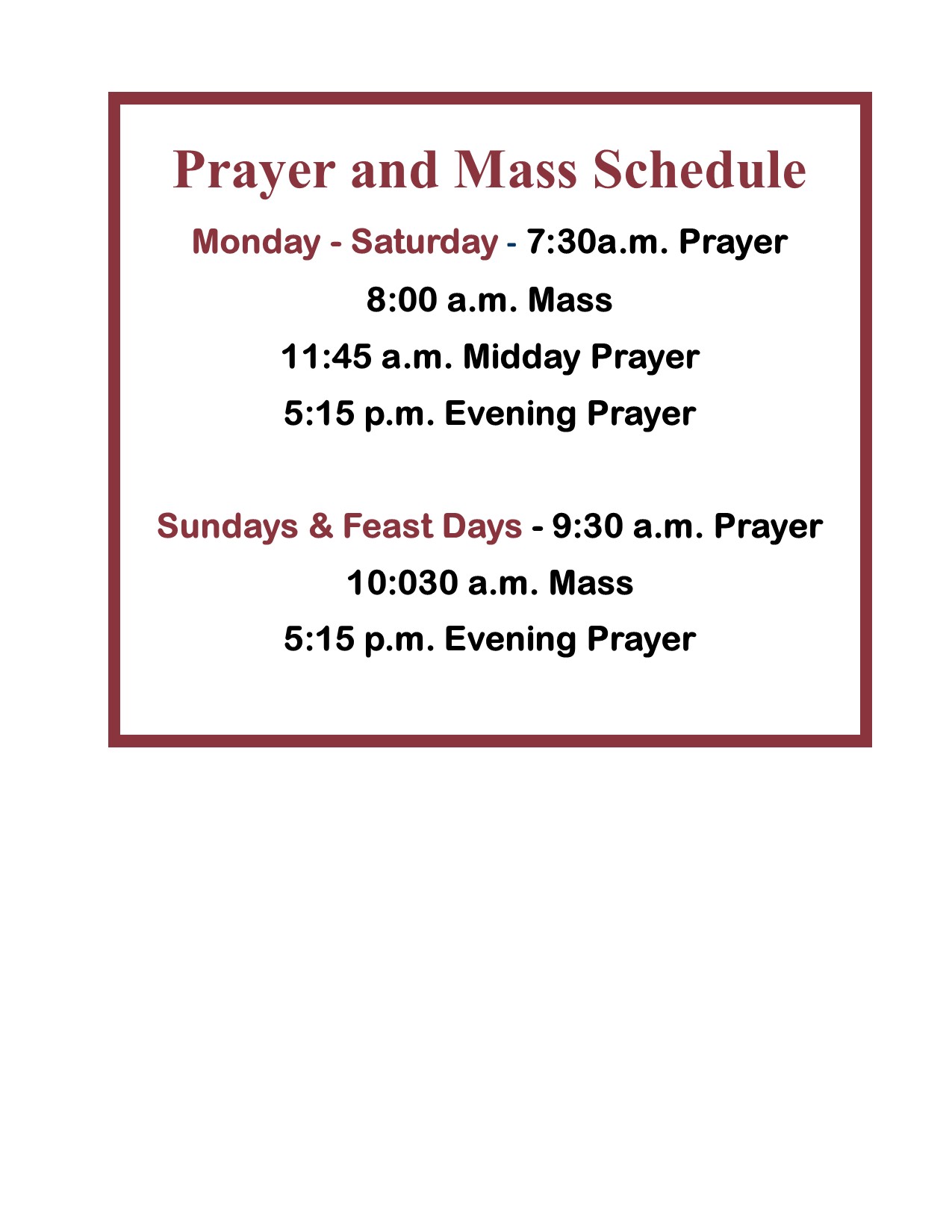
 Mass Schedule

Related Links

Copyright © 2026 · Benedictine Sisters of FL · Touching Lives Through Prayer and Service

Copyright © 2026 · Bendedictine Theme on Genesis Framework · WordPress · Log in