• Skip to primary navigation
  • Skip to main content
  • Skip to footer
Benedictine Sisters of FL

Holy Name Monastery
Founded 1889

Donate Now
  • Home
  • About Us
    • History
    • Being Benedictine
    • Benedictine Monasticism
    • Meet Our Community
    • Holy Name Academy-Alumnae
  • What We Do
    • Mission, Vision and Our Partners
    • Retreats
      • Invitation to Retreat
      • Accommodations
    • Volunteer Programs
    • Oblate Program
    • Spiritual Direction
    • Aqua/Hydroponics
    • More of Our Ministries
  • What’s Happening
    • Articles of Interest
    • Events
    • Commemorative Bricks
    • Newsletters
    • Brochures
    • Links
  • Support Us
    • Gifts of Support
    • Wish List
  • Stories Shared
  • Galleries
    • Photos
    • Videos
      • Benedictine Sisters of FL Videos
      • Other Videos
  • Contact Us

crops

Teaching is not what Jesus did; it’s who he was.

August 4, 2025 by Holy Name Monastery Leave a Comment

This Gospel sets us pondering about what is important in our lives.  The man in the incident Luke describes holds a world view that is fairly exclusive, doesn’t he?  It’s just him and HIS things. Now he’s shocked to learn that he is about to lose his life. What good are his possessions going to be to him now?   Jesus makes his opinion quite plain.  “You fool! This very night your life will be taken away.  To whom will everything belong then?!”

Surprise! Jesus refuses to take the case.  Instead, Jesus gives the squabbling brothers a parable to “mull over”.   And, what’s the point of Jesus’ story?  It’s not even remotely related to the problem that the two brothers are having.  It features a wealthy landowner that doesn’t describe either of the siblings.  Then Jesus lumps the boys in the same pot as the landowner.  He calls than all “fools”.

Better take fair warning! There is danger in thinking this parable applies only to “those rich people.” To put the matter more pointedly, thinking of those rich fools enables me NOT to think of myself as a “rich fool.”

In this little parable Jesus probes our hearts.  “Where is your treasure?” he asks.   Don’t make the mistake that this farmer made.  Examine my story. The farmer wasn’t wicked.  He didn’t gain his wealth illegally or by taking advantage of others. He’s not particularly greedy. So, what’s wrong with building larger barns, renting a storage unit to store away some of today’s bounty for a leaner tomorrow?  This kind of thinking can lead us to ask: Is there anything wrong with hanging on to clothing we’ve outgrown but might wear again someday? Or stockpiling furniture that serves only as a “catch all” because it’s just too nice to give away?  What’s wrong with requesting more allowance than we actually need saying it’s so we can do charity?  But somehow, we never find a charity other than our own pockets.  What’s the matter with setting up a little enterprise to supplement our allowance?  Why can’t we accept or ask for money gifts or gift cards from personal friends giving them the impression that our community does not take care of our needs?

Notice what the farmer’s consistent focus is.   “What should I do? I have no place to store my crops.” “I will do this: I will pull down my barns and build larger ones, and there I will store all my grain and my goods.”   It’s his relentless use of “I” and “my” that betray a preoccupation with self. He’s fallen prey to worshiping the most popular of gods: the Unholy Trinity of “me, myself, and I.”   He gives no thought to using the abundance to help others.  This most likely is what leads to a second mistake: foolishness in thinking that making provision for the future; will secure one’s future.

Jesus used the opportunity as a “teachable moment.”  Life, he impresses upon us, does not consist in things; not even in having MANY things.  The farmer in the parable is a rich man, who fears he is not rich enough.  Jesus didn’t judge him; He did teach. He was teaching all of us how to live.  After all: “Teaching is not what Jesus did; it’s who he was.”

~Reflection by Sister Roberta Bailey, OSB


First Reading:   Ecclesiastes 1:2; 2:21-23         Second Reading:  Colossians 3:1-5,9-11Gospel:   Luke12:13-21


Continue Reading
Filed Under: Blog, Front Page, Homily Tagged With: barn, crops, farmer, Gospel, Jesus, Luke, rich Fool, teachable moment

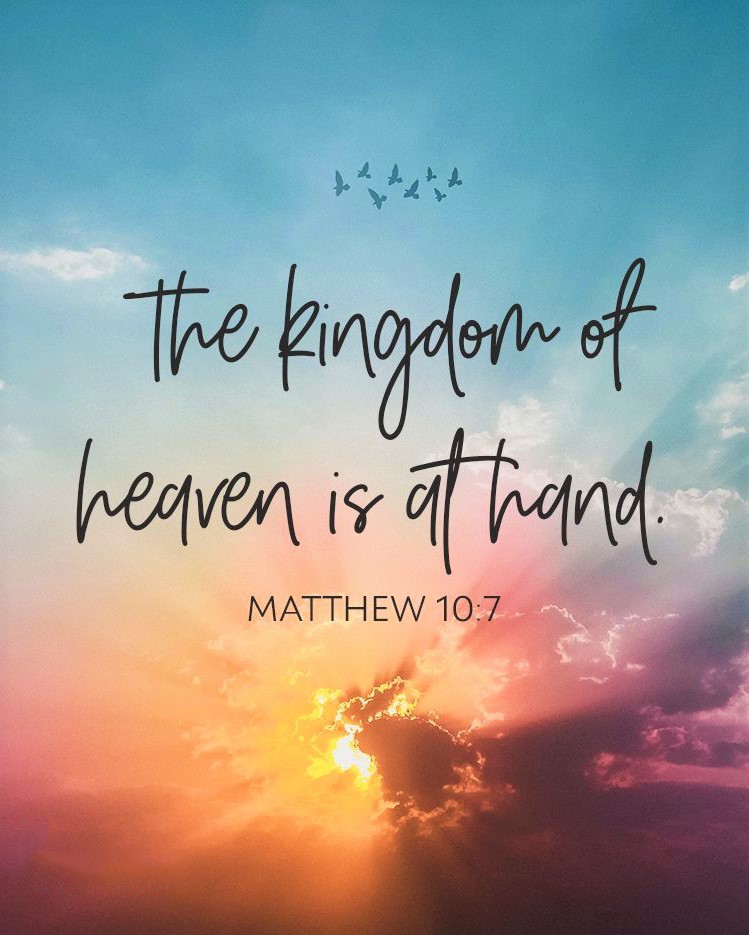
The Kingdom of Heaven is at Hand

June 20, 2023 by Holy Name Monastery Leave a Comment

“The harvest is abundant but the laborers are few.”  I had a flash back memory when I began Lectio with this Gospel story.  The summer that I entered our community, the shoreline in Lake Jovita was slowing receding and leaving a stretch of sandy beach in its wake.  St. Augustine grass was quick to see a rich opportunity to spread its runners.  In contrast, S. Rosaria, our directress, was determined that the grass was not going to win conquerors’ rights.  Believe me, the harvest was ABUNDANT!  Guess who the few laborers would be!  It was summertime and as novices our schedules included, yes, a refreshing hour at the lake to look forward to.  We who were being introduced to the convent practice of silence could laugh aloud, splash each other with glee, and even swim far from the dock … of course, in pairs.  But you’ll remember this reverie started because Jesus is talking about laborers and S. Rosaria had in her charge a handful of young, able-bodied, noisy laborers.  You guessed it!  We were instructed to spend 15 minutes of our precious recreation hour pulling up the “mile-long” runners of root-bound St. Augustine grass.  It certainly has earned its nickname “buffalo grass.”

Jesus had a knack, didn’t He, for immersing His hearers right into their surroundings?  He uses examples that are staring them right in the face and in many cases that are familiar to us.  Reading this Gospel we can imagine row upon row of Florida strawberries, fields as far as the eye can see of native wildflowers. See, the farmers and immigrant fieldhands are up before the sun to do back-bending labor until sundown.  Greenhouses across the landscape give evidence to the growing appeal and popularity of aquaponic and hydroponic farming.  The citrus industry has been driven south of us and replaced with peach orchards and Christmas tree farms as well as development.  We pray for the same intentions of our decades-ago ancestors: send us rain at the right season for a rich harvest, keep plant-eating critters away from our share of the food crops, give us health and strong backs to cultivate our gardens and laden our tables with Your bounty.  And, those children trailing the adults and the big kids; bending low to the ground to drop in seeds one-by-one?  Bless them, O God, with the delightful experience of fostering fledging plants to full bloom, and the sense of pride in adding to the array on the dinner table.  And comfort them, we pray, when tears fall on their plates of fried pet chicken.

Then I recalled hearing, probably in 5th grade, the story of the Alabama farmer George Washington Carver, known as the “Father of the Peanut Industry.”  He developed more than 300 uses for peanuts from chili sauce to shampoo; shaving cream to glue and helped save agriculture in the South.  But with all the effort to cultivate an alternative valuable crop, the farmers lost sight of what this was doing to the soil’s contents.  Now they had to deal with the same problem, soil depletion, that had caused them to switch from cotton to peanuts.  Observing the agricultural practice of rotation of crops can teach us the production benefit of increased yields, improving the organic matter in the soil, thus disrupting the lifecycle of field pests and reducing the use of chemical pesticides.

So, how in creation is this applicable to the Gospel lesson?  Jesus says, “Go into the territory of the lost sheep….”  Cure drooping arms and dragging legs, raise from the dead, cleanse the diseased, drive out demons (crop pests).  And make an announcement: “The kingdom of heaven is at hand.”

Do you think Jesus might have read farmers’ thoughts and observed their actions at the beginning of each growing season as they were gathering with all the farmhands, standing arms akimbo, eyeing the message that the sheep were sending with the evidence of their grazing patterns?  See how they self-select richer pasture land as the available harvest is depleted.  They follow a rotation of availability of crops moving from once fertile field on to one with the promise of richer pasture.

Again, how is this applicable today?  I think there is a timely vocation lesson tucked into the last sentence.  “Without cost you have received; without cost you are to give.”  Our life is our message.  A spirit of hospitality costs nothing but goodwill.  It starts in the home, the community, between each other and spreads like water seeping into cracks, binding us to one another.  Contemplate what Jesus said: “Without cost you have received; without cost you are to give.”  Listen to what is being sought in the dreams of others.  Where can you fill the gaps?  That’s how we “Cure the sick, pray for the dead and comfort mourners; drive out ill-will; raise drooping spirits and spread Jesus’ announcement: ‘The kingdom of heaven is at hand!’ ”

~Reflection by Sister Roberta Bailey, OSB


Please pray for calm weather and for peaceful recovery for the many people striving to recover from violent weather.


First Reading:   Exodus 19:2-6a         Second Reading:  Romans 5:6-11
Gospel:   Matthew 9:36-10:8


Continue Reading

Filed Under: Blog, Front Page, Homily Tagged With: crops, farmers, Gospel, Jesus, laborers, peanuts, pests, S. Rosaria, The Kingdom of heaven is at hand

Footer

Prayer / Newsletter / Info

 Contact Info

Benedictine Sisters of Florida

PO Box 2450
12138 Wichers Road
St. Leo, FL 33574-2450
(352) 588-8320
(352) 588-8443

 Mass Schedule

Related Links

Copyright © 2026 · Benedictine Sisters of FL · Touching Lives Through Prayer and Service

Copyright © 2026 · Bendedictine Theme on Genesis Framework · WordPress · Log in