• Skip to primary navigation
  • Skip to main content
  • Skip to footer
Benedictine Sisters of FL

Holy Name Monastery
Founded 1889

Donate Now
  • Home
  • About Us
    • History
    • Being Benedictine
    • Benedictine Monasticism
    • Meet Our Community
    • Holy Name Academy-Alumnae
  • What We Do
    • Mission, Vision and Our Partners
    • Retreats
      • Invitation to Retreat
      • Accommodations
    • Volunteer Programs
    • Oblate Program
    • Spiritual Direction
    • Aqua/Hydroponics
    • More of Our Ministries
  • What’s Happening
    • Articles of Interest
    • Events
    • Commemorative Bricks
    • Newsletters
    • Brochures
    • Links
  • Support Us
    • Gifts of Support
    • Wish List
  • Stories Shared
  • Galleries
    • Photos
    • Videos
      • Benedictine Sisters of FL Videos
      • Other Videos
  • Contact Us

World

Jesus Is the Bread That Is Broken Yet Never Divided

August 5, 2024 by Holy Name Monastery Leave a Comment

Admit it: We are a hungry people in a hungry world.  We crave something that will feed and energize us, fill us and satisfy more than our bellies. It’s not so much that we are hungry but it’s the kinds of bread we eat.  Think about the variety of bread we eat at our own table: wheat, multi-grain, plain white; pita pockets, hoagie rolls, English muffins, French bread and Jewish bagels and Challah bread; And, oh my goodness, the homemade varieties we get!  Saturday cooked breakfast may offer biscuits or scones, crescent rolls, pull-bread, sliced bread.  It may be toasted or plain, garlic sprinkled, seeded or stuffed.  Every Saturday is a surprise: dessert breads, nut breads, banana bread, raisin bread, cheese bread and don’t overlook all the gluten-free breads available in the markets.  The list goes on and on.

In war-torn countries both sides are eating the bread of violence and war. In our own country factions share the bread of negativity, hostility, and name-calling. In the corporate world both sides are eating the bread that objectifies and depersonalizes another human being. Many eat the bread of having to be right and get their own way. We eat the bread of hurt feelings and resentment. Sometimes we eat the bread of loneliness, fear, and isolation. There are times when we eat the bread of sorrow or guilt. Other times we eat the bread of power and control; or the bread of revenge or one-upmanship.

The world is full of bread and yet far too many live hungry, empty lives.  They wake day after day disappointed, asking God for a miracle.  It’s a sure sign that the bread we have eaten cannot give real life. It is perishable bread that nourishes only a perishable appetite.  We are left wanting more, more, more.

The bread we eat may fill our belly, may even bloat us but it’s not of lasting value.  It passes through our bodily system.  Not all bread is nutritious. If you want to know the nutritional value of bread, you have to look beyond the bread. Where did it come from? What are its ingredients?

That’s what Jesus is teaching in this gospel. The people have shown up hungry. But just yesterday Jesus fed 5000 with five loaves and two fish. Today they show up and their first question is, “Rabbi, when did you come here?”

They do not marvel at yesterday’s miracle and give thanks for Jesus’ generosity, or even wonder who this rabbi was. They’re just worried they might have missed the next meal, that Jesus started without them and they are too late. They did not perceive the meaning of the sign, the miracle, in the first feeding. They either refused or were unable to see beyond the fish and bread. They are interested only in their own appetites.

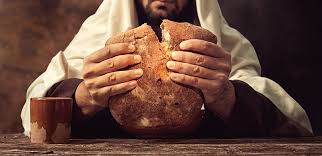
Jesus knows this kind.  He calls them out: “Very truly, I tell you, you are looking for me, not because you saw signs, but because you ate your fill.” The people are concerned for their bellies; Jesus is concerned for their lives. The people want to feed themselves with bread; Jesus wants to feed them with God. “Do not work for the food that perishes,” he tells them, “but for food that endures for eternal life.”  Jesus himself is the bread that is broken and distributed for the life of the world. He is the bread that is broken yet never divided. He is the bread that is eaten and yet the value is never exhausted.

When we believe in Jesus: eating, ingesting, and taking him into our lives, we live differently. We see ourselves and one another as persons created in the image and likeness of God.  We trust the silence of our prayer life. We choose love and forgiveness and reconciliation.  We relate with intimacy and vulnerability. We listen with “the ear of our heart” for God’s voice.  “I am the bread of life,” Jesus tells us. “Whoever comes to me will never be hungry, and whoever believes in me will never thirst.” Jesus is offering us himself – the imperishable bread that nourishes and sustains imperishable life.  So, what bread will we offer our guests and co-workers?  What bread will you and I eat today?

~Reflection by Sister Roberta Bailey, O.S.B.


Stay informed, stay safe from the effects of the tropical storm and all the “storms” of life ….   As commentators are warning: “hide from the winds; run from rising water” and pray for safety and speedy damage recovery for all peoples.  God bless!

 

First Reading:   Exodus 16:2-4, 12-15         Second Reading:  Ephesians 4:17, 20-24
Gospel:   John 6:24-35
Continue Reading

Filed Under: Blog, Front Page, Homily Tagged With: bread, Gospel, hungry, Jesus, Rabbi, World

Five Ways of Seeing

October 27, 2022 by Holy Name Monastery Leave a Comment

Life is about learning to see what we’re looking at—if we actually see it at all.

It takes a while, but eventually, the really perceptive soul discovers that there are actually five ways of seeing as we go through life.

At the first level of insight, we see only what’s in front of us.  The immediate becomes the center of the world.  We do not see beyond ourselves because we have drawn the circle of life too small, too close, too narrowly.  The older next-door neighbor, the colleague with the sick child, the friend whose life is careening off the tracks are part of my consciousness—but not part of my heart. Their agendas do not compel me to action.  Their lives do not really touch mine.

At the second level of insight, we see only the obvious, not what drives the obvious. Not what’s under the obvious.  We come to see that the other has the same feelings we do and that, like ours, they need to be heeded.  We see more of the world suddenly, but find it as lonely and confused as our own.

At the third level of insight, we see a broader world, but only from our own perspective.  Everyone should live in a democracy, we decide.  The whole world would be better off if everyone were like us.  We are the acme of the universe, we know.  Then, all of our efforts go into making the rest of the world like us.  Except that never happens and we cannot for the life of us figure out why.

At the fourth level of insight, we see a changing canvas and realize suddenly that nothing is stable, all things are in flux.  The question, of course, is whether we realize that we, too, are in the process of change now—because we have seen that nowhere does life stand still.

At the fifth level of insight, we learn to truly see beyond the center of the self and find that we are all alike, all trying to find one another, all wishing to be human together.

At that point, of course, we see our differences and find that they are beautiful—and see our likenesses and discover that they are the stuff of our growth.  We do not need to be anyone else now.  Instead, we can be everyone else now, understanding them, learning from them—trusting that I can change and become even more myself at the same time.

The question, of course, is, at what level of insight are we now?  What will it take to grow beyond ourselves and discover the rest of life?

  –from Two Dogs and a Parrot: What Our Animal Friends Can Teach Us About Life by Joan Chittister (BlueBridge)
Continue Reading

Filed Under: Blog, Front Page, Homily Tagged With: changing canvas, diferences, Five ways of seeing, front of us, insight, life, obvious, World

How are you Salting the World?

September 28, 2015 by Holy Name Monastery 1 Comment

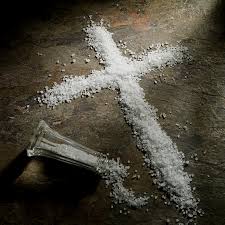
Not to make light of the Scripture just proclaimed, I would like to share with you the next verses after today’s reading – which liturgists omitted when they organized the Lectionary.  We do get them sometime during the year.  But, they will not be read next Sunday –They are too rich, I believe, to let them slip from our attention.

Everyone will be purified by fire, as a sacrifice is purified by salt.  Salt is good; but if it loses its saltiness, how can you make it salty again?  (I like the translation that says “if salt become insipid.”  “Insipid” is a rich descriptive word.  If a person become “insipid” how can her tang be restored?

Everyone knows about salt. It has an interesting taste, doesn’t it?  I’ve never met anyone who doesn’t like at least a hint of salt.  We use it every day to make our food tastier – even when the doctor dictates against it, most people crave it.

On the other hand, many of people are picky about spices.   Some think food is distasteful unless it’s pepper-hot.  The mere thought of hot spicy foods ties my stomach in a huge knot.   I marvel at people who devour a whole jalapeno pepper.

Making food taste better is just one of many uses for salt.  Reader’s Digest lists 60 everyday uses.  I will not boar you – or entertain you with them all – just a few.   It can be used to end an ant parade, deodorize your shoes, clean flower residue from a vase, freshen up artificial flowers, remove water rings from furniture, extinguish a grease fire, or a cloth soaked in salt water will prevent cheese from getting moldy.      Remember S. Bernadette’s big dye pot!  Well, salt is used in fixing the dye in fabric.  Without salt, the bright colors that we wear today would quickly fade.   It’s used in the production of over 14,000 different products – for instance in the making leather products.  Each year, food companies use an amount of salt that is every bit as staggering as it sounds: 5 billion pounds

The usefulness of salt was a well-known fact prior to the time that Jesus walked this earth.  At one time, salt was so important and valuable that people were paid with salt. Thus came the expression “are you worth your salt?”   Is it any wonder that Jesus told us that we were to be like salt to the world?  Listen to the words of Jesus.  “Salt is good, but if it loses its saltiness, how can you make it salty again? Have salt in yourselves, and be at peace with each other.” I think that he was saying that we should “salt” that is, flavor our world with love and that we should allow him to use us in making the world a better place.

Recently S. Elizabeth shared with me an Indian folk tale about salt.  A Google search revealed that every culture has a variation of the tale – most have a princess (not a prince) as the main character.

The story line goes: Once upon a time there was a king who had several daughters.  He was trying to decide which should inherit the kingdom.  So he asked each one, “How do you love me?

The first three daughters answer: “I love you as sugar or honey and sherbet. ”  To the last and youngest the king asked, “And how do you love me?”   “I love you as salt.”  On hearing the answer of his youngest daughter the king frowned, and, as she persisted in repeating it, the king was no longer listening and waved her away.

Some time later the daughter ordered the cook to prepare a meal for her father but not to add salt to any of the food.   When the king sat down to eat, the first course included only sweets which he either passed by altogether or merely picked at with displeasure.  Next he was served meat, which he usually enjoyed but this was AWFUL and he waved it away.  But, he was very hungry, and was longing sorely for something which he could eat.   The princess sent him a dish of common spinach, seasoned with salt, coarse salt such as farmers eat.  The king signified his pleasure by finishing off the dish with relish.

Then the princess stepped forward to reveal herself saying, “Oh my father, I do love you so.  I love you as salt.  My love may be homely, but it is true, genuine and lasting.

Thus, as the saying goes, were the Scriptures fulfilled: let us “Have the salt of friendship among yourselves, and live in peace with one another.”

Certainly, Pope Francis is proving to be a “salty” personality.  He speaks gently, with a voice of persuasion – not just to Catholics, or some denomination, not just to Christians nor his immediate audiences but to ALL peoples.  As one columnist put it, he teaches the Gospel, not the catechism.

How about you?  Are you allowing Jesus to use you to be salt to the world?  How are you flavoring the world?  Are you an irritant rubbing salt in the wound?  Or are you a soothing poultice held lovingly to a tender hurt?  Are you worth your salt?  Are we drying the salt of tears for the abused?   Salt seasons soup in order to fulfill its purpose Remember salt is no good by itself – it takes companionship to bring out its flavor?   In whose life are you bringing out the flavor; who is salting your life?

Continue Reading

Filed Under: Homily, Prayer Tagged With: God, Insipid, Jesus, Mark 9:38, Salt of Earth, Salt the World, World

Footer

Prayer / Newsletter / Info

 Contact Info

Benedictine Sisters of Florida

PO Box 2450
12138 Wichers Road
St. Leo, FL 33574-2450
(352) 588-8320
(352) 588-8443

 Mass Schedule

Related Links

Copyright © 2026 · Benedictine Sisters of FL · Touching Lives Through Prayer and Service

Copyright © 2026 · Bendedictine Theme on Genesis Framework · WordPress · Log in