Come join us for our Annual Thanksgiving Dinner!


Holy Name Monastery
Founded 1889
 “And, one of them, realizing he had been healed, returned, glorifying God in a loud voice; and he fell at the feet of Jesus and thanked him.”
We’re not told how these men discovered that they were healed, but it probably didn’t take long. Looking at one of his comrades, a leper probably said something like, “Where is your leprosy? Your face is clear. The skin of your hands is soft and even.” Then all of them begin to examine themselves and, sure enough, they ARE healed. What “whoop and holler” must have gone up as they took off running toward the priests’ village.
But only one man returned to give thanks – that gives us the moral of the story: Jesus expects us to show gratitude. But thankfulness is a learned trait – at least the outward expression is. If you don’t actually remember hearing this expression, you surely had it ingrained into the fiber of your being. When you were handed a gift or a compliment, Mom would prompt: “What do you say?” Most of us were taught the value of a thank you note (now an e-card). However, we must train ourselves to show thanks, to give thanks, to be filled with thanksgiving.
But this thankfulness is sometimes time-consuming. Sometimes it requires going out of our way, delaying what we had at the top of our TO DO list. A life of thanksgiving is a life of prayer. Prayer first. Before going to the priests to be declared healed. Prayer first. Before the things we have to do. Prayer first. Before we get immersed in our everyday activities. Prayer first. Thanksgiving first.
Finally, gratitude is an important component in our salvation. Were all ten lepers healed? Yes. Were they all saved? Yes, in the sense that they were rescued from their disease. But maybe not in the sense of drawing closer to God in thankfulness and dependence. Please God that may we be ever thankful for favors great and small, seen and unseen. In the words of tomorrow’s Gospel Acclamation: “In all circumstances, give thanks, for this is the will of God for you in Christ Jesus.
Recently I heard a true story of gratitude that wrought salvation. The lady who told the story works downtown in a large city. Every morning, she encountered a middle‑aged woman in a shabby coat soliciting spare change from passers-by. She greeted everyone with a smile and a pleasant “Good morning.” The lady who told the story almost always gave her something. After almost a year of this routine, however, the woman in the shabby coat disappeared. My friend wondered what had happened to her.
Then, one beautiful morning, she was in her place in front of the church, still wearing the same, shabby coat. As  folks reached into their purses or pockets for their usual donation, the woman stopped each of them. “Thank you for helping me all those days,” she said. “You won’t see me again because I’ve found a job.” With that, she reached into a bag and handed each one a wrapped package. She had been standing at her old spot waiting, not for a handout, but for the people she recognized so that she could give each of them a doughnut. She recognized those who had given to her in her time of need. This is gratitude!
Hearing the woman’s story, have pondering the story of the grateful cured man, I am reminded of the words of Hosea, the words that inspired the Weston Priory hymn: “Come back to me with all your heart, don’t let fear keep us apart.”
It took courage for the now-cleansed man to retrace his steps back to Jesus, to publicly – loudly – glorify God and proclaim his thanks to Jesus. Deep in his heart he must have sensed the spirit of the words of Hosea: “Come back to me.”
When Jesus’ disciples cry out for an increase in faith Jesus offers them two related teachings. The first is the familiar reminder that faith, even just a little, will enable the followers of Jesus to do wondrous things. But this uplifting and inspiring teaching is quickly followed by the second teaching, a caution about knowing one’s place in God’s plans. Even when God works wonders through us, with our mustard seed-sized faith, we must not seek praise. Our participation in God’s plans is God’s grace to us—nothing more, nothing less.
Yesterday we celebrated St. Francis day so I want to tell you a St. Francis story – maybe only part truth. This is not the story of how his father disowned him and he stripped naked in court and walked away. It’s not the story of how he received the stigmata. Nor is it the story of the Wolf of Gubbio. This is a story you may not have heard; this is the 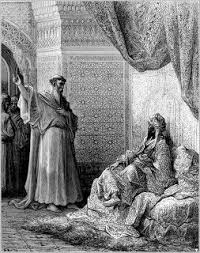 story of St. Francis and the Sultan Al-Kamil. It takes place during the Fifth Crusade – when Francis’ pilgrimage took him across the battle lines in ancient Egypt. He was immediately captured and brought before Sultan. According to some versions of the story, he challenged the Muslim clerics to a trial by fire: both he and they would preach from the heart of a bonfire and whoever was not burned alive would be the one preaching the true God. The Muslim clerics declined the challenge. Francis then offered to go into the fire by himself, with the proviso that if he was not burned up the Sultan and all his followers would have to convert to Christianity. The Sultan did not take Francis up on this offer.
Whether or not that’s true, it is known that Francis preached to the Sultan and his household, who were so impressed by Francis that the Sultan offered him numerous gifts — which Francis refused — and gave him safe conduct back to the Crusader camp. When in time the Crusader Kingdoms fell, the Muslim rulers granted permission for Christians to tend the Christian holy sites in the Holy Land, but that permission was not given to the Church as a whole, it was given specifically to the Franciscans. In fact this arrangement persists to this day — there is a Catholic office called “Custodian of the Holy Land,” and it is always held by a Franciscan; and in places where custody is shared by different Christian denominations — like the Church of the Holy Sepulcher — it is Franciscans who represent the Roman Catholic church. All because of that one visit between St. Francis and the Sultan.
Jesus says, “If you had faith the size of a mustard seed, you could say to this mulberry tree, ‘Be uprooted and planted in the sea,’ and it would obey you.” St. Francis acted out of this spirit of courage and faith when he crossed the battle lines in Egypt. He had no idea what would happen to him; he had every reason to expect to be taken prisoner at the very least. Afterward, he doubtless thought his mission had failed. But — he had made a connection — a moment of authentic human connection, two people meeting each other face to face — that has had consequences to this very day – over 800 years!
The world is full of people who are divided from us, even opposed to us — because of religion, or nationality, or ethnicity, or political views, or any of a thousand things. God calls us to reach out to these people in a spirit of courage and love, unashamed of our testimony about our Lord and our mission, our way of life. We may not convince them — we may not bring them around to our point of view. We may not even make peace. The world being what it is, the odds are against it.
The big problems in the world — hunger, war, religious conflict, and so on — often seem too big for us. Maybe they are. But we have to have faith that if we can move the pebble — then God will move the mountain.
In an interview shortly after his election, Pope Francis advises us: “Instead of being just a church that welcomes and receives by keeping the doors open, let us try also to be a church that finds new roads, that is able to step outside itself…” Sounding like his patron Francis, he says: “We need to proclaim the Gospel on every street corner, preaching the good news of the kingdom and healing… focusing on the essentials… We have to find a new balance; otherwise we will lose the freshness and fragrance of the Gospel.”
 This Gospel seems to be a case of “too little, too late.” In desperation, finally, the rich man – suffering the consequence of his insensitivity to everyone but himself, makes a grand gesture. When it dawns on him that he cannot save himself his early training takes over. He calls on Abraham to have pity on his siblings. He begs Abraham to at least give them a “heads up” about the dire cost of the repeated selfish pattern of their lives. In the end, he acknowledges it is too late to save himself. He has strayed too far from the kindness his mother had instilled in him in early childhood.
You may ask is this an historical account or is it a parable? Or, is there a difference? Is it the true story of two men who lived and died during the time of Christ’s earthly ministry? Or is it a story made up by Jesus to drive home a point?
You see, by definition, a parable is a true-to-life story used to illuminate a truth. This is true even if all of the details never occurred exactly as presented in the story. Parables are special stories that may, or may not, reflect historical events. Nevertheless, they must be true-to-life – they must be based on a real-life situation that the hearers are familiar with. In other words, the story itself has to be based on events that could have happened, whether they ever actually did.
A parable must be a true-to-life story in order for it to have any meaning to those who hear it. To try to use a fanciful story containing elements that have no basis to the world in which men and women live would only serve to confuse people rather than providing them with spiritual light.
We can relate to the main character’s growing insensitivity. How easily we too can become desensitized! In some ways it’s good. We can train ourselves by cultivating the habit of “selective sensitivity” (selective hearing and seeing) so that little annoyances fade into the background where it takes a concerted effort to notice them. The crunch of fresh potatoes chips, the click of heels on the hall surface, the fan motor on the AC, even the blinking light on the chapel.
However, the opposite, too, may prevail. I fear that as a nation, as individuals we can be bombarded by so many sources of media featuring stories of horrible torture and inhumane treatment; sustained hunger; the effects of natural disasters that it overwhelms our sensitivities so deeply that emotionally we shut down. We suffer brain over-load. We hear but we don’t listen. We direct our attention to the next graphic depiction of raging violence or the devastation wrought by climate change on the New Jersey shoreline. The images flash, and the newspapers stories and pictures, slip through our minds like the story in a novel or frames in a comic book. After a while we fail to separate between fact and fiction; between everyday happenings and once-a-week invented TV dramas. How does this happen? How can we continue to stay in touch with our gentler nature, our God-eyes and ears – the compassion of Christ that we promise to extend “to all those in our realm of influence”? (Corporate Commitment)
Our dedication in being true to our corporate commitment is living proof that we are learning the lesson Jesus is teaching … We share in the ministry of the compassion of Jesus when we provide hope and comfort to God’s people. The moral of the story, I believe, is captured in the prompting of Joan Chittister when she asks: “What do we want to be caught dead doing?”
I would like to suggest that our prayer intention for this week, to pray for an end to human trafficking, can be tied to the Gospel lesson. We chose that intention without knowing (if I recall correctly) that Pope Francis would call upon the Catholic Church to celebrate this Sunday the World Day of Prayer for Migrants and Refugees with the theme “It is not just about migrants.” The week of prayer provides an opportunity, in Francis words, to recognize that “it is not only the cause of migrants that is at stake; it is not just about them, but about all of us, and about the present and future of the human family.”
I encourage each of you to read Pope Francis’ message that was released in advance of the celebration. (It is below for readers – and posted in the Community for those in the house.) You’ll see it highlights the theme and provides guidance to everyone who works on this issue.
Amos 6:1a-7/ 1 Timothy 6:11-16/ Luke 16:19-31 Sister Roberta Bailey, OSB
The Holy See MESSAGE OF HIS HOLINESS POPE FRANCIS
FOR THE 105th WORLD DAY OF MIGRANTS AND REFUGEES 2019
[29 September 2019]
“It is not just about migrants” Dear Brothers and Sisters, Faith assures us that in a mysterious  way the Kingdom of God is already present here on earth (cf. Gaudium et spes, 39). Yet in our own time, we are saddened to see the obstacles and opposition it encounters. Violent conflicts and all-out wars continue to tear humanity apart; injustices and discrimination follow one upon the other; economic and social imbalances on a local or global scale prove difficult to overcome. And above all it is the poorest of the poor and the most disadvantaged who pay the price. The most economically advanced societies are witnessing a growing trend towards extreme individualism which, combined with a utilitarian mentality and reinforced by the media, is producing a “globalization of indifference.” In this scenario, migrants, refugees, displaced persons and victims of trafficking have become emblems of exclusion. In addition to the hardships that their condition entails, they are often looked down upon and considered the source of all society’s ills. That attitude is an alarm bell warning of the moral decline we will face if we continue to give ground to the throw-away culture. In fact, if it continues, anyone who does not fall within the accepted norms of physical, mental and social well-being is at risk of marginalization and exclusion.
For this reason, the presence of migrants and refugees – and of vulnerable people in general – is an invitation to recover some of those essential dimensions of our Christian existence and our humanity that risk being overlooked in a prosperous society. That is why it is not just about migrants. When we show concern for them, we also show concern for ourselves, for everyone; in taking care of them, we all grow; in listening to them, we also give voice to a part of ourselves that we may keep hidden because it is not well regarded nowadays.
“Take courage, it is I, do not be afraid!” (Mt 14:27). It is not just about migrants: it is also about our fears. The signs of meanness we see around us heighten “our fear of ‘the other’, the unknown, the marginalized, the foreigner… We see this today in particular, faced with the arrival of migrants and refugees knocking on our door in search of protection, security and a better future. To some extent, the fear is legitimate, also because the preparation for this encounter is lacking” (Homily in Sacrofano, 15 February 2019). But the problem is not that we have doubts and fears. The problem is when they condition our way of thinking and acting to the point of making us intolerant, closed and perhaps even – without realizing it – racist. In this way, fear deprives us of the desire and the ability to encounter the other, the person different from myself; it deprives me of an opportunity to encounter the Lord (cf. Homily at Mass for the World Day of Migrants and Refugees, 14 January 2018).
“For if you love those who love you, what recompense will you have? Do not the tax collectors do the same?” (Mt 5:46). It is not just about migrants: it is about charity. Through works of charity, we demonstrate our faith (cf. Jas 2:18). And the highest form of charity is that shown to those unable to reciprocate and perhaps even to thank us in return. “It is also about the face we want to give to our society and about the value of each human life… The progress of our peoples… depends above all on our openness to being touched and moved by those who knock at our door. Their faces shatter and debunk all those false idols that can take over and enslave our lives; idols that promise an illusory and momentary happiness blind to the lives and sufferings of others” (Address at the Diocesan Caritas of Rabat, 30 March 2019).
“But a Samaritan traveler who came upon him was moved with compassion at the sight” (Lk 10:33). It is not just about migrants: it is about our humanity. Compassion motivated that Samaritan – for the Jews, a foreigner – not to pass by. Compassion is a feeling that cannot be explained on a purely rational level. Compassion strikes the most sensitive chords of our humanity, releasing a vibrant urge to “be a neighbor” to all those whom we see in difficulty. As Jesus himself teaches us (cf. Mt 9:35-36; 14:13-14; 15:32-37), being compassionate means recognizing the suffering of the other and taking immediate action to soothe, heal and save. To be compassionate means to make room for that tenderness which today’s society so often asks us to repress. “Opening ourselves to others does not lead to impoverishment, but rather enrichment, because it enables us to be more human: to recognize ourselves as participants in a greater collectivity and to understand our life as a gift for others; to see as the goal, not our own interests, but rather the good of humanity” (Address at the Heydar Aliyev Mosque in Baku, 2 October 2016).
“See that you do not despise one of these little ones, for I say to you that their angels in heaven always look upon the face of my heavenly Father” (Mt 18:10). It is not just about migrants: it is a 2 question of seeing that no one is excluded. Today’s world is increasingly becoming more elitist and cruel towards the excluded. Developing countries continue to be drained of their best natural and human resources for the benefit of a few privileged markets. Wars only affect some regions of the world, yet weapons of war are produced and sold in other regions which are then unwilling to take in the refugees produced by these conflicts. Those who pay the price are always the little ones, the poor, the most vulnerable, who are prevented from sitting at the table and are left with the “crumbs” of the banquet (cf. Lk 16:19-21). “The Church which ‘goes forth’… can move forward, boldly take the initiative, go out to others, seek those who have fallen away, stand at the crossroads and welcome the outcast” (Evangelii Gaudium, 24). A development that excludes makes the rich richer and the poor poorer. A real development, on the other hand, seeks to include all the world’s men and women, to promote their integral growth, and to show concern for coming generations.
“Whoever wishes to be great among you will be your servant; whoever wishes to be first among you will be the slave of all” (Mk 10:43-44). It is not just about migrants: it is about putting the last in first place. Jesus Christ asks us not to yield to the logic of the world, which justifies injustice to others for my own gain or that of my group. “Me first, and then the others!” Instead, the true motto of the Christian is, “The last shall be first!” “An individualistic spirit is fertile soil for the growth of that kind of indifference towards our neighbors which leads to viewing them in purely economic terms, to a lack of concern for their humanity, and ultimately to feelings of fear and cynicism. Are these not the attitudes we often adopt towards the poor, the marginalized and the ‘least’ of society? And how many of these ‘least’ do we have in our societies! Among them I think primarily of migrants, with their burden of hardship and suffering, as they seek daily, often in desperation, a place to live in peace and dignity” (Address to the Diplomatic Corps, 11 January 2016). In the logic of the Gospel, the last come first, and we must put ourselves at their service.
“I came so that they might have life and have it more abundantly” (Jn 10:10). It is not just about migrants: it is about the whole person, about all people. In Jesus’ words, we encounter the very heart of his mission: to see that all receive the gift of life in its fullness, according to the will of the Father. In every political activity, in every program, in every pastoral action we must always put the person at the centre, in his or her many aspects, including the spiritual dimension. And this applies to all people, whose fundamental equality must be recognized. Consequently, “development cannot be restricted to economic growth alone. To be authentic, it must be well rounded; it must foster the development of each man and of the whole man” (SAINT PAUL VI, Populorum Progressio, 14).
“So then you are no longer strangers and sojourners, but you are fellow citizens with the holy ones and members of the household of God” (Eph 2:19). It is not just about migrants: it is about building the city of God and man. In our time, which can also be called the era of migration, many innocent people fall victim to the “great deception” of limitless technological and consumerist development (cf. Laudato Si’, 34). As a result, they undertake a journey towards a “paradise” that inevitably 3 betrays their expectations. Their presence, at times uncomfortable, helps to debunk the myth of a progress that benefits a few while built on the exploitation of many. “We ourselves need to see, and then to enable others to see, that migrants and refugees do not only represent a problem to be solved, but are brothers and sisters to be welcomed, respected and loved. They are an occasion that Providence gives us to help build a more just society, a more perfect democracy, a more united country, a more fraternal world and a more open and evangelical Christian community” (Message for the 2014 World Day of Migrants and Refugees).
Dear brothers and sisters, our response to the challenges posed by contemporary migration can be summed up in four verbs: welcome, protect, promote and integrate. Yet these verbs do not apply only to migrants and refugees. They describe the Church’s mission to all those living in the existential peripheries, who need to be welcomed, protected, promoted and integrated. If we put those four verbs into practice, we will help build the city of God and man. We will promote the integral human development of all people. We will also help the world community to come closer to the goals of sustainable development that it has set for itself and that, lacking such an approach, will prove difficult to achieve.
In a word, it is not only the cause of migrants that is at stake; it is not just about them, but about all of us, and about the present and future of the human family. Migrants, especially those who are most vulnerable, help us to read the “signs of the times”. Through them, the Lord is calling us to conversion, to be set free from exclusivity, indifference and the throw-away culture. Through them, the Lord invites us to embrace fully our Christian life and to contribute, each according to his or her proper vocation, to the building up of a world that is more and more in accord with God’s plan.
In expressing this prayerful hope, and through the intercession of the Virgin Mary, Our Lady of the Way, I invoke God’s abundant blessings upon all the world’s migrants and refugees and upon all those who accompany them on their journey.
From the Vatican, 30 April 2019 FRANCIS
Continue ReadingWhile I was preparing this reflection, a long ago riddle came unbidden to mind. I verified it on the Internet .. my memory was correct but I had it in a decade too early. I was thinking it was from the 1950s … but jump forward a decade to the late 60s. There was a quite popular parable about a pig and a mother hen strolling through a town plaza where there was a billboard with a graphic of a platter of bacon and eggs advertising all-day breakfast at a local café. The mother hen turned to the pig and said, “Do you see, my Friend, the contribution we make to those human folks’ dining enjoyment?”
“Ah, but there’s a big difference,” said the pig, “Your contribution is just dedication. Mine is total commitment.”  [Now, you may wonder how in the world this can be related to the Gospel … well, it’s all about commitment, isn’t it?
So, really, is the pig the one who is the committed one? For the pig to be a part of the bacon-and-egg breakfast, the pig has to be slaughtered. But does the pig buy into the adage that life is an “all or nothing” proposition?
No one asked the little pig if it would like to be slaughtered. The pig certainly doesn’t volunteer for to be slaughtered. Some might say that to be bacon was the pig’s destiny. I’ll bet the little pig would disagree. The problem with being slaughtered is that the pig can only be slaughtered once.
This is a bit like a potential member that may start out strong but quickly fizzles out and looks for another monastery unless, we make a concerted effort to insure her allegiance and loyalty. Without that sense of connection, it could be worse if she stays. But … is this real commitment? In a pig’s eye.
Now, I am not, nor have I ever been, a poultry farmer. But, it seems to me for the hen to be part of the bacon and egg breakfast, she only has to do what is in her very nature – what she grew up to do. The hen was born to lay eggs. The hen doesn’t know how not to lay eggs. You don’t even have to ask for the eggs, the hen just does it. The best part is that the hen will continue to lay eggs for as long as she is physically able.
This is like the member that gives you years of sustained superior service because she has found her passion and revels in doing it every day.
Is this real commitment? You can bet the farm on it.
So how do you find these committed, passionate members? Going through the same old motions and asking the same old interview questions like “What are your strengths? What is your greatest weakness? How could you contribute to our charism?” aren’t going to help us find the passionate Seekers for which we are looking. It may help us find good volunteers – valuable? Yes, most certainly. But it won’t ipso facto help us find great, committed and contributing members. This requires a live-in – a boot camp – experience. An extended time of rubbing shoulders in the trenches of everyday life. An experience of falling down and getting up with the support of mutual “long-timers” in the life. The only way to find this commitment is to provide an environment for their passion to shine and to discern with them if theirs is a Benedictine vocation.
Perhaps the more important question is: “Have YOU found your true passion? The thing that really gets you excited?” (Don’t get confused – being good at something is not the same thing as BEING passionate about it.) Jesus is the ideal coach to help you find your passion. He certainly had his: save the world! So associating with him, looking to his example, imitating his actions, his style of interactions, deep conversations with Him will help you not just “find” your passion. His goodness, his enthusiasm for life will rub off on you.
Calling the pig the committed one is unadulterated poppycock. [Yes, once the pig is slaughter, it is recycled to continue into another form providing sustenance for the consumer to do good in the world.] But let’s be real! The chicken is the truly committed and passionate one: day after day, year after year, doing what she knows God called her to, what she was made for, why she was created. … Oh, it takes the right nourishment and a conducive environment. “Free range” is for everyone. But, once you have found your passion, your calling, the thing you cannot NOT do. You cannot NOT be the person you were created to be. Passion drives you, informs you – peaks your thirst for a deeper relationship and prompts you to do your part to uphold your end of the covenant.
First Reading Wisdom 9:13-18b Second Reading Philemon 9-10, 12-17 Gospel Reading Luke 14:25-33
Reflection by Sister Roberta Bailey, OSB
Continue Reading
