• Skip to primary navigation
  • Skip to main content
  • Skip to footer
Benedictine Sisters of FL

Holy Name Monastery
Founded 1889

Donate Now
  • Home
  • About Us
    • History
    • Being Benedictine
    • Benedictine Monasticism
    • Meet Our Community
    • Holy Name Academy-Alumnae
  • What We Do
    • Mission, Vision and Our Partners
    • Retreats
      • Invitation to Retreat
      • Accommodations
    • Volunteer Programs
    • Oblate Program
    • Spiritual Direction
    • Aqua/Hydroponics
    • More of Our Ministries
  • What’s Happening
    • Articles of Interest
    • Events
    • Commemorative Bricks
    • Newsletters
    • Brochures
    • Links
  • Support Us
    • Gifts of Support
    • Wish List
  • Stories Shared
  • Galleries
    • Photos
    • Videos
      • Benedictine Sisters of FL Videos
      • Other Videos
  • Contact Us

obedience

Actions speak louder than words

October 3, 2017 by Holy Name Monastery 1 Comment


The overriding theme of all of the Mass readings, it seems to me, is “honest sincerity.”  In the Gospel account we just heard the younger brother tell his father: “Yes, I’ll go and work” while the older brother said: “No, not me.” Both used words contrary to their actions.

This an age-old story.  The dynamic happens in families, between friends, in the work force and in monastic community.   The situation Jesus poses is rather straightforward. Two sons are given the same task by their father: one asserts his objection, his intent to disobey right up front, but then in the end obeys his father’s wish.  The second son obeys in his words, but disobeys in his actions. For both, what they say with their words is not in their hearts – the head said one thing; the heart another.

The story reminds us that talk is cheap and actions speak louder than words.  You’ve all heard the phrase: “Don’t just talk the talk; walk the walk.”  Be slow to dismiss these truisms.  We’ve all been hurt by promises given and then broken.  Or, on occasions we have been given words that have hurt us, really hurt us, not because they were nasty but because we relied on them and were later betrayed. Intentions are too often little more than wishful thinking; appearances are deceptive. Being honest and then acting in honesty are sometimes tough things to do. You know where the path of good intentions leads, right?

The question that Jesus poses is pointed and direct: Which son did what the father wanted?  Jesus could ask us the same question. Do our words indicate our obedience to God? If not our words, do our actions? God desires a full conversion of heart, that our actions (and our words as well) will give evidence of our love for God.  The older brother had no intention of working and had the honesty of saying so. He was wrong, but he was honest. The younger brother was the opposite. He said the expedient thing knowing what his father wanted to hear but he had no integrity.

Yes, talk can be cheap. The younger brother simply didn’t live up to his words; the older brother changed his mind. The older brother had integrity; the younger brother gave valueless words to his father while having no intention at all of working.   With which brother do your words or actions identify?

For Benedictines obedience is central – we’ve come to the monastery to hear, to listen, to seek God but to do that we have to be willing to listen and then obey God’s voice as heard in your personal prayer, in the voice of the superior and spiritual guide and in communal discernments and in our interactions with each other.  As Benedict describes it, for those who have chosen to live in cenobitic community, our obedience must be open, prompt and positive, (even if it is painful) and given without murmuring.

We would do well to recall both this gospel story, and Benedict’s words about obeying with alacrity when we are asked to do a favor for one of our sisters or a co-worker.  Do we mumble OK and then put it on the back burner so far back that the pot boils away and the need goes up in the waves of evaporation?  Do you say YES and honestly add “but not right now” and make a sincere effort to perform the action when we said we would?  Are you like the son who said “no can do” but later realize your selfish response and go back to do the favor after all?  Or, do you render the favor but tell the neighborhood about the unfairness of what you had to do?  We know that for Benedict, murmuring was an abomination, anathema, a curse in community and any sign of murmuring was to be censured.

In one of her first books on the Rule, Joan Chittister suggests: “Say to the member who signs up for a task but then complains, please don’t sign up.  Kindly give the community the gift of not murmuring about it.  The rest of the community will get the job done.  Please just stay home and keep a smile on your face.  Don’t do the work and then poison the environment of the house with murmuring.”

Oh, you may think: it’s easy for you to talk about obedience – you’re the prioress, who do you have to obey?   But, think about it, for the monastic leader, actually, any leader, may have some authority with her position, but the power lies in the hands and will of the membership.  Obedience in monastic life is mutual – it springs from the bloom of mutual respect.  Without both there is no community – there is just a group of women living under the same roof.

So, what enables us to mature to a higher level of obedience?   First how do you know what level of obedience is operating in your life?  You may recall Piaget’s and Kohlberg’s stages of moral development – moving from obedience for fear of punishment to the highest stage which some never reach and those who do rarely can consistently operate at that level.  We are at the level of moral maturity where we cease to fully comprehend what the stage description is talking about.  Another insight is how you work on a committee.  How we function in community is also based on our level of moral development.  How you believe a thing ought to be done will say a great deal about where you are on the scale.

Thankfully for all of us, in life growth is always possible – “It isn’t over, til it’s over!”   Another expression may pop to mind: “it ain’t over til the fat lady sings.”    It isn’t how we start that matters, it’s how we finish!

~Reflection by S. Roberta Bailey, OSB, Prioress


Twenty-Sixth Sunday in Ordinary Time, Cycle A   October 1, 2017
First Reading  Ezekiel 18:25-28               Second Reading  Philippians 2:1-Be like
Gospel Matthew 21:28-32        


Continue Reading
Filed Under: Blog, Homily Tagged With: Benedictines, broken promises, God, Gospel, Jesus, Mass readings, obedience

22nd Sunday in Ordinary Time

August 31, 2015 by Holy Name Monastery 4 Comments

Mark verseOne Sunday a young father came into church with his three young children. As was their family custom, they sat in the very front row so the children could see what was going on in the sanctuary.   This particular service included an infant baptism.  The six year old was quite taken by this, observing that Father was saying something and pouring water over the baby’s head. With a puzzled look on her face, the little girl turned to her father and asked, “Daddy, why is he brainwashing that little baby?”


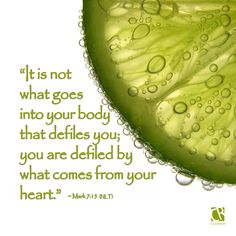
Indeed what is required by each of us is that we allow our brains to be washed by God – our brains and our hearts as well.  Jesus was telling us that what really counts is that which is in our hearts. It is from within, from the human heart, that evil intentions come….  and defile a person.”
We need to be heart-healthy — taking seriously what is in our hearts – people who spend time in lectio, time in the presence of the Lord.   We have a responsibility to do what we can to make our community a heart-healthy place.  It follows that to have a heart-healthy community requires for each of us to feed on a steady diet of soul food – and just the ham hocks and collards greens kind. Good things come from hearts that have been fed on soul food — Scripture — love of neighbor — devotion to God – nourished by prayer both communal and private.


Jesus makes it clear – in so many words – “We have met the enemy and they are us.”  We are at one and the same time perpetrators and victims.  And being the victim of our own making furthers our capacity to inflect ill on another.   “The human heart,” or the human will, remains a complex thing.  But if we fill our hearts with good things, our minds with chaste, charitable, other-directed thoughts – that’s what will come out of our mouths.   God will bless us, and through us, will bless the world.


The words of a hymn we sang earlier this week say it well:

May we be blest with hearts full of love – hearts full of joy – with peach in our days … this will enable us to be a blessing to others – keep God’s presence abiding with in – and reap the reward of an abundance of friends at our side.


Have you ever seen Suze Orman on TV?  Well, she is a financial planner and author. She tells of a period when her career was not so successful.   During that time she struggled to save face, to maintain an image of success.  She continued to entertain her friends at fine restaurants and to drive her luxury car to keep up the image of a successful professional. The truth was that every dinner, every car payment, every tank of gas was putting her deeper into debt.


Many folk who believe in God are like Suze.  They look good.  They keep up the appearances.  They try to conform to the traditions of culture and our faith – but inwardly they are empty… inwardly they are impoverished – and the more they try to conform on the outside to what supposed to come from inside, the worse off they get.


What defiles a person are the unclean things that originate from within a person, not those that come to us from without. What defiles a person is not what it is we eat, nor who it is that we eat with, rather it is our anger, our pride, our jealousy, pride and superiority that forgets Benedict’s lesson “obedience is a blessing to be shown to all.”


Our acts of goodness and love arise from within when we allow God to do good within us.  Our gentleness, our faithfulness, our kindness grow not according to our attempts to keep some law or directive about how we should act … how to be faithful, kind or gentle …  but rather they grow out of the word that is implanted within our hearts and minds by God – by meditating on what it is that God has done for us – and is doing for us – when we practice an attitude of gratitude.


But, this can occur only if we welcome the Word, ponder the Word, let it take root in us and then allow it to prompt us to action.   It is God who makes us holy.  For our part it requires perseverance in the journey.  As Joan Chittister writes in this week’s eblast: “The gift of perseverance in the journey to wholeness is the treasure trove of the human spirit. Sanctity, like everything else in life, is not an event. It is a process of coming to know the clay of the self and then shaping it into a thing of beauty. This thing called union with God, sanctity, holiness, is not a matter of going through religious hoops. It is a matter of winning the contest with the self that leads us to the best in us. Becoming holy is not an attempt to become someone else. It is about becoming the fullness of ourselves.”


Back to the 6-year-old’s query:  Are you ready to be brain-washed?

Continue Reading

Filed Under: Homily, Prayer Tagged With: brains, God, hearts, Jesus, Mark 7:15, obedience

Footer

Prayer / Newsletter / Info

 Contact Info

Benedictine Sisters of Florida

PO Box 2450
12138 Wichers Road
St. Leo, FL 33574-2450
(352) 588-8320
(352) 588-8443

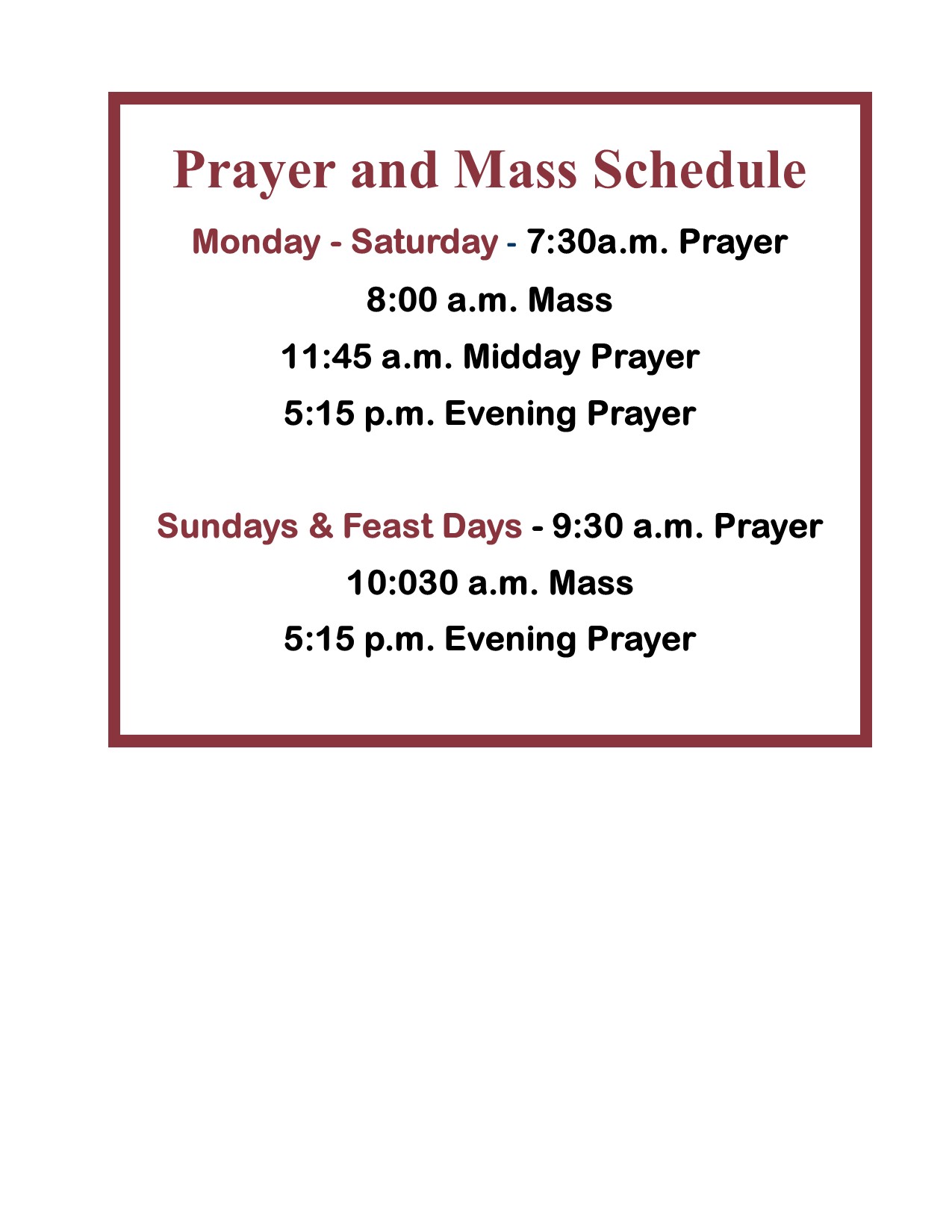
 Mass Schedule

Related Links

Copyright © 2026 · Benedictine Sisters of FL · Touching Lives Through Prayer and Service

Copyright © 2026 · Bendedictine Theme on Genesis Framework · WordPress · Log in