• Skip to primary navigation
  • Skip to main content
  • Skip to footer
Benedictine Sisters of FL

Holy Name Monastery
Founded 1889

Donate Now
  • Home
  • About Us
    • History
    • Being Benedictine
    • Benedictine Monasticism
    • Meet Our Community
    • Holy Name Academy-Alumnae
  • What We Do
    • Mission, Vision and Our Partners
    • Retreats
      • Invitation to Retreat
      • Accommodations
    • Volunteer Programs
    • Oblate Program
    • Spiritual Direction
    • Aqua/Hydroponics
    • More of Our Ministries
  • What’s Happening
    • Articles of Interest
    • Events
    • Commemorative Bricks
    • Newsletters
    • Brochures
    • Links
  • Support Us
    • Gifts of Support
    • Wish List
  • Stories Shared
  • Galleries
    • Photos
    • Videos
      • Benedictine Sisters of FL Videos
      • Other Videos
  • Contact Us

Ezekiel

History tells the rest of the story: We’re Still Here.

August 26, 2024 by Holy Name Monastery Leave a Comment

This incident found in John’s Gospel reminds us that not everyone took to Jesus positively, even those who seemed to be quite close to him.  Some of the people – not unlike today, were murmurers and grumblers – folks not too keen on what they were hearing. Following Jesus was going to be no picnic (despite the way he’d fed the five thousand people).   The idea of total commitment was a disturbing concept.

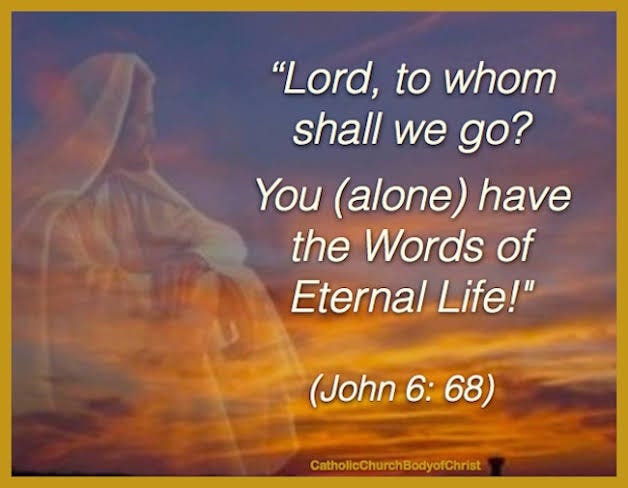
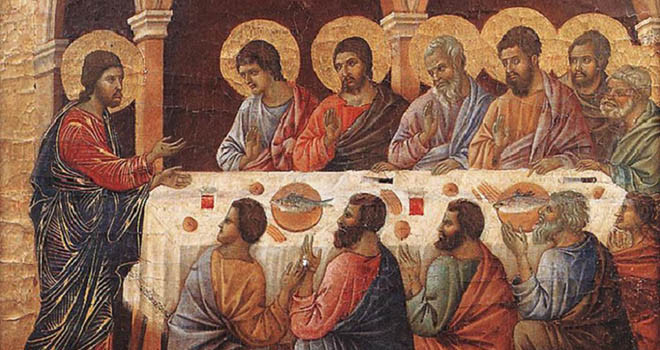
We hear it in that sad and haunting verse: “From that time many of his disciples went back and walked no more with him.”  Obviously hurt by this defection, Jesus turns to Peter and the others who are closest to him and asks them if they’ll be taking off too: “Will you too go away?”   Peter, with his usual style, spoke on behalf of all Jesus’ loyal followers: “Master, to whom would we go? You alone have the words of eternal life.” For Peter, at this time, it’s unquestionable: If Jesus said it, it must be true.  If you’ve looked ahead to the First Reading, you’re aware the church reminds us that Jesus’ experience of rejection was not unique.  1500 years earlier, Joshua, disciple of Moses, gives voice to a similar tribulation.  He addresses all the people: “If it does not please you to serve the Lord, decide today whom you will serve.”  The people answer in the same vein as Peter: “Far be it from us to forsake the Lord.”

One of my brother’s favorite books was: “This Tremendous Lover” by the Irish Trappist monk-priest Eugene Boylan. In 2002, I sent him a replacement copy for the one he’d given away.  At his death four years later, it was returned to me.  I had inscribed on the fly page: Bill, I hope this is as inspirational as you remember.  Boylan writes in his book: “Our Lord  was not looking for an enthusiastic public reception.  His miracles were not a ploy to grasp temporal power. The wonder of his public life is not the marvelous works He actually did, but the many and more wonderful works which He could have done and did not.  All He did and said and allowed to happen to him was part of God’s Grand Plan.”

What Jesus has to say is so important that he does not consider changing his message to please the people.  In fact, we can accurately say that a “Jesus” who doesn’t offend isn’t the real Jesus.

Our hearts go out to Jesus and to those who stuck with him.  If you have ever had anyone walk out on you, you can empathize with Jesus.  I recall the mixed feelings I had, when in the late 60s and early 70s we had five  deaths in one year.  It was not customary for those of us who were away for studies to come home for funerals, so there was a void for farewell until we got to visit the cemetery.  Then what some writers refer to as the “exodus”” began to happen and several of our peers felt the call to leave community. Some gave us a chance to say good-bye; others quite literally disappeared in the night.  These were good people. Some were rising leaders in community.  What did they know that I did not?  My feelings were not like the betrayal that Jesus suffered – but confusion and loneliness.    Were the shrinking numbers the handwriting on the wall and was I too blind to read it?

What does Jesus do when his ranks shrink?  Does he cajole the people, “Oh, I’m sorry that what I said was so hard to take.  Maybe we can compromise?”  Not at all!  Jesus does not let human opinion sway his proclamation of divine truth.  “The words I have spoken to you are spirit and they are life”.  History tells the rest of our story: We’re still here!   God spoke long ago, through the mouth of Ezekiel: (36:23-28) “You shall live in the land I gave you long ago; you shall be my people, and I will be your God.”

If our ears are open to the voice of the Spirit, we hear daily Jesus’ quizzing us: “Who do people say I am?”  He asks us, as he does all his friends, about our personal conviction: “Who do you say I am?”  The question also comes to us as a community.  Are we swayed by “public conviction,” forming the community we think the public wants us to be?  Or are we formed by personal and communally discerned convictions that raise peoples’ hope and help to lead the world where it needs to go now?

~Reflection by Sister Roberta Bailey, OSB


Have a good week …  pray for enjoyment and safety for all who (next weekend) will be celebrating Labor Day holiday!


First Reading:   Joshua 24:1-2a. 15-17, 18b         Second Reading:  Ephesians 5:21-32
Gospel:   John 6:60-69
Continue Reading

Filed Under: Blog, Front Page, Homily Tagged With: commitment, Community, Ezekiel, followers, hurt, Jesus, John, loneliness

Are You Who You Say You Are?

July 10, 2018 by Holy Name Monastery Leave a Comment

This Gospel tells us that Jesus is hampered from performing miracles in Nazareth because of the people’s lack of faith.  We see a very human side of Jesus.  He seems to be taken by surprise.  His family seems to be sending the message every child dreads to hear, especially from mom or dad: “Stop embarrassing us.  Act your age.”

Can you recall a time when a parent, teacher, novice mistress or maybe a friend seemed surprised by your words or an action that showed a level of maturity beyond their expectations?  In family life, and hopefully in our community, we rightfully expect a safe place to discover who we are and who God is calling us to be.

Does a time come to mind when you were surprised by someone you thought you knew saying something really wise, insightful or maybe just plain “off the wall” but so smart?  Why were you surprised?  Or was it not surprise, but impressive and pleasant to see a different aspect of that person.  It happens in my role frequently – A Sisters’ sharing gives me a peak into her depth of lectio, her expression of a deep spirituality puts me to shame or at the very least reminds me what a treasure we have in community.

Now it is interesting to note, that where the evangelist uses the word “offense” the Greek origin is “stumbling block.”  And that it seems to me is closer to what is happening here.  Jesus’ audience were scratching their heads and tripping over themselves trying to understand how this young whippersnapper from Nazareth could be so wise.  Up to this point, like most good Jews, he had kept a low profile.  Jesus’ family and friends were scared for him.   There was an emotional stumbling block interfering with them openly being a Jesus follower.

What stumbling block sometimes prevents you from speaking up in defense of Jesus, of our faith or our Benedictine values?

I was drawn back to the first reading from Ezekiel.  I wanted to say to Jesus when he seemed stymied by the crowd’s reaction to his teaching – Remember what Ezekiel said: The spirit entered into me and set me on my feet, and I heard the one who was speaking say to me: Son of man, I am sending you to the Israelites…  whether they resist or rebel or are obstinate of heart, it is you I am sending.  Say to them, whether you heed or resist, it is I whom God has sent – I am a prophet among you.”

The crowds used all the time-honored dismissive ways …  we know them, we have been targets – or sadly we may have employed them: belittling remarks, the covert laugh, the rolled eyes, the turning away of attention, or making light of the other’s knowledge – the attitude that says: who does she think she is?

Ultimately, what didn’t happen in Nazareth: no healings, no mighty deeds, is not much of a surprise.  After all a miracle is not just an event but it is an interpreted event.  If Jesus is not reputed to be capable of healing, any healing that does take place won’t be attributed to him.  So the crowd’s attitude is “there’s nothing here to see.  Let’s just move along, move along… and find some other excitement.”

Such is true with us, with our community.  Our guests don’t experience peace and harmony, generosity of spirit and light-heartedness, beauty in nature and liturgy if they don’t find it in each of us.  They come expecting a miracle – the miracle happens in our interactions – first with each other, then between us and our guests.

Remember Jesus question to this disciples: Who do people say I am?  And, you: who do you say I am?”  Who do you say these Benedictine Sisters of Florida are?

If I remembered well the music, I’d sing to you the tune from the rock opera popular in the 1970’s –

“Jesus Christ, Superstar – Do you think you’re what they say you are?”

Benedictine Sisters of Florida, do you think you’re what they say you are?

Are you really who you say you are?

Are you really who they say you are?

~Reflection by Sister Roberta Bailey, OSB, Prioress
First Reading  Ezekiel 2:2-5                Second Reading  2 Corinthians 12:7-10
Gospel Mark 6:1-6
Continue Reading

Filed Under: Blog, Front Page, Homily Tagged With: Ezekiel, Faith, God, Jesus, Miracle, Nazareth, stumbling block

Footer

Prayer / Newsletter / Info

 Contact Info

Benedictine Sisters of Florida

PO Box 2450
12138 Wichers Road
St. Leo, FL 33574-2450
(352) 588-8320
(352) 588-8443

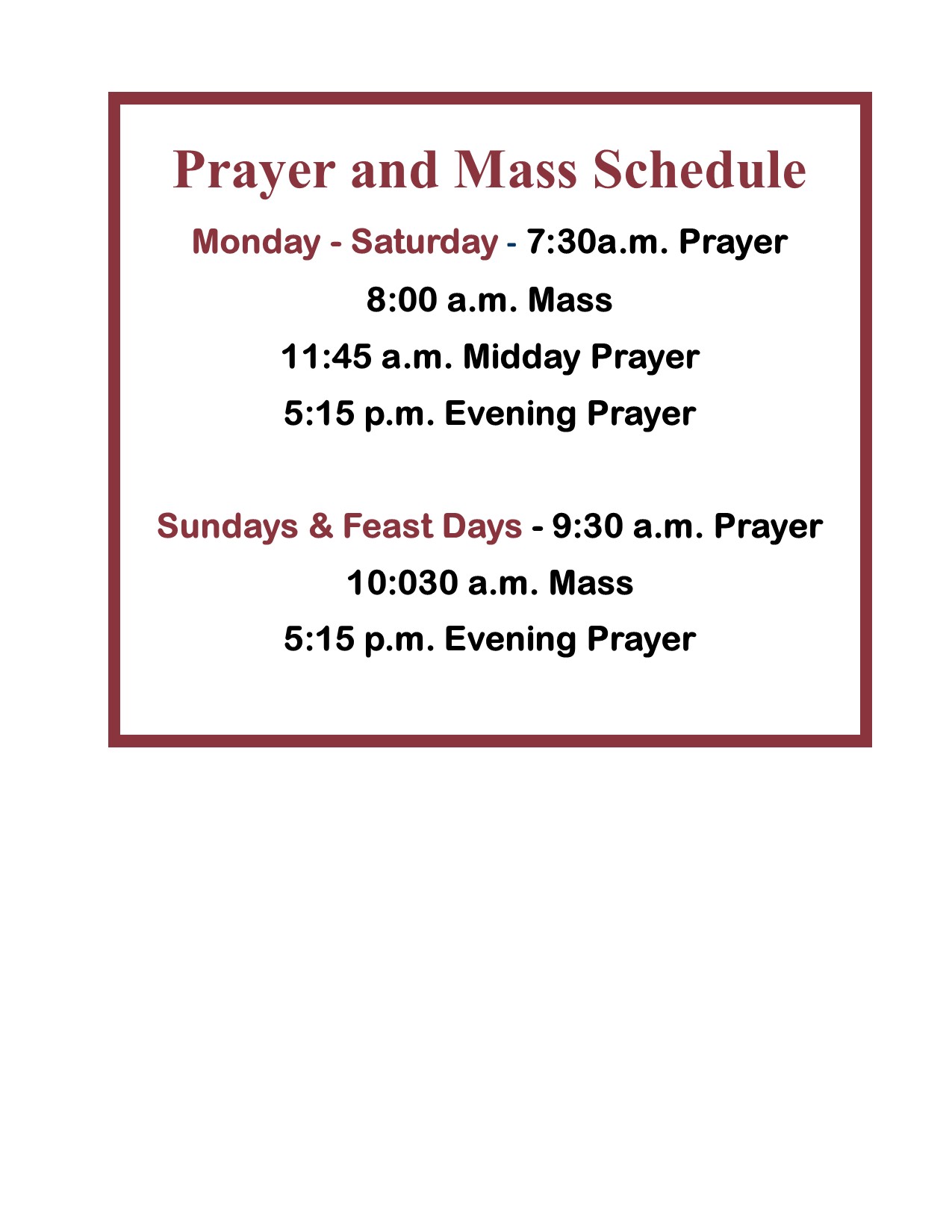
 Mass Schedule

Related Links

Copyright © 2026 · Benedictine Sisters of FL · Touching Lives Through Prayer and Service

Copyright © 2026 · Bendedictine Theme on Genesis Framework · WordPress · Log in