• Skip to primary navigation
  • Skip to main content
  • Skip to footer
Benedictine Sisters of FL

Holy Name Monastery
Founded 1889

Donate Now
  • Home
  • About Us
    • History
    • Being Benedictine
    • Benedictine Monasticism
    • Meet Our Community
    • Holy Name Academy-Alumnae
  • What We Do
    • Mission, Vision and Our Partners
    • Retreats
      • Invitation to Retreat
      • Accommodations
    • Volunteer Programs
    • Oblate Program
    • Spiritual Direction
    • Aqua/Hydroponics
    • More of Our Ministries
  • What’s Happening
    • Articles of Interest
    • Events
    • Commemorative Bricks
    • Newsletters
    • Brochures
    • Links
  • Support Us
    • Gifts of Support
    • Wish List
  • Stories Shared
  • Galleries
    • Photos
    • Videos
      • Benedictine Sisters of FL Videos
      • Other Videos
  • Contact Us

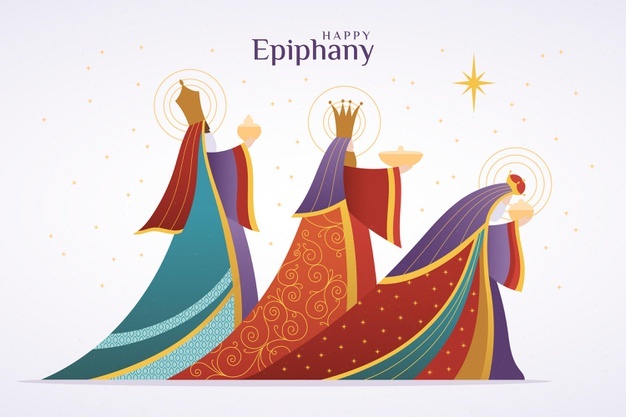
Three Kings

Solemnity of the Epiphany

January 5, 2026 by Holy Name Monastery Leave a Comment

Some say this Gospel reading raises more questions than insight.  Sometimes we think we know more about something than we really do know. A case in point is the Gospel text about the birth of Jesus and the story of the three wise men.  We even think we know their names. We believe that they came from the east bringing their gifts of gold, frankincense and myrrh for the baby Jesus. Finally, we think calling them wise is justified.  What is factual and what is legend?  And, what ever happened to the gifts the Magi gave the young Jesus and his family?

We can dispense with the information there were three Kings. Scripture simply does not say how many there were.  We know there was more than one but we can’t assume just because there are three gifts there were three givers   Nor does Scripture tell us their names; that’s tradition but not factual.    We can’t be sure either that they came from the East.  It seems a more likely conclusion if they saw the star in the eastern sky they would be coming the West.

A detail we can be fairly certain about is when these men arrived at the home of Jesus.  It was before His second birthday since we know that Herod had all the male children two years and younger killed in order to catch Jesus.

Scripture teaches us that they made a connection between that particular star and that something phenomenal was happening.  King Herod heard the news that these new comers were seeking for the King of the Jews. Now, Herod thought of He was King of the Jews.  This was the first he was hearing about a rival.  He was a very fearful person –  he was also shrewd one.  Knowing about the prophecy of Micah that a king would be born in Bethlehem he spoke to the wandering astrologers, told them to go to Bethlehem, find and let him know where the new king was and he would come later to worship him.

The unwitting Wise Men were about to return to tell Herod where they had found Jesus. However, God directly intervened and warned them to take a different route home. The Spirit also warned Joseph in a dream to get the family out of Bethlehem and flee to Egypt. Because of these interventions, the life of the young Jesus was spared.

As we can see, the Wise Men weren’t so wise after all. If it had been left to their wisdom, the infant Jesus would have been found and killed by Herod.  Not unlike the common people, they did not figure out by human wisdom that the King of the Jews had been born.  No one came to Jesus because they had reasoned it out. The angels had to announce it to the shepherds that Jesus had been born. It was by the grace of God that the Magi were led to the child Jesus, and that Jesus was protected from the wrath of Herod.

There’s our lesson – if we are to know anything about the true meaning of Christmas it will have to come by God’s grace. Unless God opens up our hearts – and we allow them to be pried open to receive the truth, we will never know it.

In case you noticed I never answered the question: what became of the gifts the Magi gave the child?  That was not a question that had come to my mind until a visit at the local Dollar Tree.  A colorful story of a child’s generosity was peeking out from a tumbled jumble of after-Christmas selections.   “The Miracle of the Myrrh” is an original, fanciful tale of what became of the Little Drummer Boy, Mary (Jesus’ mother) and the Kings’ gifts of gold, frankincense and myrrh. What a treasure for only $1.25!

~Reflection by Sister Roberta Bailey, OSB


Christmas this year is a mixture of emotions for the Sisters.   Our Sister Mary Clare died on December 22nd  – funeral Mass and burial on January 8th.

   May you and your loved ones know good heath and peace in 2026.   Best wishes from the Benedictine Sisters – be assured we you are remembered in our prayers.


First Reading: Isaiah 60:1-6              Second Reading: Ephesians 3:2-3a, 5-6
Gospel: Matthew 2:1-12
Continue Reading

Filed Under: Blog, Front Page, Homily Tagged With: 2026, Angels, Herod, Jesus, Solemnity of the Epiphany, Three Kings, Wise men

Epiphany Sunday 2024

January 9, 2024 by Holy Name Monastery Leave a Comment

In the stories of Jesus’ birth, two special groups of people came to visit the new-born babe: the shepherds and the magi. The church has no special feast to commemorate the visit of the shepherds although the Christmas liturgy at dawn is sometimes referred to as the Shepherds’ Mass.    The shepherds learned of the birth of Jesus through a direct, supernatural revelation from angels. The magi, on the other hand, learned of the birth of Jesus by observing the stars. The stars did not speak in the same way the angel had so the wandering Magi had to interpret this natural sign. It is a unique story that represents all peoples of all nations and opens our eyes to the fact that God is not limited to any one religious tradition.

This solemnity has so long been associated with the image of “Three Kings” that it’s easy to forget that Matthew, who is the only evangelist who relates this particular story, nowhere mentions either the number of visitors or their kingly rank.  He does, however, call the visitors “magi,” which, in those days, could have meant anything from “wise man” or “sorcerer”; from “astrologer” and “astronomer” – all learned men respected for their wisdom.

With the Greek community, Tarpon Springs is so close to us that we are well aware of the tradition of young men diving into the bayou (no matter how cold the waters) in hopes of being the one to retrieve the cross believed to bring them a year of special blessings.

In Spanish-speaking countries, the tradition had long been to observe Christmas Day as a solemn religious occasion, reserving Three Kings Day for partying and exchanging gifts.  Similar to the new world custom of leaving a cookie on Christmas eve for Santa Claus, children leave a treat of hay in hopes that the camels will bring the Kings with a gift.

In India, the Epiphany is not a moveable feast.  It is celebrated on the 12th night after Christmas, January 6th.  It marks the manifestation of Jesus in a religious celebration honoring the Baptism of Jesus by John in the River Jordan.  It is also a reminder of St. Thomas, the Apostle, who brought Christianity to India in the living waters of the Sacrament of Baptism.  The church commemoration includes the sound of a generous pouring of water that can be heard by the congregation and live-screen audience.

The custom in Germany is that of a children’s festival. After a church service the children, dressed as kings, go from house to house to gather offerings for the poor.  At each house, they paint “20+C+M+B+the numeral for the year” (this year 24) which is Latin for Christ bless this house). Coincidentally the letters are the first letters of the names of the wise men: Caspar, Melchior and Balthazar.

In England, the traditional Yule log is kept burning until Twelfth Night (Epiphany) in order to bring blessings and good fortune throughout the upcoming year.  Several countries – most notably Italy and Russia – share the long-held tradition of a kindly old witch who makes her annual visit on the night of January 5, climbing down the chimney to bring presents to children.

The Irish people, (Google told me) know how to celebrate the feast of the Epiphany with deference to women.  On this day it is the tradition in Ireland for the women to get together and enjoy their own Christmas.  The men folk stay at home and handle the kids and the many chores their wives do daily.

The history of the King Cake has its roots in pre-Christian religions of Western Europe. During pagan harvest celebrations it was customary to choose a man to be the “sacred king” of the tribe for a year. That man would be treated like a king for the year. Then he would be sacrificed, and his blood returned to the soil to ensure that the harvest would be successful. The method of choosing who would have the honor of being the sacred king was the purpose of the “King’s Cake” in which a coin had been baked. Whoever got the slice that had the coin was the chosen “king for a year.”

The custom evolved and migrated from France to Louisiana. The ceramic baby hidden in the oval-shaped cake speaks to the fact that the three Kings had a difficult time finding the Christ Child. Whoever finds the ceramic baby hosts “King Cake parties” each day from Epiphany until Mardi Gras.

So, why would we be of interest to any of us?  It matters because we are a nation, and a community, from a variety of backgrounds.  Jesus’ arms were widespread on the cross to embrace all cultures, all peoples through all times.  As we enter a new year, our prayer is that it will be the dawning of a new day that will bring the gifts of a warm welcome, peace, financial security, equitable access to health care services and food; worthy companionship for migrants, immigrants, displaced placed person and all for whom we have promised to pray.  In fact let us pray for these things for the entire world – and let’s not overlook each other… As Tiny Tim says in Dickens’ A CHIRSTMAS CAROL: “God bless us everyone!”

~Reflection by Sister Roberta Bailey, OSB


First Reading: Isaiah 60:1-6              Second Reading: Ephesians 3:2-3a, 5
Gospel: Matthew 2:1-12


Continue Reading

Filed Under: Blog, Front Page, Homily Tagged With: Christ, Christmas, Epiphany, Epiphany Sunday, Jesus, Magi, Shepherd, Three Kings

Epiphany

January 4, 2021 by Holy Name Monastery Leave a Comment


Epiphany

This solemnity of the Epiphany has for so long been associated with the image of “Three Kings” that it’s easy to forget that Matthew, who is the only evangelist who relates this particular story, nowhere mentions either the number of visitors or their kingly rank.  The number three seems to have been inferred from the three gifts—gold, frankincense, and myrrh.  Tradition holds that, guided by a miraculous light of a star, the three kings or magi arrived in Bethlehem where they paid homage to the Infant Jesus.  Their names, Balthasar, Melchior and Caspar are derived from their home countries named in the Responsorial Psalm: Arabia, Persia, and India.  They are usually shown to be of the three races: white, brown and black to stress that the Manifestation of the Lord was being made to all peoples.

Greek and Russian traditions hold there were twelve Magi because as they argue there were twelve legions of angels, twelve apostles, and twelve tribes of Israel.  A folksy story arises from the Holy Land about a Bethlehem widow named Babushka who put finishing touches on her housework ahead or trailing after the three mysterious visitors who spoke of a guiding star.  Her story holds a moral for us: never let the important interfere with the essential.

Kindred beliefs, stories and customs come from all over the world.  In Kerala, India, Epiphany is a holyday of great importance.  The annual celebration begins early in the day at the cathedral with much congregational participation.

With our closeness to Tarpon Springs, we are well aware of the Greek tradition of young men diving into the bayou (no matter how cold the water is) in hopes of retrieving the Cross that will bring them a year of blessings.

In Spanish-speaking countries it is often the tradition to observe Three Kings Day, first at church, then it’s time for partying and exchanging gifts.  For some, reminiscent perhaps of the St. Nicholas Day customs, a trail of hay is left for the Kings’ camels to lure them to homes to leave a gift.

One of the customs in some places in Germany is for carolers to go house-to-house.  (You’ll recognize this practice in our Epiphany house blessing.  I suspect that our Benedictines ancestors must have brought it with them when they came to the U.S. in 1852 .. from PA to our foundation in 1889).   The carolers paint, above or near the doorway, “20+C+M+B+21” which are the first letters, some say, of the three kings Caspar, Melchior and Balthazar.  Others say it is Latin for “Christ bless this house.”

In England and some former British colonies, according to an old custom, the “downstairs folk” celebrate Boxing Day on December 26, when their manor house employers gifted them with their unwanted gifts.  (Today we’d say they recycle the gifts.)  In some countries – most notably Italy and Russia – there is a long-held shared tradition of the kindly old witch who makes her annual visit bringing presents by climbing down the chimney on Epiphany eve.

In the Philippines, which is composed of 2000 inhabited islands, Epiphany is a mix of celebrations honoring the elders and children and the wearing of King’s Hats.  And you know the custom of the King’s Cake.

But why would we be interested in any of this or in any of the Epiphany or Twelfth Night customs that have evolved over the years.  For one, we are a nation, and a community, from a variety of backgrounds.  As Pope Francis said to us in his Apostolic Letter on Consecrated Life: “Journeying together always brings enrichment and can open new paths to relationships between peoples and cultures.”  Our prayer intention this week is that the dawning of this new year may bring with it the gifts of a warm welcome, peace, financial security, good health and worthy companionship for migrants, immigrants, displaced persons and all for whom we have promised to pray – and let’s not overlook each other.

In closing, I want to share with you a little story I was reminded of recently.  It was first published in 1977 – Sharon’s Christmas Prayer by John Shea (To our readers: Take a breath, read the poem, if you will, aloud – with a child’s exuberance.)

“She was five, sure of the facts, and recited them with slow solemnity convinced every word was revelation.

She said they were so poor they had only peanut butter and jelly sandwiches to eat and they went a long way from home without getting lost.  The lady rode a donkey, the man walked, and the baby was inside the lady.

They had to stay in a stable with an ox and an ass (hee-hee)
but the Three Rich Men found them because a star lited the roof.
Shepherds came and you could pet the sheep but not feed them.

Then the baby was borned.  And do you know who he was?

Her quarter eyes inflated to silver dollars, The baby was God.

And she jumped in the air whirled round, dove into the sofa and buried her head under the cushion which is the only proper response to the Good News of the Incarnation.

Continue Reading

Filed Under: Blog, Front Page, Homily Tagged With: Apostolic Letter, Bethlehem, Boxing Day, Epiphany, frankincense, gold, Holy Land, myrrh, Tarpon Springs, Three Kings

Footer

Prayer / Newsletter / Info

 Contact Info

Benedictine Sisters of Florida

PO Box 2450
12138 Wichers Road
St. Leo, FL 33574-2450
(352) 588-8320
(352) 588-8443

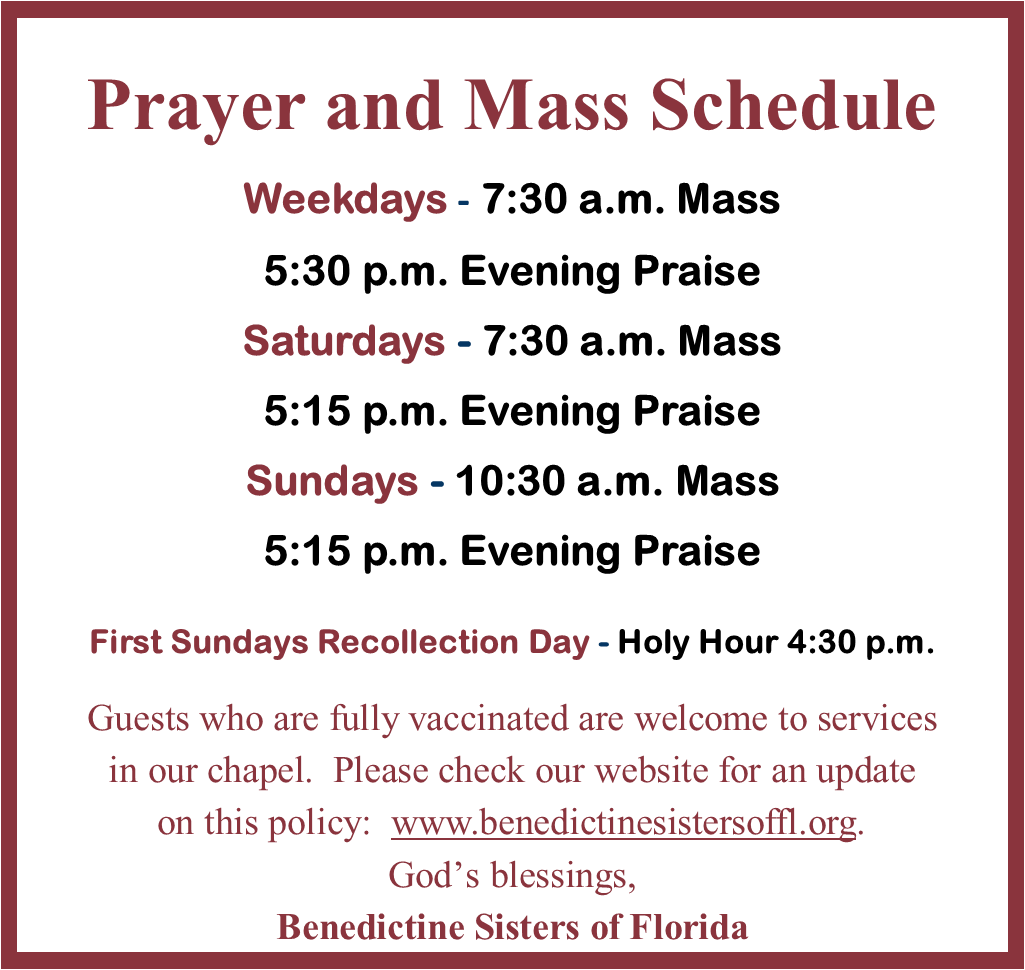
 Mass Schedule

Related Links

Copyright © 2026 · Benedictine Sisters of FL · Touching Lives Through Prayer and Service

Copyright © 2026 · Bendedictine Theme on Genesis Framework · WordPress · Log in